Searching for ballet sneakers that genuinely fit the foot, hold up through real class schedules, and feel right for the dancer wearing them can be a real chore. Most listings blur together, and parents especially get stuck guessing on materials, sizing, and whether a slipper will survive even a few months of weekly rehearsals. I pulled together ten options covering genuine leather, soft PU, stretchy canvas, satin recital pairs, and adult fashion ballet sneakers built for street wear, so you can match the right pair to the right person.
Your Options, Compared

Stelle Ballet Shoes PU Professional Dance Slippers

Stelle Ballet Shoes Soft Leather Dance Slippers

Stelle Canvas Ballet Shoes No-Tie Split Sole
Stelle Ballet Shoes Genuine Leather Slipper

Stelle Ballet Shoes Genuine Leather Slippers

THINK! Womens Guad Ballet Sneaker

Stelle Ballet Shoes Highly Elastic Canvas Slipper

Stelle Ballet Slippers Glitter Vegan Leather

Stelle Satin Ballerina Shoes With Ribbons

Anne Klein Sport Umeko Ballet Flat
More Details On Our Top Picks
Parents walking a child into their first ballet class often just need a slipper that fits, stays on, and doesn’t cost a fortune. This Stelle pair is built around a PU upper, which is a synthetic material that wipes clean and shrugs off scuffs from studio floors. The close-fit construction hugs the foot so the shoe moves with the dancer rather than slipping off mid-plié.
For families testing whether a child will stick with lessons, the lower entry cost matters as much as the fit. It also comes in sizing broad enough to cover toddlers through bigger kids, so siblings can share a household ballet bag without separate orders.
A Few Highlights
- PU upper wipes clean after class, useful in studios with dusty marley floors.
- Close-fit silhouette gives a streamlined look for recital photos.
- Lightweight build helps younger dancers feel less weighed down.
- Sizing covers both girls and boys starting from a young age.
Things To Consider
- PU doesn’t breathe like leather, so sweaty feet may need a quick airing between classes.
- Closely tied sizing means a half-size growth spurt can end the shoe’s life quickly.
Who It Suits Best
First-time enrollees in a rec or pre-ballet program whose parents want a forgiving starter slipper.
Consider Something Else When
The Stelle Ballet Shoes Soft Leather Dance Slippers make more sense for kids with sensitive skin or allergy-prone feet.
The step up from PU to soft leather is the jump many parents notice right away. Leather molds to the foot over a few classes, breaking in like a favorite pair of school shoes rather than staying stiff. The result is a slipper that feels custom by week three, especially across the toe box where most friction happens.
For dancers who complain about rubbing, blisters, or hot spots, the breathability of real leather makes a tangible difference. You may find the surface develops gentle creases with use, which owners commonly see as a sign the shoe is adapting rather than wearing out.
Everyday Wins
- Soft leather upper breathes during long rehearsals and warm-weather classes.
- Natural material softens with wear instead of staying stiff.
- Better for kids prone to blisters from synthetic slippers.
- Cleans up with a damp cloth rather than special care products.
Points To Note
- Leather slippers cost more upfront than the PU version above.
- Spot-cleaning only, so visible scuffs may need a leather conditioner down the line.
Made For
Dancers with sensitive feet or skin conditions that flare up against synthetic materials.
A Better Fit Elsewhere
The Stelle Ballet Shoes Genuine Leather Slipper fits bigger-kid sizes better when a child is between the toddler and youth range on the size chart.
Tiny dancers can’t be trusted with ribbons, and that’s the whole reason a no-tie slipper exists. The split-sole design, meaning the sole is divided under the arch to let the foot flex freely, is the part that actually matters for ballet technique. Without it, toddlers’ feet can’t articulate the way the teacher is asking.
Canvas breathes better than most synthetics, which matters for the youngest dancers who tend to sweat through their first classes. The slip-on style also cuts down on classroom transitions, since there’s nothing to tie or untie between barre work and floor exercises.
Strengths Worth Knowing
- Split sole supports arch articulation, important for early foot development.
- Canvas upper stays cool during high-energy toddler classes.
- Slip-on design removes ribbon-tying from the routine.
- Light enough that even small feet don’t feel weighted down.
Trade Offs
- No ribbons means the shoe can slip off mid-jump for very narrow feet.
- Limited size range stops at the early toddler stage.
Best Suited To
Toddlers in creative movement or pre-ballet classes where ribbons would only get in the way.
Look Elsewhere When
The Stelle Satin Ballerina Shoes With Ribbons suits older recital-bound dancers who actually need the traditional look.
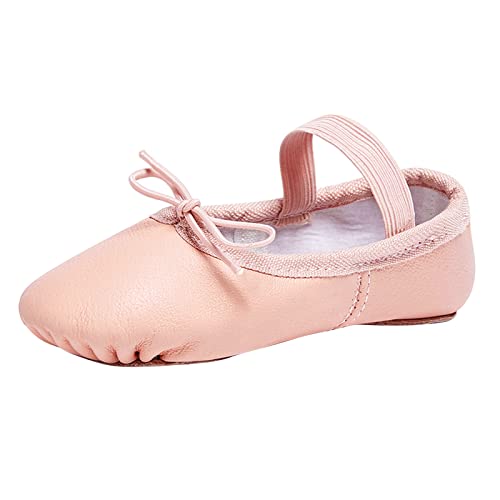
When a dancer is committed to multiple classes a week, material quality starts to matter more than the price tag. The genuine leather construction here breaks in over time and holds up to frequent studio use far better than synthetics. The size range also stretches from toddler through bigger-kid sizing, so a household with dancers at different ages can shop one model.
Compared to the PU version above, leather takes longer to dry if it gets wet from sweat or studio spills, but it lasts through the kind of wear that chews up cheaper slippers within a term.
What Earns Its Place
- Genuine leather ages gracefully instead of peeling at the seams.
- Wide size coverage fits toddlers through bigger kids in one model.
- Comfortable enough for dancers attending several classes per week.
- Suitable for boys as well as girls, broadening household use.
Room For Improvement
- Heavier than canvas slippers, which can feel like a lot for the youngest wearers.
- Needs a day to air dry between back-to-back classes.
Key Product Details
Who Should Grab It
Multi-class weekly dancers whose families want one reliable slipper that lasts a full semester.
Skip It When
The Stelle Ballet Shoes PU Professional Dance Slippers works better for absolute beginners who may outgrow the slipper within a few months.
A classic leather ballet slipper in a small-kid size range covers the years when most kids are fully committed to weekly class. The construction here is plain, traditional, and recognizable to any studio teacher reviewing uniform requirements. It avoids trendy details that might clash with dress codes.
For studio dancers, the unembellished look reads as appropriate on any recital stage. Parents shopping across multiple siblings may find this model’s sizing range a touch narrower than the previous leather option.
Real Benefits
- Clean, traditional silhouette matches most studio dress codes.
- Leather upper develops a comfortable fit over weeks of wear.
- Solid choice for dancers who attend year-round without seasonal shoe swaps.
Honest Caveats
- Fewer size options than the broader leather model earlier in the list.
- Plain design may feel underwhelming for dancers wanting recital flair.
The Right Fit
Year-round studio students who need a no-fuss slipper that satisfies uniform requirements.
Another Choice May Suit
The Stelle Ballet Slippers Glitter Vegan Leather delivers more stage sparkle for recital-heavy seasons.
Adult ballet sneakers land in a completely different category from kids’ slippers. The THINK! Guad is built as a fashion sneaker with ballet-flat DNA, meaning a soft, flexible upper married to a street-ready sole. The result is a shoe that handles long city walks better than any studio slipper.
For commuters and travel-day wear, the sneaker construction provides more arch support than a typical ballet flat. You may find the sizing runs narrow, so wider feet should approach with that in mind before settling on a size.
Notable Gains
- Sneaker sole offers better traction on wet pavement than a classic flat.
- Flexible upper moves with the foot during long walks.
- Premium construction appeals to adults who wear ballet sneakers daily.
- Transitions easily from office settings to evening plans.
Possible Compromises
- Not designed for studio use, so recital-bound dancers should look elsewhere.
- Sizing may run narrow for wider feet, depending on foot shape.
Built With In Mind
Adults who want ballet-sneaker styling for long walking days and casual outfits.
Swap It Out When
The Anne Klein Sport Umeko offers a more conventional ballet-flat silhouette for dressier settings.
Elasticity solves a problem most rigid slippers ignore: feet aren’t one shape. The highly elastic canvas here stretches around bunions, high insteps, and swelling after long rehearsals. The “grow-with-me” effect is real, since the slipper forgives a half-size of growth without becoming uncomfortable mid-season.
Compared to the no-tie canvas option earlier, this version covers a broader age range, including older girls and women. The trade-off is that stretchy materials don’t hold their shape forever, so the snugness eventually relaxes.
What It Does Well
- Elastic canvas accommodates high insteps and wider forefeet.
- Forgives minor sizing mismatches during growth spurts.
- Range covers toddlers through women in one product line.
- Canvas stays breathable through long class sessions.
Things To Weigh
- Stretchy fabric loses its snug fit over many months of heavy use.
- Less structured than leather, so foot support is minimal.
Quick Facts
Perfect Match For
Families who want one canvas slipper to share between siblings at different growth stages.
Where A Sibling Pick Shines
The Stelle Ballet Shoes Genuine Leather Slipper supports more structured technique work for serious dancers.
Recital shoes need to look the part, and a glitter metallic finish does that work better than any plain leather slipper. The vegan leather here is a synthetic material designed to mimic real leather while skipping animal products, which matters for families avoiding animal-based materials.
Full-sole construction gives more floor coverage under the arch, which beginners often find more stable than split-sole designs. The catch is that the glitter finish shows scuffs under stage lights, so plan for a backup pair if multiple performances are on the calendar.
Practical Pluses
- Glitter metallic finish photographs beautifully under stage lighting.
- Vegan leather works for households with material preferences.
- Full sole adds stability for younger performers still learning balance.
- Looks like a costume piece without needing separate recital footwear.
Soft Spots
- Glitter coating can flake after heavy studio use.
- Not ideal for daily class, since recital shoes wear out faster under frequent rehearsals.
Whose Shelf It Belongs On
Stage performers and recital dancers who want sparkle without separate costume shoes.
Not Your Match When
The Stelle Canvas Ballet Shoes No-Tie Split Sole fits daily class work better at a lower cost.
Satin and ribbons remain the recital look most studios expect. The traditional construction pairs a satin upper with ribbon ties that wrap around the ankle, securing the shoe through turns and jumps where slip-ons would otherwise fly off. Elastic straps built into the design help with that fit without requiring advanced tying skills.
Satin scuffs and stains more easily than leather or canvas, so this shoe lives mostly in a recital bag between performances. Treat it as a special-occasion piece rather than everyday studio wear.
A Favorable Mix
- Satin upper delivers the traditional recital look teachers expect.
- Ribbons keep the shoe secure through demanding choreography.
- Elastic strap support makes them easier on younger wearers.
Practical Considerations
- Satin shows scuffs and stains faster than leather alternatives.
- Ribbon tying takes practice, so first-time users may struggle initially.
Feature Snapshot
Who Will Love This
Recital dancers in need of traditional ribbon-tie shoes for stage performances.
Reach For A Different Pick When
The Stelle Ballet Slippers Glitter Vegan Leather fits performances where sparkle matters more than ribbon tradition.
Not every ballet-style shoe belongs in a studio. The Anne Klein Sport Umeko sits firmly in the fashion category, pairing a square toe with a metal ornament at the toe that gives the flat a polished look. Adults shopping for office-friendly ballet sneakers will find the silhouette versatile enough to pair with trousers and dresses alike.
Compared to the THINK! Guad above, this option trades sneaker cushioning for a sleeker flat profile. The honest read is that it looks more like a traditional ballet flat, so it earns its place in wardrobes where style comes first.
What Pays Off
- Square toe and metal ornament give a polished, grown-up look.
- Versatile styling works across office and weekend outfits.
- Fashion-sneaker category comfort for daily wear.
Worth Bearing In Mind
- Not designed for studio class or any dance floor.
- Square toe takes some getting used to if you’re switching from rounded flats.
Core Features
The Right Fit
Adults seeking a polished ballet sneaker for office wear and casual outfits.
Skip It When
The THINK! Womens Guad is the stronger pick for long walking days where sneaker cushioning matters.
What Matters Most Before Choosing Ballet Sneakers
Material matters more than brand when shopping for ballet footwear. Genuine leather breathes and molds to the foot, but costs more and requires occasional conditioning. PU synthetic leather wipes clean and costs less, yet traps moisture during long rehearsals. Canvas breathes well and stretches, but loses structure over months of daily use. Satin looks the part for recitals, though it stains quickly and belongs in a costume bag rather than a daily dance bag.
Sole construction shapes how the foot actually moves. A full sole covers the entire underside of the foot and gives beginners a stable platform. A split sole divides under the arch, allowing the foot to articulate naturally for pointed toes and proper ballet technique. Teachers usually specify which they want, so checking the studio’s dress code saves a return trip.
Sizing deserves a measuring session, not a guess. Children’s feet grow quickly, and ballet sizing runs smaller than street-shoe sizing in many cases. Measure both feet in the evening when feet are slightly swollen, then size to the larger foot. Elastic straps and no-tie designs buy some forgiveness, though leather slippers tend to fit more snugly than stretchy canvas.
Finally, think about how often the shoe gets worn. Daily class dancers need durable construction that survives three to five sessions per week. Recital-only pairs can prioritize appearance over durability since they live mostly in a bag between performances. Match the construction to the use case, and the shoe will outlast the season it’s bought for.
Where Shoppers Go Wrong And When Spending Up Pays
Most ballet shoe mistakes come down to sizing and material assumptions. Parents often order a half-size up “to grow into,” which leaves the foot sliding inside the shoe during turns and jumps. Dancers end up gripping with their toes, a habit that travels home and creates long-term foot fatigue. Measure the foot, trust the chart, and accept the natural sizing cycle.
Common Shopping Slip Ups
The biggest trap is buying based on appearance rather than studio requirements. A glitter metallic slipper looks magical in photos, yet a plain leather pair may be exactly what the dress code demands. Always check the studio’s list before browsing, then shop within those parameters.
A second mistake is treating adult ballet sneakers and kids’ slippers as the same category. The THINK! Guad and Anne Klein Umeko are built for street wear and won’t survive any actual dance floor. Buying them for a class-bound dancer wastes money and produces a poor studio experience.
The Case For Spending Up
Higher-tier ballet slippers earn their cost through material quality and construction details. Genuine leather uppers last three to four times longer than PU alternatives when worn weekly, so the per-month cost often works out lower despite the higher upfront price. Recital-grade satin pairs cost more than studio slippers, yet they photograph better and survive performance nights without splitting at the seams.
The upgrade is most worth it for committed dancers attending multiple classes per week, and least worth it for absolute beginners whose feet may outgrow the slipper within months.
Frequently Asked Questions
How do I know which ballet sneaker size to order?
Measure the foot in the evening, stand the dancer on a piece of paper, mark the heel and longest toe, then measure between those marks. Compare to the brand’s size chart rather than your usual street-shoe size, since ballet sizing varies.
Are ballet sneakers and ballet slippers the same thing?
In this list, kids’ ballet slippers handle studio use, while adult ballet sneakers are fashion shoes built for street wear. The two categories serve very different purposes, so match the shoe to the activity.
What is a split sole, and does my dancer need one?
A split sole divides under the arch so the foot can articulate and point properly. Teachers usually require split soles for older students, while beginners often start in full soles for stability.
How long should a ballet slipper last with regular use?
Genuine leather pairs typically last a full semester of weekly classes, while PU and canvas slippers may need replacing sooner. Recital-only satin pairs can last several performances if stored carefully between uses.
Can ballet slippers be washed in a washing machine?
Most slippers shouldn’t go in a washing machine, since agitation damages glue and fabric finishes. Spot-clean with a damp cloth and let them air dry away from direct heat.