I started wearing barefoot-style shoes after years of squashing my toes into narrow fashion sneakers, and the difference in how my feet feel after a long day was almost immediate. For shoppers curious about minimalist footwear, the category can feel confusing, because “barefoot” gets attached to everything from pool shoes to serious hiking boots. This roundup sorts through five options that actually deliver on the core idea: a thin, flexible sole, a wide toe box, and a flat, zero-drop profile that lets your feet move the way nature intended.
A Side-By-Side Look
Stelle Water Shoes for Women Aqua Swim Lake

Women’s Quick Drying Aqua Water Shoes

Maxome Barefoot Water Shoes for Beach Aqua Swim
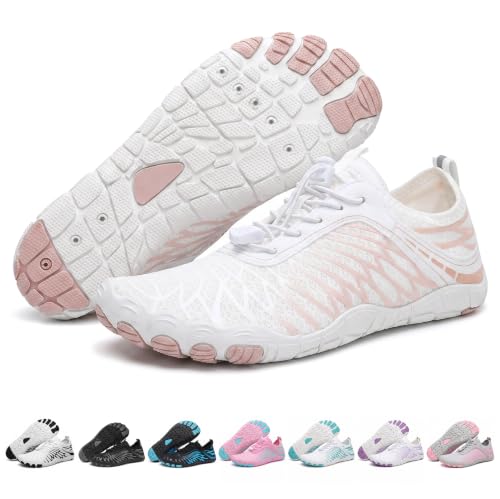
ELETON Barefoot Hiking Water Shoes Wide Toe Box

WHITIN Women’s Barefoot Shoes W81
The Strengths Of Each Pick
The Stelle Water Shoes sit at the entry point of the barefoot category, and that positioning shows up in how little commitment they ask. For someone dipping a toe into minimalist footwear, the soft, sock-like upper removes the break-in period that stops many newcomers in their tracks.
Compared to the Zhuanglin pair reviewed next, the Stelle leans more toward casual beach wear than active water use, and the lighter fabric dries fast after a paddle. The thin sole keeps ground feel alive, which is the whole point of a barefoot shoe.
Key Advantages
- Low cost lets first-timers try the barefoot concept without a big commitment.
- Lightweight upper dries quickly between dips at the lake.
- Flexible sole preserves the ground-feel that defines the category.
- Slip-on design suits travelers packing light.
Things To Consider
- Minimal cushioning and structure make rough terrain uncomfortable on long walks.
- Mesh fabric tends to collect sand, which owners commonly rinse out after each beach outing.
Who It Suits Best
Vacationers and weekend beachgoers who want a low-cost first step into barefoot-style footwear for short, casual water days.
Consider Something Else When
Pick the WHITIN Women’s Barefoot Shoes W81 instead for daily errands, since the Stelle is built for water play rather than all-day walking on hard pavement.
The Zhuanglin Quick Drying Aqua Water Shoes focus on one job: staying comfortable around water without the soggy-shoe problem. The pull-on construction with stretch fabric means slipping them off after a pool session never becomes a wrestling match.
Where the Stelle feels geared toward passive beach days, this pair steps up for active swimmers who hop between pool and lounger all afternoon. For most warm-weather routines, the breathable build keeps feet from feeling trapped.
The Value In It
- Quick-dry fabric cuts down the damp-shoe window between dips.
- Stretchy collar slips on and off without undoing laces.
- Flat, flexible sole preserves the barefoot feel underfoot.
- Holds up to repeated chlorine and saltwater exposure without stiffening.
Worth Noting
- The thin sole offers almost no protection from sharp shells or rocky lake beds.
- Sizing runs close, so shoppers with wider feet may want to size up.
Made For
Pool regulars and lakehouse hosts who want a grab-and-go water shoe that handles chlorine and dock scrambles.
Not Your Match When
Choose the ELETON Barefoot Hiking Water Shoes instead if stream crossings and rocky trails are on the menu, since this Zhuanglin pair is built for flat, wet surfaces.
The Maxome shoes stretch across more activities than the previous two, marketing themselves to everyone from yoga practitioners to kayakers. That breadth comes from a sole that’s grippier than a pure aqua sock but lighter than a hiking shoe, which threads the needle nicely.
For shoppers who bounce between a paddleboard session and a beach yoga class in the same morning, this pair keeps one shoe doing both jobs. Owners commonly report that the drainage ports prevent that waterlogged feel after a long session in the river.
Practical Advantages
- Multi-activity design covers yoga, boating, and swim in one shoe.
- Drainage channels reduce the heavy, water-filled sensation during long use.
- Rubber outsole grips slick pool decks and wet rocks better than soft mesh alone.
- Wide toe box lets toes splay naturally during balance-heavy poses.
- Stretch lacing accommodates foot swelling on hot days.
Minor Gripes
- The lacing system takes a few tries to dial in the right tension.
- Slightly heavier than a pure aqua sock, which matters for ultralight packers.
Right Fit For
Active women who mix water sports with land-based workouts and need one shoe that handles both without swapping gear.
A Better Fit Elsewhere
Choose the Stelle Water Shoes for Women if budget is the main concern, since the Maxome costs more without delivering meaningful durability upgrades for casual beachgoers.
The ELETON shifts the conversation from pool deck to trailhead, which is where the wider barefoot toe box really earns its keep on uneven terrain. The zero-drop profile, meaning the heel sits at the same height as the ball of the foot, encourages a more natural midfoot strike on climbs.
Unlike the lightweight aqua shoes reviewed above, this one carries enough structure to handle gravel paths and creek crossings without folding underfoot. For hikers transitioning from bulky boots, the ground feel is a revelation after a single long walk.
Strong Points
- Wide toe box prevents the pinching that plagues narrow hiking shoes on downhills.
- Zero-drop platform supports natural foot positioning over long miles.
- Reinforced sole shrugs off sharp rocks better than pure water shoes.
- Drains quickly after stream crossings without holding water weight.
Trade Offs
- Higher cost than casual aqua pairs, which may not suit occasional users.
- Less cushioning underfoot than traditional hikers, so transitions should be gradual.
- Toe area can scuff on rocky descents, a widely reported pattern across rugged barefoot styles.
Best Suited To
Trail walkers and creek hikers who want barefoot mechanics with enough protection for uneven, rocky terrain.
Look Elsewhere When
Pick the Maxome Barefoot Water Shoes for everyday beach and yoga use, since the ELETON’s trail focus adds weight that casual users don’t need.
The WHITIN W81 closes the list by pulling barefoot mechanics out of the water-sport niche and into the daily wardrobe. The fashion-sneaker silhouette makes these wearable to coffee runs and grocery trips, where the previous picks would look out of place.
For shoppers who care more about all-day comfort than trail performance, the wide platform and zero-drop sole offer a genuine alternative to conventional sneakers that crowd the toes. Depending on your daily mileage, the W81 may quietly become the most-worn pair in the closet.
Useful Strengths
- Casual styling fits everyday outfits better than sport-specific barefoot shoes.
- Wide toe box accommodates natural toe splay during long city walks.
- Zero-drop sole encourages better posture without the look of a minimalist shoe.
- Works across indoor and outdoor surfaces without feeling underbuilt.
Honest Caveats
- Not designed for water immersion, so swimmers will want a dedicated aqua pair.
- Sizing between barefoot and conventional lasts can confuse first-time buyers.
Who Should Grab It
Daily walkers and office commuters who want barefoot foot mechanics without the sporty aesthetic of most minimalist options.
Swap It Out When
Reach for the ELETON Barefoot Hiking Water Shoes for trail days, since the W81 is built for pavement rather than uneven terrain.
What To Weigh Before Choosing Barefoot Shoes For Women
Understanding The Barefoot Footprint
A true barefoot shoe rests on three pillars: a wide toe box that lets toes spread naturally, a thin flexible sole that preserves ground feel, and a zero-drop platform where the heel sits level with the ball of the foot. None of these features is optional, because skipping one collapses the whole concept into a regular shoe with extra marketing. Shoppers should check each box before buying.
Matching Shoe To Surface
Surface matters more than style for barefoot footwear. Smooth pool decks and yoga studios reward ultralight mesh aqua shoes like the Stelle or Zhuanglin. Mixed terrain with creek crossings demands the structured outsole of the ELETON. Urban errands and long walks on pavement suit the WHITIN W81 and its sneaker silhouette.
Sizing And The Break-In Window
Barefoot shoes fit differently from conventional sneakers, and a snug, almost tight feeling is expected at first. Most newcomers adapt within two weeks, though anyone with foot conditions should transition gradually. A rough rule: enough room to wiggle toes freely, but no sliding at the heel.
Key Considerations Across These Picks
Common Shopping Slip Ups
Newcomers often pick the lightest, most sock-like shoe and expect it to handle rocky trails, which leads to bruised feet and disappointment. The honest move is to match the shoe to the roughest surface on the regular schedule, not the easiest. Buying a half-size up to “be safe” also backfires, since barefoot shoes need a snug midfoot hold.
What The Higher Tier Buys
The jump from basic aqua pairs to the ELETON and WHITIN tiers covers better outsole rubber, more durable uppers, and construction that holds shape after months of wet-and-dry cycles. That upgrade pays off for regular users, but a casual vacationer wearing water shoes twice a year gets all the value they need from the budget tier.
Frequently Asked Questions
Are barefoot shoes actually good for foot health?
The thin sole and wide toe box encourage natural foot movement that conventional shoes often restrict. Most wearers report stronger foot muscles over time, though transitions should be gradual.
Can I use aqua water shoes for actual hiking?
Lightweight aqua shoes handle easy, flat paths but offer little protection from sharp rocks. Dedicated barefoot hiking shoes like the ELETON serve trail walkers better.
How long does it take to adjust to barefoot shoes?
Most wearers need two to four weeks of incremental daily wear before the feet adapt fully. Starting with short walks and building up prevents soreness.
Do barefoot shoes work for wide feet?
Yes, the wide toe box is a core feature, not a special variant. Shoppers with especially broad feet may still want to try sizing up.
Are these shoes machine washable?
Most synthetic uppers handle a gentle machine cycle, though air drying extends the lifespan of the sole glue and mesh fabric.
Final Verdict
The right barefoot shoe depends entirely on where it will live. Water-only days point to the Stelle or Zhuanglin, mixed adventures favor the Maxome, trail duty belongs to the ELETON, and daily pavement wear lines up with the WHITIN W81. Whichever direction feels right, start slow and let the feet catch up to the new geometry.