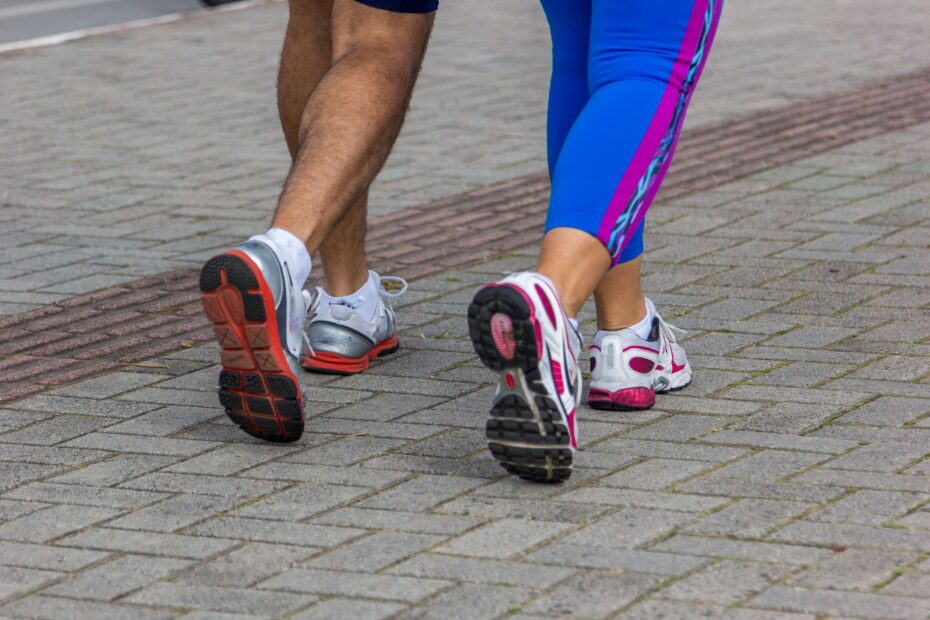
Each walking step rolls from heel to toe with longer ground contact, while running adds a flight phase and harder landings that require footwear built for different movement loads. The right pair keeps your foot steadier through the activity you repeat, rather than merely feeling soft in a store.
The sections below sort out gait cycle, midsole cushioning, fit, terrain, and wear for walkers, runners, commuters, and gym-goers who need a practical comparison.
Different Gait Cycles Place Different Loads on Footwear
Walking keeps one foot on the ground through much of each gait cycle. Your heel lands, body weight moves across the foot, and your toes guide the next step. That rolling motion favors a stable platform that feels smooth from heel strike through toe-off.
Running adds a brief flight phase, with both feet off the ground between steps. Each landing sends force through your foot, ankle, shin, knee, and hip. A running shoe needs shock absorption and a secure upper for repeated impact at a faster pace.
Walking uses a controlled heel-to-toe roll
A 45-minute neighborhood walk includes thousands of measured heel-to-toe rolls. A broad base and firmer midsole cushioning can feel steadier on concrete, tile, or a treadmill. Your foot stays closer to the ground, which reduces side-to-side movement during slower steps.
Heel-to-toe drop describes the height difference between the heel and forefoot. It appears in both categories, so the number alone does not settle comfort. Your calf tension, ankle range of motion, and walking pattern affect how that slope feels.
Running repeats higher-impact landings
Foot strikes change during a run based on pace, fatigue, hill grade, and stride pattern. Your foot can land near the heel, midfoot, or forefoot. Resilient foam rebounds after impact rather than feeling packed down under repeated loading.
The difference between walking and running shoes starts with this movement pattern, not the name printed on the box. A shoe built for running must hold the foot through faster forward motion. Walking places less demand on impact control but more time on a steady platform.
Those movement patterns determine whether cushioning, bend, and traction support the foot or work against it.
Foam, Flexibility, and Outsoles Shape the Ride
Because running repeats harder landings, the midsole needs to recover between steps. Running midsoles tend to use thicker, more resilient foam for that task. Your legs can feel less worn down across several miles in a pair built for repeated impact.
| Feature | Walking shoe focus | Running shoe focus |
|---|---|---|
| Midsole cushioning | Firm, stable comfort for steady steps | Resilient foam for repeated impact |
| Forefoot flexibility | Structured feel through toe-off | Flex or rocker shape for faster forward motion |
| Upper material | Durable comfort for daily wear | Lighter material with a close foothold |
| Outsole traction | Grip for sidewalks, floors, and treadmills | Rubber placement suited to pace and surface |
| Heel structure | Steady rearfoot feel | Secure heel counter for faster movement |
Forefoot movement changes the feel underfoot
Walking pairs can feel firmer and less flexible through the forefoot than performance running models. That structure suits a slower rolling stride, yet it can feel stiff during regular running. Your toes need room to bend and spread during push-off.
Running shoe cushioning vs walking shoe support comes down to the task. Resilient running foam returns to shape after each landing, while a walking pair favors a planted feel during long hours upright. Neither feel suits every foot or every surface.
Outsole rubber follows contact points
Rubber wears down where your foot meets the ground. Road running shoes place durable rubber under high-contact zones, while walking pairs favor broad, steady grip. Your outsole should suit the pavement, track, treadmill belt, or indoor floor beneath you.
Trail running shoes use deeper lugs for dirt, loose gravel, and mud. Some include a rock plate beneath the foot. Those features can feel awkward on smooth sidewalks, where aggressive lugs wear down and reduce flat contact.
Fit Controls How the Shoe Works During Movement
Even excellent foam can feel wrong once your heel slips or your toes strike the front. Fit decides whether the shoe moves with your stride or rubs against it. Your foot should feel secure without pressure across the upper or forefoot.
Heel hold and toe room must work together
The heel counter is the firmer cup around the rear of the shoe. It should limit unwanted heel lift without rubbing your Achilles area. Leave about a thumb’s width ahead of your longest toe, especially for runs where feet swell during longer sessions.
Toe box shape matters as much as shoe length. A narrow, pointed front can press the big toe inward or crowd smaller toes. Your forefoot should spread naturally instead of feeling cinched inside the shoe.
Arch shape does not assign a shoe category
Pronation is a normal inward roll during stance, and arch structure differs from foot to foot. More arch structure is not automatically better for your feet. Pressure beneath the arch, tingling, or a hard ridge under the midfoot signals that the shape does not suit you.
Try shoes late in the day after normal activity. Your feet tend to occupy more space then, making pinches and toe pressure easier to spot before miles expose them.
Brands such as Brooks, ASICS, New Balance, HOKA, Nike, and Saucony use different lasts, or foot-shaped molds. A size 9 in one brand can feel quite different from a size 9 in another. Your usual size is a starting point, not a fit verdict.
Once fit is sound, the safer crossover depends on which shoe can accommodate the other activity’s demands.
Running Shoes Handle Walking More Easily Than Walking Shoes Handle Running
Extra impact protection gives a running pair room to handle a walking routine. You can use running shoes for walking every day across long commutes, active jobs, or routes that include short runs. Your walking pace does not remove the value of a secure, comfortable fit.
Walking shoes can work for a short jog across a parking lot or an occasional easy mile. Regular running asks more of the midsole, heel hold, and outsole durability. A walking pair can feel fine at first, then leave your shins or knees sore after repeated use.
Movement comfort matters more than store comfort
A brief try-on cannot reveal what happens after 5,000 steps. Wear the pair on a short, familiar route before relying on it for a vacation, a new running plan, or a full work shift. Your body gives clearer feedback after repeated loading.
Watch for hot spots, numb toes, heel rubbing, shin ache, or knee pain tied to one pair. Pain has several causes, yet a consistent link between discomfort and footwear is useful evidence. Your next pair should not repeat that pattern.
More foam is not always more comfortable. A tall, soft midsole can feel unstable at your walking pace, especially on uneven sidewalks or during sharp turns.
Distance, Terrain, and Primary Activity Narrow the Choice
The surface beneath your feet narrows the choice quickly. A flat indoor track needs less outsole traction than a rocky trail, while a daily six-mile pavement walk rewards steady comfort. Your primary activity should guide the category, then fit settles the final choice.
Long walks favor a stable base
For a full day on foot, prioritize a stable base, smooth heel-to-toe roll, secure heel hold, and enough toe box width. Your shoe does not need racing foam to feel comfortable after several hours on sidewalks.
- Sidewalk routes: Choose broad outsole contact and durable rubber beneath the heel and forefoot.
- Treadmill sessions: Favor cushioning and a sole that does not feel bulky under the belt.
- Indoor workdays: Seek steady traction on tile and room for foot swelling across a shift.
- Uneven paths: Use a wider base that resists rolling on cracks, curbs, and packed dirt.
- Long outings: Leave toe space because repeated steps can move your foot forward inside the shoe.
Regular runs need a secure foothold
Road runners need midsole cushioning suited to weekly mileage and an upper that keeps the foot centered during corners. Your shoes should feel controlled on descents, where the foot slides forward and the toes face extra pressure.
Cross-training shoes suit a separate task. Their flatter base and side-to-side stability work for lifting, short treadmill walks, and lateral gym drills. Your running shoe is built for forward motion, so it can feel less steady during wide squats or quick side steps.
Wear and Discomfort Guide the Final Shoe Decision
Rubber worn smooth at the heel or forefoot changes how the shoe meets the ground. Flattened foam loses its lively feel and leaves your joints taking more of the work. Your pair has reached its limit once a familiar route starts producing new discomfort.
Visible wear shows where the shoe has changed
Set both shoes on a flat table and inspect the soles. Uneven tread wear, a tilted heel, or exposed midsole foam points to reduced traction and stability. Your upper matters too, since stretched eyelets or torn lining can let the foot slide inside.
Mileage alone cannot name an exact replacement date. Body size, surface, gait, shoe material, and rotation all affect wear. A runner logging four days each week wears through a pair faster than someone using the same model for two short walks.
Pain needs a broader look than footwear alone
Persistent heel pain, sharp forefoot pain, numbness, or discomfort after a recent injury deserves attention beyond footwear. A qualified clinician or footwear professional can review your gait, range of motion, and injury history. Your shoe choice is one part of a larger picture.
Foot-health education from the American Podiatric Medical Association can help you recognize symptoms that need clinical care. Bring the shoes linked to discomfort to an appointment, since outsole wear and fit marks can reveal useful clues.
Final Thoughts
Each pair differs most in the load it is designed to handle. Steady rolling steps favor stable comfort, while repeated running impacts call for resilient cushioning and a secure foothold. Your route, pace, foot shape, and comfort after real use matter more than a label, heel-to-toe drop, or fashionable silhouette.
FAQ
What is the main difference between walking shoes and running shoes?
Walking shoes focus on a stable heel-to-toe roll during slower, longer ground contact. Running shoes focus on repeated shock absorption, faster foot strikes, and secure foot control. Your running pair can feel lighter and more cushioned because it handles greater landing force.
Are running shoes good for walking every day?
Running shoes work well for everyday walking once the fit feels stable across your normal routine. Your feet can appreciate their cushioning during long commutes or active work shifts. Avoid pairs that feel tall, wobbly, narrow, or overly soft at your walking pace.
Can you run in walking shoes?
A walking pair can handle a brief jog or occasional easy mile. Regular running places greater stress on the midsole, heel counter, and outsole. Your shins, knees, or feet can become sore once a walking shoe faces repeated faster landings.
Do walking shoes need more or less cushioning than running shoes?
A firmer, more stable midsole often suits walking better than a thick, springy ride, though cushioning needs vary. Your walking surface and comfort decide the useful amount. Running footwear needs foam that recovers through repeated impact.
Should walking shoes be flexible while running shoes are stiffer?
Neither category follows one fixed flexibility rule. Walking footwear can feel structured through toe-off, while running footwear can flex or use a rocker shape for faster forward motion. Your toes still need space to bend during each push-off.
How should walking shoes and running shoes fit differently?
Both shoe types need secure heel hold and room ahead of the longest toe. Running footwear needs extra attention to heel movement and toe space because faster movement and longer sessions can increase rubbing and swelling. Your walking pair still should not pinch or let the heel slide.