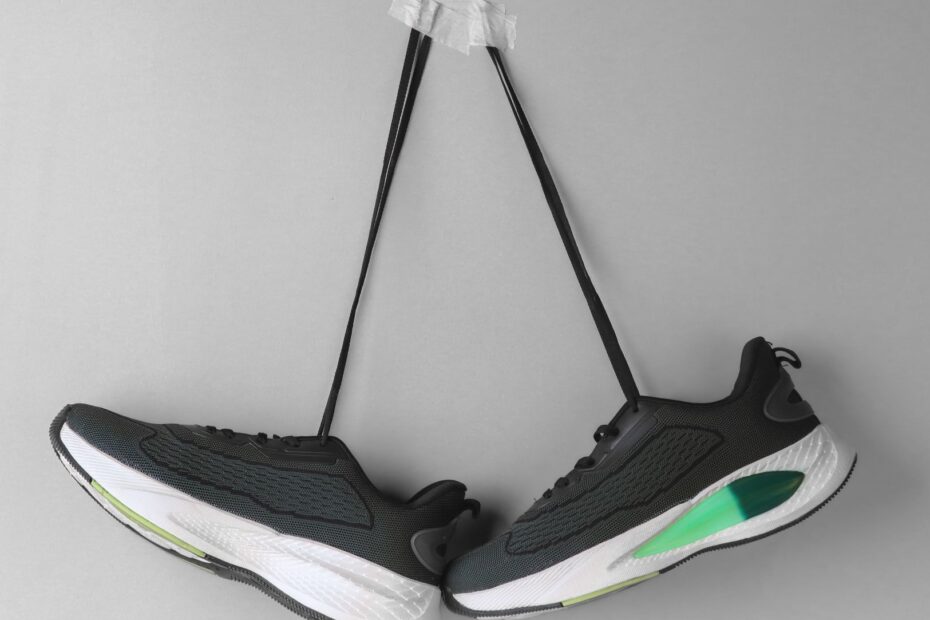
A firmer medial support element in stability models guides inward motion, while neutral models leave the foot path less directed. Your better choice depends on running shoe fit, comfort under fatigue, and whether added guidance feels steady rather than restrictive.
This comparison covers pronation, arch shape, cushioning, gait analysis, and real-run fit checks for runners choosing shoes for roads, treadmills, walking, or longer distances.
Two Categories Use Different Forms of Foot Guidance
Midsole structure separates these categories more clearly than softness or shoe weight. A neutral model leaves the platform more symmetrical, while a stability model places guidance near the inner edge, heel, or sidewalls to influence your landing path.
Neutral Shoes Keep the Midsole More Even
Neutral running shoes use cushioning with no dedicated medial post, guide rail, or rigid piece designed to resist inward rolling. Your foot still receives protection from foam, a broad base, rocker geometry, or a firmer platform, but the shoe does less steering.
A neutral shoe does not mean minimal cushioning. Your options include thick midsoles, wide landing surfaces, firm foams, and curved rockers. Those features change ride feel without adding medial support.
Stability Shoes Add Gentle Direction
Stability running shoes use firmer medial foam, raised sidewalls, guide rails, or a broader base to guide your foot through landing and toe-off. The goal is not a hard correction. Instead, the structure limits excess drift inside a soft midsole.
Your foot may feel centered rather than pushed. Brooks uses GuideRails in several stability models, ASICS uses structured midsole systems in select shoes, and HOKA uses wide bases and sidewall geometry in some supportive designs.
| Feature | Neutral Running Shoe | Stability Running Shoe |
|---|---|---|
| Midsole layout | More symmetrical cushioning | Guidance near the inner side, heel, or sidewalls |
| Foot path | Less directed during landing | More guided from heel strike toward toe-off |
| Common structures | Foam, rocker geometry, broad platform | Guide rails, medial foam, sidewalls, broad platform |
| Ride goal | Natural-feeling movement | Comfortable control during inward motion |
The difference between neutral and stability shoes sits on a scale, not in two sealed boxes. A broad neutral platform may feel steadier than a narrow stability shoe, so your experience inside the shoe matters more than the category printed on its label.
How your foot moves inside the shoe often explains that individual response better than the label does.
Pronation Explains Why Guidance Feels Different
Every running stride includes some inward foot roll after contact. Pronation describes that normal movement, which spreads load through your ankle and lower leg as your body moves over the forefoot.
Normal Pronation Is Part of a Running Stride
Your heel contacts the ground, your foot rolls inward, and your weight moves toward the forefoot. That sequence is part of the gait cycle. Wear near the inside heel of an old shoe does not diagnose overpronation by itself.
Overpronation describes inward motion that feels excessive or poorly controlled for your stride. A collapsing sensation, a knee drifting inward, repeated rubbing, or discomfort late in a run can point to a pattern worth watching, but no single sign settles the shoe choice.
Overpronation Does Not Require One Category
How to choose running shoes for overpronation starts with your comfort and response during real runs. A stability shoe may feel steadier for your stride, yet a neutral model may also suit you with mild overpronation or low arches.
A treadmill video or store gait analysis captures a short sample, not your whole running pattern. Your movement changes with pace, fatigue, hills, and the shoe already on your foot.
Supination, or outward rolling, sits at the other end of the movement range. Your best fit may still be a cushioned neutral shoe with a stable base, because labels do not replace your own comfort during a run.
Cushioning and Structure Shape the Ride in Separate Ways
Inward motion is only part of what you feel underfoot. Midsole cushioning changes impact feel, while stability features influence where your foot travels inside that cushioning.
Soft Foam Does Not Define Shoe Category
A plush shoe can be neutral, and a stability shoe can feel light and responsive. New Balance and Saucony make models where foam softness and foot guidance vary independently, so weight alone does not reveal the category.
During a slow jog, your foot has time to settle into the midsole. A neutral shoe may allow its own path, while a stability shoe may feel like low guardrails along a bowling lane: present, yet not forcing every movement.
| Ride Element | What You Feel | Why It Matters |
|---|---|---|
| Midsole cushioning | Soft, firm, springy, or dense | Changes impact feel and long-run comfort |
| Heel-to-toe drop | Higher or lower heel position | Changes load felt at the calf, Achilles, and forefoot |
| Base width | Broad or narrow landing surface | Affects steadiness before foam compresses |
| Upper fit | Secure or roomy hold | Controls foot movement above the midsole |
Small Fit Details Change Your Experience
- Heel hold: Your rearfoot should stay secure without sharp pressure at the Achilles collar.
- Toe room: Leave about a thumb’s width ahead of your longest toe for swelling during longer runs.
- Platform width: A broader base adds steadiness without requiring a firm medial post.
- Rocker shape: Curved geometry smooths your heel-to-toe movement and reduces forefoot bending.
- Upper tension: Laces and overlays should hold your midfoot without pressing on nerves or your arch.
Two shoes with the same category label can feel entirely different. Your foot may dislike a narrow neutral platform but feel comfortable in a broad neutral shoe with a secure upper and a firmer midsole.
Arch Shape Offers Clues Rather Than a Verdict
A low arch does not reveal how much your foot moves while running. Static arch height and dynamic motion have a loose relationship, especially across different paces and surfaces.
Flat Feet Do Not Demand Stability Shoes
Not as a blanket rule. Some runners with flat feet prefer guide rails or medial support, while others feel better in neutral shoes with enough width, cushioning, and room for the arch to settle.
Your arch can lower under load without pain or poor control. A shoe that presses hard into that area can cause arch soreness, numbness, or a cramped feeling. Built-in guidance should feel quiet, not like a lump beneath your foot.
Arch Support Includes More Than a Raised Insert
Your shoe needs to fit your arch comfortably, but a prominent raised piece is not always necessary. Midsole shape, insole contour, base width, and upper tension all change how supported your arch feels.
Consider two hypothetical runners with similarly low arches. One runs 8 miles at an easy pace and feels stable in a neutral shoe with a wide base. Another feels inward collapse and medial knee discomfort after 4 miles, then prefers gentle sidewalls in a stability model.
Do not select a shoe solely because an online quiz labels your arch low, medium, or high. Your comfort under moving load carries more weight than a footprint test.
A Comfortable Test Run Gives You Better Evidence
Arch shape alone cannot settle your choice, so the shoe needs to feel right on your foot. A useful fitting session moves from standing fit to walking and then to an easy run where the shop permits it.
Fit Checks Expose Problems Before Longer Mileage
- Check length: Stand in your running socks and leave thumb-width space beyond your longest toe.
- Check width: Your forefoot should rest flat without upper pressure along the little-toe side.
- Secure the heel: Use the eyelets to hold your heel without squeezing the top of your foot.
- Walk briskly: Watch for heel slip, arch pressure, toe crowding, and sharp seams within two minutes.
- Jog easily: Look for stable landings, a smooth toe-off, and no pressure point that grows with each step.
You should not need a break-in period to escape obvious discomfort. Blisters, tingling toes, hot spots, and arch pressure are fit warnings rather than signs your foot needs to adjust.
Training Conditions Change What Feels Right
Long runs expose issues that a 30-second jog hides. Your foot expands, foam compresses repeatedly, and form becomes less tidy after an hour. A guided shoe that feels intrusive at 2 miles may feel steadier at mile 10.
Treadmill running feels different from road running because the belt moves beneath your foot and the surface stays level. Bring your current pair for comparison, wear your usual socks, and use your past shoe history to spot recurring heel slip or inside-ankle discomfort.
Recurring discomfort can inform a comfort-focused choice, but it cannot show that one shoe will prevent injury.
Support Is a Comfort Tool Rather Than an Injury Promise
Comfort across your real training matters more than a label on the shoe box. Neither category promises protection from shin pain, knee pain, plantar fasciitis, or another running injury because training load, recovery, strength, terrain, and past symptoms also shape risk.
Motion-Control Models Add More Structure
Motion control vs stability running shoes is a difference of degree. Motion-control models use more substantial structure, such as a very firm medial section, broad platform, or stiff heel counter. They suit narrower circumstances where your foot feels better with more control than standard stability shoes offer.
Extra structure can feel uncomfortable when your foot does not want it. New arch pressure, outer-ankle loading, knee irritation, or a forced toe-off after a category change suggests that your current shoe is not working with your stride.
Persistent Pain Needs More Than a Shoe Change
Plantar fasciitis is not an automatic reason to move into stability footwear. Your heel pain may respond better to changes in training load, calf capacity, foot strength, or overall fit, while added guidance helps only where it improves comfort.
The American Podiatric Medical Association awards its Seal of Acceptance to footwear submitted for review, but that mark cannot predict your response to a particular model. Ongoing pain, repeated numbness, or complex gait concerns deserve attention from a qualified clinician or experienced running specialist.
Final Fit Priorities
Your strongest choice fits securely, stays comfortable beyond a few minutes, and works across the runs you actually do. Choose less guidance where your stride feels settled without it. Choose more guidance where your landing feels calmer without pressure, resistance, or new soreness.
FAQ
What is the main difference between neutral and stability running shoes?
Neutral shoes use more symmetrical midsole cushioning and avoid dedicated structures for inward foot motion. Stability shoes add guide rails, firmer medial foam, sidewalls, or a wider base to guide your foot through landing and toe-off.
How do I know whether I overpronate when running?
Overpronation can feel like your foot rolls inward too far, especially as fatigue builds, but shoe wear and a short video cannot diagnose it alone. Your gait analysis becomes more useful beside your comfort, symptom history, pace, and response in different shoes.
Can runners with flat feet wear neutral running shoes?
Comfort during easy runs can make neutral running shoes workable for runners with flat feet. Your low arch does not automatically mean you need medial support, because foot shape does not fully predict movement during a run.
Are stability shoes necessary for plantar fasciitis?
A stability shoe may help some runners, but plantar fasciitis alone does not make one necessary. Your heel pain may respond better to a different fit, lower training volume, calf work, or clinical care, while extra guidance helps only where it improves comfort.
What are guide rails and medial posts in running shoes?
Guide rails are raised midsole edges that help keep your foot centered on the platform. A medial post is denser foam near the inner side of the shoe, where it resists inward compression during your stance phase.
Can stability running shoes cause discomfort for neutral runners?
Yes, a stability shoe can feel restrictive where your foot moves comfortably without added guidance. Your warning signs include new arch pressure, outer-foot loading, knee irritation, or a forced feeling during toe-off that remains after several easy runs.