Flat feet and tall boots are a rough combo. The arch collapses inward, the ankle rolls, and by mid-shift the whole lower leg is barking. The right insole can change that, but most off-the-shelf inserts are built for neutral arches and leave flat-footed shoppers worse off than before.
I put this list together for anyone logging serious hours in work boots, hiking boots, or western boots with a low or fallen arch. Eight options, honest trade-offs, no fluff.
The Shortlist At A Glance

IWELA High Arch Support Insoles (XL)

TECRUN Plantar Fasciitis Insoles
ARIAT ATS Round Toe Gel Insole
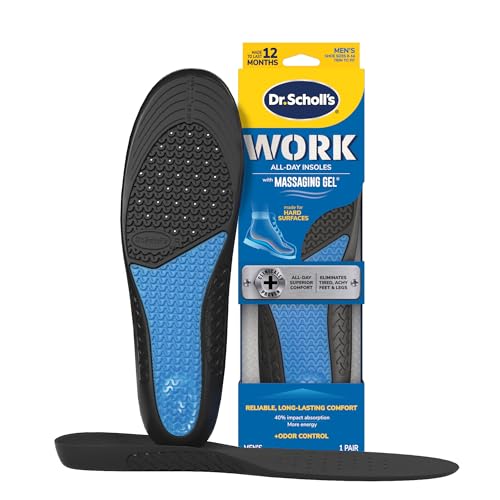
Dr. Scholl’s Work All-Day Insoles

Dr. Scholl’s Heavy Duty Orthotics

Dr. Scholl’s Advanced Pain Relief Insole

Welnove 220+ lbs Heavy Duty Insoles

Welnove 3/4 Length Semi-Rigid Insole
A Closer Look At Each Pick
For flat feet carrying real weight, a soft gel insert usually disappoints within a few hours. The IWELA High Arch Support Insoles take the opposite path with a firm, contoured TPU shell (TPU is a rigid, plastic-like material that holds its shape under load) that pushes back against a collapsed arch instead of cushioning around it.
Slip these into a laced-up work boot or logger, and the foot has somewhere to land instead of rolling inward with every step. The corrective geometry targets the plantar fascia, which is the band of tissue running along the bottom of the foot from heel to toes. Reducing the stretch on that band tends to take pressure off the heel and arch by the end of a long shift.
Everyday Wins
- Contoured TPU arch resists flattening, even on concrete floors
- Built for wearers up to 220+ lbs without bottoming out
- Reduces inward arch collapse that drives knee and hip fatigue
- Trim-friendly profile fits most lace-up boots and logger styles
Trade Offs
- Firm shell feels intrusive for the first few days, owners commonly report an adjustment period
- Takes up room in slim casual boots, so sizing up footwear may be necessary
Key Specs
Made For
Heavier workers on hard floors who want a corrective feel rather than soft cushioning.
Skip It When
The Dr. Scholl’s Work All-Day Superior Comfort Insoles suit lighter-weight service workers who want a softer, massaging ride underfoot.
Buying an orthotic for the first time can feel like guesswork. The TECRUN Plantar Fasciitis Insoles ease that hurdle by offering four arch heights and ten sizes, so shoppers can match the insert to their actual foot shape rather than trimming and hoping.
For flat-footed wearers, the low-arch or flat-foot setting gives the foot contact it needs without forcing an exaggerated curve. The insert slides into lace-up boots, casual boots, and most sneakers, which makes it handy for shoppers who rotate footwear through the week.
Practical Pluses
- Four arch profiles remove the trimming-and-praying routine
- Ten sizes cover most foot lengths without cutting
- Targets plantar fascia, heel, and arch discomfort in one insert
- Compatible with sneakers, work boots, and casual lace-ups
Some Limits To Know
- Lower arch settings feel less aggressive than the IWELA TPU shell
- Fit may run tight in narrow western boots without a half-size adjustment
The Right Fit
First-time orthotic shoppers with flat feet who want a less rigid starting point.
A Better Fit Elsewhere
The ARIAT ATS Round Toe Gel Insole suits shoppers who need a softer, gel-based feel for daily western boot wear.
Western boots are a different animal from lace-up work boots, and most rigid orthotics fight the boot instead of working with it. The ARIAT ATS Round Toe Gel Insole pairs gel cushioning with a rounded toe profile that mirrors the boot’s shape.
For flat feet, the cushion softens the impact that usually travels up the leg, while the footbed keeps the heel from sliding sideways inside a cowboy or roper boot. The lighter feel suits riders, ranch workers, and weekend boot wearers who don’t want corrective geometry under every step.
The Helpful Details
- Gel cushion softens the impact of walking on hard ground
- Round-toe shape suits the cut of most western boots
- Heel cup keeps the foot planted during long rides or roping sessions
- Thinner profile fits snug boots without crowding the toe
Practical Considerations
- Soft gel cushion compresses faster than a firm arch shell under heavy weight
- Less corrective support than the IWELA or Welnove heavy-duty picks
Who Should Grab It
Flat-footed shoppers who wear western or casual boots and want light cushioning over heavy correction.
Not Your Match When
The Welnove 220+ lbs Heavy Duty Support Insoles suit heavier wearers who need a firm arch rather than a gel feel.
Long shifts on a restaurant floor or factory line punish flat feet more than almost any other routine. The Dr. Scholl’s Work All-Day Insoles tackle that problem with massaging gel technology that flexes underfoot as the wearer walks.
The motion spreads pressure across the footbed rather than letting it pile up at the heel and ball of the foot. For flat feet, that redistribution cuts down on the throbbing feeling that usually kicks in by hour six.
Everyday Perks
- Massaging gel spreads pressure instead of letting it pool at the heel
- Trimmable design fits a wide range of work boot sizes
- Targets leg fatigue for staff on their feet all day
- Slides into most lace-up boots without crowding the toe box
Where It May Fall Short
- Trim-to-fit process adds a setup step before first wear
- Less rigid arch support than the IWELA corrective shell
Feature Snapshot
Best Suited To
Flat-footed service workers, cashiers, and hospitality staff on long standing shifts.
Reach For A Different Pick When
The Dr. Scholl’s Heavy Duty Support Insole Orthotics suit flat-footed shoppers with wider feet who need firmer arch geometry.
Wide feet with flat arches often feel squeezed inside standard insoles. The Dr. Scholl’s Heavy Duty Support Insole Orthotics address that mismatch with extended sizing up to men’s size 14 and a build designed for wearers over 200 lbs.
The shock-absorbing base spreads impact across the footbed, which keeps the heel from jarring at the end of every stride. For flat feet, the supportive arch geometry pushes back against inward roll without forcing the foot into an awkward curve.
Where It Delivers
- Wide-foot sizing up to men’s 14 fits bigger work boots
- Shock-absorbing base softens impact on concrete and asphalt
- Distributes pressure to relieve heel and lower-back fatigue
- Trim-to-fit edges tailor the length to the boot’s toe box
Honest Caveats
- Trim-to-fit setup adds time before first wear
- Wider profile crowds narrow toe boxes in casual boots
Who It Suits Best
Flat-footed, big-and-tall workers who need a wider, heavier-duty orthotic that holds up under load.
Look Elsewhere When
The TECRUN Plantar Fasciitis Insoles suit shoppers who want arch-height variety rather than a single heavy-duty shape.
Chronic foot pain drags down the whole body, and an insole that only addresses the arch rarely solves the full picture. The Dr. Scholl’s Advanced Pain Relief Insoles target ten lower-body pain points, from the plantar fascia and heel up through the knees, hips, and lower back.
The full-length design supports the foot from heel to toe, while the energy-return build softens each step. For heavier flat-footed wearers up to 340 lbs, that coverage keeps the foot from collapsing inward even under serious load.
What Makes Sense
- Targets arch, heel, knee, hip, and lower-back pain in one insert
- Energy-return construction softens each step
- Supports wearers up to 340 lbs without bottoming out
- Full-length profile suits work boots and tall lace-ups
Some Limits To Know
- Full-length build crowds tighter casual boots
- Break-in period is common before the insole feels natural
Technical Highlights
Perfect Match For
Flat-footed shoppers with chronic pain who want broad coverage rather than single-zone support.
Swap It Out When
The Welnove 3/4 Length Semi-Rigid Insole suits flat-footed shoppers who wear tight-fitting boots that can’t fit a full-length insert.
Heavy frames flatten standard insoles fast, leaving the wearer right back where they started by lunchtime. The Welnove 220+ lbs Heavy Duty Support Insoles solve that with a firm arch shell and dense cushioning tuned for heavier weights.
The result is an insole that pushes back against the inward roll common with flat feet while still absorbing the impact of long shifts. For tall wearers or anyone over 220 lbs, the geometry stays consistent where lighter inserts would have already compressed flat.
Real Benefits
- Firm arch holds shape under heavy, repeated compression
- Shock absorption reduces leg fatigue through long shifts
- Designed for wearers 220+ lbs without early breakdown
- Slides into most work boots without crowding the toe
Points To Keep In Mind
- Firm feel can feel harsh during the first few days of wear
- Limited cushioning compared with gel-based inserts
Whose Shelf It Belongs On
Flat-footed, heavier wearers who want an orthotic that won’t compress after a few months of daily use.
Where A Sibling Pick Shines
The Dr. Scholl’s Advanced Pain Relief Insoles suit flat-footed shoppers who need broader lower-body pain coverage beyond the arch.
Some boots just don’t have room for a full-length orthotic. The Welnove Semi-Rigid Arch Support Insoles use a three-quarter length design that stops under the ball of the foot, freeing up the toe box in snug-fitting footwear.
For flat feet, the semi-rigid arch still corrects inward roll, while the shortened profile lets the toes splay naturally inside western or fashion boots that would otherwise crush a full insert. The shorter cut makes these a practical pick when boots run narrow.
The Value In It
- Three-quarter length fits snug western and fashion boots
- Semi-rigid shell corrects flat-footed roll without forcing the foot
- Targets heel pain at the source of impact
- Works for women’s sizes 6 through 10 without trimming
Trade-Offs To Consider
- No cushion under the ball of the foot or toes
- First-week break-in is common as feet adjust to the shape
Right Fit For
Flat-footed shoppers who wear tight-fitting western or casual boots and need arch support without the bulk.
Consider Something Else When
The IWELA High Arch Support Insoles suit flat-footed workers in roomy lace-up boots who need full-foot corrective geometry.
Choosing Boot Insoles For Flat Feet Without Wasting Money
Match the Arch Support to Your Foot Shape
Flat feet collapse inward under load, so the insole needs a firm arch shell rather than a flat piece of foam. A rigid or semi-rigid TPU or plastic core pushes back against the collapse and keeps the foot closer to a neutral position. Shoppers with low arches but not fully flat feet can usually start with a semi-rigid insert before stepping up to a fully corrective shell.
Check the Boot Volume Before You Commit
Corrective insoles are thicker than standard inserts, so the boot needs room for them. Lace-up work boots, hikers, and ropers usually have enough volume to accept a full-length orthotic, while tighter western and fashion boots often require a three-quarter-length design. If the toe box feels cramped during a try-on walk around the house, sizing up the footwear is the realistic move.
Weigh the Build Against Your Body
Insoles rated for lighter wearers compress quickly under heavier frames, which is why many lists of inserts mention weight ratings. Heavier wearers benefit from inserts built for 200 lbs or more, while average-weight shoppers can usually get full life from a standard build. Gel cushioning feels great at first but flattens faster than firm arch shells under repeated load.
Plan for a Real Break-In Window
A new orthotic changes how the foot lands, and that adjustment rarely feels neutral on day one. Most firm and semi-rigid inserts benefit from a short ramp-up: a few hours on day one, longer each day after, until the foot adapts. The honest read is that comfort usually arrives after the first week rather than during it.
Key Considerations Across These Picks
Where Shoppers Go Wrong
The most common mistake is treating arch support like cushioning. Soft gel inserts feel plush in the store but rarely hold their shape under a flat arch during a real shift. Shoppers also tend to assume any insole fits any boot, when in reality tighter footwear often requires a three-quarter or lower-profile design to avoid crushing the toes.
What The Higher Tier Buys
Stepping up to a heavy-duty or premium insert usually means a firmer arch shell, a higher weight rating, and broader lower-body pain coverage. For shoppers logging serious hours on hard floors, the extra support tends to outlast a cheaper gel insert by months. Casual boot wearers may not need that build, but anyone in daily work boots usually feels the difference within the first week.
Frequently Asked Questions
Do flat feet actually need special insoles?
Yes, flat feet benefit from insoles with arch support because the foot’s natural arch can’t stabilize itself during walking or standing. A supportive insert reduces the inward roll that causes heel, knee, and lower-back discomfort.
How long does a corrective insole take to feel comfortable?
Most firm orthotics need a break-in period of roughly one to two weeks of gradual wear. Starting with a few hours per day and building up helps the foot adapt to the new geometry without soreness.
Can I use the same insole in work boots and casual boots?
Only when both boots have similar volume and toe-box room. Snug-fitting fashion or western boots usually need a shorter three-quarter-length insert, while lace-up work boots can accept a full-length design.
Will insoles make my flat feet stronger?
Insoles support the foot rather than retrain it, so they manage symptoms during wear. Some shoppers pair orthotics with foot-strengthening exercises for longer-term arch development.
How do I know when an insole needs replacing?
Compression shows up first: the arch shell flattens, the cushion feels thin, or foot pain returns after a comfortable period. Most orthotics last somewhere between six months and a year of daily wear before needing replacement.
Final Verdict
Flat feet demand an insole that holds its shape, not one that just feels soft in the store. Heavier wearers tend to do best with the IWELA or Welnove heavy-duty builds, while lighter shoppers or first-timers often find the TECRUN arch-height variety easier to dial in. The right pick depends on the boot’s volume and the body’s weight, and matching those two details is what turns a list into a working solution.