A long shift on concrete, a weekend of trail work, or even just a commute across town starts to wear on the feet long before the rest of the body gives up. The right insole can quietly absorb a lot of that punishment, and the wrong one makes every step feel like a small argument with gravity. I put this list together for anyone who spends real time in boots and wants steadier footing without guessing their way through the category.
The Picks In Brief

IWELA High Arch Support Insoles for Flat Feet & Work Boots (Size XL)

TECRUN Plantar Fasciitis Insole Arch Support Inserts

ARIAT Men’s ATS Round Toe Insole, Gel Cushion Footbed
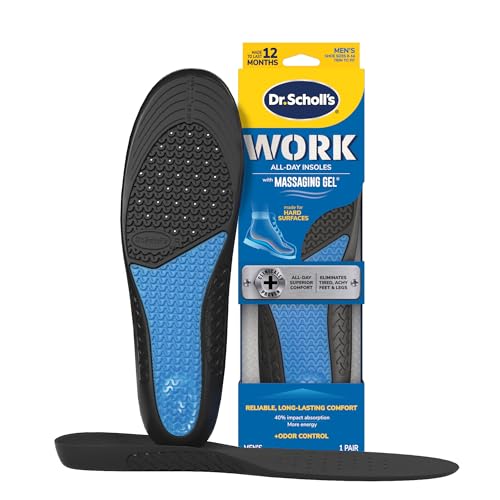
Dr. Scholl’s Work All-Day Superior Comfort Insoles with Massaging Gel, Men

Dr. Scholl’s Heavy Duty Support Insole Orthotics, Big & Tall 200lbs+

Dr. Scholl’s Advanced Pain Relief Insoles, Heavy Duty Orthotics for Work Shoes & Boots

MEGAComfort Anti-Fatigue Insoles – Memory Foam for Work Shoes, Boots, Steel Toe

MEGAComfort Ergonomic Square Toe Insoles – Anti-Fatigue Memory Foam for Boots
Taking A Closer Look At The Options
The IWELA insole is built around a firm TPU arch cradle, the kind of plastic-like thermoplastic plate that holds its shape instead of squishing flat after a few weeks. That rigid structure matters for people whose arches collapse under bodyweight or who stand on hard floors for long stretches, because it redistributes pressure away from the heel and forefoot.
It targets the 220+ pound crowd in particular, where softer inserts tend to bottom out quickly. The size XL profile fits men around 10.5-11.5 in women’s sizing, which lines up with a men’s 8.5-9.5. For work boots and other enclosed footwear, the corrective geometry helps with flat feet and plantar fascia strain. Compared to the gel-focused picks later in this list, IWELA trades plush cushioning for structural lift.
The Upside
- Rigid TPU arch holds its shape under sustained weight, supporting flat feet during long shifts.
- Engineered to handle 220+ lb loads without flattening the way foam inserts often do.
- Contoured shape reduces plantar fascia overstretch, a common cause of morning heel pain.
- Fits standard work boot volumes, so users don’t have to force a trim.
- Provides more lift than typical gel pads, which can feel too soft for heavier wearers.
Trade Offs
- Firm structure takes a few days to adapt to and may feel intrusive in slimmer casual shoes.
- Limited cushioning in the forefoot compared with foam-heavy options, depending on your walking surface.
Who It Suits Best
Heavier wearers with flat arches who spend full days standing in work boots need this kind of structural support to avoid the gradual fatigue softer inserts cause.
Where Another Pick Suits Better
Shoppers wanting memory-foam comfort should look at the MEGAComfort Anti-Fatigue Insoles instead, since those cushion with plush foam rather than rigid plastic.
TECRUN takes a sizing-first approach, offering four arch heights and ten size options that cover high, normal, low, and flat feet. That range is unusual in this price tier and lets users skip the trimming step most orthotics demand. The trade-off shows up when boots have very little internal volume, since the inserts run a touch thicker than paper-thin replacements.
The arch design targets plantar fascia strain along with secondary complaints like heel spurs and aching knees. Where the IWELA leans on a rigid TPU plate, TECRUN combines a supportive arch with more forgiving foam layers. For men rotating between work boots, sneakers, and casual shoes, the same insert often fits across all of them.
What Pays Off
- Four arch profiles cover high, normal, low, and flat feet without guesswork.
- No trimming required for most shoe types, which speeds up daily use.
- Targets plantar fascia strain plus secondary knee and hip discomfort, depending on the wearer.
- Transfers between boots, sneakers, and casual shoes easily, reducing the need for multiple inserts.
Possible Compromises
- Slightly thicker profile may crowd low-volume shoes like dress oxfords.
- Foam layers compress faster than the rigid plate on the IWELA insole, depending on body weight.
Right Fit For
Shoppers with mixed arch types or those who own several pairs of footwear appreciate the size and shape range that skips trimming entirely.
A Better Fit Elsewhere
Someone wanting a heavy-duty work-focused insert with reinforced heel cushioning should consider Dr. Scholl’s Heavy Duty Support Insole Orthotics for its stronger shock-handling build.
The ARIAT gel footbed is designed for ARIAT’s own boot lineup, where ATS technology refers to their Advanced Torque Stability platform, a multi-layer system that combines a forked shank, gel cushioning, and moisture management. That integration matters because off-brand inserts can fight the boot’s geometry rather than work alongside it. If you own ARIAT footwear already, this is the insole engineered for the same shape language.
The round toe shape fits standard boot profiles, not square-toe work boots. The gel layer softens heel strike, and the moisture-wicking top cloth helps during humid shifts. Where the heavy-duty picks earlier focus on structural correction, this one aims at day-long comfort inside a specific boot family.
What Makes Sense
- Built around ARIAT’s ATS stability platform, so it complements rather than fights the boot.
- Gel cushioning softens heel strike better than plain foam, depending on stride pattern.
- Moisture-wicking top layer keeps feet drier in warm or humid environments.
- Round toe profile fits standard western and work boots without bunching.
Soft Spots
- Less effective inside non-ARIAT boots where the geometry doesn’t match.
- Won’t fit square-toe work boots, so the MEGAComfort square-toe insert is the better fit there.
Built With In Mind
ARIAT boot owners who want an insole tuned to their footwear’s existing stability platform benefit most, since third-party inserts sometimes clash with the boot’s shape.
Skip It When
Anyone wearing square-toe safety boots or wider industrial footwear should look at MEGAComfort Ergonomic Square Toe Insoles, which are designed specifically for that profile.
Dr. Scholl’s Work All-Day insert is built around a massaging gel core that compresses and rebounds with each step, redistributing pressure instead of letting it pool under the heel or ball of the foot. Trim-to-fit sizing lets men dial the shape to their boots, which helps when one pair runs slightly different from another. The energy-return feel makes long retail or service shifts noticeably easier on tired legs.
It targets active, on-your-feet lifestyles rather than purely industrial use, so it’s a softer alternative to the heavy-duty picks. Where the IWELA offers rigid correction, this one leans on cushion and pressure distribution. For men bouncing between standing and walking across a workday, the gel layer smooths out the transitions.
Bright Spots
- Massaging gel core spreads pressure evenly, reducing hot spots during long shifts.
- Trim-to-fit design adjusts to slightly different boot volumes.
- Lighter cushion feel suits retail, warehouse, and service roles where rigid orthotics feel intrusive.
- Helps reduce fatigue and joint strain across the knees and lower back.
Points To Keep In Mind
- Gel cushioning compresses faster than the rigid TPU plate on the IWELA insole, depending on weight.
- Trim-to-fit requires scissors and a steady hand to avoid oversizing.
Feature Snapshot
Made For
Retail workers, hospitality staff, and anyone whose day mixes standing and walking in non-industrial footwear benefits most from the lighter gel feel.
Look Elsewhere When
Heavier wearers over 200 lbs who need reinforced support should consider Dr. Scholl’s Heavy Duty Support Insole Orthotics for stronger load handling.
Dr. Scholl’s Heavy Duty Support is engineered for men over 200 lbs and anyone with wide feet who finds standard insoles pinch or shift. Extra supportive heel cushioning absorbs shock from each step, while the reinforced arch distributes body weight across a broader surface. That wider platform reduces the strain that contributes to lower back pain and leg fatigue on long shifts.
Compared to the Work All-Day gel insert, this version trades softness for durability and structural lift. The trim-to-fit sizing covers men’s 8-14, and the pack of two pairs extends the replacement cycle across a full boot rotation. For warehouse, construction, or industrial settings, the extra support translates into fewer end-of-day aches.
What It Does Well
- Built for 200+ lb wearers, where standard inserts often bottom out under sustained load.
- Reinforced heel cushioning absorbs impact before it travels up to knees and lower back.
- Suits wide feet that crowd narrower orthotics, depending on boot volume.
- Comes as a two-pair pack, covering both work boots and casual pairs.
Where It May Fall Short
- Firmer feel may bother men who prefer the softer gel cushion of the Work All-Day version.
- Trim-to-fit requires careful measurement to avoid cutting too short.
Key Product Details
Whose Shelf It Belongs On
Men over 200 lbs with wide feet who rotate through work boots need this kind of reinforced support to keep fatigue manageable across full shifts.
Swap It Out When
Lighter wearers wanting a softer gel feel should pick the Dr. Scholl’s Work All-Day Superior Comfort Insoles instead, since the heavy-duty build may feel overly firm.
The Advanced Pain Relief insert targets ten distinct lower-body pain points, from plantar fasciitis and heel spurs to achilles tendonitis and achy knees. The full-length design uses a heavy-duty orthotic shape with shock-absorbing foam that returns energy instead of deadening it. For wearers carrying up to 340 lbs, the broader base keeps the insole stable through each stride.
Where the Heavy Duty Support model focuses on wider feet and 200+ lb wearers, this version pushes higher in weight capacity and adds more pain-zone coverage. The energy-return foam feels different from standard EVA, which can read as slightly bouncy during the first few days. For men whose pain moves between heels, arches, and knees, the multi-zone approach can simplify a rotation of inserts.
A Strong Showing
- Targets ten pain zones including heels, arches, knees, ankles, hips, and lower back.
- Supports up to 340 lbs, covering the heavier end of work-boot wearers.
- Energy-return foam reduces the dead, flat feeling common in basic inserts.
- Full-length design prevents the heel-only cushion gap seen in shorter inserts.
- Shock-absorbing build suits concrete-heavy work environments.
Things To Weigh Up
- Energy-return foam feels firmer than the softer gel on the Work All-Day model.
- Bigger size range adds thickness that may crowd low-volume shoes.
Feature Snapshot
Perfect Match For
Men managing pain across multiple lower-body zones who need one insole to handle heels, arches, knees, and ankles in heavy-duty work boots.
Consider Something Else When
Anyone who prefers a softer gel feel over energy-return foam should pick the Dr. Scholl’s Work All-Day Superior Comfort Insoles, which leans into plush cushioning instead.
MEGAComfort’s Anti-Fatigue insole layers dual memory foam over a supportive base, aimed at industrial workers in construction, manufacturing, and logistics. The cushioning absorbs impact from steel toe caps and hard floors, while the arch support reduces the strain that builds across long standing shifts. For men who can’t sit down during the workday, the foam rebuild helps reduce that end-of-shift ache.
Unlike the rigid TPU plate on the IWELA, this insert uses soft, body-heat-activated memory foam that molds to the wearer’s foot over the first few days. That gives a custom feel without the custom price. Where the heavy-duty picks focus on load capacity, this one trades some firmness for plush comfort that suits constant standing better than long walks on uneven ground.
A Favorable Mix
- Dual memory foam layers mold to the foot, reducing pressure points during long shifts.
- Suits steel toe boots, where standard insoles tend to feel thin against the rigid cap.
- Cushioned heel and arch help with the leg and back strain common in industrial roles.
- Works for construction, manufacturing, and logistics environments.
Less Ideal Details
- Memory foam compresses faster than the rigid plates on heavy-duty orthotics, depending on weight and temperature.
- Thicker cushion may require loosening boot laces for a comfortable fit.
Best Suited To
Industrial and warehouse workers who stand on hard floors for full shifts benefit most from the memory foam comfort that softens steel toe pressure.
Reach For A Different Pick When
Men needing corrective arch correction for flat feet should pick the IWELA High Arch Support Insoles, which delivers rigid structural lift rather than foam cushioning.
The Square Toe version of MEGAComfort’s ergonomic line matches the broad toe box of safety boots used on construction sites and in heavy industry. A medium arch profile balances support and comfort, while the memory foam top layer cushions each step on hard surfaces. The shock absorption targets the kind of repetitive impact that builds across a 10-hour shift on concrete.
Unlike the round-toe ARIAT insert or the standard MEGAComfort shape, this one is built for boots that wouldn’t accept a narrower insole. The medium arch works for many foot types, though flat-footed wearers may want something with more lift. For men whose boots dictate the insole shape, this solves a fit problem that generic inserts often ignore.
Everyday Advantages
- Square toe geometry matches safety boots, eliminating the bunching common with round inserts.
- Medium arch profile suits wearers without extreme arch height concerns.
- Enhanced shock absorption reduces fatigue on concrete and industrial flooring.
- Memory foam comfort layers mold over time to the foot shape.
Potential Drawbacks
- Won’t fit round or almond toe boots that need a narrower shape.
- Medium arch may not suit wearers needing high or low arch correction, depending on foot type.
Who Should Grab It
Construction and manufacturing workers in square-toe safety boots need this shape to get proper cushioning without the bunching that round inserts cause.
A Better Fit Elsewhere
Anyone wearing round or almond toe boots should pick the ARIAT Men’s ATS Round Toe Insole instead, since its shape matches that footwear profile better.
What Matters Most Before Choosing Boot Insoles For Men
Arch type drives most of the comfort decision. Flat feet, meaning arches that collapse under bodyweight, need firmer support that redistributes pressure, while high arches often want cushioning to absorb impact that would otherwise travel up through the heel. Men unsure of their arch type can do a quick wet test by stepping onto dark paper after getting out of the shower and checking the print shape.
Weight matters more than people expect. Inserts designed for 200+ lb wearers use denser foams and reinforced arches that don’t bottom out the way lighter materials do. For men over that threshold, a heavy-duty orthotic typically outlasts three rounds of a standard insert. Lighter wearers don’t need the extra bulk and may find rigid plates uncomfortable in casual shoes.
Boot shape sets the practical ceiling. Square-toe safety boots need inserts shaped to match, round-toe western boots fit standard profiles, and low-volume dress shoes can barely accept thin replacements. Measure the existing insole or check the boot’s listed volume before committing to a thicker option. Trim-to-fit designs help, but only if you trim carefully and leave a touch of room at the toe.
Activity type rounds out the decision. Standing all day on concrete punishes feet differently than hiking uneven ground, and warehouse work stresses arches more than retail shifts where workers move around. Matching the insole to the dominant activity, not the occasional one, makes the difference between relief and disappointment.
Key Considerations Across These Picks
Mistakes Worth Dodging
Treating insoles as one-size-fits-all is the most common slip-up in this category. A rigid plate that works for heavy industrial use can feel punishing inside casual boots, and a soft gel insert compresses too quickly for anyone carrying 200+ lbs. The second trap is skipping the trim-to-fit step, which leaves the insert sliding forward or bunching under the arch and creates new pressure points instead of solving the old ones.
Where The Extra Money Goes
Higher-tier inserts spend their premium on denser foams, reinforced arch plates, and broader pain-zone coverage that cheaper builds skip. The Dr. Scholl’s Advanced Pain Relief model, for instance, layers energy-return foam over a shock-absorbing base that standard gel inserts don’t include. For men with chronic foot pain or punishing work environments, the upgrade often pays for itself in fewer replacement cycles and less end-of-day fatigue.
Frequently Asked Questions
How long do boot insoles typically last before needing replacement?
Most foam and gel inserts last six to twelve months under daily wear, while reinforced orthotics can stretch past a year before losing shape. Heavy sweaters and concrete-heavy work environments shorten the lifespan noticeably.
Can I move insoles between different pairs of shoes?
Yes, but the insole has to match the boot’s internal shape and volume. Moving a square-toe insert into a round-toe boot creates bunching, and a thicker orthotic can crowd lower-profile footwear.
Do memory foam insoles work for flat feet?
They can soften impact, but they don’t correct the collapsed arch the way a rigid orthotic does. Flat-footed wearers often get better results combining memory foam comfort with a supportive arch plate underneath.
Should I size up my boots to fit thicker insoles?
Usually not, since most trim-to-fit designs let you adjust the insole rather than the boot. A better approach is loosening the laces slightly to accommodate a thicker insert without buying new footwear.
Are expensive orthotics worth the cost over basic drugstore inserts?
For men with chronic pain, heavier builds, or punishing shifts, the structural support and durability justify the cost. For occasional weekend use, a basic gel insert often delivers enough comfort to skip the premium tier.
The Takeaway
The right insole starts with the foot and ends with the boot. Match the arch profile first, layer in weight and activity type, then confirm the shape fits the footwear. Anyone unsure between two picks should default to the one that suits the dominant use case, since the occasional outing won’t reveal which insert truly delivers over months of wear.