Tight boots ruin good days. I know the pinch at the heel, the cramping across the toes, and the stubborn leather that refuses to give after months of breaking in. A good boot stretcher turns that fight into a quiet overnight fix, working the leather (the hide used for most boots) and synthetics just enough to fit the way your foot actually sits. The picks below come from real sizing frustrations, not lab time. Some are rigid plastic adjusters, some are spring-loaded wooden forms, and a couple handle specialized silhouettes like cowboy boots or heeled fashion pairs. I’ll walk through what each one does well, where it struggles, and who should pick it.
The Choices Worth Comparing
Fvbiywpil Boot Stretcher for Wide Feet

Bememo 8 Pieces Boot Shaper Forms
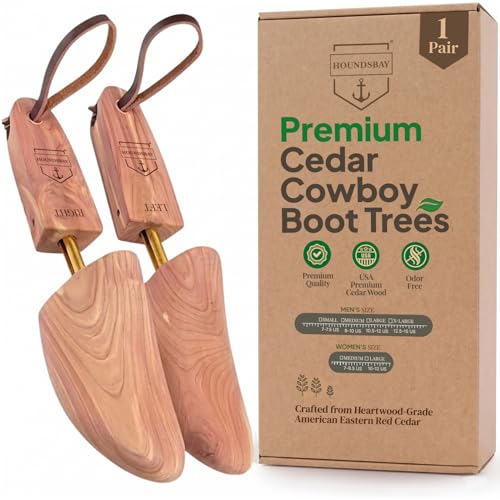
HOUNDSBAY Cowboy Boot Cedar Trees

Cedar Space Wooden Shoe Stretcher Tree

FootFitter Cowboy Western Boot Stretcher

FootFitter High Heel Boot Stretcher

FootFitter Wooden Width Expander
Taking A Closer Look At The Options
Tight work boots and stiff hiking pairs are the everyday stretch problem most shoppers face, and this rigid ABS plastic stretcher (where ABS is a tough, impact-resistant thermoplastic) is built for exactly that scenario. Sized for women’s 6–10 and men’s 5–9, it fits the bulk of off-the-shelf boot widths without buying specialty tooling.
Unlike the wooden stretchers below, the plastic body won’t absorb moisture, so it slides into wet-conditioned boots without risk of swelling. For wide-foot sufferers who just need width and length relief without frills, this is the workhorse pick.
A Few Strong Suits
- ABS plastic construction resists cracking and splintering during repeated stretch cycles
- Smooth exterior protects boot lining from scuffs during overnight stretching
- Suitable for work boots, hiking boots, and cowboy boots thanks to its adjustable length and width
- Won’t absorb moisture from leather conditioner sprays the way wooden stretchers sometimes do
- Lightweight body makes storage in a closet or boot tray simple
Things To Consider
- Plastic body can feel less substantial in hand compared to solid wood alternatives
- Limited size range leaves shoppers outside women’s 6–10 or men’s 5–9 without a fit
Quick Facts
Made For
Anyone with average boot sizes struggling with tight work or hiking pairs who wants a low-maintenance tool.
Consider Something Else When
The HOUNDSBAY Cowboy Boot Trees suit shoppers who want cedar scent and a dedicated western shape more than the Fvbiywpil’s general-purpose form.
Most stretchers come in pairs, which leaves closets with mixed footwear under-served. The Bememo bundle ships eight shaper forms, enough to outfit a household of boots from ankle pairs up to knee-high silhouettes.
These aren’t aggressive width expanders. They’re insert forms, meaning they hold the boot’s existing profile so leather doesn’t crease while stored. For someone rotating between riding boots, ankle booties, and tall pairs, this kind of bulk makes sense.
Real Benefits
- Eight-piece count covers multiple boots in a single purchase
- Insert form design prevents shaft creasing during long storage
- Lightweight construction keeps shipping and handling simple
- Practical solution for households with several tall boot silhouettes
Trade Offs
- Insert forms typically lack the ratcheting mechanism needed for active width expansion
- No information available about specific sizing or shaft height coverage
Right Fit For
Multi-pair households who want shape retention across a rotation rather than aggressive stretching on one tight boot.
Look Elsewhere When
Shoppers needing actual width expansion should reach for the FootFitter Wooden Width Expander, which uses an adjustable crank to actively widen leather.
Cedar does double duty, and this HOUNDSBAY design leans into it. The wood naturally absorbs moisture and releases a mild aroma that helps neutralize the musty smell that develops in stored leather. Western boots with their tall shafts benefit especially from rigid form support.
The shape mirrors classic cowboy boot geometry, so the shaft stands upright instead of slouching over in the closet. Compared to the Fvbiywpil’s general-purpose form, this one commits to a specific silhouette, which means better fit inside pointed-toe westerns.
What Stands Out
- Cedar wood naturally manages moisture inside stored leather boots
- Mild cedar aroma helps freshen pairs between wears
- Shaft shape preserves the upright cowboy boot posture during storage
- Functions as both a shaper and a passive stretcher for western profiles
Room For Improvement
- Cedar scent fades over time, so the freshness benefit is strongest in early months
- Western-specific shape limits usefulness on round-toe work or fashion boots
Key Specs
Who It Suits Best
Western boot collectors who rotate multiple pairs and care about shaft posture and closet freshness.
Skip It When
Shoppers needing aggressive width stretching on non-western boots should pick the FootFitter Cowboy Western Boot Stretcher, which has an active ratchet.
Size coverage is the quiet strength here. Cedar Space spans men’s and women’s sizes 6.5 through 14, a wider run than most stretchers offer, so a household with mixed sizing can share one product line instead of buying multiples.
The cedar construction brings the HOUNDSBAY-style moisture and aroma benefits, but in a more universal shape. For someone whose closet holds dress boots, casual chukkas, and work pairs across multiple sizes, the range is the real story.
Good Reasons To Consider
- 6.5–14 size run covers small women’s through large men’s boots in one product family
- Cedar wood handles moisture and odor over long-term storage
- Solid wooden build typically outlasts plastic alternatives over years of use
- Universal shape fits dress, casual, and work silhouettes
Minor Gripes
- Universal shape won’t match cowboy shaft geometry as precisely as the HOUNDSBAY
- Wooden body adds slight weight to travel bags compared to plastic
Best Suited To
Multi-size households and shoppers with boots spanning the 6.5–14 range who want one product family rather than scattered sizes.
Reach For A Different Pick When
Western-only collections get more tailored shaft support from the HOUNDSBAY Cowboy Boot Cedar Trees.
Cowboy boots punish feet at the ball and the heel, and stretching only width without preserving the shaft shape does half the job. FootFitter’s professional western stretcher targets the cowboy silhouette, including the angled heel block and tall shaft, so leather expands in the right places.
Compared to the passive HOUNDSBAY, this one is active. The ratcheting mechanism (a hand-operated crank that drives the toe block outward in measured turns) lets you dial in exactly how much pressure the leather receives, which matters when stretching premium hides that crack under uneven force.
The Helpful Details
- Width-focused ratcheting delivers controlled expansion across the ball of the foot
- Western-specific geometry matches cowboy toe and heel block shapes
- Built for repeated professional use on rodeo, ranch, and show pairs
- Adjustable mechanism allows gradual stretching over multiple sessions
Some Limits To Know
- Western-specific shape is a poor match for ankle booties or fashion boots
- Mechanical components demand dry conditions to prevent rust over years
Who Will Love This
Rodeo competitors, ranch hands, and western collectors with premium leather pairs that need careful, controlled width work.
Swap It Out When
Shoppers with heeled fashion boots get more relevant geometry from the FootFitter High Heel Boot Stretcher.
Most stretchers assume a flat sole, which destroys heeled boots because the form doesn’t match the boot’s actual resting geometry. This FootFitter design accommodates 1–3 inch heels, so the stretcher sits naturally inside the boot instead of forcing the leather into a flat shape it was never meant to hold.
The angle matters more than people expect. When the stretcher matches heel height, pressure distributes across the vamp and instep instead of bunching at the toe, which is where most heeled boot pain actually starts.
What Works In Its Favor
- Heel geometry fits 1–3 inch heels, matching real fashion boot silhouettes
- Pressure distribution across vamp and instep reduces toe-bunching pain
- Targeted stretch zones address the spots heeled boots actually pinch
Points To Note
- Outside the 1–3 inch heel range, the angle stops matching the boot’s geometry
- Specialty tool offers less versatility than a general-purpose stretcher
Feature Snapshot
Perfect Match For
Anyone whose wardrobe centers on heeled fashion boots in the 1–3 inch range and needs geometry that flat stretchers can’t provide.
A Better Fit Elsewhere
Shoppers needing flat-sole stretching on work or hiking boots get broader compatibility from the Fvbiywpil Boot Stretcher.
Solid wood and a professional build set this FootFitter apart from budget plastic options. The wooden width expander focuses specifically on lateral stretch, the dimension most shoppers actually need when a boot feels too snug across the ball of the foot.
Wood has a tactile weight that signals durability, and FootFitter has a long track record in the boot-care category. For premium leather boots where stretching mistakes mean cracked uppers, the controlled mechanism pays for itself in reduced repair risk.
What Makes Sense
- Wooden construction signals long-term durability over years of repeated cycles
- Width-specific design targets the most common stretching need
- Controlled expansion reduces risk of cracking premium leather uppers
- Compatible with a wide range of boot profiles outside specialty shapes
Where It May Fall Short
- Width focus leaves length and instep work to other tools in the rotation
- Wooden body adds weight that some travelers may not want in luggage
Tech Sheet
Who Should Grab It
Premium leather boot owners who want a controlled, width-focused tool from a known boot-care brand.
Not Your Match When
Western-only closets gain more shape-specific benefit from the FootFitter Cowboy Western Boot Stretcher.
Matching A Stretcher To Your Boot Type
The first thing to settle is boot silhouette. A flat work boot, a tall western pair, and a 2-inch heeled fashion boot all need different geometries. Flat shapes work fine in general-purpose stretchers like the Fvbiywpil or Cedar Space, but western pairs need cowboy-specific form, and heeled boots need angled form. Picking the wrong geometry means pressure distributes across the wrong parts of the leather.
The next call is active versus passive stretching. Passive forms, like the HOUNDSBAY cedar trees, hold the boot’s existing shape and prevent creasing but don’t actively push leather outward. Active stretchers with ratcheting mechanisms, including the FootFitter width expander and cowboy stretcher, dial in measured pressure. Premium leather usually benefits from the slower, controlled approach.
Material affects long-term ownership. Plastic won’t crack under pressure but feels lightweight. Cedar adds moisture control and natural aroma. Solid hardwood signals durability. Storage conditions matter too, since wood stretches poorly when left damp. For multi-pair households, size coverage like Cedar Space’s 6.5–14 run can eliminate buying multiple stretcher sets.
Where Shoppers Slip Up
Common Buying Mistakes
Buying a flat-sole stretcher for heeled boots is the classic mismatch. The form sits at the wrong angle, so pressure bunches at the toe instead of distributing across the vamp. Always match heel height to stretcher geometry.
Confusing shapers with stretchers is the second trap. The Bememo bundle is great for shape retention but lacks an active mechanism for true width expansion. Anyone who actually needs leather to give should look for ratcheting or adjustable forms.
Where The Extra Money Goes
Premium wood and brand-name construction cost more because the tolerances are tighter and the mechanisms last longer. For $30 leather boots, budget plastic works fine. For $300 pairs where a crack means a real loss, controlled stretching from FootFitter’s wooden tools reduces that risk enough to justify the step up in price.
Frequently Asked Questions
How long does it take to stretch boots with a stretcher?
Most boots need overnight stretches for two to four cycles to gain a half size in width. Leather relaxes gradually, and forcing too much pressure in one session risks cracking the upper.
Can stretchers damage boot leather?
Yes, when over-extended. Cranking too far in one session stresses the leather fibers beyond their give. Gradual stretching over multiple short sessions is safer, especially on premium hides.
Do stretchers work on synthetic boots?
Limited effectiveness. Synthetics have less give than natural leather, so stretchers help mildly at best. Leather and suede respond best to mechanical stretching.
How do I know what size stretcher to buy?
Match the stretcher size to your boot size, not your foot measurement. Most stretchers list women’s and men’s size ranges. When in doubt, sizing up slightly is safer than sizing down.
Should I use stretching spray with a stretcher?
Yes, on leather only. Conditioning sprays soften fibers so they yield to the form more easily. Skip sprays on synthetic or fabric boots, where the liquid can stain without helping the stretch.
The Takeaway
The right stretcher depends on what boots you actually wear. General-purpose work and hiking pairs do well with the Fvbiywpil’s plastic form, while western collectors should look at the HOUNDSBAY or FootFitter cowboy options. Heeled fashion boots need the angled FootFitter high heel stretcher, and premium leather owners who want controlled, width-focused work will appreciate the wooden width expander. Pick the geometry that matches your boots, stretch gradually, and the leather will give without cracking.