When the trail turns into a bog, a scree field, or a waist-deep snow trench, your boots quietly decide whether the day feels like an adventure or a regret. I pulled together eight pairs that handle the ugly stuff: sub-freezing mornings, swollen creek crossings, long pack-ins with 40 pounds on your back, and the kind of wet grass that soaks through everything in twenty minutes. The picks below span serious insulated rubber workhorses, mid-height waterproof hikers, and lightweight trail options for warmer-season scouting, so you can match the boot to the terrain instead of fighting it.
The Shortlist At A Glance

MUCK Woody Max Mossy Oak Boot

MUCK Arctic Pro Insulated Boot

MUCK Edgewater Classic Mid Boot

Columbia Men’s Fairbanks Low

HISEA Men’s Ankle Deck Rain Boots

Columbia Newton Ridge Plus II Waterproof
Columbia Redmond IV Mid Waterproof

HISEA Steel-Toe Rain Boots
The Picks, Examined More Closely
The Woody Max has earned its reputation as a backcountry workhorse, and the Mossy Oak camo pattern simply dresses it for the woods. A high-grade rubber shell sheds water and mud, while a stretch-fit topline seals comfortably around the calf so debris does not work its way down your sock over a long sit.
Inside the boot, a fleece lining paired with neoprene insulation (a synthetic rubber that traps air and resists water) helps the boot handle cold, wet mornings without stiffening up like traditional pac boots tend to. In your view, this is the kind of boot you grab when weather reports are uncommitted and the swamp might freeze by lunch.
Features That Help
- Waterproof rubber lower keeps creek crossings and dew-soaked grass from reaching your socks
- Fleece lining adds soft next-to-skin warmth during glassing sessions on cold ridges
- Neoprene core handles a wide temperature band, so one boot covers early fall through late winter
- Stretch-fit topline hugs the calf and reduces the scratchy debris slide-ins common with pull-on rubber
- Camo print helps break up your silhouette when you’re working dense brush or stalking still-hunting
Things To Consider
- Tall rubber boots run warm above 45 degrees, so summer scouting may feel like a sweatbox
- Pull-on style lacks the ankle lockdown of a laced hiker, so steep sidehilling takes more calf effort
- Owners commonly report the rubber exterior scuffs easily on rocky approaches, though scuffs rarely affect performance
Who It Suits Best
Whitetail and Eastern hunters who push through swamps, sloughs, and early-season frost in camo-friendly terrain.
Where Another Pick Suits Better
For deep-cold late-season glassing, the MUCK Arctic Pro Insulated Boot pulls noticeably more warmth for stationary sits.
The Arctic Pro is MUCK’s deepest-cold offering, and it’s built for the kind of hunter who watches a windchill gauge drop into the negative double digits. A thick fleece lining teams up with thermal foam underfoot, so you can park on a stand for hours without your toes becoming the thing you’re thinking about.
Unlike the camo Woody Max above, this boot is a serious piece of equipment designed for one job: keeping feet warm. Depending on your hunt, that single-minded focus is exactly the point.
Where It Excels
- Rated for very low temperatures, making late-season rifle hunts realistic instead of miserable
- Thermal foam beneath the footbed blocks the cold soak-up that turns a sit into an early exit
- Fleece lining wicks light perspiration, so brief climbs into a treestand don’t leave your feet damp
- Tall rubber construction keeps snowmelt and crusty postholes entirely outside the boot
Points To Note
- Considered over this boot, you may find it runs too warm for shoulder seasons above freezing
- Heavier than the Woody Max, so long still-hunts with no pack can feel like work
- Premium materials justify the cost, but beginners may not need this much insulation
Made For
Late-season deer and elk hunters facing frigid overnight stands, ice-stuck swamp hunts, and deep-snow push-ins.
Consider Something Else When
The MUCK Woody Max Mossy Oak Boot is the smarter match for hunters chasing rutting bucks in mild, wet early-season weather.
The Edgewater Classic is the boot that helped define MUCK’s mid-height category, refreshed here with an updated lining package for comfort and safety. It splits the difference between a tall pac and a low-cut hiker, covering your ankles without the bulk of a full rubber upper.
For the walker who wants waterproof confidence on a wet marsh trail without the full clomp of a pull-on, this is a sensible middle ground.
Reasons It Performs
- Mid-height profile protects ankles from rolling on uneven ground while staying lighter than tall pacs
- Updated lining gives soft cushion without trapping too much heat during active stalks
- Same MUCK’s last as the brand’s proven classics, so sizing tends to run true for most feet
- Waterproof build handles puddles, dew-soaked grass, and short creek crossings
Honest Caveats
- Not as warm as the Arctic Pro, so late-season hunts below freezing may warrant thicker socks
- Less insulation than full rubber pacs, which means wet snow can chill feet faster
Best Suited To
Mid-season hunters and outdoor types who want waterproof confidence without committing to a heavy pac boot.
Look Elsewhere When
Deep-cold hunters should pick the MUCK Arctic Pro Insulated Boot instead for serious winter insulation.
The Fairbanks Low is Columbia’s trail-born leather hiker, and it sits at the opposite end of the spectrum from the rubber pacs above. A suede leather upper paired with breathable mesh webbing makes it a warm-weather scouting boot, the kind you lace up for a long ridge-glass in early fall.
Underfoot, a Techlite cushioned midsole (a lightweight EVA foam that absorbs impact without adding weight) and an Omni-Grip traction outsole handle miles of rough terrain. For dry climates and early-season scouting, this is a noticeably nimbler option.
Advantages To Know
- Lightweight construction fights fatigue on multi-mile scouting days with a heavy pack
- Suede and mesh upper breathes well in 50-to-70-degree conditions where rubber boots would swamp your feet
- Aggressive outsole grips loose dirt, rock, and root-covered hillside approaches
- Cushioned midsole smooths out rocky trails that punish stiffer boots over distance
Where It May Fall Short
- Low-cut design leaves ankles exposed to rolling risk on uneven ground or during heavy pack hikes
- Not designed as a true winter boot, so deep snow and freezing rain will overwhelm its insulation
- Suede requires occasional cleaning and conditioning to stay supple, especially after muddy trips
Quick Facts
Who Will Love This
Summer scouting hikers and archery hunters chasing elk in dry mountain country where breathability matters more than waterproofing.
Not Your Match When
Late-season swamp hunters should grab the MUCK Edgewater Classic Mid Boot for taller waterproof coverage.
For hunters who mostly deal with shallow water crossings and wet grass but don’t want to invest in a heavy pac, the HISEA Ankle Deck pulls double duty. Rubber and neoprene construction keeps feet dry, while the low-cut silhouette makes it feel closer to a hiking shoe than a work boot.
You may find this style especially handy during spring gobbler season, when dawn means wet grass and a thunderstorm is always one ridge away.
Where It Helps
- Lower-cost entry into waterproof footwear, friendly to first-time hunters testing the category
- Neoprene adds comfortable flex so the boot moves with your foot instead of fighting it
- Lightweight rubber shell avoids the clunky fatigue of taller waterproof boots
Some Limits To Know
- Low profile means no protection from deep water, tall grass burrs, or light thorn brush
- Minimal insulation, so cold mornings will require dedicated heavy socks
- Less arch support than dedicated hiking boots over long distances
Right Fit For
Budget-conscious hunters, occasional backcountry trips, and spring-season use where water resistance matters more than warmth.
Reach For A Different Pick When
Multi-day cold hunts call for the MUCK Woody Max Mossy Oak Boot and its thicker insulation.
The Newton Ridge Plus II sits in the sweet spot for hunters who hike more than they wade. A waterproof build pairs with a hiking-shoe silhouette, so this is the boot you grab when the trail is long, the pack is heavy, and the weather could go either way.
Compared to the Fairbanks Low, you get a more substantial boot that still feels light enough for backcountry miles.
What Pays Off
- Waterproof construction handles morning dew, fog drip, and surprise showers on exposed ridges
- Sturdy midsole supports heavy pack loads without feeling clunky on climbs
- Durable leather upper shrugs off scuffs from granite slabs and scree fields
- Versatile enough for both hunting trips and standard trail hiking between seasons
Practical Considerations
- Not as warm as insulated rubber pacs, so winter hunts need serious sock layering
- Break-in period is typical for hiking shoes and tends to soften after a few short walks
- Less bite in deep mud than a rubber lugged sole, depending on how waterlogged the trail is
Feature Snapshot
Built With In Mind
Western big-game hunters running long pack-in miles where a heavy pac boot would feel like dead weight.
A Better Fit Elsewhere
Snow-packed late-season hunters will want the MUCK Arctic Pro Insulated Boot for true deep-cold protection.
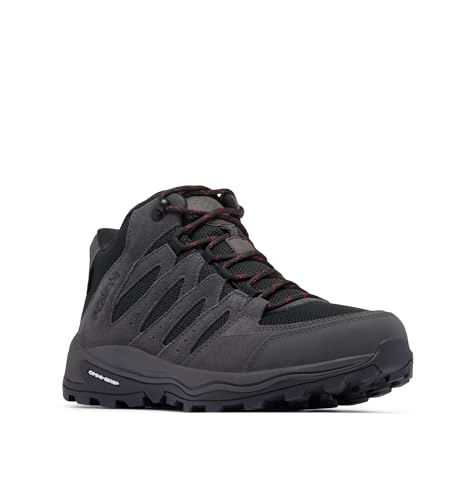
The Redmond IV Mid is Columbia’s mid-cut do-everything hiker, refreshed with a waterproof build that handles both trail and weather. Available in multiple colors and sizes, it works as a hunting boot on damp weekends and a daily hiker in between trips.
Same trail, different priority: where the Fairbanks Low wants breathability for warm days, this one is tuned for repeat wet-season use.
Where It Delivers
- Mid-cut ankle support reduces roll risk when carrying a heavy pack across uneven ground
- Waterproof membrane keeps feet dry on saturated trails and through morning frost
- Traction outsole grips mixed terrain including dirt, rock, and root mats
- Tough upper holds up to frequent weekend use without falling apart mid-season
Trade-Offs
- Slightly heavier than low-cut hikers, so ultralight hunters may push back on the weight
- Less insulation than rubber pacs for stationary cold-weather hunts
Whose Shelf It Belongs On
Hunters who log dozens of weekend trips a season and need a reliable all-weather hiker they can rotate in and out of storage without babying.
Skip It When
Deep-winter stand hunters should pick the MUCK Arctic Pro Insulated Boot for serious cold-weather insulation.
The HISEA Steel-Toe boot is the pick for hunters who break down camp, process game, and stack firewood on the same trip they stalk in. A reinforced toe shields against dropped axes and pointed sticks, while the slip-resistant rubber outsole grips slick logs and wet rocks at the truck.
You may find this boot awkward on long silent stalks, since the steel toe adds noticeable weight, but for camp-heavy trips it earns its place.
A Few Highlights
- Steel toe protects against dropped gear, kicked rocks, and sharp campsite hazards
- Slip-resistant outsole grips wet logs, muddy ramps, and slick truck-bed surfaces
- Fully waterproof rubber keeps feet dry through puddle-soaked loading areas
- Lower cost than premium insulated rubber boots
Possible Compromises
- Steel toe adds weight that becomes noticeable during long quiet approaches
- Minimal insulation means cold-weather hunts require thick socks
- Stiffer than non-safety boots, so comfort on long miles takes a hit
Perfect Match For
Hunters running camp chores, base-camp setups, and firewood work where toe protection is more valuable than ultralight stalking weight.
Swap It Out When
Long still-hunts are the priority, so pick the Columbia Newton Ridge Plus II Waterproof for quieter, lighter movement.
What Separates A Good Boot From A Miserable One
A backcountry hunting boot has three jobs, and most failures come from compromising on the wrong one. Insulation, waterproofing, and traction are the tripod: if any leg wobbles, the whole trip sways.
Insulation is rated by the warmth a boot holds in cold conditions. For late-season hunts where you’re sitting still on a stand or in a blind, thicker insulation pays for itself. For active summer scouting or archery stalks where you’re moving constantly, too much insulation turns into sweat, and sweat turns into cold feet the moment you stop. Match the boot’s rating to the lowest temperature you realistically expect to face.
Waterproofing comes from a membrane, coating, or full rubber shell. Membranes (the thin waterproof layers built into hiking shoes) breathe better but eventually soak through in deep water. Rubber pacs are bombproof in creeks and swamps but trap heat. Mid-height waterproof hikers split the difference and work for most multi-season hunters.
Traction matters more than most people think. Aggressive lugs (deep rubber treads) bite mud and loose dirt; wide spacing sheds mud better than tight patterns. For steep terrain, look for heel braking that helps on the way down.
Fit is the silent variable. A boot that’s a half-size too small will punish you with cold toes, even in a heavily insulated boot, because compression kills insulation. Try boots on at the end of the day with the socks you actually hunt in.
Key Considerations Across These Picks
Wrong Turns To Avoid
The most common mistake I see is hunters buying a heavy-duty rubber pac for a hunt that’s mostly trail-hiking. That extra weight compounds over miles and turns an enjoyable stalk into a slog. Match the boot to the dominant terrain, not the worst-case scenario.
When Paying More Pays Off
Premium boots earn their keep through three upgrades: better waterproof membranes that don’t break down, better insulation that holds warmth without bulk, and better outsoles that grip on technical terrain. If you hunt ten days a season or more, those upgrades pay back quickly through comfort and durability.