Mid hiking shoes land in the sweet spot between low trail runners and full-on backpacking boots: more ankle support than a sneaker, less weight and break-in time than a tall boot. You reach for them on long day hikes, rocky ridge walks, and weekends when the trail throws a little of everything at you.
The seven picks below cover the main trade-offs hikers actually face: weight versus support, waterproof membranes versus breathability, sticky rubber versus durable outsoles, roomy toeboxes versus athletic fit. Most of these are Merrell and KEEN options, with one Columbia entry and one lifestyle-leaning KEEN sneaker for those who split time between trail and town. One note up front: the source data is thin on confirmed specs for several items, so this roundup leans on stated construction details and well-known line characteristics rather than lab claims.
The Leading Options At A Glance

Merrell Men’s Moab 3 Hiking Shoe

Merrell Men’s Moab 3 Mid Hiking Boot
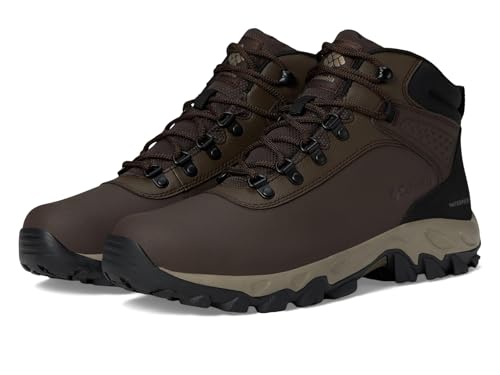
Columbia Newton Explorer

Merrell Moab 3 Mid Waterproof

KEEN Men’s Targhee 4 Waterproof Hiking Shoes

KEEN Men’s KS86 Retro Style Sneakers
A Breakdown Of The Leading Choices
The low-cut Moab 3 sits at the front of Merrell’s trail line, and for most weekend hikers that’s a good starting point. Think day-long loops on rocky root-covered New England singletrack or dusty desert washes where you want something that feels broken-in from the parking lot. The construction leans on a Vibram outsole for grip and a cushioned midsole that softens repeated heel strikes, which matters once you’re past mile six with a daypack on your back.
Compared to the mid-cut version covered next, this one sacrifices a little ankle confidence for noticeably lighter steps. If you mostly stick to well-marked trails without a heavy pack, that trade is one most people will happily make.
Notable Upsides
- Low-cut profile keeps the weight down for fast-moving day hikes
- Vibram outsole (a high-traction rubber compound widely used in hiking footwear) handles mixed rock and dirt reliably
- Cushioned midsole helps on long mileage days with a daypack
- Break-in period tends to be minimal, useful when a last-minute trip pops up
Things To Consider
- Low-cut ankle support leaves the joint more exposed on uneven talus
- Not the most breathable option in hot summer conditions for some hikers
Key Specs
Who It Suits Best
Day hikers and casual weekend trekkers who want a proven, comfortable trail shoe without committing to a heavier mid or tall boot.
Where Another Pick Suits Better
Hikers carrying heavier packs over rougher terrain will get more support from the Merrell Moab 3 Mid Hiking Boot covered next.
Take everything the Moab 3 low-cut does well and add a few inches of ankle collar, and you land here. The mid-cut version is the choice when your routes involve loose rock, scree slopes, or the kind of off-camber scrambles where ankles like to roll. The same Vibram outsole and supportive midsole architecture carry over, so you don’t give up traction or cushion to get the extra stability.
For hikers who occasionally carry 20 to 30 pounds into the backcountry for an overnight, that mid-cut collar isn’t a luxury; it’s basic insurance. You do pay for it in warmth and a slightly heavier step on the flat approach.
Everyday Advantages
- Mid-cut ankle collar adds stability without the bulk of a full boot
- Vibram outsole carries the same reliable grip as the low-cut sibling
- Cushioned midsole softens the ride when carrying a heavier load
- Trusted Moab fit, roomy in the toebox compared to many athletic hikers
Worth Noting
- Heavier and warmer than the low-cut Moab 3 in mild weather
- Not fully waterproof in this configuration, so wet grass and puddles soak through
Made For
Hikers tackling rocky, uneven trails with daypacks or light overnight loads who want more ankle security without stepping up to a full backpacking boot.
Consider Something Else When
Wet-weather hikers should jump ahead to the Merrell Moab 3 Mid Waterproof instead for a membrane-equipped build.
The Newton Explorer is Columbia’s play for hikers who’d rather not think about weather. A waterproof leather upper pairs with the brand’s Omni-Tech membrane (a bootie-style waterproof-breathable liner built into the shoe) and a Techlite midsole for what the source describes as long-lasting cushioning and energy return. In plain terms: wet grass, shallow stream crossings, and surprise rain don’t end your hike.
For Pacific Northwest hikers, Appalachian spring trail days, or anyone walking muddy shoulder-season routes, that waterproof build earns its keep. The trade is the heat and slower drying that come with any sealed leather shoe.
What It Does Well
- Waterproof leather upper with Omni-Tech membrane keeps feet dry in wet conditions
- Techlite lightweight midsole aims to reduce fatigue on multi-hour hikes
- Durable construction handles brushy, rocky trails without quick wear
- Versatile look works for casual wear after a hike
Trade Offs
- Waterproof build runs warmer in dry summer heat
- Heavier and slower to dry than a non-waterproof mesh option if it does get soaked inside
Feature Snapshot
Best Suited To
Hikers in wet climates or shoulder seasons who want a durable waterproof shoe for varied day-hike terrain.
Not Your Match When
Hot, dry summer hikers might prefer the breathability of the Merrell Moab 3 Mid Waterproof or the Moab Speed 2 GTX instead.
Picture the mid-cut Moab 3 you just read about, then seal it against water. That’s what this version delivers: ankle support from the higher collar plus a waterproof membrane to handle wet trails, morning dew, and the kind of post-rain mud that soaks through untreated shoes in minutes. The Vibram outsole and supportive midsole carry over, so traction and cushion don’t take a hit for the added weather protection.
For many hikers this is the most balanced mid-cut option in the Moab family, useful for everything from late-fall ridge walks to summer thunderstorms that blow in faster than forecasted.
Positive Takeaways
- Waterproof membrane protects against puddles, wet grass, and brief stream crossings
- Mid-cut collar stabilizes the ankle on uneven ground
- Vibram outsole maintains traction across varied terrain
- Same trusted Moab fit for hikers already familiar with the line
Minor Gripes
- Sealed build traps heat on hot, dry summer days
- Drying out fully after a wet hike takes longer than with a non-waterproof option
Right Fit For
Hikers who want one mid-cut shoe that handles wet spring trails, fall mud, and surprise rain without swapping footwear between seasons.
Look Elsewhere When
Hot-weather hikers who rarely deal with rain might prefer the breathable Merrell Moab Speed 2 GTX for its lighter, faster design.
KEEN’s Targhee line has earned a loyal following largely because the fit is different from most athletic hikers. The brand’s wider last and generous toe box let your toes splay naturally on long descents, which a lot of hikers with broader feet quietly appreciate. The Targhee 4 keeps that signature shape and layers in a KEEN.DRY waterproof membrane, plus a direct-attach construction that bonds the upper to the outsole for long-term durability.
Compared to the Moab 3 low-cut earlier in this list, the Targhee 4 trades a slightly roomier, more protective build for a touch more weight. You feel that difference over a 10-mile day.
The Value In It
- Wider, roomier fit suits hikers with broader feet or those who prefer toe splay on downhills
- KEEN.DRY waterproof membrane handles wet conditions
- Direct-attach upper-to-outsole bond tends to last through heavy use
- Known for comfort right out of the box with minimal break-in
Points To Keep In Mind
- Roomy fit may feel loose for hikers with narrow feet
- Slightly heavier than the Moab 3 low-cut for fast day hikes
Quick Facts
Who Will Love This
Hikers with wider feet, or anyone who finds athletic-cut hikers too narrow and wants a waterproof, durable build for varied trail days.
A Better Fit Elsewhere
Speed-focused hikers with narrow feet will probably prefer the lighter Merrell Moab Speed 2 GTX instead.
The KS86 isn’t a traditional hiking shoe, and that’s the point. KEEN built it for people who want trail-capable footing that doesn’t scream “I’m about to climb a mountain.” Recycled mesh or eco-friendly leather uppers pair with an aggressive tread, so it handles gravel paths, dirt doubletrack, and the kind of urban-meets-nature travel days that mix walking tours with light trail time.
Compared to the Moab 3 or Targhee 4 covered above, this one gives up serious trail capability for a much wider use case. For a trip where hiking is part of a longer itinerary rather than the whole point, that flexibility matters.
What Works In Its Favor
- Retro sneaker styling transitions from trail to casual settings without a shoe change
- Aggressive tread handles gravel, dirt paths, and light trail use
- Recycled mesh or environmentally friendly leather upper options
- Wider KEEN last is comfortable for all-day wear
A Few Limitations
- Not built for serious off-trail terrain, heavy packs, or technical scrambling
- Less ankle support than any mid-cut hiking option on this list
Perfect Match For
Travelers and casual hikers who split time between cities, light trails, and casual outdoor wear and want one shoe that handles both.
Swap It Out When
Dedicated day hikers tackling real elevation and rocky terrain will be better served by the Merrell Moab 3 Hiking Shoe earlier in this roundup.
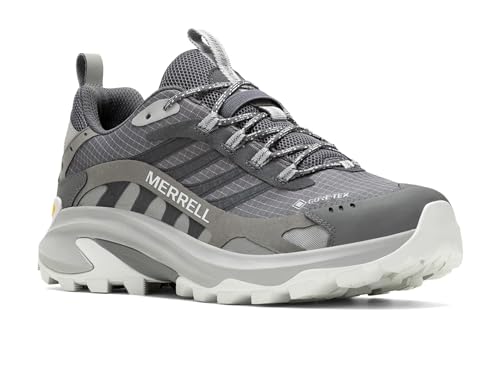
The Moab Speed 2 GTX takes the Moab name and rebuilds it for hikers who want to move faster. It borrows from athletic hiking design with a lighter build, then pairs that with a GORE-TEX membrane (a premium waterproof-breathable liner made by Gore, known for reliable wet-weather performance) and Vibram TC5+ rubber formulated specifically for Merrell. The traction lugs are designed to bite into loose trail surfaces where traditional outsoles sometimes skate.
It’s noticeably less substantial than the Moab 3 Mid Waterproof covered earlier, which is exactly the point. For thru-hikers, fastpackers, and hikers who log long miles at a brisker pace, that weight savings is real value.
The Practical Payoff
- Lighter, faster build than the standard Moab 3 mid-cut options
- GORE-TEX membrane offers reliable waterproof-breathable performance
- Vibram TC5+ rubber with traction lugs grips loose trail surfaces well
- Modern athletic-hiker silhouette for faster-paced hiking styles
Softer Spots
- Less ankle support than taller Moab boots, with trade-offs on rough terrain
- Premium construction typically carries a higher price than standard Moab 3 models
- Less durable than burlier options if used on abrasive rock regularly
Spec Overview
Built With In Mind
Fast hikers, fastpackers, and thru-hikers who want a waterproof mid-cut shoe that disappears on the foot over long mileage.
Another Choice May Suit
Heavier-pack hikers on rocky terrain will appreciate the sturdier build of the Merrell Moab 3 Mid Waterproof instead.
What To Weigh Before Choosing Mid Hiking Shoes
Cut height is the first fork in the road. Low-cut shoes like the Moab 3 and Targhee 4 feel quick and light, perfect for well-maintained trails and fast day hikes. Mid-cut options like the Moab 3 Mid and Moab Speed 2 GTX add ankle stability for rocky terrain and the occasional off-trail scramble. If you only own one pair for varied conditions, mid-cut is usually the safer all-rounder.
Waterproofing comes next. A waterproof membrane, whether it’s KEEN.DRY, Omni-Tech, or GORE-TEX, is a real asset on wet trails, but it adds warmth and slows the shoe’s drying time when it eventually does get soaked inside. Hikers in dry climates or summer-only use often prefer the breathability of non-waterproof builds. Wet-climate and shoulder-season hikers almost always want the membrane.
Fit matters more than any spec sheet. KEEN’s wider last is a godsend for hikers with broad feet, while Merrell’s Moab line offers a roomier toe box than most athletic hikers. If you can, try a pair on with the socks you actually hike in, since a half-size difference changes everything on a 10-mile day.
Finally, traction and weight often pull in opposite directions. Sticky Vibram compounds grip better but add weight, while lightweight outsoles sacrifice some durability. The right balance depends on terrain: smooth dirt paths let you go light, while rocky or loose surfaces reward grippier rubber.
Things Worth Knowing Before You Commit
Pitfalls Shoppers Hit
Choosing cut height by trend rather than terrain is the most common mistake. A low-cut shoe on a rocky, off-trail route is a recipe for a rolled ankle, while a tall mid-cut on smooth, flat trails just adds weight. Match the shoe to your typical trail, not to what looks more rugged.
Ignoring fit in the toe box is another quiet regret. Heels and arches get all the attention, but cramped toes cause black toenails and hot spots on long downhills. The Moab and Targhee lines specifically aim for roomier toe boxes for a reason.
What Separates Premium From Basic
In this category, “premium” usually means lighter weight, better waterproof membranes like GORE-TEX, and more advanced outsole rubber compounds. The Moab Speed 2 GTX, for instance, costs more than the standard Moab 3 because of the lighter construction and the Vibram TC5+ formulation. The upgrade is worth it for hikers who log serious distance, but weekend hikers on tame trails won’t feel the difference enough to justify the extra spend.
Frequently Asked Questions
Are mid hiking shoes good for beginners?
Yes, mid hiking shoes are actually one of the best starting points for new hikers, since they balance support and weight without the bulk of full boots.
Do I need waterproof mid hiking shoes?
You need waterproof mid hiking shoes if you regularly hike in wet climates, muddy shoulder seasons, or any terrain with stream crossings; otherwise, a non-waterproof build breathes better in dry conditions.
How should mid hiking shoes fit?
Mid hiking shoes should fit snug around the heel and midfoot with about a thumb’s width of room at the front of the toe box to prevent downhill pressure on your toes.
Can mid hiking shoes handle backpacking?
Mid hiking shoes can handle light backpacking loads up to about 25 to 30 pounds on moderate terrain, but heavier loads and rougher routes are better suited to full hiking boots.
How long do mid hiking shoes typically last?
Mid hiking shoes typically last somewhere between 500 and 1,000 trail miles, depending on terrain, weight carried, and how well they’re cared for between hikes.
The Takeaway
The right mid hiking shoe comes down to your usual terrain, your local weather, and how your feet actually fit. Match the cut to the trail, pick waterproofing around your climate, and prioritize fit over features on a spec sheet. Any of these seven picks will treat most hikers well; the best one is the pair that disappears on your foot from mile one to mile ten.