Men stepping into ballet class, contemporary rehearsal, or lyrical work face a specific fit problem: most dance shoes on the market are patterned after narrower feet, and the options that actually suit a wider forefoot or a higher arch are scattered across categories. I put together this shortlist for male dancers who want footwear that respects the male foot shape, supports controlled articulation, and holds up through repeated class sessions. Below, you will find canvas flats, half soles, and jazz hybrids that work for barre work, floor work, and everything in between. Each pick addresses a different priority, from Achilles-friendly construction to break-in comfort.
The Leading Options At A Glance

Bloch Men’s Synchrony Dance Shoe (White, 6 D US)

Stelle Half Soles Canvas Lyrical Ballet Pirouette Turners

Bloch Men’s Synchrony Dance Shoe (Black, 9.5 B US)
Bloch Men’s Synchrony Dance Shoe (White, 11.5 B US)

Linodes Leather Upper Jazz Shoe Slip-On

Linodes PU Leather Jazz Shoe with EVA Sole
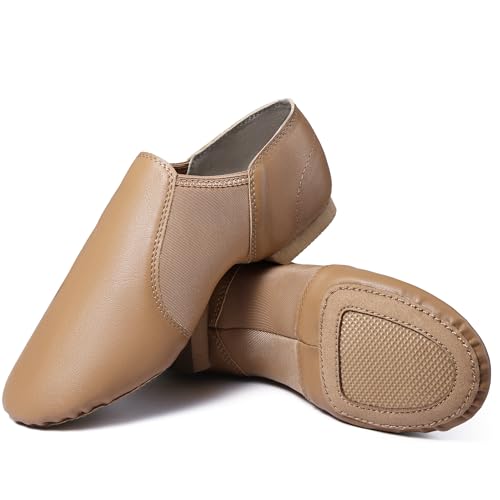
Linodes PU Leather Jazz Shoe with Suede Sole
More Details On Our Top Picks
The Bloch Synchrony is the kind of ballet flat a male dancer can put on and forget about. Where many full-sole canvas flats cinch the top of the foot with a drawstring, this design uses a wide elastic band across the instep, taking pressure off the Achilles tendon and the dorsal surface when the foot meets the floor. For men who log several classes a week, that reduced rubbing adds up.
The shoe runs in a D width, which gives wider feet room across the metatarsals without feeling sloppy. The split sole suede outsole lets the arch flex during plié and relevé, and the stretch canvas upper molds to the foot after a few sessions. Compared to Stelle’s half-sole later in this list, the Synchrony offers full foot coverage, so it suits dancers who want a more traditional barre experience.
What Works In Its Favor
- Wide elastic band reduces pressure on the Achilles during repeated relevés
- Stretch canvas molds to the forefoot, lowering break-in time for new dancers
- D width suits men whose feet feel squeezed in standard narrow flats
- Split suede sole supports articulation through plié and tendu work
Things To Consider
- The streamlined cut runs close to the foot, so ordering based on standard street size may feel tight at first
- White canvas shows studio-floor scuffs quickly and benefits from routine spot cleaning
Feature Snapshot
Made For
Men in regular ballet class who want a low-fuss full-sole flat that respects wider feet and minimizes Achilles strain during long sessions.
Where Another Pick Suits Better
Male dancers focused on pivot-heavy contemporary work may prefer Stelle’s half-sole design, which exposes more of the foot for controlled turning.
Half-sole shoes fill a very specific gap: they cover the ball of the foot and the heel, leaving the arch and toes free to grip the floor. For male dancers working on pirouettes, fouettés, and continuous turns in contemporary or lyrical choreography, that open construction gives the foot more contact with the studio surface than a full canvas flat would.
Stelle markets this style for women, but the men’s size range (3.5-4.5) is what brings it into this list. The canvas upper breathes well during high-intensity sets, and the cut keeps the metatarsals unencumbered. Dancers coming from the Bloch Synchrony will notice the difference immediately, since the Synchrony wraps the whole foot while this one leaves the arch exposed for floor connection.
Real Benefits
- Open arch design lets the foot grip the floor during multiple rotations
- Lightweight canvas upper reduces sweat build-up in heated studios
- Compact footprint packs flat in a dance bag for travel between studios
Points To Note
- Half-sole construction offers no protection for jumps with hard landings
- Sizing skews to a narrower male foot, so wider forefeet may need a careful fit check before committing
Right Fit For
Men practicing lyrical, contemporary, or turn-intensive choreography who want maximum floor contact and minimal coverage around the arch.
Look Elsewhere When
Traditional ballet students who need a full-sole flat for barre and center work will get better mileage from the Bloch Men’s Synchrony Dance Shoe (White, 6 D US).
Black ballet flats serve a different wardrobe than white ones. They pair with costumes that demand a clean, dark line, and they read better under stage lighting where white can blow out. The Bloch Synchrony in black carries the same construction as the white pair earlier in the list, including that wide elastic band that protects the Achilles and the split suede outsole that lets the arch articulate.
The B width here is a useful option for men with narrower heels and standard forefeet, since B sits between standard and the D width of the white 6 D US version. Anyone comparing these two Synchrony colorways will find the build nearly identical; the real choice is aesthetic and width.
Benefits That Matter
- Black canvas pairs with recital costumes where white would clash or distract
- Elastic instep band keeps the foot seated without a binding drawstring
- Split suede outsole grips well on marley and sprung wood floors
- B width fits dancers with slimmer heels who find D shoes loose at the back
Trade Offs
- Black canvas absorbs heat under stage lights, so feet may warm up faster than in white pairs
- Scuff marks on black canvas tend to show as lighter dust, requiring quick wipes between takes
Quick Facts
Who It Suits Best
Male performers preparing for recital or stage work who need a black flat with a streamlined silhouette and a narrower heel fit.
Skip It When
Dancers with wider forefeet should size up to the Bloch Men’s Synchrony Dance Shoe (White, 11.5 B US) in D width, or choose the white 6 D US version for more room across the metatarsals.
Finding men’s ballet shoes in larger sizes is a recurring headache. Most dance catalogs cap out around 11 or 12, and the options shrink fast beyond that. The Synchrony in 11.5 B US addresses that gap directly, giving taller male dancers the same canvas flat construction as the smaller sizes without forcing a switch to a women’s line.
Functionally, the shoe matches its smaller siblings: the wide elastic band across the instep, the split suede outsole, the streamlined fit. The main difference here is reach. A dancer on the taller side gets a full-sole flat that does not pinch at the toe box.
The Upside
- Extended size range covers men who otherwise struggle to find proper ballet flats
- Same elastic instep band protects the Achilles across larger foot volumes
- Stretch canvas upper adapts to taller arches that need more vertical room
- White color matches standard class dress codes at most ballet schools
Honest Caveats
- Larger sizes in dance shoes often run low on inventory, so the color or width you want may not always be available
- The B width on this 11.5 may feel narrow for men with both long and wide feet, so trying the D width in the smaller Synchrony sizes is worth comparing
Core Details
Who Should Grab It
Taller male dancers wearing 11.5 who need a full-sole ballet flat that matches standard class requirements and accommodates a longer foot.
Swap It Out When
Men with equally long but wider feet should check the Bloch Men’s Synchrony Dance Shoe (White, 6 D US) for a D width that offers more room across the forefoot.
Jazz shoes live next door to ballet flats, and many male dancers need a pair for combo classes, hip-hop, or musical theatre. The Linodes Leather Upper Jazz Shoe is a slip-on with a real leather upper, which feels different on the foot than the canvas on every Bloch option above. Leather holds its shape longer and breaks in to the wearer’s foot rather than stretching uniformly.
The slip-on cut makes it a fast choice between routines, and the men’s sizing starts around 3.5, lining up with the smaller Bloch Synchrony sizes. For dancers who bounce between ballet and jazz in a single day, having a leather option in the bag covers a different set of demands than a canvas flat would.
What Stands Out
- Leather upper molds to the foot over time, creating a custom fit after a few wears
- Slip-on design saves time between back-to-back classes or rehearsals
- Durable leather resists tearing at the toe box better than thin canvas
A Few Limitations
- Leather takes longer to break in than canvas, so the first sessions can feel stiff
- Jazz shoe construction does not offer the split-sole articulation that ballet flats provide, so it is not a substitute for barre work
Built With In Mind
Men who split their week between ballet and jazz or musical theatre classes and want one pair that handles the jazz side comfortably.
Another Choice May Suit
Dancers committed primarily to ballet should stay with a Bloch Synchrony model for the split suede sole and elastic instep band that flatter classical technique.
EVA is the foam compound found in most athletic midsoles, and using it in a jazz shoe gives the foot a cushioned layer between the body and the studio floor. For men logging long rehearsal days or jumping-heavy choreography, that cushion can spare the joints without sacrificing the low profile that jazz work demands.
The PU leather upper sits between real leather and synthetic in feel: lighter than the genuine leather on the Linodes slip-on above, but more structured than plain canvas. Compared to the suede-sole Linodes later in this list, the EVA version trades floor grip for joint comfort, which is the right call for many training environments.
Notable Upsides
- EVA outsole absorbs impact during repeated jumps and across long rehearsal blocks
- PU leather upper wipes clean easily after sweaty classes
- Lightweight construction reduces foot fatigue on multi-hour shoot days
Worth Noting
- EVA grips the floor less aggressively than suede, so dancers who rely on slides for choreography may feel stuck
- PU leather does not breathe as well as canvas or genuine leather, so feet may run warmer
Feature Card
Who Will Love This
Men in rehearsal-heavy schedules with lots of jumps who want extra cushion without giving up the jazz shoe silhouette.
Reach For A Different Pick When
Choreographers needing clean slides should look at the Linodes PU Leather Jazz Shoe with Suede Sole, which offers more controlled floor release.
Suede on a jazz shoe is all about controlled friction. Suede grips the floor just enough to plant a turn but releases smoothly for a controlled slide, which is why it has been a studio standard for decades. The Linodes suede-sole version keeps the same PU leather upper as the EVA model, swapping the outsole material to give dancers a more responsive floor feel.
For male dancers who already own a Bloch Synchrony for classical work, this Linodes suede pair rounds out the rotation by handling the jazz side with appropriate traction. The shared PU leather upper means the break-in feel is similar to the EVA version, but the floor behavior is noticeably different.
Points In Its Favor
- Suede outsole grips and releases on demand, supporting turns and controlled slides
- PU leather upper cleans up quickly after class
- Slip-on profile keeps the line clean during jazz progressions
Practical Considerations
- Suede outsole scuffs visibly with use, and the lighter suede color shows wear sooner than the EVA version’s foam outsole
- No built-in cushioning means longer rehearsal days can tax the joints more than the EVA-sole sibling
Spec Overview
Best Suited To
Men performing turn-and-slide-heavy jazz or musical theatre choreography who want a responsive suede outsole in a low-profile slip-on.
Where A Sibling Pick Shines
For jump-heavy rehearsal blocks where joint protection matters more than slide control, the Linodes PU Leather Jazz Shoe with EVA Sole is the better match.
What To Weigh Before Picking Your Pair
Choosing the right pair of men’s ballet shoes starts with the foot, not the brand. Width is the first filter: a D width fits most men who feel squeezed in standard narrow flats, while a B width suits slimmer heels. The Bloch Synchrony line spans both ends, while Linodes jazz styles stay unisex and run narrower through the forefoot.
Sole construction matters more than color. A split suede outsole supports the articulation a dancer needs through plié and relevé, and it is the standard for serious ballet work. Full-sole flats give more floor contact and a more traditional feel, while half soles expose the arch for turn-heavy contemporary routines. Jazz shoes follow a different logic: suede soles grip and slide, while EVA soles cushion and protect.
Material affects break-in time and care. Canvas breathes well and shapes to the foot quickly, which is why most ballet flats use it. Leather and PU leather last longer but need a few sessions before they feel broken in. Canvas shows scuffs in any color, but white shows floor dust and black shows chalk, so each has its own cleaning rhythm.
Finally, intended use dictates the category. A dancer in a traditional ballet class wants a full canvas flat. A dancer in a contemporary or lyrical class may want a half sole. A dancer bouncing between ballet, jazz, and musical theatre benefits from at least two pairs, one built for classical articulation and one for jazz traction.
Key Considerations Across These Picks
Mistakes Worth Dodging
The most common error is ordering by street size and assuming the fit will work. Dance shoes run small, and canvas stretches after a few sessions, so many dancers need to size down from their usual athletic shoe size. Another misstep is choosing a half-sole for a traditional ballet class, since the open arch leaves the foot unsupported through barre work. Finally, ignoring sole material costs dancers flexibility later: a cushioned EVA outsole is comfortable but limits slides, while a suede outsole grips and glides but does not cushion jumps.
What Separates Premium From Basic
Higher-tier men’s ballet shoes earn their price through fabric quality, sole leather grade, and pattern engineering. Premium canvas holds its shape across dozens of washes, while cheap canvas bags out at the heel after a few months. A genuine suede outsole grips better and lasts longer than synthetic alternatives. Pattern details like an elastic instep band instead of a drawstring reduce Achilles strain over years of class. The upgrade pays off most for dancers training five or more hours a week, where small fit and material differences compound into noticeable comfort and durability gains.
Frequently Asked Questions
How should men’s ballet shoes fit?
Men’s ballet shoes should fit snugly around the heel and across the metatarsals without pinching the toes, with the foot flat and the elastic snug across the instep. The toes should lie flat inside the shoe rather than curling, since gripping the fabric is a sign the size is off.
Can men wear half-sole ballet shoes?
Half-sole ballet shoes work well for men in contemporary, lyrical, or turn-focused classes where floor contact matters more than foot coverage. They are not a substitute for full-sole flats in a traditional ballet curriculum.
How long do canvas ballet shoes typically last?
Canvas ballet shoes typically last one to three months with daily class use, depending on floor surface, body weight, and how aggressively the dancer works. Rotating between two pairs extends life by letting each shoe air out between sessions.
Do men need different ballet shoes than women?
The construction of ballet flats is largely identical across genders, but men’s feet often need wider widths and larger sizes that are scarce in women’s lines. Some brands cut shoes on a wider last specifically for men, which is what gives the Bloch Synchrony line its appeal for male dancers.
How do you clean canvas ballet shoes?
Canvas ballet shoes clean best with a damp cloth and mild soap, dabbed gently rather than soaked, then left to air dry away from direct heat. Machine washing can warp the suede sole and shrink the canvas, so hand cleaning is the safer routine.
Closing Remarks
Men looking for ballet shoes that actually fit a male foot have better options now than they did a decade ago, and the picks above cover the realistic range of needs from barre work to jazz combinations. Match the shoe to the kind of class you take most often, double-check the width, and break the pair in slowly across the first few sessions. A well-chosen pair disappears on the foot, which is exactly what you want when the choreography takes over.