Sore, unstable ankles change how I approach the court. After one bad roll, every cut, every rebound, every quick stop feels like a gamble. The right shoe can tilt that gamble back in your favor. High-top collars lock the joint, cushioned midsoles absorb the jolt, and a wide, stable base keeps your foot planted. I built this list around those three priorities, mixing heritage silhouettes with purpose-built trainers so you can find a pair that protects without weighing you down.
A Fast Comparison Of The Options
Nike Air Force 1 Mid ’07 QS Sneaker

Nike Air Jordan 1 Low Sneaker

Nike Dunk High Black White (DD1399-105)

Air Jordan 1 High Men’s Shoes

Nike Lunar Force 1
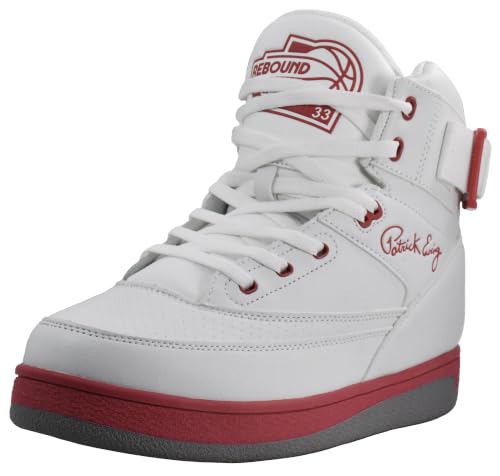
Ewing Athletics 33 HI OG Retro (1EW90014-136)

Fila Men’s F-13 M Fashion Sneaker

PUMA Rebound Layup SL
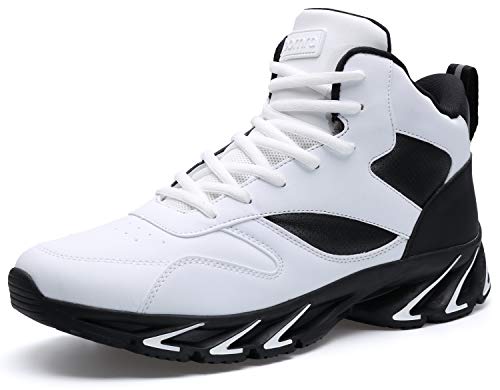
Joomra Stylish High-Top Sneakers
More On The Choices That Made The List
The Air Force 1 Mid lands at the top of my list because it threads a needle that most ankle-conscious hoopers actually want: heritage basketball DNA without the bulk of a full performance trainer. The mid-cut collar (the ankle panel that rises partway up the joint, not as low as a low-top or as tall as a true high-top) wraps the ankle in soft leather padding, while the thick Air-Sole unit underneath each heel softens landings during pickup runs. I like this pair for weekend warriors who mostly play half-court or shoot around, because the rigid rubber cupsole keeps the foot flat when changing direction.
Real-world use leans casual-to-recreational. The leather upper breathes less than a mesh trainer, so feet run warm in August gym sessions, but that same leather holds its shape and resists roll-through on hard cuts. Compared to the Air Jordan 1 Low sitting second on this list, the Mid version gives noticeably more ankle contact without jumping to a true high-top.
The Value In It
- Mid-cut collar adds ankle contact without the bulk of a high-top
- Encapsulated Air-Sole cushioning softens repeated jump landings
- Wide forefoot base helps prevent the foot from rolling outward
- Durable leather upper holds shape over multi-year casual use
- Iconic silhouette pairs with jeans off the court
Things To Consider
- Leather upper runs warm in hot indoor gyms
- Heavier than a knit or mesh trainer, so quick feet may tire
- Not built for high-impact five-on-five runs
Feature Snapshot
Who It Suits Best
Recreational players and casual gym-goers with mild ankle sensitivity who want iconic styling alongside real mid-cut support.
Consider Something Else When
Runners who log full-court sessions should look at the PUMA Rebound Layup SL, which offers a more purpose-built mid-cut trainer at a friendlier entry point.
The Air Jordan 1 Low is the everyday carry-on of basketball shoes. It borrows the silhouette of the original 1985 high-top and trims the collar down, which makes it lighter on foot but removes a layer of ankle wrap that sensitive joints really want. I see this pick working best for warm-ups, light shooting drills, and lifestyle wear rather than competitive five-on-five.
For bad ankles specifically, the leather upper and Air-Sole heel do most of the protective work. The low-top collar leaves the ankle joint itself unprotected on hard landings, so I’d treat this as a comfort companion instead of a court-side defender. It pairs well with the Air Force 1 Mid if you want one shoe for daily walking and one for actual play.
Strong Points
- Lightweight low-top feels nimble around the house or gym
- Leather upper locks the midfoot during lateral moves
- Air-Sole heel softens everyday walking impact
- Wide color range makes it easy to match casual outfits
Worth Noting
- Low-cut collar leaves the ankle joint exposed on hard cuts
- Not designed as a primary basketball performance shoe
- Leather needs break-in before it flexes naturally
Right Fit For
Shoppers recovering from an ankle issue who need a comfortable casual shoe for light activity and street wear.
Look Elsewhere When
Players returning to regular scrimmage games should consider the Air Jordan 1 High further down this list, which gives much taller ankle coverage.
The Dunk High has roots in 1985 college basketball, and that DNA shows in the way it locks the foot. A tall padded collar wraps the entire ankle joint, the wide heel platform resists tipping on hard stops, and the rounded toe box keeps toes from jamming on quick pivots. For players who feel their ankle give out laterally, this silhouette does real protective work.
Compared to the Air Force 1 Mid that opens this list, the Dunk High runs stiffer and taller. I’d reach for it when the session involves real cutting, not casual shooting around. One thing worth considering: the leather upper takes a few wears to soften, so budget a couple of short gym visits before a full game.
Practical Advantages
- Tall high-top collar locks the ankle joint during lateral moves
- Wide heel base resists rolling outward on sharp stops
- Rounded toe box reduces pinching during pivots
- Classic two-tone leather pairs easily with warm-up gear
Trade Offs
- Stiffer than the Air Force 1 Mid until broken in
- Heavier than low-top alternatives during long sessions
- Black-and-white colorway shows scuffs on outdoor courts
Quick Facts
Best Suited To
Players with a history of lateral ankle rolls who want a rigid, tall collar for competitive pickup games.
Skip It When
Anyone prioritizing cushioning over lockdown should try the Nike Lunar Force 1, which trades rigidity for a softer underfoot ride.
The Air Jordan 1 High is the silhouette that put Nike on the basketball map, and it still earns attention for ankle-conscious players. A tall leather collar rises above the ankle bone, the cupsole keeps the foot planted on hard stops, and the Nike Air unit in the heel softens repeated landings. For shoppers willing to invest in a premium pair, this shoe delivers both cultural weight and protective structure.
The honest read is that this is heavier and stiffer than the Dunk High sitting above it on this list, so it rewards players who value ankle lockdown over speed. Break-in matters here. Give it two or three short sessions before logging full-court hours, and the leather will soften into something genuinely supportive.
Benefits That Matter
- Tall high-top collar stabilizes the ankle joint fully
- Encapsulated Air heel unit absorbs impact during jump shots
- Premium leather upper holds its structure for years
- Wide colorway range supports both retro and modern outfits
Points To Note
- Premium positioning places it higher in cost than most picks on this list
- Stiffer break-in than the Lunar Force 1 alternative
- Heavier than low-tops, which can tire quick feet
Who Will Love This
Style-minded hoopers who want tall ankle coverage and the cultural cachet of an all-time classic silhouette.
Reach For A Different Pick When
Players focused purely on soft cushioning should try the Nike Lunar Force 1, which puts more emphasis on underfoot comfort than rigid lockdown.
The Lunar Force 1 takes the classic Air Force 1 upper and slips a Lunarlon midsole underneath, which is a foam blend designed to feel noticeably softer and springier than standard EVA (a firmer, more common foam used in most shoe midsoles). For someone with cranky ankles, that underfoot softness translates directly to less joint sting on every landing. The mid-cut collar still wraps the ankle, just like the standard Air Force 1 Mid, but the ride feels more forgiving overall.
This is the pair I’d suggest to players who care more about comfort than rigidity. Compared to the Air Jordan 1 High that sits above, the Lunar Force 1 trades some lockdown for plush cushioning. For most casual and recreational sessions, that trade feels right. For outdoor courts, the Lunarlon foam may compress faster than a denser midsole.
Reasons It Performs
- Lunarlon midsole softens impact during jump landings
- Mid-cut collar provides ankle contact without high-top bulk
- Lightweight foam reduces foot fatigue over long sessions
- Heritage silhouette works with casual wardrobes
Room For Improvement
- Softer midsole feels less rigid than the Dunk High on hard cuts
- Lunarlon foam can compress faster on rough outdoor surfaces
- Less lateral lockdown than a true high-top
Feature Rundown
Built With In Mind
Players with sensitive ankles who prefer cushioning over rigidity and play mostly on indoor courts.
Another Choice May Suit
Hoopers needing stronger lateral lockdown should reach for the Nike Dunk High Black White, which offers a stiffer, taller ride.
The Ewing 33 HI is a reissue of Patrick Ewing’s 1990 signature shoe, and it does something most modern basketball sneakers skip: a reversible ankle strap that snaps across the joint for extra hold. For players whose ankles feel loose inside the shoe even with a tall collar, that strap delivers an extra measure of lockdown you can dial in or remove.
The full-length PU midsole (polyurethane, a denser and more durable foam than standard EVA) cushions landings, while the high-top collar wraps the ankle from below and beside. I like this pair for players who want 90s character alongside a custom-feeling fit. It’s heavier than newer foams, so quick guards may notice the extra weight.
Real Benefits
- Reversible ankle strap adds adjustable joint lockdown
- Full-length PU midsole cushions every step
- High-top collar wraps the entire ankle joint
- Retro colorway stands out from modern monochromatic looks
Soft Spots
- Heavier than modern Lunarlon or EVA trainers
- Strap takes practice to position comfortably
- Suede accents require more careful cleaning than smooth leather
Perfect Match For
Players who want retro flair with a customizable ankle strap for added support on lateral cuts.
A Better Fit Elsewhere
Guards who prize speed should consider the PUMA Rebound Layup SL, which keeps the mid-cut height but cuts weight noticeably.
The Fila F-13 M is a heritage training shoe dressed up for casual wear, and it lands on this list as the friendly entry point for shoppers on tighter budgets. The mid-cut collar adds a layer of ankle contact without crossing into full high-top territory, and the rubber outsole handles pickup games on smooth gym floors just fine.
I’d be honest about what this shoe does and doesn’t do. It’s not a dedicated basketball performance trainer, so the cushioning is firmer and the lockdown is lighter than something like the Air Force 1 Mid. For beginners working on basic footwork or casual wear, that’s plenty. For competitive scrimmages, look further up this list.
Useful Highlights
- Accessible price point for first-time basketball shoppers
- Mid-cut collar adds light ankle contact for casual play
- Rubber outsole grips smooth indoor surfaces reliably
- Heritage Fila branding appeals to retro wardrobes
Honest Caveats
- Firmer cushioning than purpose-built basketball trainers
- Less lateral lockdown than the Dunk High or Jordan 1 High
- Materials prioritize style over heavy-duty court durability
Who Should Grab It
Beginners and casual wearers who want a basketball-styled shoe without spending on a performance trainer.
Swap It Out When
Anyone moving into regular pickup sessions should graduate to the PUMA Rebound Layup SL, which delivers a real cupsole basketball build.
The Rebound Layup SL is a purpose-built basketball-inspired trainer from PUMA, and it earns its spot here by combining a mid-cut silhouette with a real cupsole and a SoftFoam+ sockliner. Perforations on the vamp (the top-front panel of the shoe upper, just above the toes) keep airflow moving, and the full synthetic leather upper gives the foot a consistent wrap during cuts.
For someone with bad ankles who wants more basketball DNA than the Fila F-13 M can offer, this is the natural step up. The mid-cut collar wraps the joint without the stiffness of a true high-top, and the SoftFoam+ insert cushions the heel strike. It doesn’t have an Air-Sole unit, but the foam does a credible job on indoor courts.
What Pays Off
- Mid-cut collar balances ankle wrap with mobility
- Cupsole construction stabilizes the foot on hard cuts
- SoftFoam+ sockliner cushions heel landings
- Vamp perforations help feet stay cooler in warm gyms
- Accessible price relative to premium basketball lines
Practical Considerations
- Synthetic upper runs warmer than mesh options
- No dedicated Air or Zoom-style impact unit
- Less ankle coverage than the Jordan 1 High
Key Product Details
Whose Shelf It Belongs On
Mid-range hoopers with sensitive ankles who want a purpose-built basketball trainer at a reasonable price.
Where A Sibling Pick Shines
Players wanting the highest possible ankle lockdown should consider the Nike Dunk High Black White, which trades a mid-cut for full high-top rigidity.
The Joomra high-top rounds out the list as the budget tall-collar option for shoppers who want the high-top silhouette without paying for a basketball heritage brand. The tall padded collar wraps the ankle, and the rubber outsole handles light gym use. I see this working well for casual wear, light walking, and very easy pickup sessions rather than competitive play.
For shoppers specifically managing bad ankles, this is a starter pair. The cushioning is basic compared to Nike’s Air-Sole or PUMA’s SoftFoam+, so heavy impact landings will feel firmer. Treat it as a stepping stone into the high-top shape, then graduate up the list as your needs and budget evolve.
Useful Strengths
- Tall high-top collar adds full ankle contact
- Accessible price for first-time high-top shoppers
- Rubber outsole grips smooth indoor surfaces
- Lightweight build works for everyday casual wear
A Few Limitations
- Basic midsole cushioning feels firmer than Nike or PUMA trainers
- Not engineered for competitive basketball performance
- Construction quality varies across pairs in this tier
Made For
Casual wearers who want the high-top silhouette and mild ankle contact at an entry-level price.
Not Your Match When
Players returning to regular basketball sessions should invest in the PUMA Rebound Layup SL for proper cupsole support and better cushioning.
Choosing The Right Pair For Sore Ankles
Ankle-friendly basketball shoes come down to three working parts: collar height, midsole cushioning, and outsole stability. A taller collar wraps more of the joint, but it also adds weight, so the trade-off matters based on how mobile you want to feel. A softer midsole (foam that compresses on impact and bounces back, reducing the shock that travels up into the ankle) absorbs landings better but can feel less stable on hard cuts, while a firmer midsole offers more ground response for quick direction changes. The outsole should be wide at the heel and forefoot, because a broader base resists the lateral roll that bad ankles fear most.
Real-world fit depends on your playing surface. Indoor courts reward lighter shoes with grippy rubber outsoles, while outdoor asphalt tears through foam midsoles faster and pushes you toward denser builds. Players recovering from an ankle sprain should prioritize lockdown over speed, while players managing chronic tightness may prefer cushioning above all else. The widest ankles in this list sit on the high-top side: the Dunk High and Jordan 1 High lock the joint most aggressively, the Ewing 33 HI adds a strap for extra hold, and the mid-cut options (Air Force 1 Mid, Lunar Force 1, PUMA Rebound Layup SL) trade some coverage for mobility.
Budget also reshapes the decision. The Joomra high-top and Fila F-13 M offer accessible entry points, while the Nike and Jordan pairs justify higher costs with proven cushioning systems and heritage construction. Match your most common playing scenario to the shoe’s strengths, and the rest usually falls into place.
Key Considerations Across These Picks
Common Shopping Slip Ups
The most common mistake is picking a shoe by silhouette alone. A high-top looks protective, but a poorly cushioned high-top still sends shock straight up into the ankle on every landing. Shoppers also tend to underestimate the value of a wide heel base, which is what actually prevents the lateral roll that causes most basketball ankle injuries. Another trap is buying based on colorway hype and ignoring the midsole, which is where the real protective work happens.
When Paying More Pays Off
Higher-tier basketball shoes cost more for specific, visible reasons. Encapsulated Air units, Lunarlon foam, and dedicated cushioning systems absorb impact that basic midsoles simply can’t match. Premium leather uppers hold their shape over years instead of stretching out after a season, and heritage construction tends to deliver more consistent sizing. For players logging regular court time, the upgrade pays back in fewer sore mornings and longer shoe life, which usually offsets the higher upfront cost.
Frequently Asked Questions
Do high-top basketball shoes actually help with bad ankles?
A tall collar restricts some of the side-to-side motion that triggers ankle rolls, which can reduce the risk of repeat sprains during cuts and landings. They aren’t a substitute for bracing or rehab, but they do add a layer of mechanical support around the joint.
Is mid-cut a good compromise for ankle support?
Mid-cut shoes wrap the lower part of the ankle while leaving the top free, which feels lighter than a true high-top while still adding contact around the joint. For players with mild sensitivity who want mobility, mid-cut is often the sweet spot.
What cushioning should I look for in shoes for bad ankles?
Air-Sole units, Lunarlon foam, and other impact-absorbing midsoles reduce the shock that travels up into the ankle on every landing. Foam density matters too: softer foams compress more, denser foams feel firmer but last longer on outdoor courts.
Can I use these shoes for outdoor courts too?
Most pairs on this list handle outdoor asphalt, but softer midsoles like Lunarlon tend to wear faster on rough surfaces. Rubber outsoles grip well on clean outdoor courts, though dust and moisture can reduce traction compared to smooth indoor floors.
How long should basketball shoes for ankle support last?
Casual players typically get one to two years from a well-built pair, while frequent court-goers may wear through the midsole in six to twelve months. Replacing shoes once the midsole feels flat or the outsole tread smooths over is the safest move for ankle health.
Final Verdict
Bad ankles don’t have to keep you off the court, but they do change what to look for in a shoe. Prioritize collar height, midsole cushioning, and outsole width, then match the silhouette to your most common playing scenario. The right pair lets you focus on the game instead of the joint, and that’s the whole point. Pick the one that fits your needs and your budget, and give it a couple of short sessions to break in before logging serious court time.