Going up for a dunk starts well before takeoff. The right pair has to grip the hardwood, cushion the landing, and stay locked to your foot through every cut. I’ve spent years around basketball gear, and the gap between a flat pair and a proper jumping shoe shows up in ankle fatigue, traction slip, and that wobble when you plant. The picks below cover a range of budgets and styles, from signature performance models to lifestyle-friendly options that still hold their own at the rim.
Your Options, Compared

adidas Men’s Anthony Edwards Arctic Night 1 Low
Nike Dunk High Black White (2021)

Nike Men’s Air Jordan 1 Shoes

Under Armour Curry 3Z 24 Basketball Shoes

Adidas Unisex-Adult D.O.N. Issue 5 Basketball

LI-NING Wade Shadow 6 Men’s Basketball Shoes

adidas Men’s Terrex Skychaser Lt Gtx

Under Armour Men’s Lockdown 6 Basketball Shoes

Nike Mens Lace-up
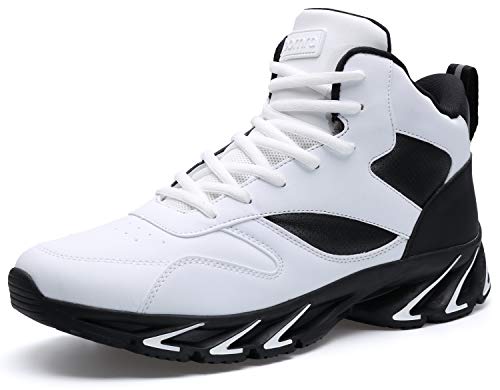
Joomra Men’s Stylish High Top Sneakers
Why These Options Stand Out
The Anthony Edwards signature shoe lands as a low-top built for players who attack the rim in straight lines. The midsole stacks Boost and Lightstrike together, which combines a bouncy foam with a lighter, more responsive layer underneath. That pairing matters for jumping: the cushioning absorbs the landing while still pushing you back up on the next stride.
For players who drive hard from the wing or pull up off two feet, this profile gives you the court feel of a low-top without giving up the cushion stack of a modern performance shoe. Compared to the heavier mid-tops later in this list, the AE 1 stays quick on first-step moves.
Noteworthy Benefits
- Lightweight Boost plus Lightstrike midsole gives springy lift off the floor
- Rubber outsole grips cleanly on indoor hardwood for clean plant-and-jump mechanics
- Low-cut collar keeps the ankle mobile for high-flying finishers
- Edwards signature branding fits players who want a recognizable game-day look
Points To Keep In Mind
- Low-top cut offers less ankle support than mid or high alternatives for players with a history of ankle tweaks
- Color options may run limited depending on size
Feature Snapshot
Made For
Explosive scorers with healthy ankles who want a fast, lightweight shoe built around takeoff power.
A Better Fit Elsewhere
Players who need extra ankle lockdown should look at the Under Armour Lockdown 6 instead.
The Dunk High pulls straight from a 1985 silhouette originally designed for college hardwood. Peter Moore built it with a wide, rounded toe box and a chunky heel for stability, which translates surprisingly well to pickup runs and street courts. The high collar locks the ankle during hard drives, and the simple leather upper breaks in cleanly over a few sessions.
Compared to the technical AE 1 above, the Dunk High leans more into lifestyle energy. It still handles rim attacks and casual dunk sessions without complaint, especially for players who want a recognizable look off the court.
Everyday Perks
- Wide, rounded toe box gives toes room to splay on takeoff
- High-top collar adds ankle stability for newer players
- Clean leather upper transitions easily from court to street
- Black and white colorway pairs with just about anything
Worth Noting
- Heavier than modern performance models, so fast-twitch players may feel weighed down
- Stock on certain sizes is uneven, and some listings show unavailable
Right Fit For
Style-minded players who split time between casual court sessions and everyday wear.
Consider Something Else When
Competitive players needing lighter cushioning should choose the Under Armour Curry 3Z 24 instead.
The Air Jordan 1 sits at the intersection of heritage and performance. The high-top collar braces the ankle during hard lateral cuts, and the padded tongue softens the lace bite during long sessions. Players who grew up watching Jordan-era highlights tend to gravitate here for both the silhouette and the cultural weight.
Versus the Dunk High, the AJ1 has a slightly slimmer toe box and a stiffer leather upper. That stiffness rewards players with a powerful vertical but takes longer to break in for wide-footed shoppers.
The Value In It
- Iconic silhouette that translates from gym to weekend
- High-top collar wraps the ankle during contested finishes
- Padded tongue eases pressure across the instep
- Solid leather construction handles outdoor blacktop reasonably well
Honest Caveats
- Stiffer upper takes a few wears to soften, which may frustrate casual players
- Narrower toe shape may not suit wide-footed shoppers without going up a half size
Whose Shelf It Belongs On
Collectors and players who want a heritage look with enough support for pickup games.
Swap It Out When
Wide-footed players chasing all-day comfort should consider the LI-NING Wade Shadow 6.
Built around Steph Curry’s quick-trigger game, the Curry 3Z 24 pairs a responsive Micro G midsole with a leather upper reinforced by mesh panels. The internal midfoot shank adds torsional stability (resistance to twisting under load) so the shoe stays planted on hard crossovers. For guards who live behind screens and pull up off the dribble, the responsive feel is the real draw.
Compared to the AE 1 at the top of this list, the Curry 3Z 24 sits closer to the foot and feels more controlled on directional changes. That’s a real advantage for shifty guards who need to decelerate hard before launching.
A Favorable Mix
- Micro G midsole (a lightweight EVA-based foam that compresses and rebounds quickly) keeps cushioning lively without a heavy stack
- Leather overlays add durability for toe-drag finishers
- Internal midfoot shank stabilizes hard lateral cuts
- Webbed lacing locks the midfoot during explosive jumps
Trade Offs
- Some colorways run narrow, which may push wide-footed players up a half size
- Limited inventory on certain sizes can mean back-and-forth on availability
Quick Facts
Best Suited To
Guards who rely on quick first steps, sharp crossovers, and pull-up jumpers.
Look Elsewhere When
Bigger forwards needing max cushion and impact protection should consider the LI-NING Wade Shadow 6.
The D.O.N. Issue 5 is Donovan Mitchell’s signature, and adidas built it to handle the kind of explosive first step that turns into a dunk. The Lightstrike midsole keeps weight down so lift-off feels quicker, and the elevated traction pattern on the outsole bites the hardwood on hard plants.
Compared to the AE 1, the D.O.N. Issue 5 sits in a friendlier price bracket and comes in unisex sizing that works for a wider range of shoppers. It trades some premium midsole tech for a more approachable build.
Positive Points
- Lightstrike midsole keeps weight low for quick first jumps
- Elevated traction pattern grips dusty gym floors
- Unisex sizing opens more size options for teen and adult players
- Mitchell signature styling for fans of the player
Possible Compromises
- Lighter midsole foam delivers less impact absorption than the Boost setups in premium adidas models
Who Should Grab It
Travel team players and rec-league hoopers who want a signature performance shoe at a friendlier price.
Another Choice May Suit
Players who want the same adidas tech in a Boost-stacked build should go with the AE 1 instead.
The Wade Shadow 6 comes out of LI-NING’s pro basketball line, and the build shows it. A textile and synthetic leather upper wraps the foot, while a TPU (thermoplastic polyurethane, a rigid plastic used for structural support) outsole with TUFF RB rubber handles the kind of hard plants that wear through ordinary shoes. The BOOM midsole tech returns energy on every takeoff, so jumping repeatedly through a session costs you less.
Compared to the lighter AE 1 and Dunk High, this one leans into protection and durability. Bigger players and powerful leapers who hammer their shoes will appreciate the structured build.
Points In Its Favor
- BOOM rebound foam returns energy into each jump
- TPU outsole plate resists twisting on hard plants
- TUFF RB rubber holds grip and resists wear on outdoor courts
- Textile upper allows airflow during long indoor sessions
Worth Bearing In Mind
- Heavier than lightweight low-tops, so speed-first guards may want a nimbler option
- Pro-style fit runs slightly narrow for some shoppers
- Synthetic materials need regular wiping to keep the upper looking clean
Feature Card
Who Will Love This
Power forwards, wings, and heavier guards who plant hard and need protection.
Reach For A Different Pick When
Quick guards chasing a faster feel should choose the Curry 3Z 24.
The Terrex Skychaser borrows its locked-down heel and TPU insert from the adidas trail-running line. That combination keeps the rear foot planted during hard cuts, and the lighter color upper keeps the shoe from feeling clunky on the foot. Players who jump on outdoor courts and rough asphalt will appreciate the trail-tuned stability.
Versus the more traditional D.O.N. Issue 5, the Skychaser is stiffer and more structured, which translates to less natural foot flex but better lockdown on uneven surfaces.
Bright Spots
- Locked-down heel reduces slippage during plant-and-jump moves
- TPU insert adds stability for dynamic cuts
- Lightweight upper construction cuts down on foot fatigue
- Durable build handles outdoor blacktop sessions
Where It Is Less Suited
- Stiffer ride than typical court basketball shoes, so indoor-only players may find it clunky
- Trail-oriented outsole lugs (the tread blocks on the bottom) may feel noisy on polished gym floors
Perfect Match For
Outdoor hoopers who play on asphalt, cracked courts, or park runs where dust and debris punish soft outsoles.
Skip It When
Pure indoor players should consider the Nike Air Jordan 1 for a smoother ride.
The Lockdown 6 brings together the basics that matter for a daily gym shoe. A leather upper with mesh panels adds durability and airflow, the EVA midsole (a lightweight foam that absorbs impact) keeps weight manageable, and the herringbone traction pattern (a zigzag tread design that grips in multiple directions) bites the floor during hard directional changes. It skips signature-name polish in favor of straightforward court performance.
Compared to the heavier LI-NING Wade Shadow 6, the Lockdown 6 trims weight for quicker rotations. The trade-off is less midsole tech, which shows up over longer sessions.
Strengths Worth Knowing
- Herringbone traction grips well in multiple directions
- EVA midsole softens landings without adding bulk
- Mesh panels keep feet cooler during long pickup runs
- Durable solid rubber outsole holds up to regular gym use
Minor Gripes
- Stock swings between available and out of stock, so timing matters
- Less premium midsole cushioning than flagship Under Armour models
Key Product Details
Built With In Mind
Rec-league players, gym regulars, and parents buying for a teenager who plays three times a week.
Where A Sibling Pick Shines
Players wanting a more cushioned ride should consider the LI-NING Wade Shadow 6.
The Nike Lace-up is a basic unisex court shoe built around standard lacing and a familiar low-profile silhouette. It serves the role of an everyday warm-up or recreational gym shoe, the kind of thing you lace up for shootarounds and easy pickup games rather than tournament play. The simple build keeps weight low and the price accessible.
Against the premium AE 1, this shoe is a stripped-down alternative. You give up midsole tech, but you also skip the cost that goes with it.
Positive Takeaways
- Lightweight build suits casual gym sessions and warm-ups
- Standard lacing fits a wide range of foot shapes
- Unisex sizing covers more shoppers on one product page
Points To Note
- Limited cushioning tech means less impact protection on hard landings
- Availability is patchy across sizes and listings
The Right Fit
Casual players who want a no-fuss court shoe for shootarounds, training drills, or light pickup games.
Not Your Match When
Players wanting real performance tech should choose the Under Armour Curry 3Z 24 instead.
The Joomra high-top leans into the athletic-inspired aesthetic at a low price, which makes it a sensible entry point for new players. The high collar wraps the ankle for casual play, and the styling borrows from classic basketball silhouettes. For a teenager starting out or someone who wants a backup pair, the math works.
Compared to the more technical Under Armour Lockdown 6, this Joomra trade midsole cushioning and outsole grip for the lower cost. It earns its spot as a starter shoe, not a daily driver.
Why It Works Well
- High-top collar offers basic ankle support for beginners
- Athletic-inspired styling works on and off the court
- Accessible price for new players or backup-pair shoppers
- Simple lacing for fast on-and-off wear
Room For Improvement
- Less cushioning tech than mid-tier performance shoes
- Outsole grip may feel less consistent on dusty gym floors
- Durability is shorter than flagship basketball shoes under heavy use
Who It Suits Best
New players, casual gym users, and shoppers who want an inexpensive high-top for light play.
Where Another Pick Suits Better
Anyone playing multiple times a week should step up to the Under Armour Lockdown 6 for better durability.
What Matters Most When Picking Jumping Shoes
A dunk shoe has three jobs: grip the floor on takeoff, cushion the landing, and keep the foot locked in place during the jump. The first one comes down to outsole rubber and tread pattern. Herringbone and multi-directional lugs grip in all directions, which matters because players plant their feet at odd angles. On dusty or worn gym floors, the rubber compound matters as much as the pattern.
Cushioning matters most on the landing, where your joints take the impact. Modern foams like Boost, Lightstrike, Micro G, and BOOM each have a different feel underfoot, but they all aim to soften that hard return to earth. Heavier players generally want more stack height (the thickness of cushion between foot and floor), while quicker guards often prefer a thinner, more responsive setup.
Lockdown is the third pillar. A heel counter (a firm cup built into the back of the shoe) and a structured midfoot shank keep your foot from sliding inside the shoe during explosive moves. Players with a history of ankle tweaks usually want a mid or high collar. Lacing matters too: webbed and overlay lacing systems pull the midfoot in tighter than standard flat laces.
Fit is non-negotiable. A basketball shoe should feel snug at the heel and midfoot with about a thumb’s width of room at the toe. Wide-footed shoppers often need a half size up or a wide-specific model. The best way to test lockdown is the heel-slip check: lace up normally, and the heel should not lift when you walk.
Common Shopping Slip Ups And Where The Upgrade Helps
Mistakes Worth Dodging
Buying for looks only is the most common error. A slick silhouette means nothing if the cushioning is thin and the traction slips on day one. Shoppers also tend to skip the lacing test, which means the shoe feels fine in the store and terrible mid-game. Try the heel-slip walk before committing. Another pitfall: assuming all high-tops support the ankle equally. Collar padding, internal heel counters, and lacing systems vary a lot between models, and the silhouette alone doesn’t tell you the whole story.
When Paying More Pays Off
Premium models bring real tech upgrades: layered midsole foams that return more energy, torsional plates that resist twisting, and outsole compounds engineered for specific court surfaces. For players who train daily or play competitively, those upgrades add up over a season. Casual gym players can usually skip the premium tier and put the savings toward a second pair or better socks.
Frequently Asked Questions
Do low-top basketball shoes work for dunking?
Yes, low-tops like the AE 1 give jumping players more ankle mobility, which can help with full extension at the rim. The trade-off is less ankle support, so players with prior ankle injuries should consider a mid or high-top instead.
How important is traction pattern for jumping shoes?
Traction is critical. Multi-directional and herringbone patterns grip the floor during angled plants, while flat outsoles tend to slip on dusty courts. A good outsole rubber compound makes the difference between a clean takeoff and a slipped first step.
Should I size up for basketball shoes?
Most players benefit from about a thumb’s width of room at the toe to prevent jamming during hard stops. Wide-footed shoppers often need a half size up or a wide-specific model. Narrow-footed players sometimes prefer a true-to-size fit for better lockdown.
How long do basketball shoes typically last?
For players who hoop two to three times a week on indoor courts, a quality pair usually lasts six months to a year before cushioning and traction break down. Outdoor play wears outsoles faster, sometimes cutting that lifespan in half.
Can I use running shoes for dunking?
Running shoes lack the lateral support and structured outsole needed for hard cuts and landings, which raises injury risk. Basketball-specific shoes are built for the multi-directional movements that jumping demands.
Closing Verdict
The right dunking shoe comes down to your build, your foot, and the surface you play on. Explosive guards get the most from the Curry 3Z 24 or the AE 1, while bigger players who plant hard should look at the LI-NING Wade Shadow 6. Anyone chasing heritage style will find what they want in the Air Jordan 1 or the Dunk High. Try a few pairs, walk around in them, and trust the heel-slip test.