Weak or recovering ankles change how a player moves. Every hard cut, every awkward landing, every quick stop on the court sends a small alarm through the joint, and the wrong shoes turn that alarm into a real risk. High-top silhouettes with structured collars, supportive midsoles, and reliable outsoles go a long way toward quieting that risk, and the right pair can keep a player in the game instead of on the bench.
I’ve spent time studying basketball footwear built for players who need extra lateral stability, locked-in heel feel, or cushioning that absorbs harsh landings. The ten models below range from budget-friendly options under $70 to signature-tier performance shoes, and each one addresses weak ankles a little differently. Some lean on ankle collars and padding, others on wide platforms and forgiving midsoles, and a few combine both.
If you’re returning from a sprain, dealing with chronic instability, or simply want shoes that let you play with more confidence, this list covers a range of budgets, widths, and playing styles. The picks table gives a quick overview, and the detailed reviews below it help match the right shoe to your situation.
An Overview Of The Picks

ZUDVOSO High Top Ultra-Light Basketball Shoes
Nike Air Force 1 ’07 High Sneaker

Nike Ja 2 Nightmare Basketball Shoes
PEAK High Top Lou Williams Streetball Master

LI-NING Wade Flash Series Basketball Shoes

Nike KD 18 Men’s Basketball Shoe

Nike LeBron Witness VIII Basketball Shoes

FitVille Wide Basketball Shoes for Men

AND1 High Top Basketball Shoes

3N2 Reaction Basketball Referee Shoes
Taking A Closer Look At The Options
The ZUDVOSO high-top sits in that rare space where the price tag is friendly and the silhouette still gives a decent hug around the ankle. For someone easing back into pickup games after a mild sprain, that combination matters more than a flashy logo. The breathable upper and anti-slip outsole target two real pain points: heat buildup during long sessions and slippery footing on dusty outdoor courts.
Compared to the budget tier just below it, this pair offers slightly more ankle padding without jumping into the $90-plus range. For most recreational players, the cushioning feels balanced, though serious athletes may want something with more responsive rebound.
What Pays Off
- High-top collar adds meaningful ankle coverage for players who roll easily
- Anti-slip outsole pattern grips well on outdoor and indoor surfaces
- Lightweight build reduces leg fatigue over long games
- Breathable upper helps keep feet cool during summer runs
Worth Noting
- Cushioning is basic compared to performance models in this roundup
- Long-term durability under daily hard-court use is uncertain
- Not the most stable option for very heavy or high-impact players
Who It Suits Best
Recreational players and streetball regulars who want a supportive high-top without a premium price tag.
Consider Something Else When
Heavier players or those who log serious court time should consider the Nike LeBron Witness VIII for stronger impact protection.
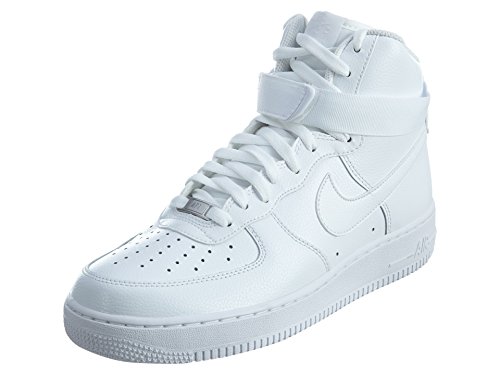
The Air Force 1 High is one of those shoes that shows up everywhere from school hallways to weekend pickup runs. Its tall, padded collar does a fair job of cradling the ankle, which is exactly what someone with mild instability wants during casual play. The leather upper also breaks in nicely over time, molding to the foot in a way synthetics often don’t.
That said, this is a lifestyle silhouette first and a performance basketball shoe second. Players who run aggressive pick-and-roll sets or attack the rim hard will find the cushioning firmer than what the Nike Ja 2 or KD 18 offer. It’s a comfortable middle ground for light court use and daily wear, not a tool for competitive five-on-five play.
Reasons It Performs
- Padded high-top collar cushions the ankle bone during wear
- Durable leather upper ages well with regular use
- Iconic design transitions easily from court to street
- Wide forefoot accommodates most foot shapes
Points To Note
- Cushioning is firm compared to dedicated basketball models
- Heavier than most modern performance shoes
Made For
Casual players and commuters who want a supportive high-top for light court sessions and everyday wear.
Not Your Match When
Competitive players who need responsive cushioning should look at the Nike Ja 2 Nightmare instead.
Ja Morant’s second signature shoe leans into the kind of speed that weak ankles often fear most: rapid accelerations, sudden direction changes, and explosive first steps. Nike built the Ja 2 with Air Zoom cushioning in the forefoot, a unit designed to compress on impact and spring back as the player pushes off. For guards who deal with ankle soreness after long sessions, that responsiveness helps reduce the cumulative pounding on joints.
The mid-cut collar gives a more modern silhouette than the high-tops earlier in this list, so players who want maximum ankle lockdown may need to add a brace or choose differently. The traction pattern, inspired by tractor tire treads, is a nice touch for outdoor courts where dust tends to clog smoother outsoles.
Standout Benefits
- Air Zoom unit provides responsive forefoot cushioning
- Treaded outsole maintains grip on dusty outdoor courts
- Lightweight build suits quick guards and shift players
- Reinforced sidewalls help contain lateral motion
- Modern fit works well for narrow to medium foot shapes
Honest Caveats
- Mid-top cut offers less ankle coverage than full high-tops
- Traction pattern collects dust and needs wiping during play
Best Suited To
Quick guards and athletic wings who want responsive cushioning and don’t mind a lower collar height.
Look Elsewhere When
Players who need maximum ankle coverage should consider the FitVille Wide Basketball Shoes instead.
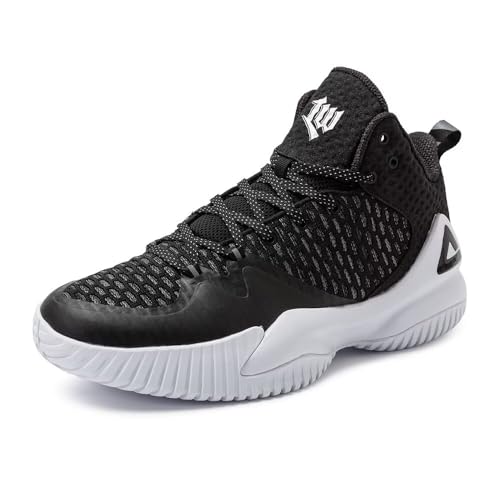
PEAK’s Lou Williams signature sits comfortably in budget territory, and that makes it approachable for casual players who want decent ankle support without a major investment. The high-top silhouette covers the joint, and the breathable upper keeps things from getting swampy during long summer runs at the park.
This isn’t a performance flagship, and the cushioning won’t satisfy serious hoopers who log heavy minutes. But for someone playing once or twice a week on local courts, or for players who rotate between basketball and pickleball, the build quality lands in a reasonable spot for the price.
A Favorable Mix
- High-top design provides meaningful ankle coverage
- Multi-sport versatility works for pickleball and casual tennis
- Price point makes it accessible for casual players
- Breathable mesh upper improves airflow
- Decent outsole grip for outdoor surfaces
Less Ideal Details
- Cushioning lacks the responsiveness of performance-tier models
- Build quality varies, so checking fit carefully helps
Who Will Love This
Recreational players who want a budget-friendly high-top for casual basketball and multi-sport use.
Another Choice May Suit
Players who want more responsive cushioning at a similar price range should consider the LI-NING Wade Flash Series.
Dwyane Wade’s signature line with LI-NING has built a reputation for blending pro-level cushioning with prices that stay grounded. The Wade Flash continues that pattern, offering responsive cushioning underfoot and multiple colorway variants that let players match personal style. For weak ankles, the mid-cut collar still offers decent coverage while keeping the silhouette agile.
Compared to the PEAK Lou Williams earlier in this list, the Wade Flash upgrades the cushioning experience noticeably. The trade-off is a slightly less padded ankle collar, so players who prioritize maximum coverage may want to lace up a brace alongside it.
A Few Highlights
- Responsive cushioning handles hard landings well
- Multiple variants (ABPU027, ABPU039, ABPV013) fit different style preferences
- Reasonable price for the level of performance offered
- Supportive midfoot plate helps reduce foot fatigue
Trade-Offs To Consider
- Collar padding is less plush than some dedicated high-tops
- Sizing can run slightly narrow for wide-foot players
Key Specs
Perfect Match For
Intermediate to advanced players who want pro-style cushioning without paying flagship prices.
Reach For A Different Pick When
Players with wide feet should consider the FitVille Wide Basketball Shoes for a more accommodating fit.
Kevin Durant’s shoes have always been about smooth, scoring-friendly cushioning, and the KD 18 continues that approach. The full-length Air Zoom setup is engineered to absorb impact on landings and return energy during push-offs, which matters for players with weak ankles who feel every hard stop in their joints. The mid-top height gives a more streamlined feel than a full high-top, but the internal fit and heel counter add a sense of lockdown that the silhouette doesn’t immediately advertise.
For players who log serious minutes and want a premium ride, the KD 18 sits in a different conversation than the budget picks earlier. The trade-off is the price, but for someone returning from injury, the impact protection alone can justify the spend.
The Upside
- Full-length cushioning reduces impact on landings
- Heel counter provides solid rear-foot lockdown
- Lightweight upper keeps the shoe agile during play
- Multi-directional traction pattern works on clean courts
- Durable construction handles regular use
- Premium feel for serious players
Some Limits To Know
- Higher price point than entry-level options
- Mid-top cut offers less ankle coverage than true high-tops
- Outsole can be slippery on dusty outdoor courts
Who Should Grab It
Scoring-oriented players who log heavy minutes and want a premium cushioning system to protect their joints.
Where Another Pick Suits Better
Players who need maximum ankle coverage should consider the Nike LeBron Witness VIII instead.
The Witness line takes LeBron’s signature DNA and distills it into a more accessible package, and the eighth version keeps the core promise: a Max Air unit in the heel paired with a supportive midsole foam. For heavier players or post players who land hard and need real impact absorption, that combination is one of the more reassuring setups in this price range.
The build is on the beefier side, which can feel like extra weight for quick guards. Bigger players who value joint protection over featherweight agility, though, will appreciate how grounded the platform feels under load.
Features That Help
- Max Air heel absorbs heavy landings effectively
- Supportive midsole foam adds stability for post play
- Wide base offers a planted, secure feel
- Durable outsole handles hard outdoor courts
- More accessible price than the main LeBron signature line
Things To Weigh
- Heavier than guard-oriented models in this list
- Less agile for quick perimeter players
Quick Facts
Built With In Mind
Bigger players, post players, and anyone who values impact protection over lightweight agility.
Swap It Out When
Quick guards who prioritize speed should consider the Nike Ja 2 Nightmare instead.
FitVille built this model for a specific group that most basketball brands ignore: players with wide feet, flat arches, or both. The extra-wide platform gives toes room to splay naturally, which sounds like a small detail until you spend a full game in narrow shoes and feel it in your feet for the next two days. The high-top collar adds meaningful ankle coverage, which is exactly the combination weak-ankle players with wide feet rarely find together.
For most players with standard-width feet, the fit will feel generous, so it’s worth checking measurements carefully. But for the right foot shape, this shoe solves a real problem that mainstream basketball models often overlook.
Well-Handled Touches
- Extra-wide forefoot accommodates wide-foot players comfortably
- High-top collar provides solid ankle support
- Supportive structure helps players with flat feet
- Padded interior reduces pressure points during long sessions
- Stable base improves confidence on lateral moves
Practical Considerations
- Fit feels loose for players with standard or narrow feet
- Style options are more limited than flagship models
Key Attributes
The Right Fit
Wide-foot and flat-footed players who need both ankle support and a roomy toe box in the same shoe.
Skip It When
Players with standard or narrow feet should consider the AND1 High Top for a more typical fit.
AND1’s high-top leans into the brand’s streetball DNA, with a tall collar and a size range that covers both men’s and women’s fits from 6 to 16. That range is genuinely useful for households where multiple players share gear, and it also means a wider pool of shoppers can actually find their size in stock. The silhouette provides decent ankle coverage, which is the main thing weak-ankle players want from a high-top.
The cushioning lands in the basic-to-decent range, so this is more of a recreational pick than a performance flagship. For most casual players, that’s a reasonable trade-off for the accessible price.
Notable Upsides
- Wide size range covers men’s and women’s fits from 6 to 16
- High-top design wraps the ankle for added support
- Streetball-inspired styling suits casual and recreational play
- Price point works for budget-conscious shoppers
Where It May Fall Short
- Cushioning is functional but not performance-grade
- Build quality may not hold up under daily hard-court use
Whose Shelf It Belongs On
Casual players and households that need a range of sizes without paying premium prices.
A Better Fit Elsewhere
Players who want more responsive cushioning should consider the LI-NING Wade Flash Series.
3N2 built the Reaction for officials, and that audience has different needs than the average player. Referees stand and pivot for entire games, often on hard gym floors, and they need shoes that cushion long hours without looking like training gear. The patent leather upper is easy to wipe clean after a dusty gym night, and the EVA midsole keeps things comfortable through back-to-back games.
For players with weak ankles, the indoor-focused traction and supportive build work well, though the mid-top height offers less coverage than dedicated high-tops like the FitVille model earlier in this list. The width options in D and EE are a nice touch for shoppers who struggle to find a comfortable fit in standard sizing.
Everyday Advantages
- EVA midsole cushions long hours on hard courts
- Patent leather upper wipes clean easily
- Non-marking outsole suits indoor gym floors
- Available in D and EE width options
- Durable leather construction holds up over time
Things To Consider
- Outsole is designed for indoor play, not outdoor courts
- Mid-top cut offers less ankle coverage than true high-tops
Feature Snapshot
Who Will Love This
Referees, gym teachers, and indoor-only players who need a polished, supportive shoe for hard courts.
Where A Sibling Pick Shines
Outdoor players should consider the Nike LeBron Witness VIII for better traction on rough surfaces.
What Matters Most Before Choosing Basketball Shoes For Weak Ankles
Collar Height and Ankle Lockdown
A high-top collar is the most visible feature for weak-ankle players, but height alone isn’t everything. A tall collar that doesn’t lock the heel in place does almost nothing for stability, and a slightly lower collar with a well-padded interior can outperform a taller, looser design. Look for shoes where the collar wraps the ankle without creating pressure points over the Achilles tendon, and where the heel counter keeps the foot from sliding inside the shoe during lateral cuts.
Cushioning and Impact Absorption
Every landing sends force through the ankles, and shoes with responsive cushioning (like the Air Zoom setups in the KD 18 and Ja 2) help absorb some of that shock before it reaches the joint. EVA midsoles, Max Air units, and Zoom pockets all work differently. EVA tends to feel firmer but more stable, while Air-based systems feel springier under load. For most players with weak ankles, a balance of both types tends to feel best.
Outsole Traction and Court Surface
An outsole that grips cleanly lets the foot stop predictably, which reduces the awkward rolling motions that cause ankle injuries. Smooth herringbone patterns work well on clean indoor courts, while deeper, more aggressive treads (like the tractor-tire-inspired pattern on the Ja 2) handle dusty outdoor surfaces better. Matching traction to where you actually play matters more than picking the most aggressive-looking sole.
Fit, Width, and Foot Shape
Weak ankles often go hand in hand with wider feet, flat arches, or both. Shoes that squeeze the forefoot force the foot to fight the shoe all game, which in turn throws off ankle alignment. Wide-fit models like the FitVille address this directly, and several models in this list come in multiple widths. Trying shoes on later in the day, when feet are slightly swollen, gives a more honest sense of fit than a morning try-on.
Key Considerations Across These Picks
Pitfalls Shoppers Hit
A common mistake is choosing a shoe based on style or signature-athlete appeal without checking the actual fit around the ankle. The Air Force 1 and Ja 2 look great, but their collar heights suit different needs, and assuming any basketball shoe will support weak ankles can lead to disappointment. Another slip-up is wearing outdoor-traction shoes on clean gym floors, where the aggressive tread actually reduces grip and increases the risk of rolling.
What The Higher Tier Buys
Stepping up to a shoe like the KD 18 or LeBron Witness VIII typically means better cushioning materials, more refined support structures, and longer-lasting outsoles. For players who log serious court time, those upgrades translate directly into less joint fatigue and fewer mid-game breakdowns. For casual players playing once a week, the premium tier may be harder to justify, and a thoughtful mid-range pick often delivers most of the protection at a friendlier price.
Frequently Asked Questions
Do high-top basketball shoes actually prevent ankle injuries?
High-tops can reduce the range of motion during a roll, but no shoe can fully prevent sprains. The real benefit comes from a locked-in heel, supportive midsole, and traction that lets you plant predictably, all of which reduce the awkward motions that lead to injury.
How often should weak-ankle players replace their basketball shoes?
Most basketball shoes lose meaningful support after about six to twelve months of regular play, depending on surface and intensity. When the midsole feels flat or the outsole tread is worn smooth, it’s worth replacing even if the upper still looks fine.
Can a basketball shoe help with chronic ankle instability?
Supportive shoes help manage the symptoms by reducing stress on the joint, but chronic instability often needs a comprehensive approach. A stable, well-cushioned shoe pairs well with strengthening exercises, and an ankle brace can add extra confidence during recovery periods.
Are lighter basketball shoes better for weak ankles?
Not necessarily. Lighter shoes reduce leg fatigue, but heavier models often have more cushioning material and wider platforms that actually protect the joint better. The best choice depends on play style and body type rather than weight alone.
Should I size up to leave room for an ankle brace?
Sizing up by half a size is a reasonable compromise for players who plan to wear a brace underneath. Going a full size up usually creates too much internal movement, which can worsen instability rather than help it.
The Takeaway
Weak ankles don’t have to keep anyone off the court, and the right pair of shoes goes a long way toward restoring confidence during cuts, jumps, and landings. The ten options above cover a range of budgets, widths, and playing styles, from budget-friendly high-tops to performance flagships. The best fit comes from matching the shoe’s strengths to your specific needs, whether that’s maximum ankle coverage, responsive cushioning, or a roomy fit for wide feet. Try to play in a few pairs if possible before committing, and prioritize how the shoe feels during lateral movement over how it looks in the mirror.