Walking up to a tight pin with a wedge in hand can make a round swing between birdie and double-bogey. For anyone still figuring out the short game, the right wedge cuts down on fat shots and skulled chips that ruin a scorecard. A cavity-back design forgives contact mishits, a wide sole glides through sand, and aggressive groove patterns grab the ball on partial swings. The picks below focus on wedges that meet newcomers where they actually play, not tour-style blades that punish a 7-handicapper’s slight miss.
The Choices Worth Comparing

Callaway Golf Mack Daddy CB Wedge

Cleveland Golf Smart Sole Full-Face Wedge

TaylorMade Golf Milled Grind Wedge
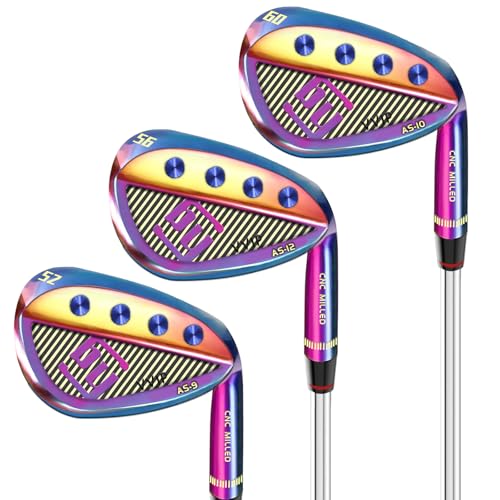
Yamato Full Face Golf Wedge Set
A Closer Look At Each Pick
The Callaway Mack Daddy CB uses a cavity-back construction, meaning a hollowed-out rear section that redistributes weight around the perimeter of the clubhead. That geometry widens the sweet spot, so off-center hits fly farther and straighter than they would from a muscleback blade. In real terms, a thin chip that drifts left on a tight pin still ends up close enough to save par.
Pair that forgiveness with player-friendly sole grinds, and the club slides through sand and thick grass without digging. The aggressive groove pattern grips the ball on partial swings, which matters most when a beginner is learning to control distance. For someone transitioning from a cavity-back iron set, this wedge feels like a natural extension of the same forgiving profile.
The Practical Payoff
- Cavity-back perimeter weighting widens the sweet spot for thin shots
- Player-friendly sole grinds glide through sand without catching
- Aggressive grooves deliver spin on partial wedge swings
- Premium shaft and grip pairing matches typical cavity-back iron specs
- Seamless visual transition when matched with cavity-back irons in the bag
Things To Consider
- The larger profile loses the sleeker look some players prefer at address
- Steel construction transmits vibration more than a softer forged head on mishits
Key Product Details
Who It Suits Best
A new golfer carrying cavity-back irons who wants a wedge that forgives thin contact and saves pars around the green without requiring tour-level precision.
Where Another Pick Suits Better
Players who spend most of their short-game time in bunkers may find the Cleveland Golf Smart Sole Full-Face Wedge’s wider sole easier to escape with.
The Smart Sole design leans into a wide, three-tiered sole shape that sits flush on the turf at address. That footprint makes the club look like it floats above the sand rather than diving in, which helps a hesitant player commit to the swing. Compared to the Callaway Mack Daddy CB’s slimmer profile, this head looks bulkier but feels more stable through impact.
The full-face groove pattern extends across the entire hitting surface, which means off-center toe hits still grab the ball. For beginners who tend to open the face in bunkers, that extra groove coverage keeps spin consistent no matter where contact happens. You may find the chunky look takes a round or two to get used to, but the bunker results usually win people over quickly.
Good Reasons To Consider
- Wide sole glides through sand and thick rough without digging
- Full-face grooves keep spin on open-face bunker shots
- Improved MOI (moment of inertia, a measure of resistance to twisting on off-center hits) helps direction on mishits
- Larger face profile boosts confidence at address for nervous chippers
Points To Note
- Bulky head shape isn’t ideal for knock-down partial shots from tight lies
- Limited shot-shaping versatility compared to a traditional wedge sole
- Groove wear tends to show sooner with heavy bunker practice
Made For
A high-handicap player who fears the sand and wants a wedge that practically pulls itself out of bunkers with a smooth swing.
Consider Something Else When
Anyone wanting a full wedge lineup covering gap, sand, and lob shots should look at the Yamato Full Face Golf Wedge Set instead.
The Milled Grind name refers to a machining process that shapes the sole and grinds to tight tolerances a hand-ground club can’t always match. Each wedge comes off the mill with consistent bounce and sole geometry, which means the club you bought behaves the same as the one in the store. For an improving player, that predictability helps build a repeatable short-game setup.
Strategic mass placement pushes weight higher in the clubhead, raising the center of gravity for a controllable launch with high spin. The result is a wedge that pops the ball up cleanly and stops it fast on firm greens. It demands more accuracy than the cavity-back Callaway, but rewards committed swings with a softer feel that better players chase.
Where It Delivers
- Precision-milled sole ensures consistent bounce across every club
- Higher CG placement delivers controllable launch with strong spin
- Chrome finish resists wear through heavy practice sessions
- Mass optimization improves feel on full and partial wedge shots
- Compact head profile suits players ready to step up from cavity backs
- Reliable turf interaction for crisp contact from fairway lies
Honest Caveats
- Smaller sweet spot punishes off-center contact more than cavity-back designs
- Premium positioning may stretch a starter budget
Feature Snapshot
Right Fit For
An improving mid-handicap player ready to upgrade from game-improvement irons and wanting tour-style feedback on every wedge shot.
Skip It When
A total beginner still fighting basic contact should start with the Callaway Mack Daddy CB Wedge for more room to grow.
Yamato bundles six lofts (50, 52, 54, 56, 58, and 60 degrees) into one set, covering every gap between pitching wedge and lob wedge. Buying a matched set rather than mixing brands keeps swing weight and finish consistent across the bag, which matters when learning distance control on partial shots. The forged steel head gives the clubs a softer feel than cast alternatives at a similar price.
The milled face pattern grips the ball on chips and pitches, while the ambidextrous design suits both right and left-handed players. Compared to buying four individual premium wedges, this set usually lands well under the cost of a single high-end lob wedge from better-known brands. Depending on your commitment level, that math alone makes it worth considering.
Useful Strengths
- Six-loft coverage fills gaps from 50 to 60 degrees in one purchase
- Forged steel head delivers softer feel than typical cast wedges
- Milled face pattern boosts spin on partial wedge swings
- Ambidextrous design accommodates any player orientation
Trade Offs
- Generic grip lacks the customization of premium aftermarket options
- Brand recognition is thinner than Cleveland, Callaway, or TaylorMade
- Resale value trails established names if you upgrade quickly
Whose Bag It Belongs In
A budget-conscious newcomer building a complete wedge lineup in one shot, rather than mixing individual clubs over several seasons.
Look Elsewhere When
Anyone wanting a single bunker-specialist club should grab the Cleveland Golf Smart Sole Full-Face Wedge instead and fill gaps later.
What Matters Most Before Choosing Beginner Wedges
Loft Gaps And Set Composition
A pitching wedge typically sits around 44 to 46 degrees, so the first wedge gap usually appears around 50 degrees (called a gap wedge). Spacing lofts in 4-degree increments (50, 54, 58) gives even distance coverage, while 2-degree jumps (52, 54, 56) offer finer distance tuning but require more commitment to learn each club’s yardage. Beginners starting with three wedges benefit more from even gaps they can swing at full speed.
Sole Width And Grind Shape
Wide soles lift the leading edge off the turf, helping the club skip through sand and thick grass without snagging. Narrow soles dig into firm turf and allow lower-trajectory chips from tight lies. For most recreational rounds played from average lies, a mid-wide sole with moderate bounce (10 to 12 degrees) handles the widest range of conditions without forcing swing adjustments.
Forgiveness Versus Feedback Trade-Off
Cavity-back heads redirect weight to the perimeter, which makes off-center hits travel farther and straighter. Muscleback or milled designs concentrate weight behind the sweet spot, giving purer feedback on strike quality but punishing thin or fat contact. Beginners gain confidence from the first type, while improving players often prefer the honesty of the second once contact becomes consistent.
Shaft, Grip, And Finish Considerations
A wedge shaft heavier than the iron shaft encourages the smoother tempo short shots demand. Stock rubber grips suit most hands, but players with larger hands may want a mid-size or oversize upgrade. Chrome finishes reflect sunlight and show scuffs over time, while raw or satin finishes hide wear but may rust slightly in wet conditions.
Common Buying Mistakes Worth Sidestepping
Skipping A Gap Wedge
A common slip-up is filling the bag with a sand wedge and lob wedge while leaving a 30-yard yardage hole between pitching wedge and sand wedge. That gap wedge slot exists for a reason, and skipping it leaves awkward in-between shots that force hand manipulation. Building the set around even 4-degree increments removes that problem before it shows up on the course.
Buying A 60-Degree Lob Wedge Too Early
The highest loft is the hardest club to control, and beginners who reach for it first often blade chips across the green. A 56- or 58-degree sand wedge handles the same flop shot with a steeper learning curve and more forgiveness. Adding the lob wedge later, once short-game contact is reliable, prevents early frustration.
Ignoring Bounce Angle
Bounce is the angle between the leading edge and the sole’s trailing edge. Higher bounce helps in soft sand and thick rough; lower bounce suits firm turf and tight lies. Picking a wedge without considering typical course conditions leaves the player fighting the sole instead of trusting it.
Where Shoppers Go Wrong
Picking a wedge purely by loft number, without checking the gap between it and the existing irons, leaves awkward distance gaps. Many beginners also grab the most expensive blade-style wedge they see, assuming premium equals better results, when a cavity-back design would actually save more shots. Trying to match an iron brand exactly matters less than matching the swing weight and feel across the set.
What The Higher Tier Buys
Premium milled wedges cost more because the sole geometry is shaped by a machine holding tolerances hand-grinding can’t repeat. That precision translates into predictable turf interaction across every club in the line, so a 56-degree behaves like the 56-degree you tried at the shop. The extra cost also funds softer forging processes that improve feel, plus groove patterns engineered for higher spin within the rules.
For beginners, the upgrade payoff shows up once short-game contact becomes consistent. Until then, the forgiveness of a cavity-back design produces more saved pars than the precision of a milled sole. The honest read is that a mid-tier cavity-back wedge suits the first two seasons, and a milled club rewards the third season swing better.
Frequently Asked Questions
What loft wedge should a beginner start with?
A 56-degree sand wedge handles bunker escapes and standard chips, making it the most versatile first wedge for a new player. Adding a 52-degree gap wedge second fills the yardage gap between pitching wedge and sand wedge without overwhelming the short-game learning curve.
How many wedges does a beginner actually need?
Three wedges cover most short-game situations: a gap wedge around 50 or 52 degrees, a sand wedge at 54 or 56, and a lob wedge at 58 or 60. More wedges create more yardage options but also more clubs to learn, which can slow early progress.
Are cavity-back wedges better for beginners?
Cavity-back wedges place weight around the perimeter, which widens the sweet spot and forgives off-center contact. That geometry helps beginners get the ball airborne and saves shots during the first seasons of play. Milled muscleback designs suit players with more consistent contact.
Can a beginner use a 60-degree lob wedge?
A 60-degree lob wedge is a difficult club to control and tends to blade or chunk without a reliable short-game setup. Most beginners benefit from a 56- or 58-degree wedge first, then adding the lob wedge once distance control improves.
Does wedge shaft weight matter?
Wedge shafts heavier than iron shafts encourage a smoother, more controlled tempo on short shots. Lighter shafts can feel whippy around the green and lead to inconsistent contact. Matching wedge shaft weight to iron shaft weight helps maintain a smooth transition through the set.
Bottom Line
The right beginner wedge removes a few of the hardest shots in golf and turns scary lies into routine pars. Cavity-back designs like the Callaway Mack Daddy CB forgive the contact mistakes newcomers make, wide-sole options like the Cleveland Smart Sole escape bunkers with less drama, and matched sets like the Yamato fill loft gaps without guesswork. Pick the wedge that matches the current swing, not the one being chased, and the short game will improve faster than the scorecard suggests.