Most riders grab a sneaker and hope for the best, then wonder why their feet go numb on a long climb or slip off the pedals in a wet root garden. A proper pair of bike shoes changes the whole ride, whether you’re pinned to flat pedals on a singletrack loop or clipped into a stationary trainer at home.
I pulled together seven options covering flat-pedal trail work, cross-country clipless setups, indoor trainer sessions, and even a triathlon crossover. Each pick solves a different friction point, so the right match depends on what you actually ride.
An Overview Of The Picks

Five Ten Freerider Pro Canvas Flat Pedal Shoe

Giro Cylinder Men’s Mountain Bike Shoe
Five Ten Freerider Pro Mountain Bike Shoes

SHIMANO SH-ME201 Women’s Cross Country Cycling Shoes

SHIMANO SH-IC100 Indoor Cycling Shoe

CJROSM Cycling Shoes for Men and Women
SHIMANO SH-TR901 Triathlon Cycling Shoes
More Details On Our Top Picks
Flat-pedal riders who split time between the trail and the coffee shop get a versatile shoe here. The Five Ten Freerider Pro Canvas swaps the brand’s usual synthetic upper for breathable canvas, giving it a sneaker-like feel that handles post-ride errands without a footwear change.
On the bike, the Dotty tread (a small hexagonal lug pattern covering most of the sole) sticks to flat pedals with the kind of confidence aggressive riders expect from Five Ten. Walk-ins feel fine too, since the rubber compound is tuned for both grip and ground traction. Compared to the Giro Cylinder covered next, this is the more casual-first option of the two flat/entry-level picks in this roundup.
A Few Highlights
- Canvas upper breathes well on warm climbs and dries reasonably fast after creek crossings.
- Dotty outsole with Stealth rubber (a sticky, high-friction compound Five Ten developed for bike pedal grip) holds the pedal pin through rough roots.
- Reinforced toe box shrugs off rock strikes when you dab on technical descents.
- Casual silhouette transitions from trailhead to taproom without looking out of place.
Worth Noting
- Canvas absorbs more water than synthetic uppers, so wet trail days leave the shoe damp longer.
- Less protective than the standard Freerider Pro for riders who crash often.
- Sizing runs narrow for some foot shapes, so trying on matters when possible.
Who It Suits Best
Trail riders who want one shoe for the bike, the hike-a-bike sections, and the post-ride stop, especially those with narrower feet who prioritize casual looks over full armor.
Skip It When
You want a more aggressive trail shoe with deeper protection. The Five Ten Freerider Pro Mountain Bike Shoes further down this list is the burlier sibling.
Newcomers to clipless mountain biking (a setup where a metal cleat on the shoe locks into a spring-loaded pedal) need a forgiving entry point, and the Giro Cylinder fits that brief. It’s a basic lace-up mountain bike shoe designed to get someone onto SPD pedals (the two-bolt cleat standard most MTBs use) without draining the gear budget.
The build is straightforward, leaning toward a lightweight, no-frills construction that focuses on the essentials. Riders moving up from flat pedals get a real cleat-compatible sole, while seasoned riders won’t find much to chase here. Think of it as the gateway shoe in a lineup that climbs all the way up to carbon-soled race gear.
What Helps Most
- SPD-compatible cleat mount opens up the entire MTB pedal ecosystem.
- Lace closure stays simple and reliable, with no straps or dials to fiddle with mid-ride.
- Lightweight construction suits shorter rides and laps at the local trail network.
- Giro’s entry-level fit works well for riders who don’t need performance-grade footbeds.
Trade Offs
- Stiffness is modest, so long climbs with heavy watts can feel soft under the foot.
- Lacks the reinforced toe protection of trail-focused shoes like the Five Ten Freerider Pro.
- Ventilation is basic, which can feel warm on summer pedal sessions.
Right Fit For
First-time clipless riders who want a low-fuss SPD setup for neighborhood trails and entry-level singletrack, especially those not sure they’ll stick with the sport.
Consider Something Else When
You spend hours climbing and want real power transfer. The SHIMANO SH-ME201 Women’s Cross Country Cycling Shoes further down offer noticeably more sole rigidity for the same cleat system.
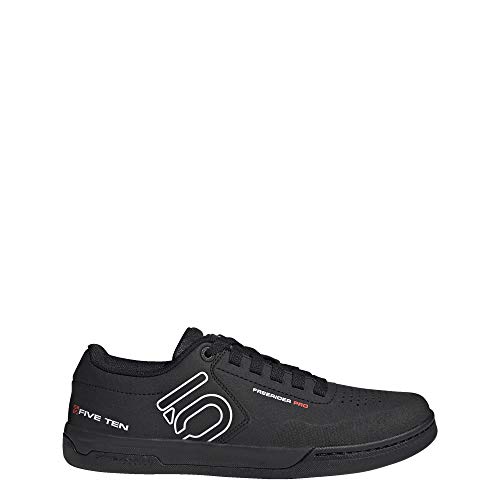
Aggressive trail riders live in their shoes, sliding them around the pedal to find grip on off-camber roots and awkward rock gardens. The Five Ten Freerider Pro is built for exactly that, with the brand’s signature Stealth rubber sole that flat-pedal enthusiasts have trusted for years.
The Pro tier adds a more protective toe and a stiffer midsole than the entry-level Freerider, meaning you can push harder through chunk without feeling every rock. Compared to the canvas version earlier in this list, this is the more serious, all-mountain option, the one to grab when rides involve lift-assisted bike park laps or rough backcountry lines.
Benefits That Matter
- Stealth S1 rubber sole delivers industry-standard pedal grip on flat setups.
- Reinforced toe box handles repeated rock strikes without splitting open.
- Cushioned midsole absorbs vibration on long descents and hike-a-bike pushes.
- Classic lacing system distributes pressure evenly across the forefoot.
- Durable build tends to last multiple seasons of hard trail use.
Things To Consider
- Heavier than cross-country options, which adds up on big elevation days.
- Synthetic upper runs warm in summer heat compared to the canvas version.
- Casual style is limited, so these are bike-only shoes for most riders.
Made For
Enthusiastic flat-pedal riders tackling technical terrain, from bike park laps to technical singletrack, who prioritize grip and foot protection over weight savings.
Look Elsewhere When
You race cross country or want a shoe that doubles as casual wear. The Five Ten Freerider Pro Canvas earlier in this list keeps the same grip DNA in a lighter, more livable package.
Women-specific fit changes everything on a long ride, especially when the shoes are meant for cross-country miles where hot spots turn into blisters by mile 15. The SHIMANO SH-ME201 is Shimano’s mid-tier women’s trail shoe, built around a last that accounts for narrower heels and different forefoot volumes.
The shoe uses a fiberglass-reinforced sole (fiberglass plates laminated into the sole for stiffness without the cost of carbon) for solid power transfer without the race-day price. Off the bike, the tread blocks provide enough traction for short hike-a-bike sections. It sits in a different category than the flat-pedal Five Ten options earlier, this is for riders who have committed to SPD clipless and want real efficiency on climbs.
Key Advantages
- Women-specific last reduces heel lift and hot spots over long miles.
- SPD cleat compatibility opens the door to most MTB pedal systems.
- Fiberglass-reinforced sole balances power transfer and walkability.
- Secure closure system holds the foot steady on rough descents.
Honest Caveats
- Not as protective as the Five Ten Freerider Pro for aggressive trail riding.
- Closure hardware can collect trail grit and may need occasional rinsing.
Key Specs
Best Suited To
Women riders who log cross-country and trail miles on SPD pedals and want a shoe shaped for their foot rather than a scaled-down men’s last.
A Better Fit Elsewhere
You ride flat pedals or want all-mountain protection. The Five Ten Freerider Pro Mountain Bike Shoes is the better match for flat-pedal trail riders in this lineup.
Home trainers changed how people ride indoors, but the included shoes are often afterthoughts. The SHIMANO SH-IC100 fills that gap with a purpose-built indoor cycling shoe that takes SPD cleats, the same standard many indoor bikes already use.
Because it never sees mud or rain, the upper focuses on breathability and comfort over armor. The sole carries enough stiffness for high-cadence interval work, but it skips the walkability tread of outdoor shoes. Compared to the trail-focused ME201 earlier, this is a stripped-down, station-based alternative.
What Makes Sense
- SPD compatibility fits most indoor trainers and spin bike setups.
- Breathable mesh upper keeps feet cooler during sweat-heavy sessions.
- Stiff sole plate transfers power efficiently during high-cadence work.
- Simple strap closure is quick to adjust between intervals.
Small Caveats
- Not designed for outdoor riding, so tread grip on pavement is limited.
- Minimal toe protection rules out any sidewalk commute use.
Feature Snapshot
Who Will Love This
Home trainers who ride Zwift, Peloton, or any SPD-equipped stationary bike multiple times a week and want a dedicated shoe instead of wearing outdoor kit.
Swap It Out When
Your indoor bike uses Delta cleats (a three-bolt Look-style system common on spin bikes). The CJROSM Cycling Shoes for Men and Women covers that exact setup.
Shared spin bikes in the household create a sizing headache, with multiple riders needing one shoe that works for everyone. The CJROSM Cycling Shoes for Men and Women uses a unisex sizing approach with a Delta-compatible cleat mount, covering the three-bolt standard most Peloton-style bikes run.
Pair that with a stiff sole for steady watt output and you’ve got a serviceable shoe for daily indoor use. It’s not a trail product, but for households splitting one bike, the design solves the real friction point of needing separate men’s and women’s pairs. This complements the SH-IC100 above rather than competing with it.
Features That Help
- Delta cleat compatibility covers the three-bolt standard used by many indoor spin bikes.
- Unisex sizing covers men’s and women’s foot ranges in shared-household setups.
- Stiff sole keeps power transfer consistent during steady trainer efforts.
- Adjustable closure adapts to different foot volumes across users.
Points To Note
- Brand recognition is lighter than the Shimano options in this roundup.
- Indoor-only build means walking comfort outside the trainer is limited.
The Right Fit
Households sharing a single spin bike or Peloton-style setup who want one shoe that fits a range of feet and pairs with Delta cleat systems.
Reach For A Different Pick When
Your trainer uses SPD cleats rather than Delta. The SHIMANO SH-IC100 Indoor Cycling Shoe covers that exact setup with stronger brand backing.
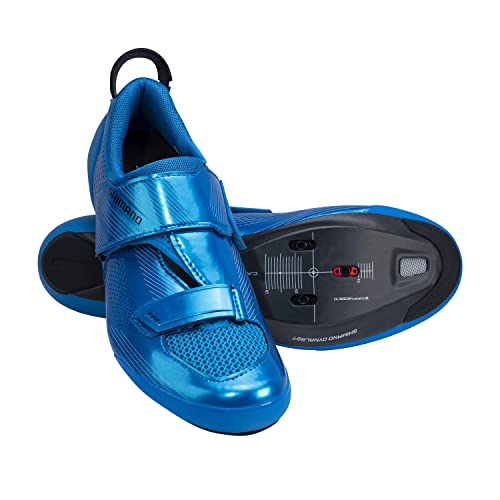
Triathlon transitions punish slow hands. The SHIMANO SH-TR901 is engineered for those seconds, with a single oversized strap, a wide opening, and a heel loop large enough to grab while running through T2.
The carbon fiber sole (a rigid plate made from woven carbon strands for maximum stiffness at minimum weight) makes every watt count on the bike leg, and ventilation channels keep feet from cooking under a hot sun. It crosses categories here, technically a tri shoe rather than a pure mountain bike option, but it earns its place for racers who want the same efficiency off-road or on a road-to-trail mixed course. Different purpose from the ME201 earlier, but with the same Shimano DNA.
Notable Upsides
- Carbon fiber sole delivers top-tier power transfer for racing efforts.
- Single-strap closure plus heel pull enables fast, fumbling-free transitions.
- Wide opening accommodates swollen post-swim feet.
- Ventilation ports help feet dry and breathe in hot conditions.
- Lightweight build reduces fatigue over long-course racing.
Where It May Fall Short
- Single-strap fit offers less micro-adjustment than multi-buckle road racing shoes.
- Carbon sole and minimal tread limit walkability outside race contexts.
- Specialized purpose makes it overkill for casual riders.
Feature Card
Built With In Mind
Triathletes and time-crunched racers who count transition seconds and want a race-only shoe that prioritizes exit speed over all-day comfort.
Where A Sibling Pick Shines
You ride trails and want versatility. The Five Ten Freerider Pro Mountain Bike Shoes handles rough singletrack with far more protection.
What To Weigh Before Picking Your Next Pair
Cleat compatibility drives most of the decision. SPD two-bolt cleats cover most mountain bike and many indoor trainer pedals, while Delta three-bolt cleats fit most spin bikes. A shoe that doesn’t match the pedal is just expensive slippers.
Sole stiffness affects how much power reaches the pedals. Rigid fiberglass or carbon plates work well for long climbs and racing, while flexible soles feel better for walking and casual riding. Flat-pedal riders can ignore cleats entirely and focus on tread compound instead.
Fit matters more than brand. Last shape (the foot-shaped form the shoe is built around), volume, and closure type change how a shoe feels over hours. Women-specific lasts typically run narrower in the heel with more forefoot room.
Use case closes the deal. A trail rider, an indoor trainer, and a triathlete each want different things from a shoe, and mixing them up usually ends in compromises nobody enjoys.
What Separates These Picks From Each Other
Some readers wonder why the list mixes flat-pedal trail shoes, indoor trainers, and a triathlon shoe. The short answer is that “cycling shoes” covers a wide territory, and the right pick depends entirely on what gets pedaled. Flat-pedal trail riders want grippy rubber and toe protection, indoor trainers want cleat compatibility and breathability, racers want stiff soles and fast entry. Putting them in one roundup gives a clearer picture of which shoe fits which rider.
For most people starting out, the Giro Cylinder or the SHIMANO SH-IC100 covers the basics without overcommitting. Experienced trail riders get the most from the Five Ten Freerider Pro or the SH-ME201. Racers and triathletes have a clear lane with the SH-TR901.
Smart Choices That Save Headaches Later
Common Shopping Slip Ups
The most common mistake is buying the wrong cleat system. SPD and Delta cleats look similar but don’t fit the same pedal. Check the pedal model before buying, since adapters rarely solve the gap cleanly.
Another trap is overbuying for a sport that hasn’t started yet. Brand-new riders often grab top-tier carbon-soled road shoes for a casual first season. Those gains only matter once the habit sticks, and a budget shoe gets used far more than an expensive one sitting in a closet.
Where The Extra Money Goes
Higher-tier cycling shoes spend the extra on stiffer soles, lighter uppers, and tighter manufacturing tolerances. Stiffness affects power transfer, weight affects fatigue, and tolerances affect how the shoe fits hot spots over hours. For riders logging serious weekly mileage, those upgrades add up. For occasional weekend riders, the law of diminishing returns kicks in fast.
Frequently Asked Questions
Do I need different shoes for indoor and outdoor riding?
Not strictly, but it’s nice. Indoor shoes skip the tread and armor that outdoor shoes need, so they breathe better and cost less. Many riders keep a dedicated indoor pair to avoid wearing trail grime onto the living room carpet.
What cleat system do most mountain bikes use?
Most mountain bikes use SPD two-bolt cleats. This is the standard for trail, cross-country, and entry-level clipless setups. Road bikes typically use a three-bolt system, but mountain biking stays mostly in two-bolt territory.
Can flat-pedal shoes use cleats?
No. Flat-pedal shoes have a grippy rubber sole designed to grab pedal pins. Adding cleats to a flat-pedal shoe is not possible since the sole is not built for that interface. Riders who want cleats need a dedicated clipless shoe.
How often should cycling shoes be replaced?
Sole wear and closure damage drive most replacements. Cleats themselves typically need swapping every few thousand miles, well before the shoe wears out. Owners commonly replace cycling shoes when the upper tears, the sole delaminates, or the closure stops holding tension.
Are women’s cycling shoes really different?
The last shape typically differs, with a narrower heel and adjusted forefoot volume. Men’s shoes scaled down often leave heel lift or pinching, especially on long rides. Women-specific lasts solve those fit issues for many riders.
Final Verdict
The right cycling shoe depends entirely on where the pedals spin. Trail riders get the most from grippy flat-pedal options like the Five Ten Freerider Pro, indoor trainers get dedicated comfort from the SHIMANO SH-IC100, and racers find their fit in the SH-TR901. Match the shoe to the use case, double-check the cleat system, and the rest takes care of itself.