A flat-soled sneaker looks harmless until you’re grinding out a heavy squat or push press and your heels start sliding on the gym floor. Bodybuilding shoes solve that problem with a hard, raised heel, a wide stable base, and a strap that locks your foot in place so all your effort goes straight into the bar. The five pairs below each handle that core job differently, and this guide will help you figure out which design fits the way you actually train.
The Shortlist At A Glance

adidas Men’s Adipower Weightlifting II Cross Trainer

Under Armour Project Rock 4 Training Shoes

Otomix Stingray Escape Bodybuilding Shoes
adidas Powerlift 5 Weightlifting Shoes
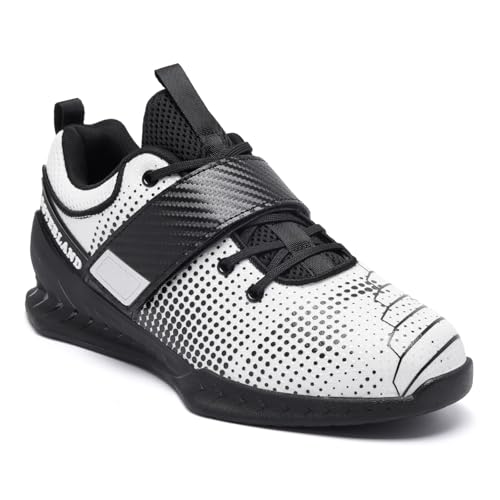
Osterland Weightlifting Shoes for Men and Women
More Details On Our Top Picks
The Adipower II is the shoe I’d point most serious lifters toward before they ever ask about anything else. Its hard, non-compressing midsole gives you a planted feel under heavy squats, and the wide, raised heel tilts your torso into the position powerlifters chase on every rep.
For anyone running a program built around the big three (squat, bench, deadlift), this shoe makes sense as the only lifting pair you need for the first year of training.
Notable Upsides
- Non-compressing midsole keeps the platform stable when loads get heavy
- Woven upper breathes well during long lifting blocks
- Wide toe box lets your feet splay naturally on maximal pulls
- Hook-and-loop strap adds lock-down without forcing you to re-tie
- Raised heel improves ankle dorsiflexion for deeper squat depth
Points To Keep In Mind
- Stiff construction makes it a poor choice for box jumps or running intervals
- Sizing tends to run narrow for lifters with wider forefeet
Key Specs
Who It Suits Best
Lifters focused on squat and deadlift progression who want one shoe dedicated to barbell work.
Consider Something Else When
You follow a mixed circuit format, in which case the Under Armour Project Rock 4 gives you more flexibility.
Where the Adipower leans hard into pure lifting, the Project Rock 4 splits time between strength and conditioning. The Charged Cushioning midsole softens impact, which matters when a session hops from heavy rows to burpees without warning.
It is the right pick for people whose training week looks more like a hybrid circuit than a strict powerlifting template.
The Helpful Details
- Perforated mesh upper keeps feet cool during high-output sets
- Strap and heel overlays improve midfoot lock-down under load
- Bootie-style construction gives a snug, secure wrap
- Cushioned midsole handles plyometrics and short sprints
Trade Offs
- More cushioning means slightly less direct force transfer than the Adipower on max attempts
- Sizing can run long for narrow feet, so trying before committing helps
- Mesh upper wears faster than synthetic leather under heavy rope or sled use
Right Fit For
Hybrid athletes who rotate between strength work and conditioning circuits each week.
A Better Fit Elsewhere
Strict strength athletes chasing a single-purpose shoe should reach for the adidas Powerlift 5 instead.
The Stingray Escape earns its place on this list for lifters whose training does not stop at the barbell. Its thin, grippy sole lets you push off the platform during floor presses, push-ups, or grappling drills without losing contact.
Compared to the taller heel of the Adipower, this pair sits closer to the ground, which trades squat depth assistance for raw ground feel. It is a classic bodybuilding gym shoe built for the kind of work Arnold-era training plans still lean on.
Real Benefits
- Low profile keeps the foot grounded for pressing movements and sled work
- Grippy outsole handles lateral movement and mat work
- Lightweight build reduces fatigue during long accessory circuits
Worth Noting
- Flat sole offers less ankle support for deep front squats
- Design is more utilitarian than modern, so the look is not for everyone
- Minimal arch structure can feel flat for lifters used to raised-heel shoes
Who Should Grab It
Bodybuilders and grapplers who spend more time on the floor than on the platform.
Skip It When
You want a strong heel lift for Olympic-style squats, where the adidas Adipower II serves you better.
The Powerlift 5 is the most approachable adidas lifting shoe for someone stepping into a barbell for the first time. The raised heel sits a touch lower than the Adipower, which keeps new squatters from drifting too far forward while they learn the movement.
For anyone starting a strength program and unsure whether they will stick with it, this pair delivers the core benefits of a lifting shoe without the harder learning curve of a more aggressive design.
What Works In Its Favor
- Moderate heel height helps beginners find depth without overloading the knees
- Wide base gives a planted feel during warm-up and working sets
- Simple strap closure makes on-and-off between lifts easy
- Durable synthetic upper handles daily gym use well
Honest Caveats
- Less stiff than the Adipower, so very heavy lifters may want to upgrade later
- Synthetic lining can run warm in hot training environments
Feature Snapshot
Built With In Mind
New lifters learning squat form who want a forgiving shoe to grow into.
Reach For A Different Pick When
You are already loading heavy and want maximum stiffness, where the adidas Adipower II pulls ahead.
The Osterland lands on this list as a sensible first pair for a home gym where you want the basics without spending much. It gives you a raised heel and a strap, which covers the core difference between a regular sneaker and a true lifting shoe.
Anyone setting up a garage gym on a tight budget gets the barbell experience they need without the sticker shock of premium options.
What Helps Most
- Lower cost makes it easy to commit to a first lifting shoe
- Raised heel supports squat depth for new trainees
- Available in men’s and women’s sizing for shared home gyms
Less-Strong Areas
- Construction quality tends to feel lighter than premium adidas pairs
- Limited long-term track record compared to legacy brands
- Cushioning is minimal, so it is not ideal for high-impact conditioning
Product Snapshot
Best Suited To
Home gym starters who want the basics of a lifting shoe without committing to a premium price.
Swap It Out When
Training frequency climbs and you need a more durable build, at which point the adidas Powerlift 5 is a logical next step.
What To Weigh Before Choosing Bodybuilding Shoes
Heel Height And Squat Mechanics
A raised heel changes your squat geometry in ways a flat shoe cannot match. Most bodybuilding shoes on the market sit between 0.6 and 1.0 inches of lift, which lets you descend deeper into a squat before your calves and ankles become the limiting factor. Taller heels favor Olympic-style and front squats, while shorter heels keep the movement pattern closer to a natural deadlift stance. Picking the wrong height usually shows up as discomfort in the low back or a forward lean that feels hard to control.
Sole Rigidity And Force Transfer
The midsole is the part of the shoe that decides how much of your effort becomes movement versus how much gets absorbed. A stiff, non-compressing sole gives you direct ground contact, so the bar moves only when your muscles do. Softer midsoles, common on cross-training shoes, feel comfortable but cost you a small percentage of force on every heavy rep. Lifting in softer shoes is fine for accessory work, less ideal for your main compounds.
Strap And Closure Choices
Lace-only shoes rely entirely on tension to keep your foot planted. Adding a hook-and-loop strap across the midfoot gives you a second lock-down point, which keeps the heel from lifting under load. For anyone who has had a shoe slip during a snatch or clean, the strap is the feature that fixes it. The trade-off is slightly slower transitions between lifts, but most lifters find that trade worth it.
Fit, Break-In, And Longevity
A lifting shoe that fits well out of the box usually keeps fitting for years because the materials do not stretch dramatically. Trying them on at the end of a training day, when your feet are slightly swollen, gives a more realistic fit than trying them on cold. Watch for hot spots near the strap on your first sessions, since these are the most common break-in complaint and rarely a sign of a defective shoe.
Smart Choices Before You Commit
Traps First Timers Fall Into
Many people buy a lifting shoe before they have built enough squat mobility to use the heel properly, then wonder why their form feels off. The smarter move is to train flat-footed for a few weeks first, identify your mobility limits, and only then add the heel. Another common mistake is buying a training shoe for true lifting work. The cushioning feels great for warm-ups but takes the bite out of your working sets.
What The Higher Tier Buys
Premium pairs cost more because the midsole compounds resist compression longer, the straps use materials that do not stretch out, and the uppers hold their shape through years of use. The upgrade is worth it once training is consistent and loads are climbing, since a stiffer shoe gives back a small amount of performance on every heavy attempt. For casual lifters, that return shows up more in durability than in numbers, but it is still real.
Frequently Asked Questions
Do Bodybuilding Shoes Really Make A Difference?
Yes, for compound lifts they do. The raised heel and rigid sole change your squat mechanics and force transfer in ways a regular sneaker cannot match.
Can I Just Use Squat Shoes For Everything?
You can, but running and plyometrics wear them out faster and the heel can feel awkward during cardio. Many lifters keep a separate pair for conditioning.
How Long Do Lifting Shoes Usually Last?
With consistent training, a quality pair typically holds up for a couple of years before the midsole begins to soften noticeably.
Should I Size Up Or Down?
Most lifters prefer their normal size or a half size up. Sizing down often causes discomfort in the toe box during deep squats.
Are Women’s And Men’s Lifting Shoes Different?
The core construction is usually the same, with differences in width and last shape. Choose the version that matches your foot shape, not just the label.
Closing Remarks
The right bodybuilding shoes come down to how you actually train, not which pair has the loudest marketing. Match the heel height to your squat style, the sole stiffness to your training volume, and the price to your commitment level. Any of the five pairs above will serve you well once you pick the one that fits your routine best.