Wet gloves and boots drag down your morning. Soggy ski mittens, damp work boots, and soaked dive gloves all share the same misery: cold, heavy, and slow to dry. A dedicated dryer cuts that cycle from a full day of waiting to a couple of hours, sometimes less. I put together this list to help anyone from weekend hikers to daily tradespeople find gear that actually fits how they use it.
The Picks In Brief

Underwater Kinetics Super Accessory Hanger (Black)

PEET Mitten DryPort Attachment for Bulky Gloves
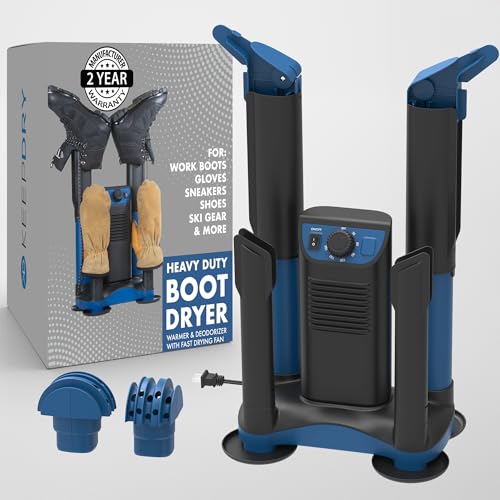
KeepDry Forced Heat Boot Dryer with Timer

DryGuy Force Dry DX 4-Port Electric Dryer

FORLIM Shoe & Boot Dryer 2-Hour Timer

KeepDry Glove Dryer Eco Vent Drying Rack

A Closer Look At Each Pick
Divers coming out of cold water know the dread of hanging wetsuit gloves, hoods, and booties on a doorknob that wasn’t built for them. The Underwater Kinetics Super Accessory Hanger steps in as a no-frills, no-heat solution for that exact problem. It’s molded from a single piece of plastic resin in an I-beam shape, which gives it the kind of stiffness a dripping neoprene glove needs to stay open and vent.
Because there’s no electrical component, it lives happily in a gear locker, on a boat, or in a damp garage without worry. Anyone who logs dives in chilly water and wants their kit dry and ready for the next launch will appreciate how simple it is.
Well-Handled Touches
- Non-corroding resin shrugs off saltwater exposure and won’t rust in a humid locker
- One-piece I-beam shape keeps bulky gloves and hoods spread open, not bunched
- Made in the USA, which keeps the build quality consistent for long-term use
- Lets air circulate around gear so items dry from the inside out
Things To Consider
- It’s passive, so drying still depends on airflow in the room
- Designed mainly for thin neoprene; thicker ski mittens may not fit
Who It Suits Best
Open-water divers, snorkelers, and free-divers who want a simple, no-power way to dry neoprene gloves and booties between sessions.
Where Another Pick Suits Better
The KeepDry Forced Heat Boot Dryer with Timer fits anyone dealing with heavy ski mittens, since this hanger lacks any heat source.
The PEET Mitten DryPort is a small accessory, not a full dryer. It clips onto a compatible PEET base unit and gives that machine the ability to handle bulky ski mittens and insulated gloves that standard ports can’t grip. Think of it as the missing piece for anyone who already owns a PEET dryer and wants to expand what it can do.
For households with both ski gear and everyday shoes, this attachment lets one machine cover both without buying a second system. It only makes sense for shoppers already inside the PEET ecosystem, since it needs the parent dryer to function.
Notable Upsides
- Opens up drying capability for thick winter mittens that standard tubes can’t reach into
- Saves buying a second full dryer if you already run a PEET unit
- Lightweight and compact enough to store in a gear drawer between ski weekends
Worth Noting
- Doesn’t work as a standalone dryer, it needs a PEET base to push air through it
- Limited value for anyone without a compatible PEET system already at home
Made For
Skiers and snowboarders who already own a PEET dryer and want to dry oversized mittens the base unit can’t reach into.
Skip It When
The DryGuy Force Dry DX 4-Port Electric Dryer is a better starting point for anyone who hasn’t committed to a brand yet and needs a full standalone setup.
The KeepDry Forced Heat Boot Dryer is built for households that cycle through soggy gear every weekend. It pushes warm air at around 105°F through four collapsible tubes, so a pair of work boots, a set of ski gloves, and a damp hat can all dry at once. The 250-watt heater moves enough volume to make a real difference in a couple of hours rather than overnight.
The collapsible tube design tucks down for storage, which matters in apartments and mudrooms where counter space is precious. The on-unit heat switch and timer take the guesswork out of leaving gear unattended, a small but practical touch for busy mornings.
Advantages To Know
- Four ports let multiple items dry at the same time, useful for families with overlapping schedules
- Heat switch and built-in timer protect gear from over-drying or accidental all-day runs
- Tubes collapse flat so the unit slides into a closet or under a workbench between uses
- Forced-air design pulls moisture out from deep inside boots, not just the surface
Trade Offs
- The 250-watt draw means it pulls real power, so leaving it on a garage circuit with other tools can trip a breaker
- Tube length is fine for most boots, but very tall ski boots may leave the upper cuff cooler
Key Specs
Best Suited To
Tradespeople, ski families, and weekend warriors who rotate through wet boots and gloves and want one machine to handle all of it.
Consider Something Else When
The KEEPDRY Quiet Boot Dryer Fanless suits shared bedrooms and small spaces where any fan noise would be distracting.
The DryGuy Force Dry DX has been a familiar name in home boot dryers for years, and for good reason. It blows gentle 105°F air through four ports, drying ski boots, work boots, and gloves in roughly one to three hours depending on how soaked they are. The heat-plus-fan combo is safe enough for most materials, including leather and modern synthetic liners.
Accessories expand the system to handle larger footwear and even helmets, which makes it useful beyond standard household duty. Garages, mudrooms, and entryway benches all make natural homes for this dryer.
A Favorable Mix
- Energy-efficient design keeps operating costs low for daily use
- Odor-eliminating airflow helps gear smell fresher between wears
- Compatible with add-on accessories for boots and helmets beyond standard sizes
- Safe 105°F temperature protects delicate materials like leather and glue seams
Points To Note
- The 1-3 hour dry time means planning ahead for next-morning wear
- Four fixed ports sit close together, so very bulky items may need to rotate
Who Should Grab It
Multi-sport households that need one dryer to handle ski boots, cleats, and everyday shoes without swapping tubes.
Reach For A Different Pick When
The KeepDry Forced Heat Boot Dryer with Timer is a stronger fit for anyone who wants a built-in timer for hands-off drying cycles.
Tall boots are where most dryers give up. The FORLIM Shoe & Boot Dryer tackles that problem with telescoping, bendable ports that reach deep into toe boxes and up the shaft of work or ski boots. A 200-watt heater pushes warm air through both ports, and a 2-hour timer lets you walk away once the cycle starts.
The articulating rack rotates a full 180°, letting it sit flat for sneakers or stand upright for tall boots. That kind of adjustment makes it a versatile pick for anyone whose closet spans work boots, slippers, and ski gear.
What Earns Its Place
- Telescopic, bendable ports extend into tall boot shafts up to 21 cm deep
- 2-hour timer removes the worry of leaving the unit running overnight
- 180° rotating rack adapts to flat shoes, slippers, and upright boots alike
- 200-watt heater balances fast drying with reasonable energy draw
Less Ideal Details
- Only two ports, so drying more than one pair means a second cycle
- Tall ski boots may need a manual nudge to align with the angled ports
Spec Overview
The Right Fit
Tradespeople and ski households that deal with tall, hard-to-dry boots and want a hands-off timer cycle.
A Better Fit Elsewhere
The DryGuy Force Dry DX 4-Port Electric Dryer handles more items at once for larger families with mixed footwear.
The KeepDry Glove Dryer takes a different approach than every other pick on this list. Instead of generating heat, it channels the warm air already coming out of a household register vent through a patent-pending rack. That means zero additional electricity, no fans, and no heating elements to worry about with kids around.
It’s a clever fit for anyone who wants to dry gloves, hats, socks, and small boots without adding another appliance to the power strip. The catch is that it only works well when your home’s heating system is actually pushing warm air.
Strengths Worth Knowing
- Uses zero additional energy since it relies on existing register heat
- Non-electric design removes fire and shock hazards in kids’ rooms and entryways
- Holds gloves open so air moves through the fingers, not just around them
- Compact rack slides over a vent without permanent installation
Honest Caveats
- Only dries effectively during the heating season when the furnace is running
- Smaller rack capacity than full electric dryers, so big work gloves may not fit
Whose Shelf It Belongs On
Energy-conscious households and families with kids who want safe, silent drying without adding another plug-in appliance.
Not Your Match When
The KEEPDRY Quiet Boot Dryer Fanless is a better fit for year-round drying in homes without active forced-air heating.
The KEEPDRY Quiet Boot Dryer drops the fan entirely. Convection heat rises naturally through the boot, drawing moisture out without any moving parts or motor noise. For people who keep gear in a bedroom, a cabin, or a yurt, that silence is the whole point.
It warms boots gently and helps reduce odor buildup between wears. Outdoor enthusiasts who camp, hunt, or ski will appreciate the small footprint and the lack of any fan to fail in cold storage.
Why It Works Well
- Fanless design runs silently, ideal for shared rooms and quiet spaces
- No moving parts means fewer mechanical failure points over years of use
- Warm convection helps reduce odor-causing bacteria in damp boots
- Compact enough for travel bags and small cabin closets
Potential Drawbacks
- Slower drying than forced-air models since it relies on natural convection
- Best results come after a towel-wipe first, soakers may need overnight cycles
Feature Snapshot
Perfect Match For
Campers, hunters, and apartment dwellers who want quiet, low-maintenance drying for everyday boots and gloves.
Look Elsewhere When
The KeepDry Forced Heat Boot Dryer with Timer is the better pick for anyone needing fast, multi-port drying on a deadline.
What To Weigh Before Buying A Boot Glove Dryer
Match The Dryer To The Gear You Actually Own
Start by listing what you’ll dry most often. Ski boots, work boots, waders, and dive gloves each have different shapes and shaft depths. A standard two-port dryer handles everyday shoes and most gloves fine, but tall boots need telescoping ports like the FORLIM model offers.
Decide Between Heat And Passive Drying
Forced-air and convection dryers actively pull moisture out, which matters for thick leather work boots soaked through on a job site. Passive racks like the Underwater Kinetics hanger and the KeepDry vent rack rely on room airflow or existing heat, which works for lighter neoprene and everyday gloves but takes longer.
Consider Noise, Power, And Placement
Forced-air units move real volume and make some fan noise, which is fine in a garage but rough in a bedroom. Fanless convection models like the KEEPDRY Quiet Boot Dryer stay silent. Also think about outlet access, since garage dryers sometimes share circuits with heavier tools and may need a dedicated line for safe daily use.
Key Considerations Across These Picks
Pitfalls Shoppers Hit
A common slip is choosing a dryer with too few ports for a full household. Two ports sound fine until three people need boots ready at the same time on a Monday morning. Another trap is overlooking shaft depth, since standard tubes barely reach into tall ski or work boots.
Where The Extra Money Goes
Higher-tier dryers tend to add telescoping ports, multi-port layouts, and built-in timers. Those upgrades matter most for households with tall boots, mixed gear types, and tight morning routines. A simpler two-port convection unit makes more sense for one person drying one pair at a time.
Frequently Asked Questions
How long does a boot glove dryer take to actually dry gear?
Most forced-air models finish a damp pair of boots or gloves in one to three hours, while fanless convection dryers typically need overnight cycles for soaked items.
Can I leave the dryer running overnight?
Units with built-in timers like the FORLIM model are designed for unattended runs, but timer-less models should be unplugged once gear feels dry to avoid over-drying.
Will a boot dryer damage leather or delicate liners?
Dryers running around 105°F are generally safe for leather and modern synthetic liners, though very high heat over long periods can dry out natural leather and shorten its life.
Do these dryers work for gloves and mittens specifically?
Yes, though bulky ski mittens need either wide ports, an attachment like the PEET DryPort, or tall enough tubes to keep the cuffs open so air can move through.
Are non-electric drying racks actually effective?
Passive racks work well when paired with good airflow or active heating vents, but they dry slower than electric units and depend heavily on room conditions.
The Takeaway
The right boot glove dryer depends on what fills your gear closet: tall work boots, ski mittens, dive gloves, or a mix of everything. Match the port count and shaft reach to your actual gear, decide between active heat and passive drying based on your space, and don’t overlook noise if the unit lives near a bedroom. With the right fit, soggy mornings turn into routine ones.