One wrong step on a frozen sidewalk can ruin a whole winter. I’ve watched friends turn an ankle on black ice outside a coffee shop, and I’ve seen trail hikers bail out halfway through a loop because their footing gave up on them. Boot ice cleats solve the same problem from two angles: everyday walkers get rubber-and-stud overshoes that stretch over boots, while backcountry travelers reach for steel-spike traction that bites into frozen ground. The seven picks below cover both ends of that spectrum, and I’ll walk you through what makes each one worth a closer look.
A Snapshot Of The Selections

Kahtoola MICROspikes Footwear Traction for Winter Trail Hiking
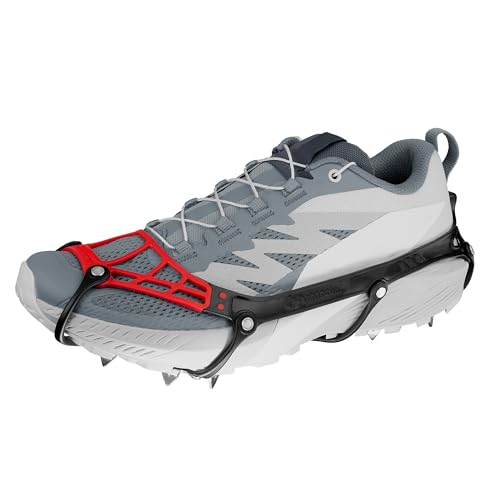
Kahtoola MICROspikes Ghost Footwear Traction

Kahtoola EXOspikes Footwear Traction

Giggleway Kids Crampons for Hiking Boots

Winter Walking Spare Spike Ice Cleat

AGOOL 9-Point Crampons Ice Cleats

AGOOL 11-Stud Anti-Slip Ice Cleats
More On The Choices That Made The List
The original Kahtoola MICROspikes have been a familiar sight on winter trailheads for years, and the design shows why. Twelve heat-treated stainless-steel spikes sit under each foot, with eight clustered at the forefoot where most of the braking and push-off happens, and four bracing the heel on descents. The corrosion-resistant steel holds up to repeated freeze-thaw cycles, which matters more than people expect when gear lives in a car trunk half the winter.
For hikers logging miles on frozen singletrack or ice-glazed scrambles, this is the baseline that other traction gear gets measured against. Unlike the lighter Ghost version you’ll see later, this one leans into steel-chain durability over weight savings. It runs best on hiking shoes and mid-height boots with a fairly flexible sole, and the elastomer harness pulls on without much fuss.
Real-World Strengths
- Twelve stainless-steel spikes per foot provide confident bite on glare ice and refrozen crust
- Forefoot-heavy spike layout (eight up front, four in heel) matches how a boot actually rolls during a stride
- Corrosion-resistant steel means the spikes survive wet storage and salty pavement
- Compact enough to live in a pack pocket when conditions warm up mid-loop
- Pulls over hiking shoes and most light boots in under a minute once you get the hang of it
Worth Noting
- Heavier than thermoplastic options, so long trail-runners may feel the extra swing weight
- Best on semi-flexible soles; very stiff mountaineering boots can crowd the chain
- Owners commonly recommend drying the harness before long-term storage to extend rubber life
Key Specs
Who It Suits Best
Backcountry hikers and winter trekkers who spend real time on frozen trails and want proven steel traction without stepping up to full crampons.
Where Another Pick Suits Better
Runners chasing speed over icy ground should look at the Kahtoola MICROspikes Ghost, which trades steel chains for a lighter thermoplastic build.
The Ghost takes the original MICROspikes concept and strips out the steel chains in favor of a thermoplastic elastomer (a rubber-like plastic that stays flexible in cold) platform with a thermoplastic rubber toe harness. Kahtoola pegs the weight savings at well over 40 percent compared to the classic version, which is the kind of number trail runners actually feel on a long tempo.
Twelve hard-wearing spikes per foot still handle the biting work, with eight at the forefoot and four at the heel laid out the same way as the steel model. Where it earns its keep is on flexible trail-running shoes, where a heavy steel chain would slap and fatigue the foot. Compared to the heavier EXOspikes later on this list, the Ghost packs down flatter and lives quietly at the bottom of a running vest.
Good Reasons To Consider
- Significantly lighter than steel-chain traction, so gait stays natural at running pace
- Twelve-spike layout preserves forefoot grip on icy climbs and descents
- Streamlined TPR toe harness reduces bulk over thin trail-running uppers
- Folds flat and packs into small jacket pockets or running belts
- Designed specifically for flexible footwear rather than stiff boots
Trade Offs
- Thermoplastic platform doesn’t bite quite as deep as steel on hard, refrozen ice
- Less suited to stiff mountaineering boots than the original MICROspikes
- Buyers commonly mention rinsing off road salt after coastal or treated-pavement runs
Right Fit For
Trail runners and fast hikers who want grip on frost-hardened singletrack without the swing weight of a full steel traction system.
Look Elsewhere When
Backpackers hauling a loaded kit on mixed ice-and-rock terrain will get more bite from the Kahtoola EXOspikes, which sit between this Ghost model and a true crampon.
The EXOspikes sit in the middle of Kahtoola’s lineup, aimed at hikers and runners who don’t want to commit to either the all-steel MICROspikes or the ultralight Ghost. The build leans on abrasion-resistant materials meant to handle a long day bouncing between frozen dirt, snow patches, and exposed rock without shredding the platform.
Twelve spikes per foot carry over from the MICROspikes family, with the same eight-forefoot, four-heel geometry. The harness is designed for hiking shoes and boots rather than racing flats, so the fit feels more secure on mid-height waterproof boots. Where this one earns its place is on routes that mix conditions. Frozen morning trail giving way to bare rock by noon is exactly the kind of day this gear was designed around.
Where It Delivers
- Abrasion-resistant platform handles snow-to-rock transitions better than pure snow traction
- Twelve-spike layout gives reliable braking on steep, frozen descents
- Sturdier harness than the Ghost model for use on waterproof mid-height boots
- Light enough that hikers in good shape can keep a steady pace on long routes
- Versatile across hiking, backpacking, and trail-running use cases
Points To Note
- Doesn’t grip quite as deep as full-steel chains on sheer blue ice
- More presence on the foot than the Ghost, which dedicated runners may notice
- Avoid walking on bare dry rock longer than necessary to slow platform wear
Feature Snapshot
Best Suited To
Hikers and trail runners dealing with mixed winter terrain, where snow in the morning gives way to frozen rock and bare trail by afternoon.
Consider Something Else When
Pure ice climbers and glacial travelers should pair the Kahtoola MICROspikes with a stiffer boot, while casual walkers on plowed sidewalks will be happier in the stretch-overshoe options below.
Kids fall down more than adults on icy sidewalks, mostly because their center of gravity sits higher and they move faster than their boots can grip. Giggleway’s kid-sized crampons are sized down for toddlers through youth, and they use the same basic stainless-steel spike approach the adult traction gear relies on, just scaled for smaller boots.
The fit covers hiking boots, snow boots, and regular winter shoes, so a parent doesn’t need a separate pair for every type of footwear. For weekend hiking, ice fishing trips, or just getting to the bus stop without a faceplant, the traction is a clear step up from hoping for the best. Compared to the AGOOL stretch overshoes later on this list, the harness here is meant to stay put during the kind of running, jumping, and tree-climbing kids actually do outdoors.
Positive Points
- Stainless-steel spikes hold up to the kind of abuse kids dish out
- Sized for toddlers through youth, so families can outfit multiple kids in one product line
- Works over hiking boots, snow boots, and everyday winter shoes
- Lets parents extend the hiking season into shoulder-winter conditions
Less Ideal Details
- Kids outgrow the size quickly, so plan on a replacement each winter for fast growers
- Putting them on takes more patience than a stretchy rubber overshoe, especially with mittens on
Perfect Match For
Families with kids who hike, ice fish, or just need reliable footing on neighborhood sidewalks through winter.
Skip It When
Adults looking for serious backcountry traction should jump to the Kahtoola MICROspikes, which are built for heavier boots and longer days.
The Winter Walking Spare Spike leans into a different philosophy than the trail-oriented Kahtoola gear. It uses tungsten carbide studs rather than steel spikes, which hold an edge longer on pavement and concrete, and the elastic harness is sized from XS through XXL so it slips over everything from work boots to winter sneakers.
The replaceable-stud design is the standout feature. Once a stud wears down, you swap in a fresh one instead of retiring the whole unit. For people who wear through traction gear during a single winter of jobsite walks or daily commutes, that lifespan difference matters. The trim-line feature at the heel lets a wearer cut down the strap for a closer fit on smaller boots, which is a small touch but a thoughtful one.
The Good Stuff
- Tungsten carbide studs outlast standard steel on abrasive pavement
- Replaceable studs extend the working life of the whole unit
- Wide size range covers work boots, casual boots, and winter shoes
- Trim-line feature adjusts heel length for a tighter fit
Room For Improvement
- Stud pattern is less aggressive than dedicated ice-trail traction on refrozen hills
- Low-profile design is better for walking than running or steep descents
At A Glance
Who Should Grab It
Jobsite workers, postal carriers, and daily commuters who need traction that survives months of pavement pounding.
A Better Fit Elsewhere
Anyone heading into genuine backcountry ice will find more confident grip in the Kahtoola MICROspikes, which use longer steel spikes designed for frozen trails.
AGOOL’s nine-point crampons take the overshoe approach: a stretchy silicone-and-elastomer harness pulls over whatever shoes or boots you already own. There’s no separate hiking boot required, no chain tensioning, and the whole unit rolls up small enough to live in a coat pocket until the sidewalk turns mean.
Sizing runs from small through XL, with men’s and women’s size ranges printed on the listing, so picking the right fit mostly comes down to matching your usual shoe size. The thermoplastic elastomer (a flexible cold-resistant rubber) keeps its stretch in freezing temps, which is the kind of detail that separates decent traction gear from the stuff that turns rigid on the first cold morning. Compared to the steel-and-chain options above, the bite here is shallower, but the convenience is hard to beat for casual winter walking.
Reasons It Performs
- Stretch-overshoe design pulls on over any shoes or boots in seconds
- Cold-resistant elastomer stays flexible when temperatures drop below freezing
- Compact enough to carry in a coat pocket for changing conditions
- Lower entry cost than steel traction systems
Honest Caveats
- Studs don’t bite as deep as steel spikes on hard ice or steep hills
- Best on relatively flat, plowed sidewalks rather than backcountry terrain
- Looser fit on bulky boots, so double-check the size chart for insulated winter pairs
Quick Facts
Made For
Casual walkers, dog walkers, and anyone who mostly deals with slick sidewalks and neighborhood streets rather than trail ice.
Another Choice May Suit
Backcountry hikers should look at the Kahtoola EXOspikes for a more aggressive platform that handles mixed snow and rock.
The 11-stud AGOOL model is the older sibling of the nine-point version, and the extra stud placement makes a noticeable difference on uneven sidewalk patches where patches of glare ice hide between dry concrete. Like its smaller sibling, it stretches over shoes and boots without any harness adjustment, so it’s a grab-and-go option for daily commutes.
The one-piece steel-stud design is built so the studs won’t separate from the platform the way some stitched units eventually do, which is the kind of failure mode that turns into a faceplant. Compared to the Winter Walking Spare Spike above, this one trades replaceable studs for a simpler all-in-one build, and most casual users won’t wear through the studs in a single winter anyway. The trade-off works for daily walkers who don’t want to think about maintenance.
Points In Its Favor
- Eleven steel studs add coverage across the forefoot compared to nine-point designs
- One-piece stud construction holds up to repeated flexing on pavement
- Cold-resistant elastomer stays stretchy in freezing temperatures
- Pulls on over shoes or boots in seconds, no harness fiddling
Things To Consider
- Studs are fixed, so once they wear down the whole unit is retired
- Less bite than steel-chain options on steep, refrozen hills
Built With In Mind
Daily commuters, dog walkers, and parents who want simple pull-on traction for sidewalks and school runs.
Reach For A Different Pick When
Heavier jobsite use with replaceable studs will outlast this design; the Winter Walking Spare Spike is the longer-running choice for that workload.
Picking Traction That Actually Fits Your Winter
Choosing boot ice cleats comes down to matching the gear to the ground you’ll cover most. Steel-spike traction like the Kahtoola MICROspikes bites hardest on refrozen trails and icy climbs, where longer teeth and chain platforms transfer force into the surface. Thermoplastic and rubber-overshoe designs trade some bite for convenience, and that’s a fair trade when most of your winter walking happens on plowed sidewalks.
Spike Material And Bite Depth
Stainless steel spikes stay sharp longest on mixed terrain, and they resist corrosion from road salt and wet snow. Tungsten carbide studs, like those on the Winter Walking model, hold an edge through abrasive pavement where steel would polish smooth. For sheer ice, longer spikes dig deeper, while shorter studs feel more natural on flat ground.
Fit And Footwear Compatibility
Boot ice cleats either stretch over what you already wear or replace your footwear entirely. Stretch overshoes work with anything from sneakers to pac boots, while chain-style traction fits best on hiking shoes and mid-height boots with semi-flexible soles. Stiff mountaineering boots crowd most traction chains, so match the gear to your footwear before anything else.
Weight And Packability
Runners and fast hikers want low swing weight, which is where thermoplastic platforms earn their keep. Backcountry travelers often accept extra grams in exchange for steel-chain durability on longer routes. If the gear lives in a coat pocket for half the winter, compact folding matters more than absolute grip.
Spike Count And Layout
More studs mean more contact patches, but placement matters as much as count. A forefoot-heavy layout, with most spikes up front and a few bracing the heel, matches how a boot actually rolls through a stride and improves braking on descents.
Key Considerations Across These Picks
Pitfalls Shoppers Hit
The most common mistake is choosing the wrong size. Stretch overshoes that are too loose shift underfoot and trip you up; chain traction that’s too tight crowds the sole and won’t flex naturally. Equally common is buying steel-spike traction for jobsite pavement, where the steel wears down fast and tungsten carbide would last much longer.
What The Higher Tier Buys
Premium traction earns its keep through materials and replaceable parts. Heat-treated stainless steel resists corrosion, abrasion-resistant platforms survive mixed snow-and-rock days, and replaceable studs turn a one-season item into multi-year gear. For occasional sidewalk use, the budget stretch overshoes do the job; for daily wear or backcountry days, the upgrade pays off fast.
Frequently Asked Questions
How Do Boot Ice Cleats Differ From Full Crampons?
Boot ice cleats stretch over hiking shoes or boots for casual ice and packed snow, while full crampons are rigid step-in frames designed for vertical ice and glacier travel. For plowed sidewalks and winter trails, boot ice cleats are usually the right tool.
Can I Wear These On Regular Sneakers?
Stretch-overshoe designs like the AGOOL models pull over sneakers and casual winter shoes without issue. Chain-style traction like the Kahtoola MICROspikes fits best on hiking shoes and mid-height boots with semi-flexible soles, where the harness has something to grip.
How Long Do The Spikes Actually Last?
Spike lifespan depends on the surface and material. Tungsten carbide studs outlast steel on pavement, while heat-treated stainless steel holds up longest on mixed trail terrain. Most casual walkers get multiple winters from a single pair before studs need attention.
Are Boot Ice Cleats Safe On Stairs And Indoor Floors?
Steel spikes and carbide studs can scratch hardwood, tile, and concrete. The safer habit is to slip the cleats off at the door, or pick a stretch-overshoe design with shorter studs for places where you’ll transition between outdoor and indoor walking.
How Do I Store Them Between Winters?
A quick rinse to remove salt and grit, then air-dry before tossing them in a drawer or bin, extends the life of both the harness and the spikes. Avoid leaving damp traction gear sealed in a car trunk, where moisture accelerates corrosion on metal parts.
The Takeaway
The right boot ice cleats depend entirely on where winter takes you. Backcountry hikers get the most from steel-spike traction like the Kahtoola MICROspikes, casual walkers love the convenience of stretch overshoes like the AGOOL 11-stud model, and jobsite commuters will appreciate the replaceable studs on the Winter Walking Spare Spike. Match the gear to your usual terrain, fit it to your boots, and the rest of winter gets a lot less slippery.