Finding the right booties for dogs feels like a small thing until your pup is limping across hot pavement or picking up snowballs between the toes. I know the scene: a senior Lab sliding on hardwood floors, a Husky who refuses to walk past the salted sidewalk, a small terrier whose paws get sore on summer trails. A good set protects the pads and keeps outings enjoyable for both ends of the leash. These four options cover the common situations pet parents actually face.
A Closer Look At The Lineup

EXPAWLORER Dog Socks with Grippers for Hardwood Floors
Lukovee Waterproof Fleece Lined Dog Winter Booties, 4 Pack

Hcpet Water-Resistant Dog Shoes for Large Medium Small Dogs

Hcpet Anti-Slip Dog Boots with Reflective Straps, 4-Pack
The Picks, Examined More Closely
These are technically socks, not booties, and that distinction matters. I think of them as a softer alternative for dogs who need traction on hardwood or tile rather than full paw coverage on rough ground. The grippers along the sole help senior dogs and pups recovering from injury stay steady indoors, which is a real quality-of-life upgrade for households where slipping has become a daily worry.
Unlike the Lukovee set I’ll get to next, this one trades waterproof leather for breathable knit, so it shines in climate-controlled spaces and short outdoor trips on mild days. Owners commonly use it to discourage paw-licking, since the snug sock fabric interrupts the habit. I find the appeal is the indoor focus: warm floors for napping, no scuff marks on the wood, and a much calmer senior dog in the kitchen.
A Few Highlights
- Grip dots help senior or post-surgery dogs walk confidently on slick hardwood
- Soft knit fabric keeps paws warm in air-conditioned homes during summer
- Sock-style design stays flexible, so dogs adjust faster than to harder booties
- Useful as a barrier that interrupts compulsive paw-licking
- Machine-washable knit construction makes cleanup straightforward
Soft Spots
- Not waterproof, which limits use in snow, heavy rain, or muddy yards
- Knit can snag on rough pavement during longer outdoor walks
- Sizing runs a bit wide; measuring paw width before ordering matters
- Elastic cuff may loosen on very active dogs who paw at them
Made For
Senior dogs, dogs recovering from paw injuries, and small breeds who mostly need indoor traction and warmth on smooth flooring.
Skip It When
You need real weather protection on winter sidewalks, in which case the Lukovee dog booties handle snow and slush far better.
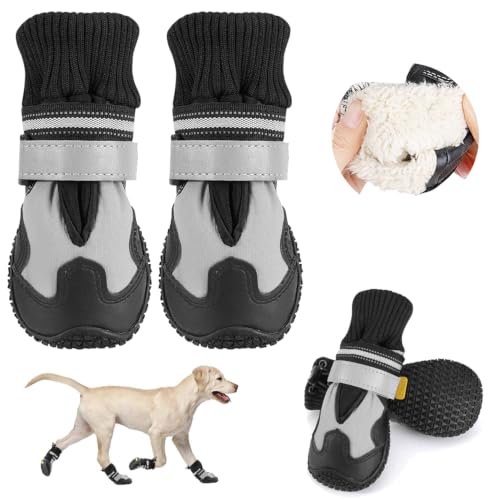
These are the pair I reach for when the forecast turns ugly. The water-resistant leather shell blocks slush, while the fleece interior holds warmth in freezing temps. Think of them less as cute accessories and more as functional winter gear for dogs who balk at salted sidewalks.
An adjustable drawstring sleeve plus a hook-and-loop fastener strap work together to keep the booties from rotating off mid-walk, which is the most common complaint I hear about cheaper sets. The natural rubber soles add grip on icy patches. Eight size options let them fit a wide range of breeds, from small terriers up to mid-size huskies, and a four-pack means one chewed bootie won’t end the whole season.
Reasons It Performs
- Fleece lining and leather shell keep paws warm and dry during winter walks
- Drawstring plus strap combination stays put even on dogs who kick at their feet
- Rubber sole improves traction on icy or salted pavement
- Four-pack gives a spare if one gets lost in deep snow
- Wide size range covers small to large breeds in one product line
Worth Bearing In Mind
- Some dogs need a short break-in period to accept the bulkier fit
- Fleece lining takes longer to dry if it gets soaked through
- Not designed for long trail hikes; better for neighborhood winter use
Feature Card
Right Fit For
Cold-climate households with dogs who walk daily through snow, slush, or salt-treated sidewalks during winter months.
Another Choice May Suit
If you hike rocky or uneven summer trails, the Hcpet water-resistant shoes give a roomier fit and a more breathable mesh build instead.
Where the Lukovee focuses on winter sidewalks, this Hcpet set leans into trail use. Breathable mesh panels let heat escape during active hikes, which matters more than people expect when a working dog is climbing a ridge in shoulder seasons. The sizing chart covers an unusually wide range, going up to dogs over 88 pounds.
I think the standout detail is the eight-size fit system: measuring paw width rather than guessing by weight tends to land a much better fit, especially for in-between breeds. For hikers, joggers, and people who walk on hot summer asphalt, these provide a balance of breathability and surface protection that pure winter booties cannot match.
Real Benefits
- Breathable mesh keeps paws cooler during warm-weather hikes
- Wide size range fits everything from terriers up to giant breeds
- Water-resistant shell handles creek crossings and damp trails
- Reinforced construction handles rough terrain without splitting
Things To Weigh
- Less insulation than the Lukovee, so not great in deep snow
- Fit is snug by design, which can frustrate first-time users
- Mesh dries quickly but offers less warmth for very short-coated breeds
- Wide paws between sizes may need careful sizing up
Who It Suits Best
Active dogs and their people who hike dirt trails, jog on pavement, or explore rocky terrain in mild to warm seasons.
Look Elsewhere When
Cold-winter paw protection is the main concern, because the Lukovee fleece-lined booties offer much better warmth for that scenario.
The last pick on my list is the most versatile for everyday pavement walking. Reflective straps along the closure line improve visibility during early-morning or after-dark walks, which I appreciate for city dogs crossing busy intersections. The khaki color stays presentable even after a few muddy outings.
Compared to the Lukovee set, this pair trades fleece lining for a lighter, year-round build that handles hot pavement, light snow, and trail debris without overheating. Owners commonly use these for protecting healing paw injuries and for preventing scratches on hardwood floors when paws are freshly trimmed. I think of them as a solid all-rounder.
Well-Handled Touches
- Reflective straps improve low-light visibility on urban walks
- Anti-slip sole works well on hot pavement and slick indoor floors
- Four-pack is useful when one goes missing during outdoor play
- Versatile build handles summer heat and light winter conditions
- Helpful for protecting paws during injury recovery
Points To Note
- Lacks deep-cold insulation for serious winter climates
- Reflective strap material may scuff after heavy use
- Lightweight fabric provides less rugged durability on rocky hikes than the Hcpet mesh trail shoes
Best Suited To
Urban dog owners who need paw protection across hot summer pavement, light snow, and indoor hardwood floors year-round.
A Better Fit Elsewhere
For dogs who mostly need indoor traction and a softer sock-style feel, the EXPAWLORER socks offer a gentler option for senior pets.
What Matters Most Before Choosing Booties For Dogs
Fit Beats Everything Else
A bootie that slips off mid-walk does no one any good. Measure paw width on a flat surface while the dog is standing, then match to the brand’s specific chart rather than guessing by weight. If your dog falls between sizes, going slightly smaller usually works for knit or sock-style designs, while a roomier cut tends to fit hiking booties better. A two-finger check at the cuff confirms the closure isn’t pinching.
Match The Bootie To The Climate
Winter booties need insulation and a waterproof shell, while summer and indoor models benefit from breathable mesh or knit. A dog walking on hot asphalt has very different needs than one crossing salted sidewalks. The Lukovee set excels in cold; the Hcpet mesh design suits warmer hiking weather. Mixing seasons is where most fit problems start.
Durability And Traction
Rubber soles grip better on slick floors and pavement, while softer knit grips handle indoor traction. Reinforced stitching around the toe and cuff extends the life of the bootie, especially for active dogs. Owners commonly report that the first wear shows where a bootie truly fits, so a short test walk indoors beats a cold-weather debut.
Smarter Spending Across The Lineup
Where Shoppers Slip Up
The biggest mistake I see is skipping the paw measurement and ordering by breed alone, which leads to the dreaded high-kicking shuffle on day one. Another common trap is assuming booties fit like human socks: dogs with dewclaws, wider paws, or thick fur around the cuff need different adjustments. Finally, choosing a heavy-duty hiking model for indoor use makes a dog walk like they’re wearing ski boots, so match the build to the activity.
Why Spending Up Pays Off
A higher-tier pair usually buys tougher stitching, better waterproofing, and more reliable closures that survive daily use. For households walking through real winter or rough trails, that upgrade translates into longer-lasting booties and fewer mid-walk losses. For light indoor use, a budget sock-style covers the basics without overspending. The right tier depends on how often the booties actually go outside, not just on price alone.
Frequently Asked Questions
How Do I Get My Dog Used To Booties?
Start with one paw at a time indoors, treat after each bootie, and keep early sessions short. Most dogs acclimate within a few days if sessions stay positive.
Can Dogs Walk Comfortably In Booties All Day?
Daily walks are usually fine, but extended wear can trap moisture and heat. I remove booties during rest periods so paws can breathe and dry.
Should I Size Up Or Down For In-Between Paws?
Sizing depends on the build. Knit sock-style designs tend to fit smaller, while rugged hiking booties usually benefit from sizing up for toe room.
Are Booties Safe For Hot Pavement?
Yes, that is one of their main jobs. A water-resistant sole insulates paws from heated asphalt, which can otherwise burn pads in summer.
How Do I Clean Dog Booties?
Most fabric and rubber booties rinse clean with mild soap and water, then air-dry away from direct heat. Knit sock-style designs often do well in a gentle machine wash inside out.
Closing Remarks
Each pick above solves a different version of the same problem: keeping paws safe across the surfaces dogs encounter every day. Measure your dog’s paws first, then match the bootie to the climate and activity that fits your routine. The right pair should feel like a small daily upgrade for both of you, not a constant battle at the door.