Anyone who walks a frozen sidewalk, a slick trail, or a shoveled driveway knows the moment your boot slips and your stomach drops. The right traction gear turns that stomach-drop into a confident stride, and the wrong one leaves you shuffling with your arms out like a toddler on a polished floor. I put together this list of six options covering everything from quick neighborhood errands to full-on mountain treks, so you can match the grip to the ground you actually cross.
The Picks In Brief

Kahtoola MICROspikes Footwear Traction
Hillsound Cypress6 Six Point Ice Cleat
Kahtoola MICROspikes Ghost Traction

Kahtoola 1st Gen NANOspikes Traction

Kahtoola EXOspikes Footwear Traction

AGOOL 28-Stud Ice Cleats
Inside Each Recommended Option
When I think about the standard most winter traction gear gets measured against, this is usually the one. Kahtoola’s MICROspikes pull on over a hiking boot or low trail shoe and stay put with a simple rubber harness, which is the kind of no-fuss design that matters when your fingers are cold.
Twelve stainless steel spikes sit under each foot, with eight up front and four at the heel, which mirrors how a boot actually loads during a stride. The steel is heat-treated for corrosion resistance, so wet slush and road salt don’t chew it up over a single season.
The Good Stuff
- 12 stainless steel spikes per foot deliver confident bite on icy trails and packed snow
- Corrosion-resistant build holds up through wet winters and salty sidewalks
- Stretchy rubber harness slips over hiking boots and trail shoes in seconds
- Compact enough to stash in a pack for surprise weather changes
- Forefoot-heavy spike layout matches how a foot plants when walking uphill
Things To Consider
- Not the lightest option, so long-distance runners may feel fatigue sooner
- The steel spikes can scuff hardwood floors if worn indoors without removing them
Feature Snapshot
Who It Suits Best
Winter hikers and backpackers tackling frozen mountain trails who want a single traction system that handles ice, packed snow, and mixed terrain with minimal fuss.
Consider Something Else When
Trail runners chasing speed on groomed snow should look at the lighter Kahtoola MICROspikes Ghost, which trims weight without giving up the same 12-spike layout.
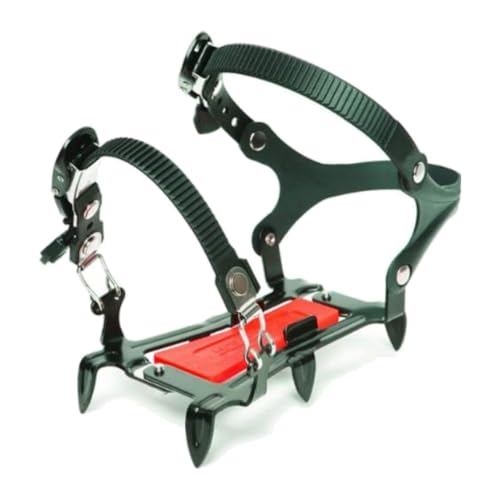
The Hillsound Cypress6 sits in a different category from the lighter Kahtoola MICROspikes covered earlier. This is a six-point instep system with 20mm and 25mm carbon steel spikes, the kind of aggressive profile that points toward glacier edges and frozen ridgelines rather than a park path.
An orange anti-snowballing pad stretches across the bottom of the harness, which keeps packed snow from building up under your foot and turning your cleat into a slippery platform. A ratchet buckle tightens the whole thing down so the spikes stay centered under your arch even after hours of stepping.
Well-Handled Touches
- Carbon steel spikes in two lengths bite hard into ice and frozen terrain
- Anti-snowballing pad prevents snow buildup that kills grip mid-stride
- Ratchet buckle locks the fit so spikes stay aligned under the foot
- Heavier build suits hikers carrying packs across longer frozen miles
Worth Noting
- Heavier than rubber-harness designs, so it’s overkill for casual walks
- Ratchet buckle adds a small learning curve the first few times you put them on
- Steel spikes are tough on car floor mats and indoor surfaces
Right Fit For
Non-technical trekkers and winter mountaineers who need serious bite on glaciers, frozen slopes, and deeper snow without stepping into full crampon territory.
Swap It Out When
City commuters and casual walkers should skip toward the AGOOL 28-Stud Ice Cleats, which trades the steel spike intensity for a lighter stretch fit that suits sidewalks and short errands.
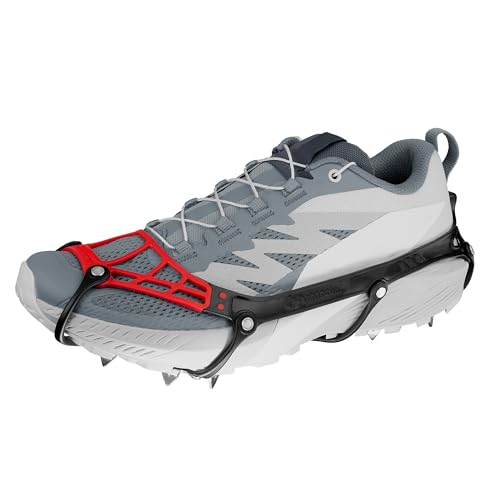
Kahtoola rethought the original MICROspikes for runners who count every gram in their pack. The Ghost drops the steel chain for a thermoplastic polyurethane build, which sounds technical but means the same 12-spike layout (8 forefoot, 4 heel) lands roughly 43 percent lighter than the classic version.
The streamlined thermoplastic rubber toe harness slides over flexible trail-running shoes without bunching, which matters when your foot is bending through a long stride. The trade-off is material feel, since TPU flexes differently from steel, and aggressive rocky terrain can wear it down faster.
A Few Highlights
- Significantly lighter than steel-chain MICROspikes for faster miles
- Twelve-spike layout still gives the forefoot a strong grip
- Slim harness fits flexible trail-running shoes without crowding the toe box
- Compact pack-down for stashing in a running vest or small pack
Points To Keep In Mind
- TPU spike base wears faster than steel when crossing rocky terrain
- Less aggressive bite than the Hillsound Cypress6 on hard glacier ice
Quick Facts
Made For
Trail runners training through winter who want spike-level grip without the weight penalty that steel chains add over a 10-mile loop.
A Better Fit Elsewhere
Backpackers carrying heavier loads across rocky ground should choose the Kahtoola EXOspikes, which trades some lightness for a tougher build that handles rough terrain.
Trail spikes on a city sidewalk feel clunky, and that’s the gap the NANOspikes fills. Ten tungsten carbide-tipped spikes sit under each foot in a slim profile, designed for the transition between dry pavement and the occasional icy corner rather than deep snow.
The lower-profile harness disappears under road-running shoes, and the lighter build keeps your turnover quick. The trade-off shows up on anything deeper than hard-packed snow, where fewer spikes and a softer base start to lose bite.
Benefits That Matter
- Tungsten carbide tips grip polished ice better than steel at this scale
- Slim fit suits road-running shoes and casual winter boots
- Easy on-and-off for short sidewalk commutes
- Light enough to keep on a key hook or in a desk drawer at the office
Trade Offs
- Only 10 spikes per foot, so deep snow coverage falls short
- Best on hard-packed ice rather than soft powder or fresh snow
Best Suited To
Road runners and daily walkers who want confident footing on icy sidewalks and shaded corners without strapping on a chunky winter traction system.
Reach For A Different Pick When
Anyone heading off pavement onto snowy trails will get more grip from the original Kahtoola MICROspikes, which carry the same 12-spike DNA in a trail-ready build.
The EXOspikes step in where the standard MICROspikes leave off, with a tougher construction that handles the rocky, mixed terrain of a longer winter trip. It’s still a 12-spike system, but the housing is built for abrasion resistance rather than pure weight savings.
That extra durability matters when a hike crosses frozen dirt, exposed roots, and rock slabs in the same mile. The build is light enough for trail running but tough enough to shrug off the kind of scraping that would fray lighter chain-based systems.
What It Does Well
- Abrasion-resistant build handles rocky and rooty mixed terrain
- Twelve-spike layout delivers reliable grip across ice and snow transitions
- Balances weight savings with longer-lasting materials
- Versatile enough for both backpacking trips and trail-running days
Minor Gripes
- Not as light as the Ghost for pure running-focused use
- Heavier housing can feel bulky on smaller, low-volume shoes
Who Should Grab It
Backpackers and trail runners who want one traction system that survives rocky, mixed ground without babying it through each trip.
Where Another Pick Suits Better
Pure runners chasing low weight over long distances will appreciate the slimmer profile of the Kahtoola MICROspikes Ghost more than the EXOspikes’ tougher housing.
Not everyone needs a steel spike underfoot. The AGOOL design stretches over shoes and boots using a thermoplastic elastomer harness, with 28 small metal studs spread across the sole for grip on snow, ice, and muddy ground.
There’s a strap addition that helps the cleat sit flatter on thinner footwear, which is a small detail that matters for people with narrower feet. The honest read is that the studs are shorter and the harness is lighter than the steel systems earlier in this list, so the grip is gentler on truly hard ice.
Notable Upsides
- Stretch-on fit works over sneakers, boots, and casual shoes
- 28-stud layout offers balanced grip for everyday winter walking
- Strap helps secure the cleat on narrower or thinner footwear
- Low cost for casual users who don’t need glacier-grade bite
Honest Caveats
- Shorter studs slip more on hard, polished ice than steel spikes
- Thermoplastic elastomer harness can stiffen in extreme cold over time
Key Attributes
Perfect Match For
Casual walkers, dog owners, and commuters who want a low-effort traction layer for sidewalks, driveways, and snowy parking lots.
Look Elsewhere When
Anyone heading into real mountain terrain or sustained ice should step up to the Kahtoola MICROspikes for the steel spike bite the AGOOL stretch design can’t match.
Picking The Right Traction For Your Winter Routine
Choosing traction gear comes down to matching the system to the ground and the distance, not chasing the most aggressive option. A neighborhood dog walk on partly shoveled sidewalks calls for a much lighter setup than a frozen ridge hike miles from the trailhead.
Match The Spike Count To The Terrain
Steel spikes in the 10 to 12 per foot range handle most packed snow and icy trails without turning every step into a clattering march. Carbon steel spikes with longer 20 to 25mm profiles earn their keep on glaciers and frozen slopes, where shorter studs simply don’t reach into the hard surface. Stud-based rubber harnesses work for sidewalks and short walks, though they lose bite fast on truly polished ice.
Think About The Footwear Underneath
Traction gear stretches over a boot or shoe, so the fit underneath matters as much as the cleat itself. Bulky mountaineering boots pair well with beefier harnesses like the Hillsound Cypress6, while flexible road runners need slimmer designs like the Kahtoola NANOspikes to avoid crowding the toe box. Wider feet often do better with stretch-fit designs, while narrower profiles benefit from added top straps to keep the system centered.
Weight Changes The Whole Experience
Steel chains and heavy housings hold up longer but add noticeable fatigue over a long day. Lighter thermoplastic builds trim grams and disappear on the foot, which matters for runners and anyone covering serious distance. Heavier systems trade weight for durability, so backcountry users with a pack often prefer that trade while casual walkers usually don’t.
Storage And Care Extend The Life
Most traction gear benefits from a quick dry before being stuffed back into a bag, since moisture trapped against steel spikes can shorten their lifespan. A small stuff sack or dedicated pocket in a winter pack keeps the harness from tangling with gloves and hats. Checking the spikes before each season for bent tips or loose housings catches wear before it turns into a slip.
Smart Considerations Before You Buy
Traps First Timers Fall Into
The biggest mistake shoppers make is buying the heaviest, most aggressive system and then feeling silly wearing it on a flat sidewalk. Traction gear is terrain-specific, and a steel spike system on a paved commute feels awkward indoors and wears fast on bare pavement. Match the system to the actual ground you’ll cross most often, not the worst-case scenario you’ll rarely face.
Another common slip is assuming all harnesses fit all shoes. Stretch-fit designs accommodate a wide range, but low-volume road runners and bulky mountaineering boots sit at opposite ends of that range, and forcing a mismatch leads to sloppy spike placement. Trying the harness on with your actual winter footwear, even at the door, prevents that surprise on the trail.
What The Higher Tier Buys
Spending more on a traction system typically buys tougher materials, longer-lasting spike construction, and details like anti-snowballing pads and ratchet buckles. A premium pick like the Hillsound Cypress6 earns its place on glacier days where a stretched rubber harness would fail. The upgrade is worth it for anyone who spends real time on technical frozen terrain, while a budget stretch-fit system covers the casual crowd without the extra cost.
Frequently Asked Questions
Do traction cleats work on regular boots?
Yes, most winter traction systems stretch over standard hiking boots, winter boots, and even running shoes. The fit depends on the harness design, so match the cleat to the volume of your footwear rather than assuming one size handles everything.
Can I wear these indoors without damaging floors?
Steel spikes can scratch hardwood and tile, so removing them before stepping inside is the safer move. Studded rubber harnesses are gentler but can still leave marks on softer surfaces over time.
How long do winter traction cleats last?
Lifespan depends on terrain and material, but steel spikes generally last multiple seasons of regular winter use. Thermoplastic builds wear faster on rocky ground, while heavy-duty steel systems can stretch across many trips with basic care.
Are these safe for running on icy roads?
Yes, lighter systems like the Kahtoola NANOspikes are designed specifically for road running and walking on packed ice. Spike placement and harness fit both matter, so choose a system built for the surface you’ll cover most.
What’s the difference between spikes and studs?
Spikes are longer, sharper metal points designed to bite hard ice, while studs are shorter, blunter metal nubs that grip through packed snow and mild ice. Spikes suit serious frozen terrain, and studs work well for everyday winter walking.
Bottom Line
The right traction gear depends less on the worst winter day you’ve ever seen and more on the walks you actually take this week. Match the spike intensity to your regular terrain, the harness fit to your footwear, and the weight to your mileage, and any of these six options will serve you well through the cold months ahead.