Framing lumber at sunrise, hauling plywood through a wet yard, kneeling on subfloor for hours on end: a carpenter’s feet take a beating that ordinary boots can’t handle. The right pair keeps ankles stable on uneven ground, sheds rain when a deck job runs long, and holds up after a year of dropped two-by-fours. I’ve narrowed down six solid options across wedge-soled classics, rugged ranch-style builds, and modern waterproof jobsite boots, so you can match the boot to the kind of work you actually do.
The Lineup, Simplified

Georgia Boot Men’s Wedge Industrial Boot

Carhartt Boys’ Washed Dungaree Pants

Georgia Boot Men’s Farm and Ranch Lacer Work Boots

SUREWAY Men’s 6″ Soft Toe Moc Toe Leather Work Boots
SUREWAY Men’s 6″ Soft/Steel Toe Heavy Duty Waterproof Work Boot
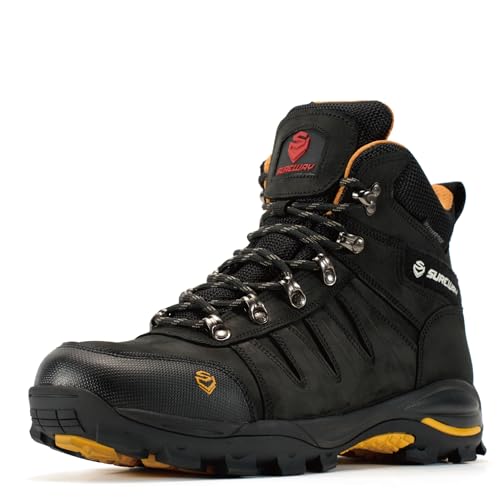
SUREWAY Men’s 6″ Waterproof Soft/Steel Toe Work Boots
The Picks, Examined More Closely
The Georgia Boot Men’s Wedge Industrial Boot leans on a wedge-style outsole that spreads weight evenly across the foot, which most framers notice on long days standing on concrete slabs or subfloor panels. Built with a Goodyear welt, the upper is stitched to the sole in a way that lets a cobbler swap the sole when it wears down, so the boot can outlive its first tread. The wedge profile trades aggressive lugs for a flatter footprint, which means it grips fine on hard-packed surfaces but can feel slick on muddy jobsite approaches after a rain.
For crew members who frame houses indoors or do finish-heavy work on flat subfloors, the wedge design reduces fatigue compared to a chunkier lug sole. The leather upper breaks in gradually, so the first week may feel stiff until the material softens around the ankle.
Practical Advantages
- Goodyear welt construction allows resoling, extending the boot’s working life well past a single sole.
- Wedge outsole spreads pressure evenly, which helps on concrete slabs and hard-packed surfaces.
- Smooth sole profile keeps the boot from tracking mud and debris onto finished floors.
- Pull-on styling speeds up morning startup when you’re lacing up at the truck.
Worth Noting
- Wedge soles can feel slippery on wet grass or muddy terrain compared to lugged alternatives.
- Break-in period stretches beyond a few shifts, so plan for some short-day wear early on.
Feature Snapshot
Who Should Grab It
Framers and trim carpenters who spend most of their day on flat, hard surfaces and want a resolable boot that won’t quit after one sole wears out.
Swap It Out When
For rough terrain or muddy rural builds, the SUREWAY Men’s 6″ Soft/Steel Toe Heavy Duty Waterproof Work Boot offers better traction and weather protection.
The Carhartt Boys’ Washed Dungaree Pants aren’t a boot, but they show up alongside the boots in this lineup for the young apprentice tagging along to the jobsite on weekends. The outer shell is a rugged washed canvas that handles scrapes from deck screws and sawhorse edges, while the inner lining brings cotton flannel softness that helps on cool mornings at an unheated job. They sit in that workwear middle ground: tougher than school pants, more comfortable than raw denim.
For parents sizing up workwear for teens who help on weekend builds, the pre-washed feel skips the stiff break-in you’d get from unwashed duck canvas. The fit runs roomy through the thigh for kneeling and climbing, though sizing can feel a touch generous on slimmer frames.
Bright Spots
- Washed canvas feels broken-in out of the package, so no stiff first-wear discomfort.
- Cotton flannel lining adds warmth for chilly morning starts before the sun hits the framing.
- Roomy cut through the seat and thigh supports kneeling on subfloor or deck work.
- Carhartt construction handles scrapes against lumber edges and sawhorse hardware.
Trade Offs
- Canvas outer fabric is warmer in summer heat than synthetic ripstop work pants.
- Not a safety-rated work pant, so it pairs with boots rather than replacing protective gear on the adult jobsite.
The Right Fit
Parents outfitting teens who tag along on weekend carpentry jobs and want a pant that handles scrapes without the stiff feel of raw workwear.
Look Elsewhere When
For an adult carpenter who needs safety-rated pants rather than general workwear, the work boots in this lineup are the priority purchase.
The Georgia Boot Men’s Farm and Ranch Lacer Work Boots step up the leather quality with SPR leather, a specially treated hide that resists abrasion far better than standard work boot leather. That extra toughness matters for carpenters working near treated lumber, adhesives, or chemicals that would otherwise dry out and crack ordinary uppers. The internal padded collar and rear nylon pull loop make the lace-up process faster at the start of a long shift.
Compared to the earlier Wedge Industrial Boot, this model trades the smooth wedge for a more aggressive farm-and-ranch profile that grips dirt and gravel better. The tradeoff is a slightly heavier boot that can feel bulkier on ladders.
Strong Points
- SPR leather handles barnyard acids and caustic chemicals better than standard boot leather.
- Padded collar reduces ankle rubbing during multi-hour work sessions.
- Rear nylon pull loop speeds up the lace-up routine at the start of the day.
- Lugged outsole grips dirt, gravel, and uneven terrain better than wedge designs.
Honest Caveats
- Heavier construction can wear on shins during ladder-heavy days or roofing work.
- Lace-up design takes longer to put on than the pull-on wedge option above.
- Lugged sole tracks more debris onto finished surfaces compared to a smooth wedge profile.
Quick Facts
Built With In Mind
Carpenters working around treated lumber, adhesives, or job-site chemicals who need a leather upper that won’t break down from exposure.
Consider Something Else When
For a lighter boot focused on flat-surface framing comfort, the Georgia Boot Men’s Wedge Industrial Boot is the smoother, lighter sibling.
The SUREWAY Men’s 6″ Soft Toe Moc Toe Leather Work Boots carry the moc toe stitching that trim carpenters and finish workers tend to prefer, since the toe box has a bit more room than a plain round-toe build. At six inches tall, the shaft supports the ankle without feeling like a tall logger boot on shorter frames. The soft toe design trades impact protection for lighter weight, which matters when you’re climbing scaffolds or staging trim overhead.
Unlike the heavier SPR leather on the Georgia Boot Men’s Farm and Ranch Lacer, this SUREWAY keeps the build lighter for jobs that don’t require safety toes. The moc toe silhouette looks closer to a casual boot off the clock, so it doubles as a weekend boot without the steel-toe clunk.
Standout Benefits
- Soft toe construction shaves weight, easing fatigue on multi-floor trim runs.
- Moc toe shape gives extra room for wide foot types and cushioned work socks.
- Six-inch shaft height balances ankle support with a non-bulky feel.
- Leather upper transitions easily from jobsite to weekend wear.
Points To Keep In Mind
- Soft toe provides no impact or compression protection against dropped lumber.
- No waterproof membrane listed, so wet lumber yards mean soggy feet.
Made For
Finish carpenters and trim specialists working indoors who prefer lightweight comfort over safety-toe protection.
Reach For A Different Pick When
For jobs where toe protection matters, the SUREWAY Men’s 6″ Soft/Steel Toe Heavy Duty Waterproof Work Boot adds impact resistance and waterproofing.
The SUREWAY Men’s 6″ Soft/Steel Toe Heavy Duty Waterproof Work Boot layers a waterproof bootie, slip-resistant outsole, and either a soft toe or steel toe option depending on the listing selected. For exterior framers and deck builders working through wet mornings, the waterproof lining keeps feet dry when the lumber is damp and the ground is soaked. The slip-resistant outsole grips slick surfaces like wet OSB sheathing or freshly rained-on subfloor better than a wedge profile would.
Compared to the lighter moc toe SUREWAY above, this model adds weight in exchange for weather protection and toe safety. The removable insole makes drying the boot easier overnight, which matters when the boots get soaked through.
The Upside
- Waterproof construction keeps feet dry on wet lumber and damp subfloor mornings.
- Slip-resistant outsole grips slick OSB, plywood, and wet concrete better than wedge designs.
- Removable insole simplifies overnight drying after soaked workdays.
- Available in safety-toe configurations for impact-prone work.
Potential Drawbacks
- Heavier than the soft-toe moc toe version, which can wear on legs during full-day framing.
- Waterproof membrane reduces breathability in hot summer conditions.
Feature Rundown
Best Suited To
Exterior framers, deck builders, and remodel crews who work through wet conditions and need reliable traction.
Not Your Match When
For interior finish work where lighter weight and breathability matter more, the SUREWAY Men’s 6″ Soft Toe Moc Toe Leather Work Boots are the better everyday pick.
The SUREWAY Men’s 6″ Waterproof Soft/Steel Toe Work Boots add an electrical hazard rating to the formula, which reduces risk on job sites where live wiring, generators, or energized panels are part of the day. For carpenters doing rough-ins, remodeling older homes, or working near temporary power setups, the EH-rated sole offers an extra layer of protection that standard work boots skip. The full-grain leather upper resists scuffs and scrapes that come with handling rough lumber daily.
The combination of waterproofing, EH rating, and oil-resistant outsole makes this the most safety-focused pick in the lineup. For homeowners running power tools in a damp basement, the EH rating adds peace of mind where ordinary boots wouldn’t.
Everyday Perks
- EH-rated sole reduces electrical hazard risk around live wiring and temporary power.
- Oil- and slip-resistant outsole grips greasy shop floors and wet surfaces.
- Full-grain leather upper resists scrapes from rough lumber handling.
- Waterproof bootie handles damp basements and wet morning conditions.
Some Limits To Know
- Safety and EH ratings add weight compared to non-rated work boots.
- Higher feature count puts this among the pricier options in the lineup.
Key Product Details
Perfect Match For
Carpenters who handle rough-ins, work near live wiring, or do renovation jobs in older homes where electrical hazards are a daily concern.
A Better Fit Elsewhere
For pure framing work without electrical exposure, the Georgia Boot Men’s Wedge Industrial Boot keeps weight and cost lower.
What To Weigh Before Choosing Your Next Pair
The right boot depends more on the work than on brand loyalty. Sole profile is a first decision: wedge outsoles spread pressure evenly and work best on hard, flat surfaces like concrete slabs and subfloor panels, while lugged outsoles grip dirt, gravel, and uneven terrain at the cost of tracking mud indoors. Toe protection matters when framing members, lumber, or tools could drop on the foot; soft toe boots shave weight for finish and trim work where toe injuries are unlikely.
Leather quality affects both lifespan and break-in. Treated leathers like the SPR leather on the Georgia Boot Men’s Farm and Ranch Lacer resist abrasion and chemical exposure, but they weigh more and need longer to soften. Standard leather uppers break in faster and breathe better in warm weather.
Height of the shaft changes ankle support and ladder feel. Six-inch boots balance ankle stability with a non-bulky fit, while taller shafts add support for uneven ground at the cost of bulk on ladders. Waterproofing helps in wet climates but reduces breathability in summer.
Fit And Break-In Realities
Boots that fit perfectly in the store can feel different after eight hours on a framing crew. Plan for a short-day break-in before judging comfort, and remember that thicker work socks change the fit noticeably. Heel slippage on day one often resolves as the leather molds to the foot.
Climate And Job-Site Conditions
Wet-weather framers benefit from waterproof membranes, even though the same boots run hot in summer. For mixed climates, a non-waterproof boot with leather conditioner applied seasonally often outperforms a waterproof boot used year-round.
Long-Term Maintenance Habits
Leather boots last longer when cleaned weekly and conditioned monthly. Removable insoles dry faster overnight, which reduces the mildew smell that builds up in soaked boots. Resoling extends the life of Goodyear-welted boots like the Georgia Wedge Industrial far beyond a single sole’s lifespan.
Key Considerations Across These Picks
Pitfalls Shoppers Hit
A common mistake is picking the heaviest safety-rated boot for work that doesn’t require it. Trim carpenters hauling finish lumber rarely drop heavy materials on their feet, so a steel toe adds weight without meaningful safety gain. Another wrong turn is choosing wedge outsoles for muddy rural builds where lugged traction is essential. Sizing up to fit thick socks leaves feet sliding inside the boot, while sizing down creates pressure points after the leather breaks in. Boot width matters as much as length; wide feet need wide lasts to avoid pinching during long shifts.
When Paying More Pays Off
Higher-tier boots in this category typically add treated leather, waterproof membranes, or EH ratings. For carpenters working around chemicals or treated lumber, SPR leather on the Georgia Boot Men’s Farm and Ranch Lacer resists damage that would destroy standard uppers within a year. For anyone near live wiring, EH-rated soles on the SUREWAY waterproof boots reduce electrical hazard risk in a way that budget boots can’t match. Waterproofing earns its cost in wet climates where soggy feet shorten days and lead to cold-related discomfort. When the work regularly exposes the boots to water, chemicals, or impact, the upgrade pays back through longer service life and fewer replacements.
Frequently Asked Questions
How long should carpenter work boots last?
Most quality work boots last one to three years with daily use, depending on the leather and the work environment. Treated leathers and resolable welt construction can push that range further when the boots get regular cleaning and conditioning.
Should carpenters choose steel toe or soft toe?
Steel toe boots protect against dropped lumber and impact, which matters on framing and deck builds. Soft toe boots weigh less and suit finish carpenters who rarely work under heavy materials.
Are wedge soles better than lugged soles?
Wedge soles spread weight evenly on hard, flat surfaces like subfloor and concrete. Lugged soles grip dirt, gravel, and uneven terrain better, so the choice depends on whether the work happens indoors or out.
Do waterproof boots make feet sweat?
Waterproof membranes reduce breathability, so feet run warmer in summer conditions. For mixed climates, non-waterproof leather with regular conditioning often feels cooler year-round.
How important is electrical hazard rating?
EH-rated soles matter for carpenters doing rough-ins, remodeling older homes, or working near live wiring and generators. For pure framing on de-energized sites, the rating is less critical.
The Takeaway
The best carpenter work boot is the one matched to your specific work: wedge soles for flat-surface framing, lugged builds for rough terrain, EH ratings for live-wire exposure. Try to match the boot’s strengths to your most common day, and you’ll spend less time thinking about your feet.