A solid pair of casual motorcycle shoes shouldn’t feel like a compromise. I ride, then I walk into a coffee shop, a hardware store, or a friend’s place, and I don’t want to limp or change footwear. The picks below are built to take saddle time without looking like full race gear. Some lean into leather tradition, some borrow sneaker comfort, and a couple split the difference between boot and shoe. Here’s what I’d actually consider, and what each one does best.
A Quick View Of The Lineup

Harley-Davidson Vntgmoto Tall Casual Boots Mid Calf

Harley-Davidson Brake Buckle Leather Riding Boots
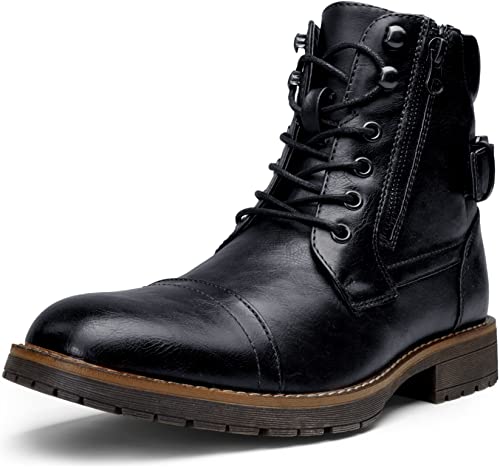
Vostey Men’s Motorcycle Combat Casual Boots

Arkbird Chelsea Leather Chukka Ankle Boots

RIDEIRON CE Certified Protective Riding Shoes

Arkbird Grainy Leather Lace-Up Chukka Boots
A Deeper Look At The Lineup
Mid-calf boots are a specific mood, and the Vntgmoto leans hard into it. The plain-toe lace-up front and the buckle detail across the top give it that classic cruiser silhouette, the kind you see parked at a Saturday meet-up next to a Softail.
For someone whose ride is short and stylish, maybe across town to grab lunch, this boot covers the moment well. The leather upper carries the Old English tonal logo emboss, which lands as subtle rather than loud.
The Case For It
- Mid-calf height reads as intentional style, not safety afterthought
- Tonal logo emboss keeps branding understated
- Buckle detail adds visual interest beyond plain lace-up
- Leather upper handles weather reasonably with conditioning
Worth Bearing In Mind
- Tall shaft adds bulk under jeans cuffs for shorter riders
- Break-in on leather uppers can run a few weeks
Built With In Mind
Weekend riders on cruisers who want the leather-and-buckle aesthetic and don’t need all-day commuting comfort.
Look Elsewhere When
The Harley-Davidson Brake Buckle Leather Riding Boots are a better match for riders who want ankle height and easier daily wear.
If the Vntgmoto is the weekend jacket, the Brake Buckle is the everyday jacket. It sits at ankle height, which makes walking easier, and the leather build keeps it feeling like a proper boot rather than a sneaker with motorcycle marketing.
The Goodyear welt construction is the detail worth pausing on. A welt is the stitched strip that joins the upper to the sole, and a Goodyear welt specifically means the sole can be resoled by a cobbler when it wears out. That extends the boot’s useful life considerably. For daily commuters, that long-term thinking matters.
The Value In It
- Goodyear welt allows professional resoling over time
- Oil-resistant rubber outsole grips wet pavement and fuel spots
- Lace-up fit adjusts for thicker riding socks
- Ankle height works under most jeans
- Buckle accent adds style without bulk
Honest Caveats
- Leather requires periodic conditioning to stay supple
- Heavier than fabric alternatives on long walks
Whose Shelf It Belongs On
Daily commuters who log real miles and want a boot that can be maintained rather than replaced every couple of seasons.
Reach For A Different Pick When
The RIDEIRON CE Certified Protective Riding Shoes are a smarter pick when safety certification matters more than welt construction.
The Vostey is the entry door into motorcycle footwear. It borrows the combat-boot silhouette, lace-up front with a hidden inner zipper, and throws in a reinforced cap toe so your toes have something between them and a dropped bike.
For someone who wants to ride protected without spending much, this fills the gap. The padded collar helps on longer walks, which matters because cheap boots often skip that comfort detail. Depending on how hard you ride, you may find the lifespan shorter than premium leather, but for the spend, the protection is real.
The Good Stuff
- Hidden inner zipper speeds up on-and-off between rides
- Cap toe adds impact protection where it counts
- Padded collar reduces ankle rubbing on long walks
- Lace structure lets you fine-tune the fit over time
Small Caveats
- Materials may not match premium leather longevity
- Surface finish can scuff more easily than full-grain leather
- Sizing can run narrow, worth checking width notes
The Right Fit
New riders buying their first pair who want real toe protection at an approachable spend.
A Better Fit Elsewhere
The Arkbird Chelsea Leather Chukka Ankle Boots work better for commuters who want slip-on convenience over combat styling.
Chelsea boots carry an office-friendly silhouette, and Arkbird adds a side zipper so you don’t fight elastic gussets every morning. The leather upper keeps it looking pulled together for meetings, then handles the ride home without complaint.
Compare that to the Vostey combat style, which leans harder into motorcycling identity. The Arkbird is for someone whose bike is transportation first, statement second. You may find the ankle protection lighter than a dedicated riding boot, so the trade-off is style for safety margin.
A Few Strong Suits
- Side zipper saves time at parking lots
- Leather upper dresses up easily off the bike
- Clean silhouette works under chinos and jeans
Trade Offs
- Less protective hardware than a true riding boot
- Leather care becomes part of the ownership routine
Who Should Grab It
Office-to-bike commuters who want one pair of shoes that handles desk time and the ride home.
Skip It When
The RIDEIRON CE Certified Protective Riding Shoes make more sense when certification and on-bike protection lead the decision.
The RIDEIRON sits at the protective end of the casual shoe spectrum. The CE certification is the headline, meaning the boot has been tested against European safety standards for motorcycle footwear. For riders who prioritize that label, this is the one to weigh.
The microfiber suede and breathable mesh upper is a different feel from full leather. It runs lighter on the foot, which is helpful in warmer months, though cold-weather riders may want thicker socks. The reinforced rubber outsole is built for grip across dry pavement, wet rain, and rougher surfaces. Owners commonly report the mesh needing more careful cleaning than leather since grit shows in the weave.
Positive Takeaways
- CE certification signals tested impact and abrasion performance
- Reinforced rubber outsole grips across wet and dry surfaces
- Mesh panels improve airflow in warm weather
- Microfiber suede adds abrasion resistance without full-leather weight
- Construction targets riding safety specifically
Factors To Consider
- Mesh upper needs careful cleaning to avoid embedded grit
- Less insulating than full leather for cold-weather riding
- Athletic shoe styling may not suit dressier wardrobes
Key Details
Best Suited To
Street riders whose priority is certified protection over heritage styling.
Swap It Out When
The Harley-Davidson Brake Buckle Leather Riding Boots are a better choice when Goodyear welt construction and resoling potential matter more.
The other Arkbird in this roundup leans on zipper convenience; this one leans on lace-up simplicity. The grainy leather surface gives the upper a textured look that hides scuffs better than smooth leather, which matters for shoes that double as everyday wear.
For someone whose bike is more weekend than weekday, or whose riding leans toward shorter trips, this is the kind of boot you grab without thinking. The trade-off shows up when you push the protective features, since the design focuses more on looks than armor.
Advantages To Know
- Grainy leather finish masks everyday scuffs
- Lace-up front allows full fit adjustment
- Chukka silhouette pairs with casual and smart-casual outfits
Less-Strong Areas
- No dedicated armor hardware for riding impacts
- Leather conditioning becomes an ownership habit
- Sizing varies, worth checking fit notes carefully
Who Will Love This
Riders who treat their boots as everyday footwear first and want something that pulls double duty without screaming motorcycle.
Where A Sibling Pick Shines
The RIDEIRON CE Certified Protective Riding Shoes serve better when on-bike protection has to lead the list.
Finding The Right Pair For Your Ride
Choosing casual motorcycle shoes really comes down to three questions: how much protection you need, how often you’ll wear them off the bike, and how long you expect them to last. Boots with CE certification or reinforced toes trade comfort and style for measurable safety. Leather welt construction adds longevity through resoling. Mesh and microfiber uppers breathe better in summer but ask for more cleaning care.
Match the boot to the ride. A weekend cruiser on short loops gets along fine with a leather chukka. A commuter logging highway miles benefits from oil-resistant outsoles and ankle coverage. A new rider still learning the controls may want a cap-toe boot at low cost before committing to premium leather.
Think about maintenance too. Leather uppers need conditioning a few times a year. Mesh and suede need gentle brushing and air drying. Welt-constructed boots can be resoled. Synthetic boots usually can’t. The honest read is that the cheapest pair rarely stays the cheapest over five years of use.
Slip Ups Worth Skirting
Treating motorcycle shoes like regular sneakers is the most common mistake. They need a real break-in, and ignoring hot spots early turns into blisters later. Sizing them like fashion shoes is another trap, because thicker riding socks and armor inserts change the interior volume.
Where The Extra Money Goes
Higher-tier boots usually spend the budget on welt construction, certified armor, and full-grain leather. That pays off in resole potential, impact protection, and material aging. For riders who keep gear for years, the upgrade tends to pencil out. For occasional weekend riders, a mid-tier boot often hits the right balance.