Picking a Hyrox shoe means balancing running economy with the strength work that defines the format: sled pushes, wall balls, burpee broad jumps, and the long rows and ski ergs in between. You need a platform that handles pavement without falling apart under load, and a heel-to-toe drop that won’t punish your ankles when fatigue sets in around rep four hundred. This list sorts six options by what they actually do well, from a carbon-plated race shoe to cushioned daily trainers that double as capable race-day picks.
The Main Contenders
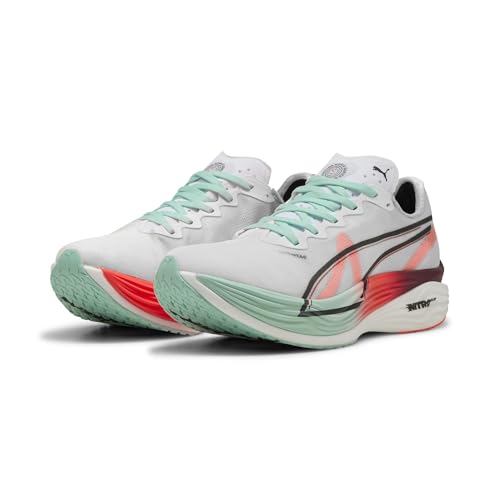
Puma Deviate Nitro Elite 3 Hyrox
ASICS Gel-Excite 11 Running Shoes

ASICS Gel-Contend 9 Road Running Shoes

Saucony Triumph 22 Sneaker


Saucony Endorphin Speed 5 Sneaker
More On The Choices That Made The List
The Puma Deviate Nitro Elite 3 Hyrox is built specifically for the format, and it shows in the geometry. A carbon PWRPLATE runs through the midsole to add snap on the running kilometers, while a dual-density NITROFOAM Elite stack handles the rebound that keeps your legs alive through the sled station and the burpee broad jumps. The ULTRAWEAVE upper keeps weight down and lets heat escape during long transitions, and PWRTAPE reinforcement adds the structure your midfoot needs when lateral force shows up in the lunges.
Compared with the softer daily trainers lower in this list, this one trades plush comfort for outright propulsion. It rewards a strong foot plant and a forward-leaning posture, which experienced competitors tend to bring on race day.
What Makes Sense
- Carbon plate geometry adds forward drive on the eight running kilometers
- Dual-density foam absorbs impact without flattening out under load
- Lightweight woven upper reduces foot fatigue across long race blocks
- Targeted midfoot support handles sled pushes and lateral work
Things To Consider
- Firmer ride may feel punishing on cold, stiff legs during warm-up miles
- Narrower fit than the ASICS and Saucony daily trainers listed below
Built With In Mind
Competitive Hyrox racers chasing a personal best who already log heavy weekly mileage and want a shoe tuned for race-day output.
Swap It Out When
First-timers and high-mileage trainers will get a friendlier ride from the ASICS Gel-Excite 11, which prioritizes soft comfort over raw propulsion.
The ASICS Gel-Excite 11 is the kind of shoe that forgives sloppy foot placement and tired ankles. An engineered jacquard mesh upper wraps the foot with breathable support, and the polyester lining and insole work together to manage moisture through a long event day. Lace-up closure keeps the heel locked, and the gel-based cushioning softens landings on the running segments without sacrificing ground feel during the strength stations.
Where the Puma Deviate above is built for output, this one is built for comfort across mixed training. You trade the carbon plate’s snap for a platform that feels easier on the joints when you haven’t yet built Hyrox-specific mileage.
Practical Pluses
- Engineered mesh upper keeps feet cool in heated venue formats
- Plush gel cushioning absorbs impact during accumulated fatigue
- Secure lace-up fit holds the heel during lateral sled work
- Lightweight build reduces drag across the eight run kilometers
Trade Offs
- Less propulsive than the Endorphin Speed 5 or Deviate Nitro Elite 3
- Mesh upper, while breathable, wears faster under repeated sled friction
Right Fit For
First-time Hyrox competitors and recreational athletes who want a forgiving trainer for their debut event and the training cycles leading up to it.
Reach For A Different Pick When
Athletes chasing a podium finish will find more responsiveness in the Saucony Endorphin Speed 5, which delivers a faster turnover for the running blocks.
The ASICS Gel-Contend 9 sits in the affordable corner of the Hyrox-friendly market and brings more technology than its tier suggests. The Ortholite sockliner steps in soft and breathes well during long warm-ups, while AMPLIFOAM cushioning keeps the midsole durable enough to handle repeated sled pushes and lunges. Trusstic Technology under the arch adds a layer of midfoot stability that pays off during the lateral shuffle through the burpee broad jump station.
Versus the pricier Triumph 22 reviewed later, the Gel-Contend 9 is a touch firmer and slightly more utilitarian. It’s a workhorse pick, not a luxury one, and many Hyrox newcomers appreciate that clarity.
Everyday Wins
- Ortholite sockliner manages moisture across long event days
- AMPLIFOAM midsole balances cushion with day-to-day durability
- Trusstic arch support helps stabilize the midfoot during lateral work
- Accessible price point lets you commit to a full training block without worry
Honest Caveats
- Heavier than the Triumph 22 or Endorphin Speed 5, which shows up late in long races
- Rearfoot gel adds comfort but lacks the propulsive feel of a plated shoe
- Outsole grip is road-oriented and can feel slick on wet turf warm-up zones
Made For
Budget-conscious hybrid athletes who log consistent training miles and need a reliable, no-fuss shoe for both gym sessions and event day.
Consider Something Else When
Runners with a softer-mileage preference should look at the Saucony Triumph 22, which delivers a noticeably plusher underfoot feel for high-volume weeks.
The Saucony Triumph 22 is what happens when a daily trainer gets the kind of midsole usually reserved for race day. The PWRRUN PB super foam stack absorbs impact on every step of the running kilometers and stays responsive enough to handle transitions without feeling sluggish. A broader platform and an updated rocker geometry smooth out the heel-to-toe transition, which matters more than people expect by kilometer seven of an eight-kilometer run.
This sits in a different zone than the firmer Gel-Contend 9 above. If your training block stacks volume, the Triumph 22 is built for the kind of mileage that punishes a thinner midsole.
Points In Its Favor
- PWRRUN PB foam delivers race-level cushioning for daily training
- Broader base improves stability during wall balls and lunges
- Updated rocker geometry eases the heel-to-toe transition
- XT-900 rubber outsole provides durable traction across training surfaces
Worth Noting
- Plush stack adds noticeable weight compared with the Endorphin Speed 5
- Higher price tier than entry-level ASICS picks on this list
Best Suited To
High-volume trainers running four or more times per week who want a single shoe that covers easy days, long runs, and race-day comfort.
Skip It When
Athletes focused on competition pace will get faster turnover from the Saucony Endorphin Speed 5, which is tuned for up-tempo efforts.
The Saucony Cohesion 18 is a neutral cushioning trainer designed to keep things simple. VersaRun cushioning softens impact across the running kilometers, and the secure fit holds the foot comfortably during the wall ball and sled stations. It doesn’t try to do anything fancy, and that restraint is the point. Recreational athletes who want a comfortable platform without paying for race-day tech will find a lot to like here.
Where the Triumph 22 above layers in PWRRUN PB foam, the Cohesion 18 leans on a more modest midsole. That keeps the price accessible but also keeps expectations honest.
Real-World Strengths
- VersaRun cushioning absorbs impact during long event days
- Secure midfoot fit holds during lateral Hyrox stations
- Light entry-level weight reduces fatigue on accumulated miles
- Modest price lets you keep a rotation of training and racing shoes
Points To Keep In Mind
- Less responsive than the plated Triumph 22 or Endorphin Speed 5
- Outsole rubber tends to show wear sooner under heavy sled friction
Who Should Grab It
Recreational gym runners and hybrid athletes who want a comfortable, no-drama shoe for training cycles and their first events.
Where Another Pick Suits Better
Runners wanting a more energetic ride for race day should consider the ASICS Gel-Excite 11, which adds a touch more bounce underfoot.
The Saucony Endorphin Speed 5 started life as an up-tempo shoe and has earned a reputation as a daily workhorse. The midsole balances soft cushioning with a snappy nylon plate, which adds turnover on tempo runs and keeps the legs turning over during the late-stage running kilometers of a Hyrox event. It’s the rare shoe that handles sprint intervals on Tuesday and a long Sunday run with equal grace, and that versatility suits the mixed demands of Hyrox training blocks.
Compared with the plush Triumph 22 reviewed earlier, this one is more energetic and less sink-in. Where the Deviate Nitro Elite 3 at the top of this list is a pure race-day tool, the Speed 5 is a do-everything pick you can keep in heavy rotation.
Well-Handled Touches
- Nylon plate adds snap without the aggressive feel of a carbon setup
- Responsive midsole handles both tempo days and event-day effort
- Stable base supports lateral work during sled and lunge stations
- Durable outsole rubber holds up across long training cycles
Practical Considerations
- Priced higher than entry-level picks like the Gel-Excite 11
- Less plush underfoot than the Triumph 22, which some runners miss on easy days
Whose Shelf It Belongs On
Repeat trainers and racers who run four to six times per week and want one shoe that transitions smoothly between tempo workouts and event day.
Look Elsewhere When
Athletes focused purely on the running kilometers should look at the Puma Deviate Nitro Elite 3, which delivers stronger propulsion at the cost of everyday versatility.
Factors To Consider When Choosing Hyrox Shoes
Cushioning And Stack Height
The right amount of foam underfoot protects your joints across eight running kilometers and repeated impact stations. Higher stack heights add comfort but bring extra weight, while thinner setups feel faster and more grounded. Most athletes in training mode land somewhere in the middle, around 30 to 40 millimeters of midsole depending on brand and model.
Heel-To-Toe Drop
Heel-to-toe drop (the height difference between the back and front of the shoe) affects how your Achilles and calf muscles load. Lower drops around four to six millimeters encourage a more natural foot strike, while higher drops around eight to twelve millimeters reduce strain on tired calves during the burpee broad jumps and sled pushes where you spend time on your toes. Match the drop to your running background and any history of calf tightness.
Outsole Grip And Durability
Hyrox training mixes rubber gym flooring with pavement and occasional turf. Rubber compounds vary widely in grip and wear rate, and softer compounds grip better but wear faster under repeated sled friction. Consider the surfaces you train on most and how often you replace shoes.
Upper Fit And Breathability
Your feet swell during long event days, and a narrow last can cause hot spots by kilometer five. Engineered mesh uppers breathe well and accommodate swelling, while more structured overlays add security at the cost of airflow. The right balance depends on foot width and how much your feet tend to expand in heat.
Key Considerations Across These Picks
Common Shopping Slip Ups
Many first-time buyers pick a shoe based purely on the running segment and ignore the strength stations, then complain about midfoot collapse during sled pushes. Others grab a carbon-plated racer for training and burn through the midsole in two months. Match the shoe to the workload, not the marketing. Training cycles call for durable daily trainers; race day justifies a more aggressive, specialized build.
When Paying More Pays Off
Higher-tier picks like the Triumph 22 and Deviate Nitro Elite 3 use advanced foam blends and plate technology that improve energy return and reduce fatigue. The upgrade is worth it once your weekly mileage climbs above 25 to 30 miles and you start racing multiple events per season. For occasional gym-goers running one event a year, the marginal gains rarely justify the price difference.
Frequently Asked Questions
Do I really need a Hyrox-specific shoe?
Not strictly, but the format rewards shoes that handle both running and strength work well. A versatile road runner with stable midfoot support handles most of what Hyrox throws at you.
How long do Hyrox shoes typically last?
Durable midsoles and rubber outsoles usually give 300 to 500 miles before the cushioning flattens. Heavy sled work shortens that range, so plan replacements more often if you train the format weekly.
Can I race in a daily trainer?
Yes, many recreational competitors race in cushioned daily trainers like the Triumph 22 or Gel-Excite 11. Competitive racers gain an edge with plated, race-tuned options, but finishing well doesn’t require them.
What about zero-drop or minimalist shoes?
Minimalist shoes lack the cushioning and stack height needed to protect your joints across eight running kilometers. Hyrox rewards protective cushioning, especially as fatigue accumulates through the strength stations.
Should I size up for race day?
Feet tend to swell during long events, especially in warm venues. A half-size up from your training fit can reduce hot spots and black toenails, though fit preference varies by foot shape.
The Takeaway
The best Hyrox shoe is the one that matches your training volume and your goals. Newcomers get the most value from forgiving trainers like the Gel-Excite 11 or Cohesion 18, while seasoned competitors chasing time gains will lean toward the Endorphin Speed 5 or Deviate Nitro Elite 3. Pick the platform that fits your weekly mileage, train in it long enough to trust it, and let your event-day legs do the rest.