You know that gut-dropping moment when your boot slides on a frozen driveway and your arms pinwheel? Most winter slips happen in everyday spots: the porch steps, the dog-walk sidewalk, the trailhead at dawn. The right pair of ice shoes turns that scramble into something steady, whether you’re hiking a snowy ridge, shuffling the kids to a hockey practice, or just trying to take the trash out without a hostage negotiation with the back steps.
Your Options, Compared

Kahtoola MICROspikes Footwear Traction

Giggleway Kids Crampons for Hiking Boots & Shoes

Winter Walking Spare Spike Ice Cleat (1 Pair)

AGOOL Ice Cleats with Magic Tape Straps
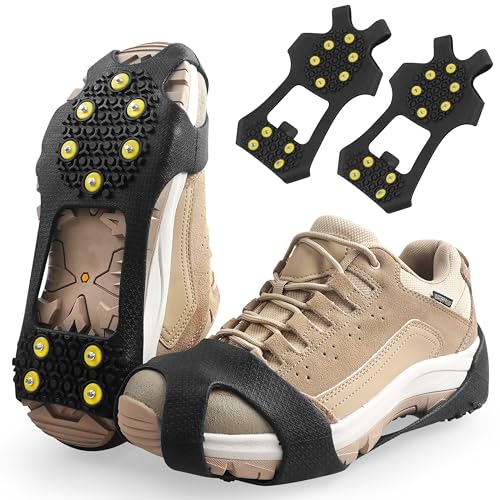
AGOOL Thermoplastic Elastomer Ice Traction Overshoe

SILANON 9-Point Stainless Steel Ice Snow Cleats
The Picks, Examined More Closely
If your winter plans involve anything rougher than a salted sidewalk, this is the kind of traction you reach for. Kahtoola’s MICROspikes stretch over hiking shoes and boots, gripping slick rock, frozen mud, and packed trail with the kind of confidence that lets you stop worrying about your feet and start watching the view.
Where the previous picks in this category leaned on rubber bottoms, this one skips the cushion and goes straight to bite. For backcountry hikes, ridge walks, and early-morning trail runs on hardpack, the trade-off pays off in real control.
Where It Helps
- Heat-treated stainless-steel spikes stay sharp across long seasons and shrug off corrosion on wet trails.
- The 12-spike layout (8 at the forefoot, 4 at the heel) pushes grip where you actually plant your foot on climbs and descents.
- Low-profile design hugs the sole, so rocks and roots don’t catch the way they sometimes do with bulkier overshoes.
- Stays put on hiking boots during long-mile days without needing constant readjustment at the trailhead.
Honest Caveats
- The aggressive spike layout can feel like overkill on plain city pavement, and may scuff indoor floors.
- Pricing sits above the rubber-overshoe options, so it’s a real investment rather than an impulse add-on.
Key Specs
Right Fit For
Trail hikers, winter backpackers, and trail runners who tackle packed snow, ice, and mixed mountain terrain most weekends.
Look Elsewhere When
The AGOOL Thermoplastic Elastomer Ice Traction Overshoe is a smarter pick when your winter is mostly sidewalks, driveways, and short errands.
Kids are small, impatient, and absolutely fearless on ice, which is why a grown-up crampon stretched over a child’s boot never fits right. Giggleway’s version scales the whole idea down for toddlers through youth sizes, so a six-year-old can keep up on the snowy trail instead of getting carried across the parking lot.
Compare that to the Kahtoola MICROspikes, which are tuned for adult hiking shoes: this one is sized and stretched for the narrower, smaller footwear kids actually wear.
Real Benefits
- Stainless-steel spikes grip packed snow and ice during recess, hikes, and frozen walks to the bus.
- Sizing runs across toddlers, kids, and youth, so one product covers the rough-and-tumble years.
- Stretch-fit design slips on over boots and shoes without a wrestling match at the door.
Worth Noting
- Spike-heavy designs can mark up hardwood floors if kids walk inside without removing them.
- Kids outgrow sizes fast, so the value depends on whether you can pass the set down to a younger sibling.
Whose Shelf It Belongs On
Parents of toddlers through teens who walk, hike, or fish on frozen ground and need something scaled smaller than adult crampons.
A Better Fit Elsewhere
The SILANON 9-Point Stainless Steel Ice Snow Cleats is a smarter pick when the whole family shares one set of overshoes across many shoe sizes.
Most ice traction fails the same way: the metal wears down, the rubber stretches out, and suddenly the cleats you trusted last January are useless. Winter Walking built this pair around replaceable tungsten carbide studs, which is a fancy way of saying the working part of the product can be swapped out when it dulls.
The build leans toward industrial strength rather than light trail use, so it lands between the Kahtoola MICROspikes and the everyday rubber overshoes. For long outdoor shifts, it’s the closest thing to a work boot for your feet.
What Helps Most
- Tungsten carbide studs outlast standard steel on concrete, asphalt, and gritty worksite surfaces.
- Low-temperature elastic stays stretchy in deep cold instead of turning brittle like basic rubber.
- Trim-line heel lets you cut back the back section when fit runs long, which is rare in this category.
- Wide size range (XS to XXL) covers the whole crew without buying multiple pairs.
Small Caveats
- The stretch-overshoe format adds a step at the door, and studs can scuff smooth indoor flooring.
Feature Snapshot
Best Suited To
Outdoor workers, mail carriers, and anyone logging long hours on frozen pavement where standard cleats wear out fast.
Swap It Out When
The AGOOL Thermoplastic Elastomer Ice Traction Overshoe is a smarter pick when casual walks matter more than industrial-grade durability.
Plain stretch-on ice cleats have one annoying habit: they wiggle sideways on narrow feet. AGOOL fixes that with hook-and-loop straps across the top, so the cleat cinches down instead of sliding around during a long walk. That small change matters more than it sounds once you’ve tried it.
The build leans rubber and aggressive tread rather than metal spikes, so it’s friendlier on indoor floors than the Kahtoola MICROspikes or the Winter Walking tungsten carbide pair.
Useful Highlights
- Hook-and-loop straps lock the cleat down on narrow or low-volume shoes that usually let traction slip.
- Rubber tread grips ice and snow without scratching the kind of floors you’d worry about in a clinic or shop.
- Pricing sits comfortably below metal-studded options, so it’s an easy second pair to keep in the car.
Less Ideal Details
- Straps add a few extra seconds at the door compared to plain pull-on designs.
- Rubber treads don’t bite as deep as metal spikes on hard blue ice or steep frozen slopes.
Who Should Grab It
Anyone with narrow feet, tight-fitting shoes, or a need for affordable traction that won’t shred indoor flooring.
Not Your Match When
The Kahtoola MICROspikes Footwear Traction is a smarter pick when hiking steep, technical ice matters more than indoor-friendliness.
Thermoplastic elastomer, sometimes shortened to TPE, is the stretchy, cold-tolerant rubber blend that stays flexible when temperatures drop. AGOOL uses it for an overshoe that pulls on quickly and stays comfortable through long winter dog walks, shoveling sessions, or that frozen-morning commute.
Compared to the strapped AGOOL model above, this one drops the hook-and-loop in favor of a simpler slip-on stretch fit, trading adjustability for speed.
Positive Points
- Five sizes (S through XXL) cover women’s, men’s, and youth ranges without buying multiple products.
- TPE material stays flexible in deep cold rather than stiffening like older rubber compounds.
- Slip-on design trims time at the door when you’re running late for work in the dark.
- Aggressive tread pattern grips packed snow and icy patches during regular neighborhood walks.
- Pulls off cleanly without yanking your shoes along with it, which is a common pain point with cheap rubber cleats.
Practical Considerations
- Pure slip-on fit can loosen during long hikes, so rechecking tension mid-walk is wise.
- Studs wear faster on bare concrete than the tungsten carbide option in this roundup.
Feature Card
Who Will Love This
Multi-shoe households who want one overshoe design that covers small feet through adult boots without a closet full of options.
Reach For A Different Pick When
The Winter Walking Spare Spike Ice Cleat is a smarter pick when industrial-grade stud durability matters more than quick on-and-off.
Nine stainless-steel studs spread across the toe-to-heel length sounds almost modest next to 12-spike designs, but the plum-shaped layout puts steel where it counts. SILANON’s design feels like the middle ground of the roundup: more aggressive than the strapped AGOOL rubber, simpler than the tungsten carbide Winter Walking setup.
The thicker 2.5mm rubber base is the quiet hero, since it’s the part that decides whether your overshoe cracks after two weeks or survives a full season.
Noteworthy Benefits
- Nine plum-shaped stainless-steel studs spread evenly from toe to heel for balanced bite on flat ground.
- 2.5mm cold-resistant rubber holds up to winter temperatures without cracking the way thinner rubber does.
- Stretchy build fits women’s, men’s, and kids’ shoes, so one household can share a single set.
- Embedded studs resist popping out the way glued-on studs sometimes do on cheaper cleats.
Where It May Fall Short
- Nine contact points bite less hard than the 12-spike Kahtoola on steep, technical ice.
- Studs may mark smooth indoor floors if you forget to kick them off at the door.
Made For
Mixed-age households that want a single, flexible set of ice cleats everyone can grab on the way out.
Skip It When
The Kahtoola MICROspikes Footwear Traction is a smarter pick for serious trail hikers who need aggressive spike bite on steep terrain.
What to Weigh Before Picking Ice Shoes
Start with the surface you’ll face most. Packed snow on neighborhood sidewalks calls for rubber overshoes with aggressive tread, while frozen mountain trails reward metal spikes that bite deeper. If your winter lives in both worlds, two pairs might honestly serve you better than one compromise pick.
Sizing is the other quiet killer. Overshoes that fit your winter boots perfectly often swim on your summer shoes, and a stretch-fit design that hugs a hiking boot will slide around on a low-profile sneaker. Look for products with a real size range (like the AGOOL thermoplastic overshoe or the Winter Walking tungsten carbide pair) rather than one-size-fits-most designs.
Stud material decides how long the traction actually lasts. Stainless steel handles casual winter use well, while tungsten carbide outlasts steel on gritty concrete and worksite conditions. For casual walks, the upgrade may not pay off. For daily work wear, it absolutely does.
Where Shoppers Slip Up
Common Shopping Slip Ups
Buying by stud count alone misses the bigger picture, since layout and stud shape matter as much as the raw number. A handful of poorly placed spikes can fail where nine well-distributed studs hold steady. Fit is the other trap: a “stretch to fit” promise works only if the rubber actually reaches your toe box without bunching.
What The Higher Tier Buys
Spending more typically buys harder studs, replaceable parts, and tougher rubber compounds that survive multiple seasons. The Winter Walking tungsten carbide model and the Kahtoola MICROspikes both earn their place through material upgrades that cheaper pairs skip, especially if your ice shoes see daily use rather than occasional weekend wear.
Frequently Asked Questions
How do ice shoes actually work?
Ice shoes add textured or spiked contact points under your boot, turning a smooth rubber sole into something that bites into frozen ground. The studs or tread dig into micro-grooves in the ice, which is why metal spikes outperform plain rubber on hard, slick surfaces.
Can kids use the same ice shoes as adults?
Not safely, since adult cleats stretch out on smaller boots and lose grip mid-stride. The Giggleway kids cleats are sized specifically for toddler through youth footwear.
Are metal spikes bad for indoor floors?
They can be, especially on hardwood or polished tile. Kicking cleats off at the door or choosing rubber-tread designs like the strapped AGOOL model helps protect finished floors.
How long do ice shoes usually last?
Casual-use rubber overshoes last a season or two, while steel-studded pairs can stretch longer. Tungsten carbide studs and replaceable designs, like the Winter Walking model, push service life noticeably further.
Do ice shoes fit over any shoe?
Most stretch-fit designs work over sneakers, casual boots, and hiking shoes. Bulky mountaineering boots or unusual shoe shapes may need a specific size or a different fit system.
Closing Remarks
The best ice shoes are the ones you actually put on before stepping outside. Match the traction to your terrain, the sizing to your shoes, and the stud material to how often you’ll wear them, and the rest takes care of itself. Any of these six pairs will keep your feet under you this winter, so pick the one that fits your routine and head outside.