Trail days look different for everyone. Some folks chase summits with a full pack, others just want to drift off a paved road onto dirt for a few hours before turning back. The right pair of light hikers changes how all of those days feel. This lineup focuses on comfort from the first mile, traction that earns trust on uneven ground, and a weight that doesn’t drag you down by the time the trail starts climbing.
A Quick View Of The Lineup

SCARPA Mojito Wrap Walking Shoes

Merrell Moab 3 Mid Hiking Boot

Merrell Moab 3 Mid Waterproof

adidas Terrex Free Hiker 2.0 Gore-Tex
adidas Terrex Free Hiker 2.0 Gore-Tex 9.5
Why These Options Stand Out
The SCARPA Mojito Wrap leans toward the casual end of the spectrum, and that’s exactly the point. It’s the kind of shoe that disappears on a coffee-run walk and still feels right when the sidewalk runs out and a dirt path picks up.
Where the Merrell Moab below leans hard into trail tech, this pair keeps things simple. A low-profile silhouette, a wrap-style closure (a lacing setup that wraps around the foot for a snug fit), and a sole that grips well enough on gravel, grass, and pavement. You won’t load a 30-pound pack into these, but you won’t feel overdressed grabbing lunch after a quick loop either.
The Practical Payoff
- Low weight keeps legs fresh on shorter outings
- Casual styling pairs with everyday clothes
- Wrap closure delivers a snug, glove-like midfoot feel
- Grippy rubber outsole handles mixed surfaces
Things To Consider
- Limited ankle coverage, so rocky descents may feel exposed
- Suede and fabric uppers tend to spot in muddy conditions
- Less protective underfoot for sharp scree (loose, broken rock fragments)
Right Fit For
Weekend walkers and travelers who split time between pavement and easy dirt paths.
Look Elsewhere When
You want all-day support on technical terrain, where the Merrell Moab 3 Mid is a stronger match.
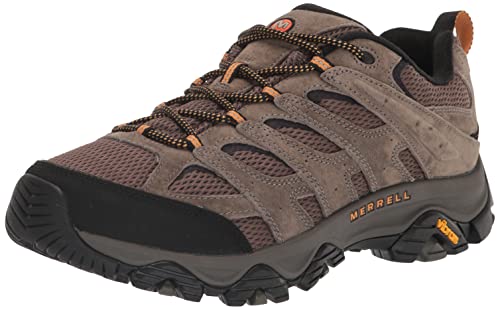
The Merrell Moab line has spent years earning its reputation, and version 3 keeps the same easy break-in feel that made the original popular. Right out of the box, there’s no stiff pinch across the arch or hot spot (a pressure point that rubs and blisters) on the heel. That alone saves a hike.
The low-cut Moab 3 trades ankle support for agility. You move quicker over roots and rocks, and you feel less like you’re wearing a boot. Compared with the SCARPA above, this is a more focused trail tool, ready for longer days and rougher footing without going full mid-cut.
Good Reasons To Consider
- Comfortable feel right out of the box
- Vibram outsole (a high-traction rubber sole made by a well-known Italian brand) holds firm on wet rock and loose dirt
- Cushioned midsole softens long-mile impact
- Breathable mesh panels keep feet cooler in summer
Worth Noting
- Sizing runs slightly short, so trying a half size up may help
- Not waterproof; wet grass soaks through quickly
Key Product Details
Made For
Day hikers logging five to ten miles who want a familiar, no-fuss trail shoe.
A Better Fit Elsewhere
You frequently hike in wet or muddy conditions, where the Moab 3 Mid Waterproof handles things more cleanly.
Step into the mid-cut Moab 3 and the difference shows up immediately around the ankle. The shaft rises higher, hugging without locking, so side-hilling across a slanted trail (walking across a slope rather than straight up it) feels steadier. For anyone who has rolled an ankle on uneven ground, that extra coverage matters more than any spec sheet.
This is the same Moab DNA as the low-cut version, just wrapped in a taller package. It still uses a Vibram outsole and a cushioned midsole, but the upper adds structure. The trade-off is breathability: your feet will run a touch warmer, especially on summer afternoons.
Reasons It Performs
- Mid-cut shaft stabilizes ankles over rocky terrain
- Same Vibram traction trusted across the Moab line
- Cushioned footbed supports multi-hour days
Trade Offs
- Heavier than the low-cut Moab 3 by a noticeable margin
- Warmer in hot, dry conditions
- Not waterproof, so puddles and dew still soak through
Best Suited To
Hikers carrying light loads over uneven, ankle-twisting trails.
Consider Something Else When
Wet, rainy trails are a regular part of your routine, where the Moab 3 Mid Waterproof makes more sense.
The waterproof Moab 3 Mid keeps everything that worked about the standard mid version, then adds a sealed bootie inside the upper. That internal waterproof membrane (a thin lining layer that blocks water while letting some vapor escape) is the difference between stepping through a puddle with dry socks and finishing a hike with damp feet.
Compared with the regular mid-cut Moab, this version runs slightly warmer and costs a touch more, but the comfort payoff shows up on cold mornings and muddy switchbacks (zigzagging trail turns cut into a hillside). Anyone who hikes shoulder seasons (the spring and fall windows between summer and winter) will appreciate having dry feet at the summit.
Noteworthy Benefits
- Waterproof membrane keeps feet dry through puddles and morning dew
- Mid-cut shaft supports ankles on uneven descents
- Vibram outsole grips slick rocks and roots
Points To Note
- Waterproofing adds warmth, so summer hikes may feel stuffy
- Heavier than the non-waterproof Moab 3
Feature Snapshot
Perfect Match For
Hikers in damp climates or shoulder seasons who want warm, dry feet on long days.
Skip It When
Your trails are mostly dry and warm, where the lighter Moab 3 Hiking Shoe breathes better.
The adidas Terrex Free Hiker 2.0 brings a different energy to the trail. Where the Merrell line focuses on traditional hiking construction, this shoe borrows BOOST cushioning, the same responsive foam you’d find in adidas running shoes. After a few hours, that extra energy return starts to matter on tired legs.
The Gore-Tex lining (a waterproof, breathable membrane made by Gore-Tex, used widely in outdoor footwear) seals out water while still letting heat escape. The trade-off is weight: this shoe is heavier than the Moab 3, so it feels less nimble on quick scrambles. For long, steady miles on mixed terrain, though, the comfort easily wins out.
Standout Benefits
- BOOST midsole returns energy with each step
- Gore-Tex membrane blocks water without trapping heat
- Knit upper (a soft, sock-like fabric construction) hugs the foot for a sock-like fit
- Continental rubber outsole (a high-grip rubber compound originally developed for car tires) grips wet and dry rock
Room For Improvement
- Heavier than low-cut Merrell options
- Knit upper scuffs on brushy trails over time
Who Should Grab It
Long-distance hikers who value all-day cushioning and weather protection over featherweight feel.
Reach For A Different Pick When
Speed and low weight matter most, where the SCARPA Mojito Wrap feels livelier on quick walks.
This is the same Terrex Free Hiker 2.0 Gore-Tex reviewed above, just offered in a 9.5 medium fit. Everything about the build applies here: BOOST cushioning, waterproof Gore-Tex, Continental rubber, knit upper.
The reason it earns a separate spot is simple. Sizing is half the battle with hiking shoes, and a half-size shift can be the difference between a comfortable hike and a blistered mess. If the previous listing’s size didn’t match your fit, this one may land closer to your sweet spot without changing the shoe itself.
Real Benefits
- Same BOOST comfort and Gore-Tex protection as the 12 medium version
- Knit upper conforms to mid-volume feet
- Continental rubber grips wet stone confidently
Small Caveats
- Knit uppers can snag on rough brush
- Still heavier than minimalist options
Quick Facts
Built With In Mind
Mid-size hikers wanting the same Terrex comfort without sizing up or down.
Swap It Out When
You prefer a low-cut, breathable design over a weather-sealed build, where the Merrell Moab 3 Hiking Shoe fits more naturally.
What To Weigh Before Picking Your Next Pair
Choosing lightweight hiking shoes comes down to how you actually hike, not just what’s on the spec sheet. Start with terrain. Smooth dirt paths reward low-cut, breathable designs like the Moab 3, while rocky routes with loose scree benefit from mid-cut support or thicker soles.
Next, think about weather. If your trails run through morning dew, creek crossings, or shoulder-season rain, a Gore-Tex or waterproof membrane pays for itself in dry socks. Hot, dry climates favor breathable mesh that lets heat escape.
Weight matters more than many people expect. A few ounces per shoe add up over ten miles. Low-cut trail runners and lifestyle hikers save energy, though they trade away ankle protection. Mid-cut boots give stability but add bulk.
Finally, fit beats every other consideration. A perfect-spec shoe with the wrong fit becomes a blister factory within a mile. Try on with the socks you actually hike in, and walk a real slope or stairs in the store before committing.
Choosing The Right Shoe For Your Terrain
Match shoe height to slope severity. Flat or rolling terrain works well in low-cut shoes that flex easily. Steeper trails with loose rock call for mid-cut ankle support to prevent rolls. For really demanding alpine terrain, full boots add weight that may or may not be worth it depending on pack size.
Pay attention to outsole lug depth (the height of the rubber tread blocks on the bottom of the shoe). Shallow lugs grip smooth rock and packed dirt better. Deep lugs dig into mud and loose soil but can feel clunky on hard surfaces. Pick the lug pattern that matches your most common trail surface.
Consider toe protection. A reinforced toe cap (a rubber overlay at the front of the shoe) protects against rock kicks and root stubs. Lighter hikers often skip this for weight savings, but anyone who has jammed a toe into a hidden stone appreciates the protection.
Key Considerations Across These Picks
Where Shoppers Go Wrong
A common slip is choosing the lightest shoe possible without considering protection. Ultralight shoes feel great on day one but leave feet bruised on rocky miles. Another misstep is ignoring waterproofing, then discovering wet socks halfway through a hike. Match features to conditions rather than chasing lowest weight or lowest price.
Where The Extra Money Goes
Premium hiking shoes tend to spend the budget on better midsole foams, more durable outsoles, and refined uppers that resist abrasion. A BOOST midsole or a Vibram outsole adds cost, but also adds miles of comfort and traction. The upgrade pays off when you hike often enough to notice the difference in fatigue and shoe life.
Frequently Asked Questions
How should lightweight hiking shoes fit?
They should feel snug around the heel and midfoot with about a thumb’s width of room at the toe. Too loose causes blisters, too tight causes numbness on downhills.
Can lightweight hiking shoes handle multi-day trips?
For light packs on maintained trails, yes. Heavier loads or rough terrain benefit from mid or full boots that offer more support.
Are waterproof hiking shoes worth it?
Waterproof membranes shine in wet conditions but run warmer. If most of your hikes stay dry, breathable non-waterproof shoes breathe better and dry faster.
How long do lightweight hiking shoes typically last?
Trail mileage varies by terrain and gait, but most quality pairs last several hundred miles before midsole cushioning breaks down or outsoles wear smooth.
Do I need special socks for hiking?
Synthetic or merino wool hiking socks (tall, moisture-wicking socks designed for outdoor use) reduce blister risk far more than cotton athletic socks ever will.
Bottom Line
Lightweight hiking shoes for men range from casual walkers to weatherproof trail tanks. Match the shoe to your terrain, climate, and pack weight rather than chasing one perfect spec. The right pair makes every mile feel easier, and the wrong pair makes a short hike feel like a long one. Trust fit, trust your trail, and the rest follows.