Climbing poles in wet weather, scrambling across rooftops, or working a jobsite where one wrong step ends badly, your feet take the worst of it. The right pair of lineman boots turns long shifts from punishing to manageable, and the wrong pair leaves you sore by lunch. This roundup looks at seven options built for trades that demand serious underfoot support, grip, and protection, so you can match your boots to the way you actually work.
How The Shortlist Stacks Up

Carolina Lytning 1.9 Metatarsal Guard Composite Toe Work Boot

Timberland PRO Direct Attach MaxTRAX Soft Toe SRO Boot

Timberland PRO 26011 Direct Attach 8-Inch Soft-Toe Boot

Irish Setter Wingshooter ST 6-Inch NMT Toe Work Boot

Carolina Linesman 10-Inch Leather Composite Toe Waterproof Boot
SUREWAY 6-Inch Moc Toe Work Boots
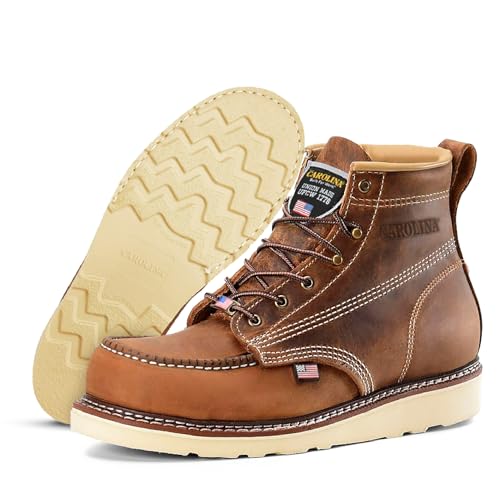
Carolina AMP USA 6-Inch Soft Moc Toe Work Boot
A Breakdown Of The Leading Choices
Carolina positions the Lytning as a boot for the trades that punish feet hardest. Climbing a pole means your shins and the top of your foot both take the load, and the Lytning addresses that with a metatarsal guard (a protective plate covering the top of the foot) over the toe box, plus a composite toe that meets ASTM F-2413 standards (the American Society for Testing and Materials benchmark for protective footwear).
For linemen scaling wooden poles or stepping over scrap on a construction site, that layered protection matters more than a softer toe would. If your shift runs from ladders to muddy ditches to concrete pads, this is the kind of boot you stop noticing on your feet, which is the highest compliment work footwear can earn.
Standout Benefits
- ASTM F-2413 rated composite toe for impact and compression protection
- Met guard shields the top of the foot from dropped tools and gaff strikes
- Oil- and slip-resistant outsole with rubber pods for traction on slick surfaces
- Removable AG8 Intellisphere footbed (a cushioned insole with arch support) for underfoot comfort on long shifts
- Electrical hazard rated, useful around live circuits
Trade Offs
- Heavier build than soft-toe alternatives, so fatigue shows up sooner on long walks
- Stiffer out of the box, typically needs a few shifts before the break-in feels right
Key Specs
Built With In Mind
Linemen, utility workers, and anyone climbing poles or working around live electrical equipment who needs layered foot protection.
Look Elsewhere When
Cold-weather climbers should look at the Timberland PRO 26011 Direct Attach, which adds insulation the Lytning lacks.
Not every job demands a steel or composite toe. The Direct Attach MaxTRAX drops the safety cap and redirects the weight into the outsole, which is where Timberland put serious engineering with the MaxTRAX tread pattern. For outdoor crews working rough terrain, landscaping, or trail crews who hike as much as they haul, that trade is worth it.
Unlike the Lytning’s reinforced crown, this boot keeps things light on top. You feel that difference immediately when you step into a long shift. Soft toe work boots typically rely on roomier toe boxes, which helps if wide feet have been a sore point with past pairs.
Where It Excels
- MaxTRAX outsole grips loose dirt, gravel, and uneven ground
- Lighter on the foot than composite-toe options
- Roomy toe box suits wider feet
- Direct-attach construction (the upper is bonded directly to the sole without stitching) keeps water from sneaking in at the seam
- SRO treatment (Slip-Resistant Outsole) adds traction on wet surfaces
Honest Caveats
- No safety toe means it is not appropriate where impact-rated footwear is required
- Limited insulation, so cold mornings bite through the leather quickly
Right Fit For
Outdoor crews, utility ground workers, and linemen handling non-climbing tasks who want traction and comfort over impact protection.
Skip It When
You need a safety toe, in which case the Irish Setter Wingshooter ST 6-Inch or the Carolina Lytning are the better match.
The 26011 is the cold-weather sibling to the MaxTRAX. Timberland built it around seam-sealed waterproof leather (stitched and sealed so water cannot pass through the seams) with 400 grams of insulation tucked inside, which makes a real difference when you are climbing a frozen pole at 5 a.m. in January. The 8-inch shaft adds ankle support that shorter boots cannot match on uneven terrain.
Where the previous Timberland leans toward dry warm-weather work, this one is engineered for wet and cold. The padded collar keeps your ankles from rubbing raw when the boot flexes, and the lug outsole bites into mud rather than skating across it. Storm restoration crews in northern climates tend to favor this profile for good reason.
Features That Help
- 400g insulation keeps feet warm in freezing conditions
- Seam-sealed waterproof leather upper keeps rain and slush out
- 8-inch shaft supports ankles on uneven ground and ladder climbs
- Heat-, oil-, and abrasion-resistant rubber lug outsole
- Padded collar reduces rubbing over long shifts
Points To Note
- No safety toe, so it is not rated for impact hazards
- Insulation can run hot during summer shifts or in heated indoor environments
Quick Facts
Made For
Linemen and utility crews working in cold, wet climates where insulation and waterproofing are non-negotiable.
Consider Something Else When
Your shifts run mostly in warm or indoor environments, where the insulation becomes a liability. The Timberland PRO MaxTRAX is lighter and better ventilated for that work.
Irish Setter took a different approach with the Wingshooter ST. The NMT (non-metallic toe) cap gives you ASTM-rated protection without the cold-conducting feel of steel, which matters in winter. The 6-inch shaft sits between a low hiker and a tall work boot, giving you a balance of mobility and ankle coverage that some trades prefer over the higher options on this list.
Where the Carolina Lytning layers in a met guard for climbing hazards, this boot stays focused on the basics and does them well. The EVA midsole (a lightweight foam layer between the foot and outsole) softens impact without adding bulk, and the defined heel keeps your foot planted when working on ladders. For lighter industrial work or utility tasks away from heavy falling-object risk, this is a comfortable everyday option.
Practical Advantages
- Non-metallic safety toe, lighter and warmer than steel
- Waterproof leather upper for wet conditions
- EVA midsole cushions long shifts
- Defined heel adds stability on ladders
Some Limits To Know
- No metatarsal guard, so top-of-foot protection is limited
- Lower shaft height offers less ankle support than 8- or 10-inch boots
Best Suited To
Linemen handling ground duties, light industrial workers, and anyone who wants safety-toe protection without the weight of a full climbing boot.
Reach For A Different Pick When
You regularly work around dropped tools or heavy falling objects. The Carolina Lytning’s met guard is purpose-built for that exposure.
The Carolina Linesman is a purpose-built pole climbing boot with a 10-inch shaft that wraps high above the ankle. That extra height locks your lower leg in place when you are gaffing up a pole, and the composite toe keeps the front of the boot lighter than steel would. It is also waterproof, so wet grass, puddles, and morning dew stop being a concern.
Compared to the Lytning, which adds a met guard on top, the Linesman leans into shaft height and weather protection instead. For linemen who spend more time in the air than on the ground, that tall cuff is the feature that actually shapes the day. It runs warm in summer, but in shoulder seasons and winter it earns its keep.
Key Advantages
- 10-inch shaft supports ankles and lower legs during climbs
- Composite toe is lighter than steel and does not conduct cold
- Waterproof construction for wet environments
- Carolina’s heritage in work footwear shows in the leather quality
Worth Bearing In Mind
- Tall shaft can feel restrictive for ground-based tasks
- Runs warm in summer or in southern climates
- No metatarsal guard compared to the Lytning
Feature Snapshot
Who It Suits Best
Linemen climbing poles regularly, especially in cooler or wet climates, who want maximum lower-leg support from a single boot.
Swap It Out When
You split time between climbing and ground work in warm weather. The Carolina Lytning offers met guard protection at a lower shaft height that breathes better.
The SUREWAY Moc Toe is the old-school work boot philosophy. Full-grain leather (the strongest, most durable layer of the hide) upper, Goodyear welt construction (a stitching method that bonds the upper to a strip of leather, which is then stitched to the sole, allowing the boot to be resoled), and a moc toe profile that gives your toes room to spread. The tradeoff is that the welt makes the boot heavier, but you get resoleability in return, which extends the life of the boot well past glued alternatives.
Where the previous options lean into specialty features (met guards, insulation, tall shafts), the SUREWAY keeps the focus on fundamentals. For utility workers, light construction, or linemen handling ground support, that simplicity is the appeal. Slip it on, lace it up, and trust it to hold up shift after shift.
Real-World Strengths
- Goodyear welt construction allows resoling, extending boot life
- Full-grain leather ages well and resists abrasion
- Moc toe shape gives toes room to flex naturally
- Slip-resistant outsole for traction on slick surfaces
Potential Compromises
- Heavier than direct-attach boots like the Timberland options
- Soft toe configuration means no impact protection
- Break-in period is longer with the stiffer welt construction
Essential Details
Perfect Match For
Tradespeople who wear the same pair daily and want a boot they can resole rather than replace, especially when safety-toe protection is not required.
Not Your Match When
You need ASTM-rated toe protection for impact hazards. The Carolina Linesman or Carolina Lytning both deliver that.
The AMP USA is Carolina’s American-built answer to the resoleable work boot. Like the SUREWAY, it uses Goodyear welt construction, but the domestic build tends to show up in tighter quality control and consistent leather selection. The 6-inch shaft with moc toe profile keeps the boot versatile across jobs that do not require climbing gear.
Where the SUREWAY is a solid general-purpose moc toe, the AMP USA leans into craftsmanship for those who value American manufacturing. It fills the same niche as the SUREWAY but trades a slightly higher cost for tighter construction tolerances and the appeal of domestic assembly.
Where It Helps
- Goodyear welt construction makes the boot resolable
- American-built construction offers consistent quality
- Moc toe shape provides a roomy, comfortable fit
- 6-inch shaft balances mobility with ankle coverage
Things To Weigh
- Soft toe, no impact protection for hazardous work
- Welt construction adds weight and requires break-in
Who Should Grab It
Tradespeople who want a resoleable American-made boot for shop, ground utility work, or light industrial tasks where impact-rated toe protection is not required.
A Better Fit Elsewhere
Linemen regularly climbing poles should pick the Carolina Linesman instead, since its taller shaft and composite toe are purpose-built for that work.
What To Weigh Before Choosing Lineman Boots
Match The Boot To The Climb
Linemen who spend most shifts in the air need taller shafts (8 to 10 inches) and either a composite toe or a met guard, since falling tools and gaff strikes are constant risks. Ground crews, storm responders, and utility workers handling mostly horizontal tasks get away with 6-inch boots that breathe better and weigh less. The Carolina Lytning and Linesman cover the climbing end. The Timberland PRO MaxTRAX and SUREWAY Moc Toe cover the ground end.
Material And Construction Tell The Story
Full-grain leather outlasts split leather (leather made from the lower layers of the hide, weaker and less durable) by years, especially in wet conditions. Goodyear welt construction is heavier up front, but the boot can be resoled when the outsole wears through, which makes it cheaper in the long run. Direct-attach boots (where the upper is molded directly to the sole) are lighter and more flexible but cannot be resoled, so they tend to be replaced rather than repaired.
Toe Protection Is Not Optional On Most Sites
ASTM F-2413 is the standard most employers require. Composite toes are lighter than steel and do not conduct cold, which makes them popular in winter. Steel toes are cheaper but add weight and chill your toes in freezing weather. If your site does not require a safety toe, soft toe boots breathe and flex better, but verify with your employer before skipping the rating.
Fit And Break-In Matter As Much As Specs
A boot that feels fine in the store can ruin your week on a ladder. Plan for at least a few shifts of break-in with welt-constructed boots. Wider toe boxes help if you have had cramping issues in past pairs. Insulated boots run hot in summer, so seasonal rotation makes sense for linemen who work year-round.
Key Considerations Across These Picks
Where Shoppers Go Wrong
The biggest mistake is choosing a boot based on look or brand familiarity rather than the actual job. Soft toe boots feel great in the store and turn into regrets the first time a wrench drops. The opposite mistake is buying the most protective boot on the shelf when your work does not call for it, leaving you with tired legs from carrying unnecessary weight. Match the boot to the shift.
When Paying More Pays Off
Higher-tier boots in this category typically spend the extra money on three things: better leather, tougher construction, and American assembly. Full-grain leather ages better than corrected grain (leather that has been sanded and coated to hide imperfections). Goodyear welt construction adds resoleability. Domestic manufacturing usually means tighter quality control. For someone wearing the same pair 200 days a year, those upgrades pay back over the life of the boot rather than on day one.
Frequently Asked Questions
What Makes Lineman Boots Different From Regular Work Boots?
Lineman boots typically have taller shafts (6 to 10 inches) for ankle support during climbing, plus features like met guards or shanks (rigid plates between the sole and footbed) for gaffing poles. Regular work boots prioritize comfort over climbing support and usually have shorter shafts.
How Often Should Lineman Boots Be Replaced?
Most lineman boots last 12 to 18 months with daily use, depending on conditions. Goodyear welt boots can be resoled to extend life, while direct-attach boots are typically replaced when the sole wears out. Inspect the sole tread and upper leather monthly for cracking or separation.
Are Composite Toes As Protective As Steel?
Composite toes meet the same ASTM F-2413 impact and compression standards as steel, so protection is comparable. They are lighter, do not conduct cold, and do not set off metal detectors, which is why many linemen prefer them despite the higher cost.
Do I Need Insulated Boots For Summer Work?
Insulated boots trap heat, so most linemen switch to non-insulated models for summer. Insulated boots running 200 grams or below are tolerable, but anything over 400 grams will feel hot in warm weather. Consider rotating two pairs seasonally for comfort.
Can Lineman Boots Be Resoled?
Only boots with Goodyear welt construction can be resoled. The SUREWAY Moc Toe and Carolina AMP USA both use welt construction. Direct-attach boots like the Timberland PRO models cannot be resoled and must be replaced when the sole wears through.
Wrap Up
The right lineman boots come down to matching protection and shaft height to the work you actually do. Climbers benefit from the Carolina Lytning’s met guard or the Linesman’s tall shaft, while ground crews find the Timberland PRO MaxTRAX or SUREWAY Moc Toe more comfortable for long days. Start with your most common task, then choose the boot that handles that task with the least compromise.