Logger boots live in a tough category. You need solid footing on uneven brush, ankle support for hauling chains, and leather that holds up to wet weather without falling apart. The right pair becomes a daily tool. The wrong pair shows its flaws fast. This roundup covers seven solid options spanning heavy-duty loggers, lighter work boots, and the kind of leather care that extends the life of all of them.
An Overview Of The Picks

Carolina Lytning Metatarsal Guard Composite Toe Boot

Huberd’s Shoe Grease Leather Conditioner

Harley-Davidson Men’s Tyson Logger Boot

Arborwear Cedar Flex Arborist Pants

Carolina Linesman 10″ Composite Toe Boot

Chippewa Super DNA 9″ Steel Toe Logger
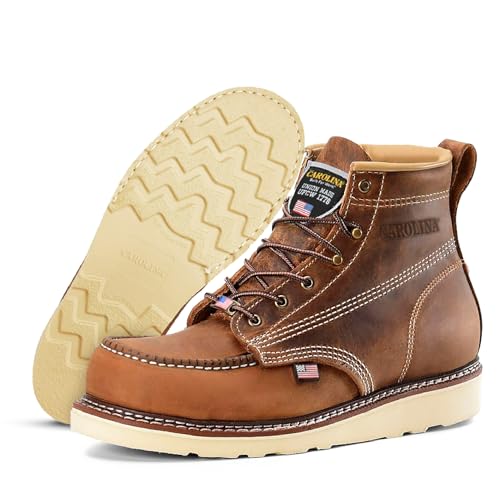
Carolina AMP USA 6″ Soft Moc Toe Boot
Inside Each Recommended Option
Carolina’s Lytning is the boot you reach for when falling objects and rolling debris are part of the day. A composite safety toe is paired with a metatarsal guard, which is the rigid armor that covers the top of your foot from lace to ankle. That extra plate matters on framing sites and saw work, where a dropped log or dropped tool can crush the bones across your forefoot.
The Tech-Tonic rubber outsole pods grip wet planks and oily concrete, and the AG8 Intellisphere footbed supports your arch through long shifts. Compared to the lighter Harley-Davidson Tyson covered below, the Lytning is built around protection first, style second.
Benefits That Matter
- Composite toe plus met guard covers the whole forefoot, not just the toes
- Oil and slip-resistant outsole pods help on slick shop floors
- Removable AG8 dual-density footbed cushions long days on hard surfaces
- Electrical hazard rated for work around live wiring
Things To Consider
- Heavier than a soft-toe logger, which can tire out your legs on long walks
- Met guard adds bulk, so the boot runs stiff until broken in
Key Specs
Who It Suits Best
Construction, framing, and sawmill workers who need toe plus top-of-foot protection and don’t mind extra weight.
Skip It When
The Harley-Davidson Tyson is a smarter fit for casual wear and riders who want a logger silhouette without the armor.
Huberd’s isn’t a boot, it’s the product that keeps your boots alive. A beeswax and pine tar formula, the grease soaks into leather fibers, replacing natural oils lost to mud, sweat, and weather. That conditioning step matters because dry leather cracks, and cracked leather takes a boot out of service well before the sole wears down.
Beyond softening, the wax seals out rain and snow while still letting the leather breathe. For anyone logging in wet brush or working snowy job sites, that moisture barrier is the difference between dry socks and trench foot. Pair it with the Carolina Linesman or Chippewa Super DNA from this list and you’re building a real maintenance routine, not just buying a product.
Real Benefits
- Restores flexibility and prevents cracking on heavy leather uppers
- Beeswax base creates a moisture barrier against rain, snow, and mud
- Works on boots, saddles, gloves, and belts, so it’s a versatile shop staple
Worth Noting
- Darkens light leather noticeably, so test on a hidden seam first
- Reapplication every few weeks is the realistic cadence for wet climates
Feature Snapshot
Made For
Loggers, ranchers, and tradespeople who want a single product that softens and waterproofs without fancy sprays.
Look Elsewhere When
The Carolina AMP USA moc toe is a better choice if you’re hunting for a new boot rather than extending the life of your current pair.
The Harley-Davidson Tyson borrows the silhouette of a classic logger and softens it for everyday wear. Cording stitched over the foot adds grip when pulling on the boot, and a side zipper lets you slip in without breaking the laces down every time. Padded collars and a shin pad keep the upper comfortable against the leg.
The thick rubber lug sole grips loose gravel and wet pavement, which makes the Tyson useful for light trail work, motorcycle riding, and weekend chores. It lacks the safety toe of the Carolina Lytning, so it’s not the right call for a framing site, but it wears more like a casual boot than a piece of PPE (personal protective equipment). For someone who likes logger styling but doesn’t need full safety gear, the Tyson is a comfortable middle path.
A Favorable Mix
- Side zipper speeds up on and off compared to full lace logger boots
- Cording over the foot doubles as a pull tab and a visual detail
- Lug sole handles loose gravel and wet sidewalks well
- Padded collar and shin pad reduce rubbing on long walks
Points To Keep In Mind
- No safety toe, so it’s not approved for industrial job sites
- Leather upper benefits from regular Huberd’s conditioning to stay supple
At A Glance
Best Suited To
Riders and casual wearers who like the logger look but want comfort and convenience over heavy-duty protection.
Consider Something Else When
The Chippewa Super DNA is the better pick for cold-weather logging where insulation and a steel toe earn their keep.
Pants aren’t a logger boot, but they’re the other half of a complete kit, so the Arborwear Cedar Flex earns its place here. A heavy-duty double knee panel takes the abuse of kneeling on bark, rocks, and chainsaw cradles, while a gusseted crotch lets you climb and step high without the seam biting into your hips. The boot cuff at the ankle keeps sawdust and wood chips from dropping straight into your boot top.
Think of these as the partner to the Carolina Linesman or Chippewa Super DNA covered in this roundup. Pants that move freely when you swing a saw, and a boot that grips the bark ladder, make a real working system. Anyone whose job is climbing, trimming, or cutting trees will feel the difference between standard work pants and arborist-specific construction.
Useful Strengths
- Double knee panel survives kneeling on rough bark and rock
- Gusseted crotch opens up the range of motion for climbing
- Boot cuff blocks debris from entering the top of your boot
Room For Improvement
- Heavier fabric than standard work pants, which trades comfort for durability
- Sizing can run long, so check the inseam before ordering
Feature Snapshot
Perfect Match For
Arborists, climbers, and tree-care crews who need pants that move and survive alongside serious logging boots.
Swap It Out When
The Carolina AMP USA moc toe is the smarter pick if you mostly need a work boot for flat-ground tasks rather than climbing.
The Linesman is a classic 10-inch logger with waterproof leather and a composite safety toe. That height matters in real brush and slash, because tall leather keeps twigs, briars, and small branches from finding the gap between your boot top and your pant leg. The composite toe keeps weight lower than a steel cap while still meeting jobsite safety standards.
Compared to the Chippewa Super DNA later in this list, the Linesman skips heavy insulation, so it runs cooler in shoulder seasons and warmer regions. If your work is wet but not deeply cold, the Linesman is a better match. For below-freezing logging, the Chippewa’s Thinsulate fills a gap the Linesman leaves open.
Real-World Strengths
- 10-inch shaft seals out debris and water at the boot top
- Composite toe cuts weight versus steel without giving up protection
- Waterproof leather keeps feet dry through wet brush and rain
Trade Offs
- No insulation rating means cold feet in deep winter work
- 10-inch shaft feels restrictive if you’re used to 6-inch boots
Quick Facts
The Right Fit
Wet-climate loggers and brush cutters who need a tall waterproof build but don’t need heavy insulation.
A Better Fit Elsewhere
The Chippewa Super DNA is a smarter match for anyone working in deep cold where insulation matters more than airflow.
Chippewa’s Super DNA is a 9-inch logger that handles cold as well as it handles abuse. A waterproof full-grain leather upper pairs with a Dri-Lex liner and 400g of 3M Thinsulate, which is a thin synthetic insulation that traps warmth without much bulk. Together, those layers keep feet functional when temperatures drop below freezing.
The steel toe meets jobsite standards, and the logger-style lug sole grips muddy trails and snow. Where the Carolina Linesman above leans on waterproofing alone, the Super DNA adds warmth to the same formula. It’s a true four-season option for loggers who stay busy all year.
Everyday Wins
- 400g Thinsulate handles cold-weather logging without overheating indoors
- Waterproof full-grain leather keeps moisture out in snow and slush
- Steel toe passes jobsite safety standards
- Logger lug sole bites into soft soil and snow
Honest Caveats
- Heavier than the Carolina Linesman thanks to steel toe and insulation
- Premium build commands a higher upfront cost than basic loggers
Technical Sheet
Built With In Mind
Year-round loggers and rural tradespeople in cold climates who need insulation and jobsite-rated protection in one boot.
Reach For A Different Pick When
The Carolina Lytning is the better answer if you work around falling hazards and need metatarsal protection above the toe.
The Carolina AMP USA trades the tall logger shaft for a 6-inch moc toe silhouette built around a Goodyear welt. That welt, a stitched bond between the upper, the sole, and a leather strip between them, means the boot can be resoled when the lugs wear down. For a daily work boot, that resoleability is the difference between a five-year boot and a one-year boot.
Soft toe means no safety cap, which keeps the boot light and flexible. Pair it with Huberd’s Shoe Grease from earlier in this list and the leather stays supple through years of wet-dry cycles. The AMP USA is a versatile daily driver for someone who doesn’t need jobsite-rated protection but wants a long service life.
Useful Highlights
- Goodyear welt construction lets a cobbler replace the sole when worn
- Soft moc toe gives all-day comfort without the bulk of a safety cap
- 6-inch height feels familiar to anyone used to casual work boots
Where It Is Less Suited
- No safety toe rules it out for industrial sites with impact hazards
- 6-inch shaft lets in more debris than the 10-inch Linesman
Whose Shelf It Belongs On
Tradespeople, shop owners, and homeowners who want a resoleable daily boot rather than a jobsite-rated logger.
Where A Sibling Pick Shines
The Carolina Linesman is the smarter fit for loggers working wet brush who need the extra shaft height.
What Matters Most Before Choosing Logger Boots
Logger boots overlap with hiking boots, work boots, and motorcycle boots, but a few details separate the real article from the lookalikes.
Shaft Height And Debris Protection
The first decision is shaft height. A 6-inch boot moves like a sneaker and works for flat-ground tasks, while a 9 or 10-inch boot seals out brush, snow, and slash. Loggers in briars and tall grass generally want at least 8 inches of leather above the foot.
Toe Protection And Hazard Ratings
Composite and steel toes both meet ASTM (American Society for Testing and Materials) safety standards, but they feel different on foot. Composite runs lighter and stays warmer in cold weather. Steel costs less and handles higher impact ratings. Add a metatarsal guard when falling objects are part of the day, like in the Carolina Lytning.
Leather, Waterproofing, And Insulation
Full-grain leather holds up longest, and a waterproof membrane helps in wet climates. Insulation like 3M Thinsulate adds warmth without the bulk of fleece linings. For cold-weather logging, 400g is a common baseline.
Construction And Resoleability
Goodyear welt construction, as found on the Carolina AMP USA, lets a cobbler replace the sole. Cemented or direct-attach boots usually cannot be rebuilt, so the entire boot gets replaced when the sole wears through.
Smart Considerations Across These Picks
Where Shoppers Go Wrong
The biggest miss is buying a logger for the look without checking the height or toe rating. A 6-inch moc toe can’t handle brush like a 9-inch waterproof build. Another common slip is skipping leather conditioning, which shortens the life of even the toughest upper. Treat new boots with Huberd’s or a similar conditioner before the first wet day.
When Paying More Pays Off
Premium loggers like the Chippewa Super DNA add Thinsulate, upgraded waterproof membranes, and resoleable construction. That extra cost matters if you log year-round or work in deep cold. For occasional weekend use, a simpler boot like the Harley-Davidson Tyson delivers the silhouette without the safety ratings you don’t need.
Frequently Asked Questions
What makes a logger boot different from a regular work boot?
Logger boots have a tall shaft, a heavy lug sole, and often a kiltie or vamp design built for uneven terrain. Work boots run shorter and lean toward jobsite ratings more than outdoor traction.
Are logger boots good for everyday wear?
Yes, especially models like the Harley-Davidson Tyson with a side zipper and softer construction. Heavy-duty loggers can feel stiff at first, so break them in before a long day on your feet.
How do I waterproof logger boots?
Treat new leather with a beeswax and pine tar conditioner like Huberd’s. Reapply every few weeks in wet climates, and let boots dry naturally between wears.
Can logger boots be resoled?
Only welted constructions, like the Carolina AMP USA’s Goodyear welt, can be resoled. Cemented and direct-attach boots usually need full replacement once the sole wears out.
Do logger boots need a break-in period?
Most do. Heavy full-grain leather softens after several days of wear, and the footbed molds to your arch. Plan short walks before a long shift.
The Takeaway
The right logger boot depends on your terrain, climate, and how much protection you actually need. Heavy-duty picks like the Carolina Lytning handle falling objects, while the Chippewa Super DNA carries you through cold winters. Casual wearers get plenty of mileage from the Harley-Davidson Tyson, and the Huberd’s conditioner keeps any of them alive longer. Match the boot to the job, condition the leather, and your feet will thank you for years.