A long day on concrete, a wet jobsite, or a warehouse with rolling carts will punish your feet faster than almost anything else in your routine. The right pair of mens safety shoes quietly absorbs that punishment, while the wrong one turns every step into a small negotiation. This roundup covers six solid options built around comfort, protection, and the kind of grip that keeps you upright when the floor gets slick.
The Main Contenders

Wolverine Lockhart DuraShocks Waterproof Oxford

Wolverine Lockhart DuraShocks 6″ Composite Toe

Truper BOT-25I Industrial Boots Non-Slip

KEEN Utility Lansing Low Steel Toe
KEEN Utility Vista Energy Composite Toe
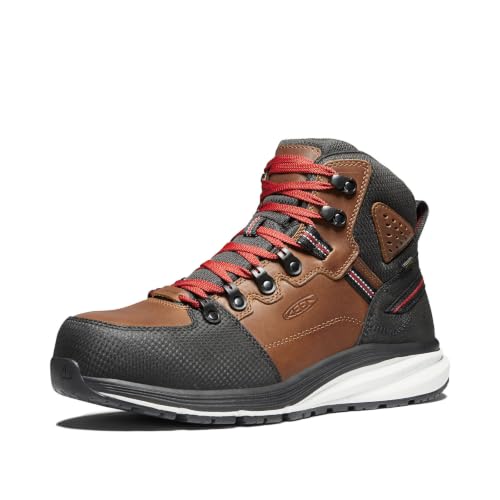
KEEN Utility Red Hook Mid Composite Toe
The Details Behind The Selections
The Wolverine Lockhart Oxford slips into the lineup as a comfortable, low-profile option for anyone who needs safety footwear that doesn’t look or feel like a clunky boot. The waterproof leather upper handles puddles and damp floors, while the moisture-wicking lining helps keep sweat from settling in during a long shift.
Wolverine’s DuraShocks outsole is the real story here: it’s engineered to absorb impact and return energy with each step, which matters when you’re walking on concrete eight hours straight. The ContourWelt construction gives the shoe a flexible feel that bends with your foot rather than fighting it, so break-in time is short.
Why It Works Well
- Waterproof leather keeps feet dry through wet jobsite mornings and accidental puddle splashes.
- Energy-returning outsole reduces foot fatigue over long shifts on hard surfaces.
- Oxford styling transitions between a warehouse floor and a client meeting without looking out of place.
- Lightweight construction compared to traditional work boots, which helps during long walking days.
- Moisture-wicking interior lining reduces the sweaty-foot buildup common with all-leather shoes.
Things To Consider
- No safety toe cap, so it’s not suited for environments requiring steel or composite toe protection.
- Waterproof membrane can trap heat in warm, dry indoor settings.
Feature Snapshot
Who It Suits Best
Floor supervisors, technicians, and light-duty workers who walk a lot on hard surfaces but don’t need a safety toe.
Skip It When
You work in a job site with falling-object hazards, where the Wolverine Lockhart DuraShocks 6″ Composite Toe is the smarter fit.
Take everything the Oxford version offers and bolt on a safety toe, then add ankle-high support. That’s the gist of the Wolverine Lockhart 6″ Composite Toe: same waterproof leather upper, same DuraShocks outsole, same ContourWelt flexibility, with a composite toe (a non-metallic cap made of layered materials like carbon fiber or Kevlar) instead of steel.
The composite toe is lighter than steel and doesn’t trigger metal detectors, which helps if you pass through security checkpoints. The taller 6-inch shaft gives your ankle a bit more stability on uneven ground, and it’s the kind of boot you reach for when the jobsite gets serious.
Key Advantages
- Composite toe meets common safety standards without the weight of steel.
- Waterproof leather and membrane keep feet dry in muddy or rainy conditions.
- Ankle-height shaft adds stability when climbing ladders or walking on debris.
- DuraShocks outsole cushions every step, reducing end-of-day foot soreness.
- Non-metallic construction won’t set off metal detectors at secured worksites.
- ContourWelt build means the boot flexes naturally rather than feeling like a rigid block.
Honest Caveats
- Heavier than the Oxford version above, which can wear on you during all-day walking.
- Composite toes can run warmer than steel in cold conditions, a small comfort quirk.
- Leather upper typically needs a brief break-in window before feeling truly comfortable.
Built With In Mind
Construction workers, warehouse staff, and tradespeople who need toe protection plus ankle support on demanding job sites.
Consider Something Else When
Your shift involves mostly walking on flat, clean indoor floors, where the KEEN Utility Lansing Low Steel Toe is a lighter, more breathable option.
The Truper BOT-25I is the kind of boot that doesn’t try to impress you. It’s a straightforward PVC work boot with a non-slip sole, designed for wet, messy environments like farms, food processing, landscaping, and light industrial work.
PVC (polyvinyl chloride) is a waterproof plastic, so the entire boot resists water and most chemicals rather than just shedding them. The non-slip outsole helps you keep your footing on slick concrete, and the tall shaft keeps your calves dry when you’re standing in puddles or wash-down areas.
A Few Highlights
- Fully waterproof PVC construction handles standing water and wet cleanup jobs.
- Non-slip outsole pattern grips well on greasy or wet concrete floors.
- Affordable option for outfitting a crew or replacing worn boots without much fuss.
- Tall shaft protects lower legs from splashes and minor scrapes.
Worth Noting
- No safety toe, so it won’t satisfy jobs requiring impact or compression ratings.
- PVC doesn’t breathe, which can leave feet hot and damp over long shifts.
- Less ankle flexibility than a leather boot, a trade-off some wearers notice immediately.
- Fit can run slightly generous, so trying them on matters if you’re between sizes.
Made For
Farm workers, landscapers, and anyone needing a low-cost, fully waterproof boot for messy outdoor work without safety-toe requirements.
Look Elsewhere When
Your workplace requires safety toe protection, where the Truper’s lack of toe cap makes the Wolverine Lockhart DuraShocks 6″ Composite Toe a better match.
KEEN built the Lansing Low for workers who’d rather feel like they’re wearing a sturdy sneaker than a work boot. The low-cut profile, water-resistant leather upper, and moisture-wicking lining make it a natural fit for indoor jobs and warm environments, especially warehouses and light construction.
The roomy KEEN fit is a real feature here, since wider feet get the toe box they need without squeezing. A steel toe handles impact and compression hazards, while the lighter construction means your legs don’t drag by the end of a shift.
Noteworthy Benefits
- Steel toe delivers impact and compression protection at jobs requiring rated footwear.
- Water-resistant leather upper sheds light spills and morning dew.
- Low-cut profile gives freedom of movement around the ankle.
- Roomy toe box accommodates wider feet without pinching.
- Moisture-wicking lining helps manage sweat in warm indoor settings.
Trade Offs
- Steel toe adds weight compared to the composite-toe Vista Energy below.
- Low height means less ankle support on uneven outdoor terrain.
- Water-resistant, not fully waterproof, so it’s not ideal for standing water.
Feature Snapshot
Right Fit For
Warehouse workers, light-duty construction, and indoor crews who need steel toe protection without a tall, heavy boot.
Swap It Out When
Your work takes you outdoors into rain or mud, where the KEEN Utility Red Hook Mid Composite Toe offers waterproof protection with more ankle coverage.
The Vista Energy is KEEN’s play for people who want safety footwear that feels like a running shoe. A breathable mesh upper keeps air flowing, while the KEEN.ReGEN midsole (the cushioned layer between the foot and the outsole) is engineered to return a notable share of energy with each step, which adds up across a long shift.
The carbon-fiber toe cap is lighter than steel and doesn’t conduct cold, so this shoe is a smart pick for anyone who moves quickly through a warehouse and wants their feet to feel fresh at the end of the day. The KonnectFit heel capture system helps lock your heel in place during quick turns and lateral movements.
Strengths Worth Knowing
- Carbon-fiber toe is lighter than steel, reducing foot fatigue over long shifts.
- Energy-return midsole technology reduces the heavy-foot feeling after hours of walking.
- Breathable mesh upper keeps feet cooler than all-leather designs.
- Non-metallic construction means no metal-detector slowdowns.
- KonnectFit heel system improves stability during quick pivots and side-to-side movement.
Things To Weigh
- Mesh upper offers limited water resistance, a real issue in wet outdoor settings.
- Lighter build means less ankle support compared to taller boots.
- Composite toe can feel slightly warmer than steel in cold environments.
Best Suited To
Active warehouse associates, light industrial workers, and anyone logging lots of steps who values comfort over heavy-duty protection.
Reach For A Different Pick When
You work in a wet outdoor environment, where the waterproof leather build of the KEEN Utility Red Hook Mid Composite Toe is the safer bet.
The Red Hook sits in the middle of the lineup, blending boot-level stability with sneaker-like agility. The mid-height shaft gives your ankles real support, while the KEEN.ReGEN midsole keeps the cushioning lively. Compared to the lower Vista Energy above, this one adds waterproof leather and high-abrasion protection in key wear zones.
The TecTuff overlays are the quiet heroes here: reinforced patches in high-wear areas like the toe and heel that extend the boot’s life. The carbon-fiber toe handles impact hazards, and the moisture-wicking lining keeps sweat from turning into a problem during long indoor or outdoor shifts.
Where It Excels
- Waterproof full-grain leather stands up to rain, puddles, and wet grass.
- TecTuff abrasion protection extends boot life in high-wear zones.
- Mid-height shaft balances ankle support with mobility.
- Carbon-fiber toe is lighter than steel and won’t set off metal detectors.
- KEEN.ReGEN midsole cushions long shifts and adds energy return with each step.
- Roomy KEEN fit accommodates wider feet without compressing the toes.
A Few Limitations
- Heavier than the Vista Energy, which can wear on you over very long days.
- Mid-height shaft is stiffer than low-cut styles and needs a short break-in period.
Whose Shelf It Belongs On
Tradespeople, warehouse supervisors, and outdoor workers who move between wet and dry environments and need serious toe and ankle protection.
A Better Fit Elsewhere
Your priority is keeping feet cool on long indoor shifts, where the lighter, breathable KEEN Utility Vista Energy Composite Toe is the more comfortable choice.
What To Weigh Before Picking Your Pair
Matching Protection To Your Workplace
The first decision is whether your job demands a safety toe. Steel and composite toes (caps built into the front of the shoe that resist impact and compression) handle impact and compression hazards, while non-toe options like the Wolverine Lockhart Oxford work fine for environments where nothing heavy drops on your feet. Check your workplace’s specific requirements before deciding, since regulations vary by industry and role.
Toe Material Trade-offs
Steel toes are durable and cost-effective, but heavier and cold-conducting. Composite and carbon-fiber toes are lighter, non-metallic, and warmer in cold weather, though they can cost more. For jobs with metal detectors, non-metallic is a quiet daily advantage.
Fit, Weight, and Breathability
Wider toe boxes like those from KEEN help if your feet swell during long shifts. Mesh uppers breathe better than full leather, but leather wins on water resistance. If you walk miles a day, weight matters: a difference of a few ounces per shoe adds up across eight hours on concrete.
Waterproofing Versus Moisture Management
Waterproof membranes keep water out, which also means they keep sweat in. Fully waterproof boots suit outdoor and wet work, while moisture-wicking liners in non-waterproof shoes suit indoor, warm environments where sweat is the bigger issue.
Smart Choices Across These Picks
Common Shopping Slip Ups
A frequent misstep is choosing a waterproof boot for an indoor climate-controlled warehouse, which leaves feet clammy by midday. Another is picking a composite toe when the workplace specifically requires steel, or grabbing steel when lighter composite would suit your daily miles. Sizing matters too: work shoes worn with thicker socks need about a half-size up from your casual fit.
When Paying More Pays Off
Higher-tier picks like the KEEN Utility Red Hook add genuine engineering, including energy-return midsoles, abrasion-resistant overlays, and carbon-fiber toes. The extra cost buys lighter weight, longer life, and noticeably better comfort on long shifts. For anyone logging real hours on their feet, that upgrade tends to pay back quickly in reduced end-of-day soreness.
Frequently Asked Questions
How do I know if I need a steel toe or composite toe?
Check your workplace’s safety requirements first. Steel is heavier and colder but typically costs less, while composite is lighter, non-metallic, and a better fit for warm environments or security checkpoints. For roles without rated requirements, a non-toe option can be more comfortable.
Are waterproof boots worth it for indoor work?
For most indoor jobs, fully waterproof membranes trap heat and sweat. A water-resistant leather upper with a moisture-wicking lining handles minor spills without the clamminess. Reserve true waterproof builds for outdoor and wet-environment work.
How long do work shoes typically last?
Lighter sneakers and oxfords often show wear within a year of daily use, while full-grain leather boots with reinforced overlays can stretch to two or more years. Rotating between two pairs and cleaning them regularly extends life noticeably.
Can I wear safety shoes with custom orthotics?
Most work shoes have removable insoles and enough depth to accept custom orthotics. Check the insole is removable before buying, and consider going up half a size if your orthotics add noticeable bulk.
What’s the break-in period for leather work shoes?
A week of regular wear typically does it. Leather softens quickly with body heat and movement, though waterproof membranes and reinforced toe caps can extend that window. Wearing them around the house for short stretches helps.
Closing Thoughts
The right mens safety shoes come down to matching your job’s hazards, your shift length, and your climate. Start with the safety requirements, then narrow by comfort and weight. Whichever direction you go, a well-fitted pair is one of the easiest upgrades you can make for your daily stamina.