Wet footwear isn’t one thing. Some days you need a quick-dry slip-on for the marina, other days you want a neoprene boot that survives sharp rocks at the shoreline. The right pair comes down to where you spend time, how often you get wet, and how much traction matters when surfaces turn slick.
This roundup sorts six men’s water shoes by real-world use, from casual slip-ons built for boat decks to puncture-resistant boots made for cold surf. Each pick is evaluated on materials, fit behavior, traction approach, and how it handles daily abuse. The goal is simple: match your routine to a shoe that fits it, instead of forcing your routine to match the shoe.
A Quick View Of The Lineup

HEYDUDE Men’s Wally Hey2O Fishing Slip-On Shoe

Helly Hansen Feathering Lightweight Deck Shoes

HUK Men’s Brewster Slip-On Fishing Shoe

Mares Equator 2mm Dive Boots
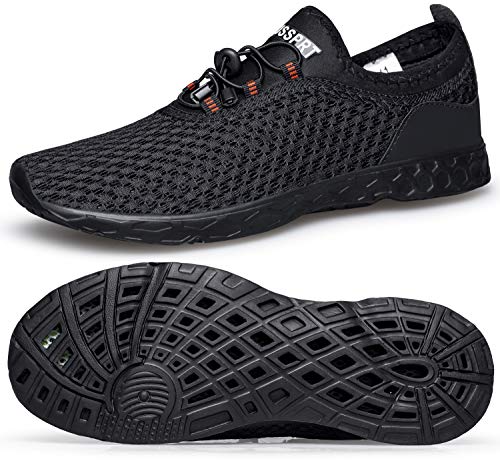
DOUSSPRT Men’s Quick Dry Water Shoes
Neoprene Wetsuit Boots 3mm & 5mm Puncture Resistant
Taking A Closer Look At The Options
The Wally Hey2O sits in that rare middle ground where a shoe feels casual enough for the gas station dock but rugged enough for a full Saturday on a friend’s boat. The slip-on shape, paired with stretch laces, means you step in and forget about it, which is the whole point when your hands are full of tackle or a cold drink.
Where it differs from the Helly Hansen Feathering later in this list is the mindset: HEYDUDE leans into a relaxed, almost sock-like fit, while the Feathering carries a more traditional maritime silhouette. For most casual users stepping off a wet lawn or wandering a marina boardwalk, the Wally’s quick-dry mesh and airy upper earn it a comfortable spot at the top of the everyday category.
Useful Strengths
- Breathable perforated mesh helps water escape and feet dry faster between dips.
- Stretch laces give a forgiving fit that works for slightly wider or higher insteps.
- Slip-on shape removes the bend-down hassle common with tied water shoes.
- Light enough to wear sockless on a hot afternoon without feeling heavy.
Trade Offs
- Mesh upper offers minimal toe protection against dropped tackle boxes or sharp rocks.
- Less aggressive tread than dedicated fishing shoes, so slick algae-covered surfaces can feel sketchy.
- Rinse-and-air-dry care is the norm, since debris tends to collect in the mesh weave.
Who It Suits Best
Casual users who want one shoe for the dock, the dock bar, and the drive home.
Skip It When
The HUK Brewster makes more sense for anglers who spend full days standing on wet, fish-blood-slicked decks and want dedicated traction patterns.
Helly Hansen has dressed North Sea sailors for decades, and the Feathering carries that heritage into a low-profile deck shoe. The non-marking rubber sole, a sole compound that won’t scuff gelcoat on boats, is engineered to bite wet wood without leaving black streaks on cabin floors.
Compare that to the HEYDUDE Wally Hey2O: the Wally is lighter and more casual, while the Feathering looks at home with canvas shorts or a sport coat on a yacht club afternoon. For users who care about clean decks as much as solid footing, this shoe is hard to beat, though it costs more than most casual water shoes.
What Pays Off
- Non-marking rubber sole preserves boat decks and indoor surfaces.
- Substantial traction pattern that holds on wet fiberglass and rain-soaked timber.
- Maritime silhouette transitions smoothly from boat to dockside dining.
- Build quality suited to repeated saltwater exposure with basic rinse care.
Honest Caveats
- Heavier and stiffer than mesh slip-ons like the Wally Hey2O.
- Not designed for full submersion; performs best in splash and spray conditions.
- Leather-trimmed versions require conditioning to avoid salt-water dry-out.
Made For
Sailors, boat owners, and coastal weekenders who want traction without sacrificing a clean look.
Look Elsewhere When
The DOUSSPRT Quick Dry mesh shoe is a smarter match for beach volleyball or pool days where weight and drainage matter more than deck etiquette.
The Brewster is purpose-built for anglers who treat their boat like a workshop. The combination of a full-length EVA midsole (a foam layer that absorbs impact underfoot) and the GRIP-X non-marking outsole is engineered for the specific pain point of standing on a blood-and-brine-slicked deck for hours.
Against the Helly Hansen Feathering, the Brewster trades a bit of refinement for outright grip. Where the Feathering looks at home at the yacht club, the Brewster looks like it belongs on a bay boat at dawn. For users who fish hard and walk even harder, the trade is the right one.
A Strong Showing
- GRIP-X outsole pattern is tuned specifically for wet, fishy decks.
- Rapid-dry mesh upper keeps weight down after repeated splashes.
- EVA midsole cushions long standing sessions on hard boat floors.
- Slip-on entry is fast when hands are busy with rods or net.
Points To Note
- Mesh panels can snag on rough dockside wood or barnacles.
- Less breathable in still air than fully open sandals.
- Style skews aggressively sporty for casual wear.
Best Suited To
Anglers, charter regulars, and anyone whose footwear takes a daily saltwater beating.
Swap It Out When
The Mares Equator 2mm Dive Boots suit snorkelers who actually enter the water, where the Brewster’s open mesh lets in more cold than a neoprene boot would.
The Mares Equator steps away from the deck-shoe category and into actual water entry. Built from 2mm Nylon II neoprene (a thin, flexible synthetic rubber that traps a thin layer of water against the skin to hold warmth), it keeps feet warm during long surface swims and short reef dives without overheating in tropical conditions.
The molded rubber sole adds protection from coral shards and rocky shorelines, and the low-cut profile keeps the boot out of the way of full-foot fins. Compared to the HUK Brewster, the Equator is less about traction on a deck and more about protecting feet once you’re already in the water.
Useful Touches
- 2mm neoprene balances warmth and flexibility for warm-water diving.
- Molded sole shields feet from sharp coral, shells, and shoreline rocks.
- Low-cut cuff won’t chafe against a wetsuit ankle seal.
- Glued and blind-stitched seams reduce water flushing through the boot.
Where It May Fall Short
- 2mm thickness offers limited insulation in water below the mid-60s Fahrenheit.
- Molded sole grip is decent on rock, but not designed for long overland walks.
- Sizing can run snug; users with wide feet may want to size up.
Perfect Match For
Snorkelers, casual divers, and paddleboarders who wade in and out of warm-water entry points.
Reach For A Different Pick When
The 3mm or 5mm neoprene wetsuit boots later in this list serve kayakers and cold-water users who need serious thermal protection.
The DOUSSPRT sits firmly in the throw-in-the-trunk category. Lightweight knit uppers and a stretchy construction make them easy to slip on barefoot, rinse under a hose, and hang on a doorknob to dry by the next morning.
Versus the HEYDUDE Wally Hey2O earlier in the list, the DOUSSPRT leans further toward athletic-shoe styling rather than classic boat-shoe looks. For pool decks, beach days, or kayaking put-ins where the priority is keeping sand out of the car, the value here is hard to match.
Real Benefits
- Knit upper drains quickly and sheds most sand with a single rinse.
- Flexible sole bends naturally for barefoot-style walking on hot pavement.
- Low price point makes them expendable for travel or rental-cabin use.
- Packs flat in a beach bag or backpack.
Some Limits To Know
- Minimal arch support for users who stand for long stretches.
- Sole tread is shallow and slips on slick river rocks.
- Knit fabric wears faster than leather or heavy mesh under repeated abuse.
Who Will Love This
Vacationers, pool regulars, and parents packing a spare pair for the whole family.
Consider Something Else When
Pick the HUK Brewster instead if traction on a wet boat deck matters more than price or packability.
These neoprene boots go the furthest of any pick on this list. Available in 3mm for moderate water and 5mm for genuinely cold conditions, they’re built around a vulcanized rubber sole (rubber that’s been heat-bonded for durability and puncture resistance) that shrugs off oyster beds, broken shells, and barnacle-encrusted landings.
The trade-off against the Mares Equator earlier is bulk and warmth: this boot is taller, heavier, and far more protective. For lake kayakers, river guides, and cold-coast surfers, that extra insulation is the difference between an enjoyable session and a cut-short one.
What Stands Out
- Vulcanized rubber sole resists punctures from shoreline hazards.
- Available thicknesses (3mm and 5mm) cover both temperate and cold water.
- Tall protective heel shields the Achilles from fin rub.
- Glued and blind-stitched seams keep cold water flushing to a minimum.
Things To Weigh
- Bulky profile is awkward on dry land and overland portages.
- 5mm version can feel overly warm in summer or tropical water.
- Pull-on style lacks the convenience of slip-on or zippered alternatives.
Built With In Mind
Kayakers, cold-water divers, and shoreline anglers who need serious protection in rough conditions.
Not Your Match When
The HEYDUDE Wally Hey2O or DOUSSPRT Quick Dry is a much better pick for casual dock days where heavy insulation and puncture soles are overkill.
What Matters Most Before Choosing Mens Wet Shoes
The single biggest mistake is buying a water shoe for a use case it wasn’t designed for. A mesh slip-on like the DOUSSPRT drains beautifully but offers almost no warmth, while the 5mm neoprene boot keeps toes toasty but turns a casual walk into a slog. Match the shoe to the activity, not the other way around.
Traction comes next. Non-marking rubber outsoles like the Helly Hansen Feathering’s protect boat decks, while siped (cut with narrow channels for grip) or lugged patterns like the HUK Brewster’s bite into wet rock and algae. If you’re on a fiberglass deck most of the time, prioritize non-marking compounds. If you’re crossing slippery shorelines, prioritize deeper lugs.
Fit behavior is often overlooked. Stretch laces and slip-on shapes, like the HEYDUDE Wally’s, forgive wider feet and high insteps. Pull-on neoprene boots tend to run snug and benefit from a half-size bump. Try shoes on at the end of the day when feet swell, and wear the same socks or sockless style you’ll actually use in the water.
Finally, consider maintenance reality. Mesh shoes need a quick rinse to prevent mildew. Leather-trimmed deck shoes need occasional conditioning to fight salt corrosion. Neoprene boots last longest when dried inside-out between uses. The “right” shoe is the one you’ll actually care for.
Smart Buying Advice For Wet Footwear
Common Shopping Slip Ups
The most frequent error is treating water shoes like regular sneakers. Standard athletic shoes absorb water, lose cushioning, and stay heavy for hours. A purpose-built water shoe is engineered to drain, dry fast, and grip slick surfaces. Buying “any old sneaker” for the boat is how soggy feet and ruined gym bags happen.
Another trap is ignoring terrain. Beach sand rewards lightweight, quick-drain mesh. Riverbeds and rocky shorelines punish thin soles and demand puncture resistance. Slick boat decks call for non-marking compounds. Picking a shoe without thinking about where it’ll actually touch ground is the fastest route to disappointment.
Where The Extra Money Goes
Spending more typically buys better materials and longer service life. Premium deck shoes use higher-grade leather, better non-marking rubber, and stitched construction that handles repeat saltwater exposure. Premium neoprene boots use glued and blind-stitched seams that reduce cold-water flushing, plus thicker vulcanized soles that outlast thin molded ones.
The upgrade is worth it for users who wear the shoes weekly or in harsh conditions. For occasional vacation use, budget mesh designs serve perfectly well and free up cash for the rest of the trip. The honest read is that premium tier pays for durability and refinement, not a fundamentally different feature set.
Frequently Asked Questions
Can water shoes handle hiking on rough trails?
Lightweight water shoes are designed for shorelines, boat decks, and stream crossings, not multi-mile hikes over rocks and roots. For trail use, look for a hybrid water-trail shoe with a stiffer midsole and deeper lugs. The neoprene boots in this roundup, like the 5mm puncture-resistant pick, handle short rocky portages far better than mesh slip-ons, but they’re still overkill for actual hiking trails.
How should wet shoes fit?
Snug but not tight, with roughly a thumb’s width of room at the toe. Water causes feet to swell slightly, and shoes that feel roomy on dry land often feel right once waterlogged. Neoprene boots tend to fit closer to the foot because the material compresses, while mesh slip-ons need a tighter initial fit since the fabric stretches when wet.
Do water shoes protect against sharp rocks and shells?
That depends entirely on the sole. Thin mesh water shoes offer almost no protection and are best for sandy beach entries. Vulcanized rubber-soled neoprene boots like the 5mm pick resist punctures from oyster shells and broken glass. For typical coastal wading, a molded rubber sole is a sensible minimum.
How do you clean and store wet shoes?
Rinse with fresh water after every saltwater use, paying attention to mesh weave and sole grooves where debris collects. Squeeze out excess water, then air-dry out of direct heat and sunlight. Storing wet shoes in a sealed bag invites mildew and bacterial growth, which is the most common cause of odor and material breakdown.
Are water shoes worth owning for casual use?
For people near any body of water, even a community pool, water shoes pay for themselves by protecting feet from hot pavement, hidden glass, and slippery surfaces. The HEYDUDE Wally and DOUSSPRT Quick Dry both cross over nicely into everyday casual wear, so they’re not a single-purpose purchase. For users without nearby water access, they make less sense as a dedicated purchase.
The Takeaway
The best men’s wet shoe is the one that matches where you actually spend time. Boat owners and sailors gravitate toward the Helly Hansen Feathering or HUK Brewster for their deck-specific traction and durability. Anglers and reef walkers get more protection from the Mares Equator or the heavier neoprene boots. Casual users near pools or beaches do well with the HEYDUDE Wally or DOUSSPRT Quick Dry for their easy, packable convenience. Start with the activity, then narrow by fit and care demands, and the right pair usually reveals itself pretty quickly.