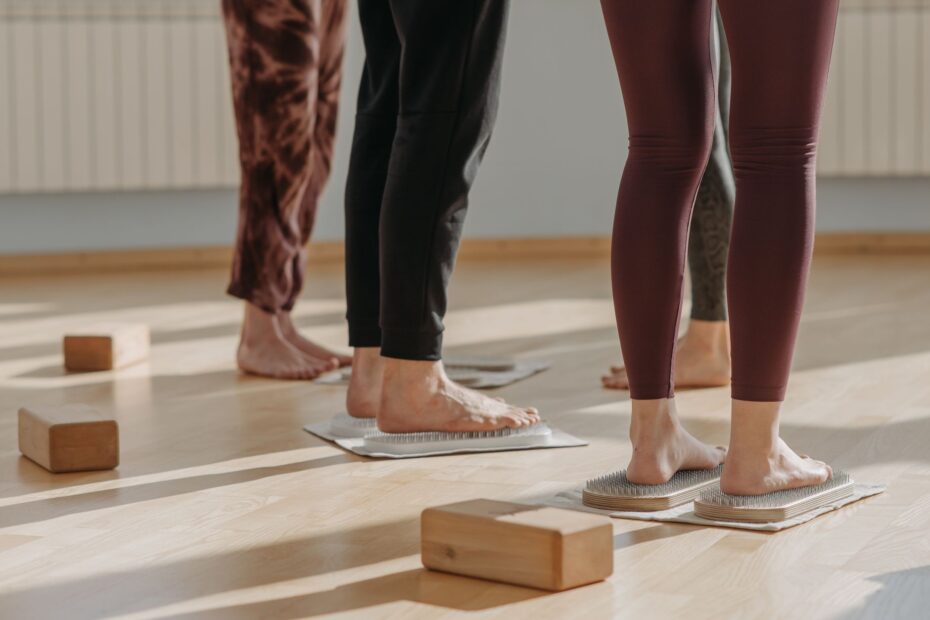
Pain, stiffness, weakness, or poor foot control can change how your body meets the ground through a biomechanical process. A sore heel can shift your weight across thousands of daily steps, altering motion at your knees, hips, pelvis, and spine.
You’ll find practical detail on foot biomechanics, gait, footwear, home observations, exercises, orthotics, and signs that call for a podiatrist or physical therapist.
Your Feet Set the Starting Point for Standing and Walking
Every step begins at the floor. Your feet receive ground force, adapt to surface changes, and create a stable base for your body. Comfort, strength, ankle mobility, sensation, skin condition, and balance all influence the force moving upward through your legs.
Foot Health Extends Beyond Arch Shape
A healthy foot does not need a certain appearance. It needs to tolerate your daily load without recurring pain, numbness, skin breakdown, or limping. Your toes also need enough motion for a smooth push-off rather than gripping the floor for stability.
Pain changes your behavior before you consciously identify it. You may stand heavier on one leg, turn a foot outward, shorten your stride, or avoid rolling through the toes. Those small adjustments alter gait long before posture looks uneven in a mirror.
The Kinetic Chain Carries Force Upward
Foot biomechanics link the sole of your foot to your ankle, knee, hip, pelvis, and spine. Ground force enters through the foot, while muscles and joints above respond to keep your head and trunk over your base of support.
| Your body area | Your job during walking | What reduced foot function can change |
|---|---|---|
| Your foot and toes | You absorb load and push off | You may grip, avoid toe-off, or shift pressure |
| Your ankle and knee | You control forward motion | You can bend or rotate through a different path |
| Your hips and pelvis | You keep your trunk level | You may hike one side or sway farther |
| Your low back | You transfer force through the trunk | You can move farther to make up for lost motion below |
Posture is not a frozen pose against a wall. It is your movement strategy during standing, walking, stair climbing, and carrying groceries. That is why how gait affects body alignment matters as much as shoulder position or spinal alignment.
Foot Motion Changes the Movement of Joints Above It
A painful step rarely stays local. Each stride asks your foot to accept load, adapt to the ground, stiffen for push-off, and release your body forward. Lost motion during one part of that sequence can shift work into another joint.
Pronation and Supination Change Load Distribution
Pronation is the inward rolling motion that helps your foot adapt after heel contact. Excessive pronation, especially alongside pain or poor control, can increase inward rotation through the lower leg and alter knee and hip tracking.
Supination is an outward loading pattern that creates a stiffer foot. A rigid, supinated foot can concentrate pressure along the outer edge, heel, or ball of your foot. Your leg may then seek a softer route through the ankle, knee, or hip.
| Your foot pattern | What changes during a step | Where compensation may appear |
|---|---|---|
| Excessive pronation | Your arch drops or stays loaded longer | Your ankle, knee, hip, or pelvis can rotate inward |
| Supination | Your outer foot carries more pressure | Your ankle may feel unstable and your calf can tighten |
| Limited big-toe motion | Your push-off becomes shorter | Your hip or low back can rotate farther during stride |
| Reduced ankle dorsiflexion | Your shin cannot move forward well | Your knee, pelvis, or low back can borrow motion |
A Brief Limp Differs From a Repeated Pattern
A bruised heel after a long day can change your stride for a few hours. That temporary guarding differs from a months-long gait pattern, where your nervous system has learned a route around discomfort.
Achilles tendon tightness can limit ankle dorsiflexion. Your heel may lift early, your foot may turn outward, and your pelvis may rotate farther during each step. Repetition does not prove that the foot caused back pain, but it gives a clinician a useful area to inspect.
Because several linked joints and tissues can compensate, a static arch measurement cannot explain the whole pattern.
Arch Height Alone Does Not Predict Posture Problems
Flat feet and high arches are structural variations, not verdicts on posture. A low arch can work well under load, while a high arch can stay pain-free for decades. Your strength, joint motion, footwear, past injuries, and activity level shape the result.
Flexible and Rigid Feet Behave Differently
Flexible flat feet change shape under body weight but retain motion. Rigid high arches can absorb less shock and place more pressure beneath the heel or forefoot. Neither pattern automatically explains knee, hip, or back symptoms.
Your arch deserves closer attention alongside repeated ankle rolling, fatigue, painful calluses, instability, or clear gait changes. In that setting, overpronation or supination becomes one part of a larger movement picture rather than the entire explanation.
Symptoms Give Foot Shape Its Meaning
A runner with flat feet who finishes a 5K without pain needs a different response than a warehouse worker whose feet ache after two hours on concrete. Load tolerance shows how well your feet meet the demands of your actual day.
Foot shape does not diagnose poor posture. Pain, function, strength, and movement quality tell you far more than a wet-footprint test.
That distinction matters because foot problems that affect posture tend to alter gait through discomfort, weakness, or loss of motion rather than arch height alone. Arch support may feel useful for some foot types, yet it does not replace an evaluation of pain, mobility, and strength.
Painful Foot Conditions Can Change Gait and Alignment
Heel pain can turn a normal step into a guarded one before breakfast. Plantar fasciitis involves irritation near the plantar fascia attachment at the heel, and sharp steps after rest can lead you to unload that side.
Specific Conditions Can Shift Your Weight
- Plantar fasciitis: Your heel pain can shorten your stride and reduce push-off through the affected foot.
- Bunions: Your big toe may lose room and motion, leading you to load the outside of your forefoot.
- Arthritis stiffness: Your stiff joints can limit roll-through and make stairs or uneven ground harder.
- Metatarsalgia pain: Your ball-of-foot pain can shift pressure toward your heel or outer border.
- Nerve irritation: Your numbness or burning can change foot placement because pressure feels unpredictable.
- Ankle stiffness: Your reduced forward ankle motion can force extra movement at the knee, hip, or low back.
Achilles tendon problems can produce a similar pattern because the tendon helps control ankle motion and push-off. Your calf may stay guarded, and a shorter stride can continue after sharp pain fades.
Higher-Body Symptoms Can Follow Several Paths
Knee discomfort, hip tightness, pelvic asymmetry, and low-back strain are common places to feel a changed walking pattern. Your neck and shoulders can become involved as well, especially where your trunk leans, your arms stiffen, or you carry tension to avoid pain.
No single body area takes the largest effect from poor posture in every case. Your symptoms depend on which joint lacks motion, where pain starts, how long compensation has lasted, and what your work or activity demands.
As compensation persists, it can become visible in stance, shoe wear, and the way you move.
Visible Clues Can Point to Postural Compensation
Uneven shoe wear can show a repeated loading habit before a mirror does. A worn outer heel, collapsed inner edge, or one shoe that breaks down faster gives you a practical clue, though shoe wear cannot diagnose the cause.
Track Patterns Across Two Weeks
- Recurring soreness: Your pain returns in the same heel, arch, toe, or ankle after familiar activity.
- Visible swelling: Your foot or ankle looks fuller on one side after standing or walking.
- Unusual calluses: Your thick skin gathers beneath one metatarsal head or along one outer edge.
- Toe gripping: Your toes claw inside the shoe while you try to feel steady.
- Shortened stride: Your affected leg takes a smaller step or avoids heel contact.
- Balance change: Your single-leg stance feels less steady on one side.
Check your left and right sides at the same time of day. Your notes can cover standing comfort, one-leg loading, stair descent, and the point in a walk where symptoms start. A 10-minute walk gives you more useful detail than a single still photo.
These signs of unhealthy feet reveal patterns, not diagnoses. Back, hip, and knee pain can arise from several tissues, so a foot finding does not prove the source of your musculoskeletal pain.
Once warning signs are recognized, external support can sometimes improve comfort without correcting every underlying contributor.
Footwear and Orthotics Influence Mechanics Within Limits
A narrow toe box can leave your toes crowded and unable to spread during stance. Poorly fitting footwear can increase discomfort, restrict motion, and lead you to shift weight while standing or walking.
Shoe Features Change Your Starting Conditions
| Your footwear feature | What you should check | Why your gait can change |
|---|---|---|
| Length and width | Your toes have room without sliding | Crowding can alter toe motion and forefoot pressure |
| Heel counter | Your rearfoot feels steady, not squeezed | Excess motion can irritate a tender ankle or heel |
| Cushioning | Your shoe matches the surface and activity | Too little or too much can change loading comfort |
| Forefoot flexibility | Your shoe bends near the ball of your foot | A stiff bend point can block natural toe-off |
| Shoe condition | Your sole is not tilted or compressed | Uneven wear can reinforce an uneven loading pattern |
It can contribute indirectly by making your feet hurt, crowding your toes, restricting motion, or creating an unstable base. Your body may then shift weight, shorten stride length, or tense through the hips and trunk.
Orthotics Have a Narrower Role Than Full Posture Correction
Foot orthotics can redistribute pressure, cushion sensitive areas, or guide load for a specific condition. Your response depends on diagnosis, material, fit, shoe shape, and the time you spend standing or walking.
An insert cannot correct every posture issue, and abrupt use can irritate your foot or calf. Start with short wear periods and track comfort during the next day, not only while your shoes are on.
Choose shoes for the task in front of you. A work shoe, walking shoe, and court shoe place different demands on your foot and ankle.
Gradual Movement Work Builds Foot and Ankle Capacity
Sudden changes can create a new pain problem. Your tissues need time to adjust after a new exercise routine, lower-profile shoes, or a change in insole use. Begin below the activity level that triggers symptoms.
A Practical Movement Sequence
- Reduce the irritant: Cut back distance, hill work, or standing time that starts your symptoms.
- Stretch your calves: Hold a gentle calf stretch for 20 to 30 seconds without forcing heel pain.
- Mobilize your ankle: Drive your knee forward over your toes while keeping your heel down and movement controlled.
- Train toe control: Lift your big toe while keeping smaller toes down, then reverse the pattern.
- Use short-foot holds: Gently draw the ball of your foot toward your heel without curling your toes.
- Practice heel raises: Rise slowly, pause at the top, and lower with control while pain stays manageable.
Single-leg balance adds a useful next layer because your foot, ankle, hip, and trunk must respond together. Hold a counter for safety and aim for steady breathing rather than clenched toes.
Foot Work Belongs Within Whole-Body Movement
Your hips help control leg position during every step, so hip strength belongs beside foot drills. Walking tolerance, gentle calf capacity, and breaks from prolonged standing can reduce the load spikes that make your body brace.
Track one variable at a time. Your log can list distance, surface, shoe pair, pain during activity, and symptoms the next morning. That record helps you see how foot health affects posture without guessing from one difficult day.
Persistent Changes Need Clinical Assessment
Numbness, new weakness, sudden swelling, wounds, marked limping, recurring injury, or a major shape change needs prompt clinical attention. A podiatrist can examine foot structure and skin, while a physical therapist can study your gait, joint motion, and strength.
Health Conditions Raise the Stakes
Diabetes, poor circulation, inflammatory arthritis, and loss of sensation change the risk around a new foot symptom. Small injuries can become serious where feeling or blood flow is reduced. Guidance from the American Diabetes Association backs regular foot checks for people with diabetes.
Your clinician may look beyond the painful spot. A gait evaluation can include ankle range, big-toe motion, calf strength, hip control, shoe wear, and the timing of symptoms during a walk.
Ozempic Feet Is Not a Formal Diagnosis
The term “Ozempic feet” is an informal phrase, not a recognized medical diagnosis. Ozempic contains semaglutide, and rapid weight loss can reduce natural cushioning beneath the sole, alter shoe fit, or make a pre-existing bunion, callus, or nerve symptom more noticeable.
New foot pain during weight change deserves individual medical context rather than assumptions about medication. Your prescriber and a foot clinician can sort out changes in body weight, activity, nutrition, footwear, circulation, and prior injury.
Final Takeaways
Your feet do not control every part of posture, but they set the starting mechanical conditions for standing and walking. Pain-free movement, usable ankle mobility, steady balance, and shoes that fit your actual activity give your knees, hips, pelvis, and spine fewer reasons to compensate.
Persistent symptoms deserve closer attention before a temporary limp becomes your default movement pattern. How foot health affects posture becomes clearer through your pain pattern, gait changes, shoe wear, ankle motion, and response to daily activity.
FAQ
How do your feet affect your whole body?
Each step shapes how force enters your body during standing and walking. Foot pain, stiffness, weakness, or poor control can alter ankle motion and leg rotation, which can change knee position, hip movement, pelvic alignment, and spinal motion during repeated steps.
What are signs of unhealthy feet?
Recurring pain, swelling, numbness, burning, weakness, skin breakdown, unusual calluses, balance changes, and uneven shoe wear can signal foot problems. Your concern rises where symptoms change your stride, limit daily activity, disturb sleep, or appear with a wound or color change.
Can flat feet or overpronation cause back pain?
Back pain does not automatically result from flat feet or overpronation. Your risk becomes more relevant where arch motion comes with foot pain, instability, reduced ankle mobility, repeated injury, or a visible gait change that makes your pelvis or low back move differently during walking.
Can poor footwear cause posture problems?
Footwear that hurts, crowds toes, restricts motion, or creates an unstable base can indirectly contribute to posture problems. Your body may then shift weight, shorten stride length, or tense through the hips and trunk to avoid pressure.
Can orthotics improve posture and walking alignment?
Redistributing pressure or changing foot loading inside a shoe can improve comfort and walking alignment for some conditions. Your result depends on fit, diagnosis, shoe shape, activity demands, and whether weakness, stiffness, or pain needs attention.
What exercises help improve foot strength, ankle mobility, and posture?
Calf stretches, ankle mobility drills, toe-control work, short-foot holds, heel raises, and single-leg balance can build strength and mobility. Your pain should stay manageable during these drills, and a physical therapist can tailor them to your gait and symptoms.