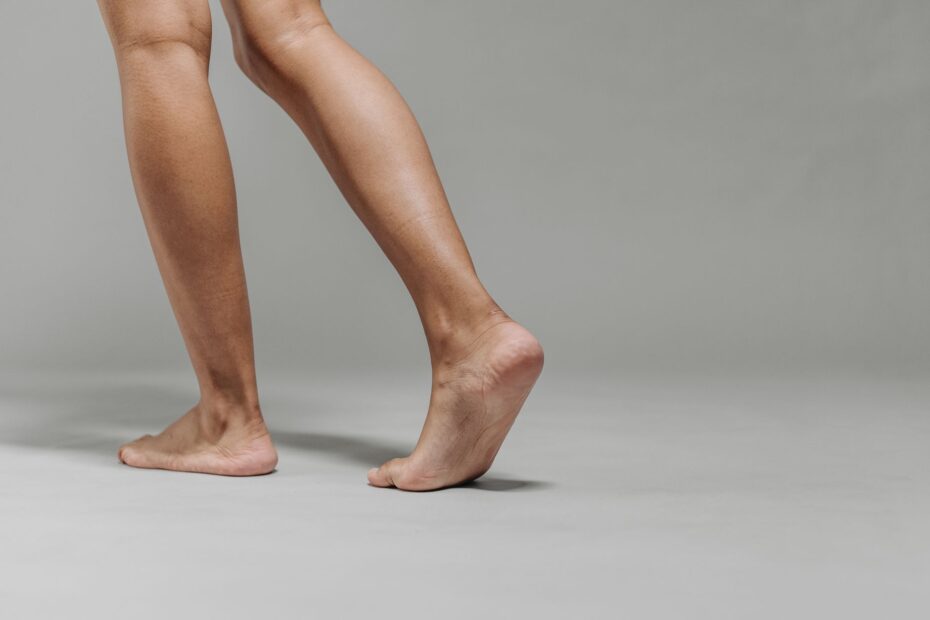
Just after heel strike, three linked motions help your foot soften impact and prepare for push-off. A small inward roll belongs in a comfortable gait cycle because it spreads force across your heel, arch, and forefoot instead of leaving one area to absorb the full load.
You’ll learn how this motion changes through walking and running, what overpronation signs can mean, and which comfort strategies fit your symptoms, activity, and foot shape.
Pronation Helps Your Foot Accept Ground Force
Landing starts with a firm outer heel, but the foot needs to become more flexible as body weight moves forward. Pronation allows that shift by letting the rearfoot and midfoot yield enough to meet pavement, trails, carpet, or a gym floor.
During early stance, your arch lowers a small amount under load. That movement spreads pressure across more of the sole, so force does not stay concentrated at the heel or outer border of your foot.
Arch height alone does not label your movement as harmful. A low arch can move comfortably through a long work shift, while a high arch can feel stiff and overloaded during a short run.
Pain, repeated injury, fatigue, and lost function tell you more than a still photo of your feet. Your foot can roll inward without symptoms, and that motion does not automatically need correction.
Look for a pattern, not a pose. Your standing foot shape is one clue; movement under load shows a fuller picture.
The Gait Cycle Times the Inward Roll and Push-Off
The inward motion begins after heel strike rather than continuing through your entire step. As your body passes over the planted leg, the ankle, lower leg, and midfoot share force in a short sequence.
That sequence has a purpose. Your foot becomes flexible during loading, then firms again near toe-off so the calf and forefoot can push your body forward.
Loading Response Softens the Landing
Weight shifts from your heel toward the forefoot during the loading response. The subtalar joint allows rearfoot motion, the arch settles slightly, and the sole gains more contact with the ground.
- Heel strike: Your outer heel meets the ground and starts receiving body weight.
- Weight acceptance: The subtalar joint permits rearfoot motion while your leg moves forward.
- Midstance: Your body passes over the planted foot while the arch settles under load.
- Surface contact: The midfoot becomes more mobile, helping your sole meet uneven ground.
A hard, rigid landing can feel harsh through the heel and outer foot. Controlled motion at this stage gives your foot room to absorb force before your body reaches midstance.
Resupination Firms the Foot for Push-Off
Late stance reverses the pattern. Your foot resupinates as the heel rises, becoming firmer and less mobile for push-off during walking, running, or climbing stairs.
Continued inward collapse near toe-off can leave your push-off feeling unstable or tiring. That timing difference explains why two feet with a similar-looking arch can behave very differently during the same activity.
The gait cycle changes with speed, hills, fatigue, footwear, and surface slope. Your stride during a relaxed walk may not match your stride during downhill running or a 10-hour standing shift.
Three Linked Motions Form Pronation
An inward roll is only the visible part of the movement. Your foot and ankle move through several planes at once, which is why pronation vs eversion is not an equal comparison.
The subtalar joint supplies much of the rearfoot motion, while midfoot joints let the sole adapt to the surface. Your calf, shin muscles, intrinsic foot muscles, and posterior tibial tendon influence how smoothly that sequence occurs under load.
| Motion | What happens | Why your step uses it |
|---|---|---|
| Subtalar eversion | Your heel bone tilts outward relative to the lower leg. | It helps the rearfoot accept force after landing. |
| Forefoot abduction | Your forefoot turns slightly away from the body midline. | It lets the front of your foot meet the ground under load. |
| Ankle dorsiflexion | Your shin advances over your foot as the ankle bends upward. | It carries your body forward during midstance. |
Eversion Describes Only One Part
At the rearfoot, the heel bone tilts outward relative to the lower leg in one directional movement. Pronation includes eversion, forefoot abduction, and ankle dorsiflexion while your body moves over the planted foot.
Supination is the later-stance counterpart. Relative inversion, adduction, and plantarflexion stiffen the foot for propulsion, so your stride needs mobility after landing and rigidity before toe-off.
Pronation vs Supination Changes Where Force Lands
Pronation shifts load inward as the foot becomes flexible after heel strike. Supination shifts the foot toward a firmer, more outward-loaded position during late stance and push-off.
Neither pattern is automatically harmful. Your comfort, training volume, shoe fit, tissue history, and activity demands decide whether either pattern deserves closer attention.
Overpronation Reflects Timing, Amount, and Tissue Tolerance
An inward roll matters only after the load on your tissues exceeds their current capacity. Overpronation describes motion that lasts too long, becomes too large, lacks enough control, or creates symptoms during your usual activity.
Flat-looking feet can show more arch drop and still remain comfortable through distance running or long shifts. A higher arch can still irritate tissues through stiffness or a stride that stays loaded along the outer border.
| Pattern | Loading tendency | Possible concern for your body |
|---|---|---|
| Comfortable pronation | Load spreads during stance, then the foot firms for push-off. | No change is needed without symptoms or repeated injury. |
| Overpronation | Inward motion lasts too long or grows too large for available control. | Arch, inner ankle, shin, knee, or heel tissues can become irritated. |
| Underpronation | Loading stays closer to the outer border of the foot. | Impact can feel harsh in a rigid or high-arched foot. |
Symptoms Have More Than One Cause
The plantar fascia, posterior tibial tendon, Achilles tendon, shin muscles, knees, and hips can react to repeated load. Yet a foot-motion pattern rarely explains pain by itself.
A jump from 10 to 25 running miles per week can exceed tissue capacity even with a familiar stride. Worn shoes, reduced sleep, limited ankle motion, and repeated hill sessions can add load to the same area.
Because load tolerance shifts with context, repeated observations are more useful than a single snapshot.
Neither pronation nor supination is universally worse. Your symptoms, prior injuries, activity load, and comfort during movement show whether the pattern needs attention.
Home Clues Can Show a Repeatable Pattern
Shoe wear can offer a clue, but it cannot diagnose your movement. A worn inner heel can reflect your walking route, leg position, shoe fit, or a normal landing pattern rather than a problem needing correction.
Overpronation signs become more useful after you link them to a location, an activity, and a recent workload change. Your symptom pattern carries more weight than one crease in the upper or one worn patch on the outsole.
Several Clues Give a Better Picture
- Inner ankle fatigue: Track soreness behind or below your inner ankle after longer walks, standing shifts, or runs.
- Arch discomfort: Write down pain that rises as your standing time or mileage increases.
- Repeated shin pain: Record soreness along the inner shin that returns during the same activity.
- Late inward roll: Use a rear-view phone video to see whether your heel stays tilted inward near toe-off.
- Side-to-side difference: Check both legs because your left and right feet do not always move alike.
Film several steps instead of relying on one frame. Place the phone behind you at ankle height, use level ground, and wear the shoes linked to your symptoms.
Your video can reveal a repeatable heel pattern, but it cannot show tendon health, joint mobility, or pain sensitivity. A video is a starting point, not a diagnosis.
Activity History Gives the Clues Meaning
Write down where discomfort starts, which activity brings it on, and what changed during the prior 2 to 4 weeks. Your notes can reveal a link between pain and hills, speed work, standing time, new shoes, or a sudden mileage jump.
A useful gait evaluation pairs movement observation with footwear, calf flexibility, single-leg strength, training history, and symptom location. The American Physical Therapy Association describes physical therapists as movement specialists, which fits a load-and-movement problem well.
A podiatrist can examine foot structure, tissue irritation, and shoe-related pressure where your symptoms center on the foot or ankle. Your history matters because the same heel position can feel harmless for one activity and painful for another.
Once a pattern is linked to symptoms or demand, each intervention should target a specific limitation.
Exercises, Shoes, and Insoles Have Different Jobs
Comfort improves more reliably when your plan targets load tolerance instead of forcing your arch into a straight-looking position. Strength work builds endurance and control, mobility shifts where motion occurs, and footwear or insoles can alter pressure and perceived stability.
Foot Pronation Exercises Build Control Under Load
Start at a level that keeps symptoms calm during the session and the following day. Slow repetitions matter more than fatigue because your foot needs control while body weight moves over it.
- Short-foot holds: Gently draw the ball of your foot toward your heel without curling your toes, holding 5 to 10 seconds.
- Controlled calf raises: Rise on both feet, then progress toward one-leg raises while keeping your heel path steady.
- Single-leg balance: Stand barefoot near a counter for 20 to 30 seconds without gripping hard through your toes.
- Hip abduction work: Use side-lying leg raises or band walks to build pelvic and thigh control.
- Calf mobility: Stretch with a straight knee and a bent knee to address both major calf muscle groups.
Your bones will not reshape from these drills, but your muscles can share force more effectively. The posterior tibial tendon, calf complex, and small foot muscles work with the knee and hip during each loaded step.
Motion-Control Shoes Change Feel and Pressure
By redistributing pressure or limiting rearfoot motion, motion-control shoes and orthotic insoles can reduce discomfort for some feet. ASICS, Brooks Running, and New Balance label some models for stability, yet the label cannot predict how your feet will feel.
Try a new shoe or insert during short walks before a long run or full work shift. A firm insert that eases arch discomfort but causes numb toes, outer-foot pain, or blisters is not a useful trade for your body.
Your comfort during real activity matters more than a marketing category. A shoe that feels steady during a five-minute store walk can feel very different after 5 miles, stairs, or concrete floors.
How to Correct Overpronation Focuses on Tolerance
Changes in symptoms or control can take several weeks of steady exercise and sensible load reduction. Structural traits and day-to-day gait variation can remain, so your goal is better tolerance rather than a motionless arch.
Reduce one stressor at a time, such as hill volume, long standing periods, speed work, or running distance. That approach gives you a clearer view of what your body tolerates before you add more activity.
Persistent Pain Needs an Individual Plan
A sore inner ankle after a hard hill session calls for a different response than numbness under the forefoot during a short walk. Reduce aggravating mileage, speed, hills, or standing time while you work on the mobility, strength, footwear, and recovery factors linked to your symptoms.
Specific Warning Signs Need Clinical Care
Seek care from a podiatrist, physical therapist, or sports-medicine clinician for pain that lasts beyond 1 to 2 weeks despite lower activity load. Swelling, numbness, a feeling that your ankle gives way, marked weakness, night pain, or repeated injury also warrant prompt care.
A clinician can separate a load-related movement issue from posterior tibial tendon injury, stress injury, nerve irritation, arthritis, or joint instability. Those conditions need different care, and shoe wear cannot sort them out.
A Runner Scenario Shows the Difference
Consider a runner whose arch aches only after downhill runs. Lower hill volume, calf mobility work, and slow single-leg calf raises can settle irritation tied to that specific load.
Persistent swelling behind the inner ankle changes the picture. Your next step is an individual evaluation rather than more home drills because posterior tibial tendon irritation needs a closer examination.
Key Takeaways
Your feet need to yield after landing and stiffen before push-off. A smooth sequence spreads force across the step, while trouble appears after load, timing, and tissue capacity stop matching.
Focus on symptoms, training changes, and function instead of trying to make your feet look neutral in every stride. Your activity tolerance is a better target than a perfectly straight heel in a single video frame.
Use strength work, mobility, footwear changes, and lower training load as tools with different roles. Repeated pain, swelling, weakness, numbness, or instability deserves individual clinical care.
FAQ
What is foot pronation, and is it normal?
After heel strike, an inward-loading motion normally occurs as the foot accepts body weight. Your arch lowers slightly, the rearfoot moves, and the sole adapts to the ground before the foot firms again for push-off.
How does foot pronation work?
Your foot moves through eversion, forefoot abduction, and ankle dorsiflexion after heel strike. The subtalar joint and midfoot joints allow your sole to spread force across the ground, then your foot resupinates near toe-off for a firmer push-off lever.
What is the difference between pronation, overpronation, and supination?
Pronation is normal loading motion after heel strike. Overpronation describes inward motion that lasts too long, becomes too large, or causes symptoms for your activity level, while supination is the later-stance stiffening pattern that prepares your foot for propulsion.
How can you correct overpronation in your foot?
Gradually reducing load, improving calf and ankle mobility, strengthening the foot and hips, and choosing comfortable footwear can ease symptoms linked to overpronation. Your goal is better control and tolerance during activity, not a permanently motionless arch or a visually straight foot.
How do you know if you overpronate your feet?
You may notice arch fatigue, inner-ankle soreness, recurring shin discomfort, or an inward heel tilt that continues near toe-off. A rear-view phone video and shoe wear offer clues, but your symptom pattern, strength, mobility, and activity load are needed for a useful evaluation.
Can flat feet or low arches cause overpronation?
A visibly dropping arch is more common with flat feet or low arches, but it does not automatically signal painful overpronation. Your tissue tolerance, movement timing, footwear, training load, ankle mobility, and prior injury history all shape whether the pattern causes symptoms.