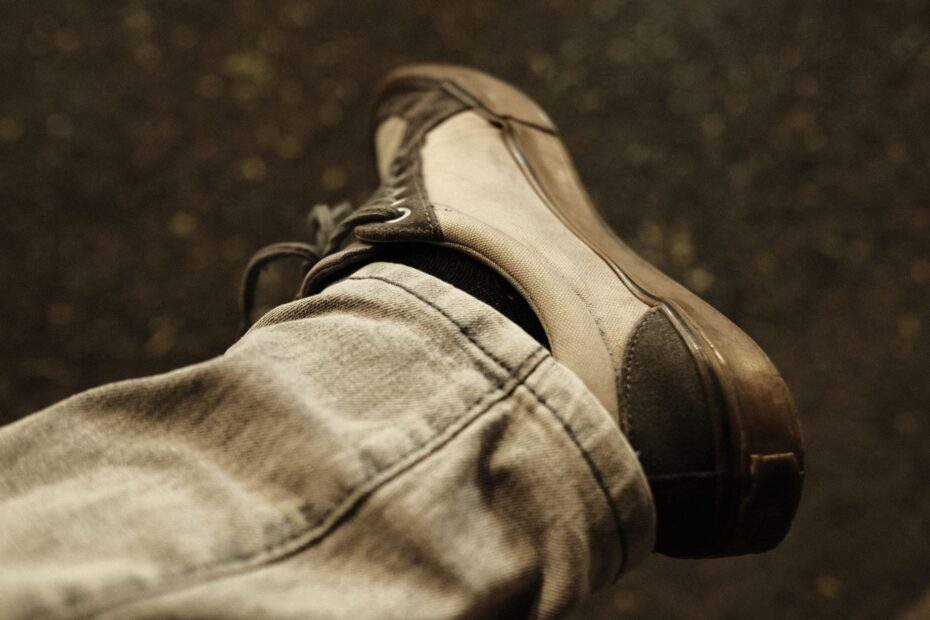
After a long walk, trapped moisture lets odor-causing microbes thrive and wears down linings, insoles, foam, leather, and glue faster. Your shoes are not ruined by one sweaty commute or workout, but repeated damp wear creates a warm, humid interior that speeds material fatigue.
This explanation covers daily shoes, work boots, and running pairs, with practical drying, cleaning, rotation, material, and replacement guidance for your routine.
Trapped Moisture Starts the Wear Cycle
A foot can release substantial perspiration during a hot shift, long run, or crowded train ride. Sweat is part of body cooling, and sweaty feet alone do not point to poor health. Your concern starts after a shoe stays warm and wet for hours between wears.
Fresh perspiration dries with airflow. A closed shoe holds humidity against your sock, lining, and insole, especially under the ball of your foot and heel. Foot sweat and shoe lifespan become connected through retained dampness rather than perspiration itself.
Normal perspiration leaves before the next wear
A lightly humid shoe dries in room air before your next use. A problem pair still feels cool, clammy, or heavy the following morning. Check the insole edge and toe box with your fingers; those areas reveal moisture that a quick look can miss.
Mileage still matters. Impact compresses midsole foam, poor fit rubs holes into fabric, and age weakens materials even during dry storage. Sweat speeds those stresses, so your inspection should separate dampness damage from normal wear caused by walking, work, or running.
Odor alone does not prove that a shoe has lost cushioning, traction, or stability. It does show that moisture and microbes have stayed inside long enough to gain a foothold.
A Damp Interior Feeds Odor and Material Fatigue
That lingering clammy feeling changes conditions inside the shoe. Sweat supplies water and skin oils, while body heat creates a humid pocket where bacteria and fungi multiply. Bacterial odor comes from microbial activity, not from a broken outsole.
Each damp-to-dry cycle pulls shoe materials in different directions. Fabric fibers swell and shrink, foam holds moisture in tiny air cells, and leather loses flexible oils. Your pair can smell sharp long before its structure fails, yet persistent dampness raises the chance of deeper wear.
| Interior condition | What happens | What you notice |
|---|---|---|
| Dry between wears | Microbes have less water for growth | Less odor and a lighter feel |
| Damp overnight | Linings and insoles retain moisture | Cool insole, stale smell, wet socks |
| Repeated damp use | Foam compresses and glue faces stress | Flattened footbed or lifting edge |
| Hot, humid storage | Some polyurethane parts face hydrolysis | Cracks, flakes, or crumbling foam |
Hydrolysis is a chemical reaction where water breaks down susceptible polyurethane. Heat and humidity speed that reaction, which explains why an old pair stored in a hot garage can crumble without heavy mileage. Your dry closet is kinder to foam than a sealed car trunk.
Insoles, Linings, and Bonded Areas Wear First
The removable footbed takes direct contact from your feet, socks, and sweat. Insoles collect salt, skin oils, and moisture, then lose loft under heel pressure. Your shoe can look presentable outside while its interior has become flat and sour.
Fabric linings show friction damage early
Thin lining at the heel counter also faces friction with every step. Damp fibers abrade faster, exposing foam or creating a rough patch that rubs your heel. A fresh insole can restore comfort where the outsole and upper remain sound.
| Component | Sweat-related stress | Likely warning sign |
|---|---|---|
| Removable insole | Compression and odor retention | Flat heel cup or persistent smell |
| Fabric lining | Damp friction and fiber wear | Thin spot near heel or toes |
| Upper material | Salt marks and repeated wetting | Stiff leather or stained fabric |
| Adhesive seams | Moisture stress at bonded joints | Lifting sole edge |
| Midsole foam | Humidity plus compression cycles | Dead feel, cracks, or collapse |
Adhesives sit out of sight, so separation can seem sudden. Repeated damp wear weakens some bonds, especially around the toe and forefoot flex line. Inspect any lifted sole edge with a gentle pull rather than waiting for a small gap to spread.
Midsole foam faces a different problem. Your body weight compresses it thousands of times during a workday or run, while interior humidity slows its recovery. A flat, dead feeling underfoot points to foam fatigue more than odor alone.
Upper Materials Change Drying Speed and Risk
Mesh running shoes shed surface moisture faster than thick leather boots, yet padded collars and foam-backed linings still hold sweat. Your upper material changes drying speed, but every pair needs air inside after hard wear.
| Material or construction | Drying behavior | Weak point under repeated dampness |
|---|---|---|
| Breathable mesh | Fast surface drying | Padded lining and foam retain moisture |
| Synthetic upper | Water stays near the lining | Odor and bonded seam stress |
| Leather shoes | Slow drying after saturation | Stiffness, lost shape, and cracking |
| GORE-TEX membrane | Blocks outside water but slows vapor escape | Humid interior during long wear |
| Washable footwear | Water tolerates the upper better | Foam and glue still need gentle drying |
Leather needs a patient recovery after saturation. Sudden heat pulls moisture out too fast, leaving the upper stiff and misshapen; repeated cycles can lead to surface cracks. Your leather shoes benefit from loosened laces, paper in the toe, and room-temperature airflow.
Waterproof safety boots present a harder case. Protective toe caps, thick padding, and waterproof membranes trap perspiration through a 10-hour shift. Give your boots more drying time than a lightweight Nike, Brooks Running, or ASICS mesh trainer.
Washable footwear still needs restraint. Water-tolerant fabric does not mean that midsole foam, adhesive seams, or padded collars tolerate a hot dryer. Follow the maker’s care directions, then let the pair dry fully in moving room air.
Gentle Air Drying Protects Foam, Glue, and Leather
Air movement does more useful work than a blast of heat. Start after you remove the pair, before moisture sinks deeper into the footbed and collar. Your goal is a dry interior without cooking glue, foam, or leather.
- Remove shoes promptly. Take the pair off after heavy sweating rather than leaving it closed in a gym bag or locker.
- Lift out insoles. Separate removable insoles so both surfaces release moisture into room air.
- Open the throat. Loosen laces and pull the tongue forward to expose the deepest interior space.
- Blot soaked lining. Press a clean cloth against wet areas without scrubbing salts farther into the fabric.
- Add loose paper. Place clean paper in the toe area and swap it after the paper feels damp.
- Use moving air. Place shoes near a fan at room temperature until the insole and lining feel dry.
Paper should fill space lightly rather than stretch the upper into a new shape. A dry shoe insert serves the same purpose, though remove it after the interior dries. Your shoes need several hours or a full overnight rest based on padding, humidity, and how wet your socks became.
Skip radiators, clothes dryers, hair dryers, direct heaters, and long stretches of intense sun. Fast heat can harden leather, distort foam, and speed adhesive breakdown.
How to dry sweaty shoes comes down to airflow, separation, and patience. A fan near an open pair moves humid air away from the lining without overheating the materials. Your shoe should feel dry at the insole edge, heel counter, and toe box before it returns to your feet.
Shoe Rotation Gives Damp Interiors Recovery Time
A pair worn day after day can start each morning with leftover humidity under the insole. That repeated exposure gives the lining little recovery time and keeps odor active. Your shoe rotation creates a longer drying window between uses.
Two pairs work well for runners, restaurant staff, nurses, warehouse crews, and anyone whose socks end a day damp. Alternating pairs also spreads mileage across two midsoles. It can, because each pair faces fewer back-to-back wet cycles and fewer impact sessions.
- Wear moisture-wicking socks. Merino wool or technical fibers move moisture away from your skin better than heavy cotton.
- Pack spare socks. Change socks halfway through a long shift after dampness builds around your toes and heel.
- Choose removable footbeds. Separate footbeds dry faster and give your pair a practical comfort refresh point.
- Store pairs open. Keep shoes out of sealed bins, gym bags, and closed trunks after wear.
- Rotate work boots. Give thick protective footwear a full dry interval before the next shift.
- Use antimicrobial insoles. Antimicrobial insoles can limit odor between cleanings, but they still need full drying.
Dry footwear and clean socks reduce prolonged contact between damp material and your skin. Persistent heavy sweating, peeling skin, itching, or sudden odor changes deserve a podiatrist’s attention. That approach aligns with foot-care guidance from the American Podiatric Medical Association.
Absent those warning signs, cleaning targets buildup while replacement insoles restore the removable layer.
Cleaning and Fresh Insoles Address Different Problems
A shoe that smells after one wet day needs drying before deodorizing. Fragrance sprays cover odor for a few hours, but they do not dry foam or restore a collapsed heel cup. Your nose gives a clearer signal after the pair has aired fully.
Odor differs from structural deterioration
Start with the maker’s care directions for the specific upper. Wipe surface grime from leather with a barely damp cloth, clean washable fabric as directed, and dry the pair fully before adding odor-control powder. Your effort has more value after moisture is gone.
- Temporary stale odor. Dry the pair, clean the lining, and air it in a ventilated room.
- Flattened footbed. Fit new removable insoles after the shoe interior is fully dry.
- Loose sole edge. Seek a cobbler for leather work shoes before separation reaches the flex area.
- Cracked leather. Stop soaking and heating the upper, then seek material-specific repair advice.
- Misshapen collar. Retire the pair from long walks or running after heel control feels loose.
Foot sweat and shoe lifespan do not follow one rule because a $20 insole and a failing midsole are different problems. Your casual leather shoe may merit repair, while crumbling foam or a separated running sole calls for a new pair.
Sweat alone does not. Repeated trapped moisture can damage removable insoles, fabric linings, leather finishes, adhesive seams, and foam cushioning, especially after the pair stays damp through multiple wear cycles.
Once cushioning or bonds begin to fail, hygiene measures cannot restore safe support.
Support Loss Signals Replacement More Than Odor
Dead cushioning changes how each step feels long before a shoe looks worn from across the room. Running shoes lose bounce through mileage and foam compression, while casual shoes can remain usable for years with sound soles and renewed insoles. Your feet are a useful gauge of a change in stability or comfort.
The familiar 300-mile mark is a rough reference rather than a fixed deadline. Surface, body size, gait, midsole design, and training volume change the result, and sweat is rarely the main source of foam fatigue. How long do running shoes last depends on those pressures and on the point where your cushioning no longer feels stable.
- Persistent interior dampness. Retire a pair that stays wet despite open drying and fresh absorbent paper.
- Compressed cushioning. Stop using running shoes after the midsole feels flat or unstable.
- Uneven outsole wear. Check for a tilted heel, worn tread, or a sole that changes your stride.
- Crumbled foam. Discard shoes with cracking, flaking, or chunks breaking from the midsole.
- Separated sole sections. Seek cobbler advice for leather work footwear where the bond and sole remain sound.
- Persistent odor after care. Retire the pair after full drying, cleaning, and a fresh insole fail to change it.
Signs it is time to replace shoes include altered footing, flattened foam, a tilted outsole, crumbling material, and separation that affects the flex area. For casual shoes, odor without pain or structural damage calls for care rather than retirement. Your running pair belongs out of training rotation after cushioning compression or sole separation changes your footing.
Practical Takeaways for Drier Shoes
Sweat does not automatically end a shoe’s useful life. Moisture left trapped inside does the costly work, starting with the insole and lining before reaching leather, foam, or glue. Your strongest routine is simple: open the pair, remove the footbed, use gentle airflow, and give the interior time away from your feet.
That routine also makes wear easier to judge. A dry pair with a stale smell needs cleaning or a fresh insole; a dry pair with flat foam, a loose sole, or lost heel control needs more serious attention. Your next wear should start with a dry interior rather than yesterday’s humidity.
FAQ
How does foot sweat affect shoe lifespan?
Moisture left inside a pair after a workout can shorten its usable life. Your insoles and fabric linings absorb sweat first, while repeated damp cycles can stress leather, adhesive seams, and midsole foam. Airflow and drying time reduce the moisture that drives odor and material fatigue.
Can sweat break down shoe glue, foam, leather, or insoles?
Repeated damp wear adds moisture stress to adhesives, cushioning foam, leather, and insoles. Your insoles may flatten and retain odor, leather can stiffen after harsh drying, and foam can lose resilience through humidity plus compression. A lifting sole edge or crumbling midsole points to deeper damage.
Does wearing the same pair of shoes every day make sweat damage worse?
Daily wear is harder on a pair that has not dried inside. Your lining, removable insoles, and padding face another damp cycle before recovery. Alternating two pairs gives each interior more air time and spreads impact across two sets of cushioning and outsole tread.
How long should shoes dry before wearing them again?
Shoes need several hours or a full overnight rest after heavy sweating. Your drying time depends on padding, humidity, waterproof membranes, and how wet your socks became. Check the insole edge, heel counter, and toe box before wear; each area should feel dry rather than cool or clammy.
What are the best ways to dry sweaty shoes without damaging them?
Open the shoe, remove removable insoles, blot soaked lining, add loose absorbent paper, and place the pair near a room-temperature fan. Your shoes dry more safely with moving air than direct heat. Avoid radiators, clothes dryers, hair dryers, direct heaters, and intense sun because heat can harm foam, glue, and leather.
Which shoe materials hold up best for people with sweaty feet?
Breathable mesh sheds surface moisture faster than thick leather or waterproof boots. Your shoe still needs interior airflow because padded collars, fabric linings, and midsole foam hold moisture in every material type. Leather shoes need slower room-air drying, while washable fabric still needs gentle treatment around foam and adhesive seams.