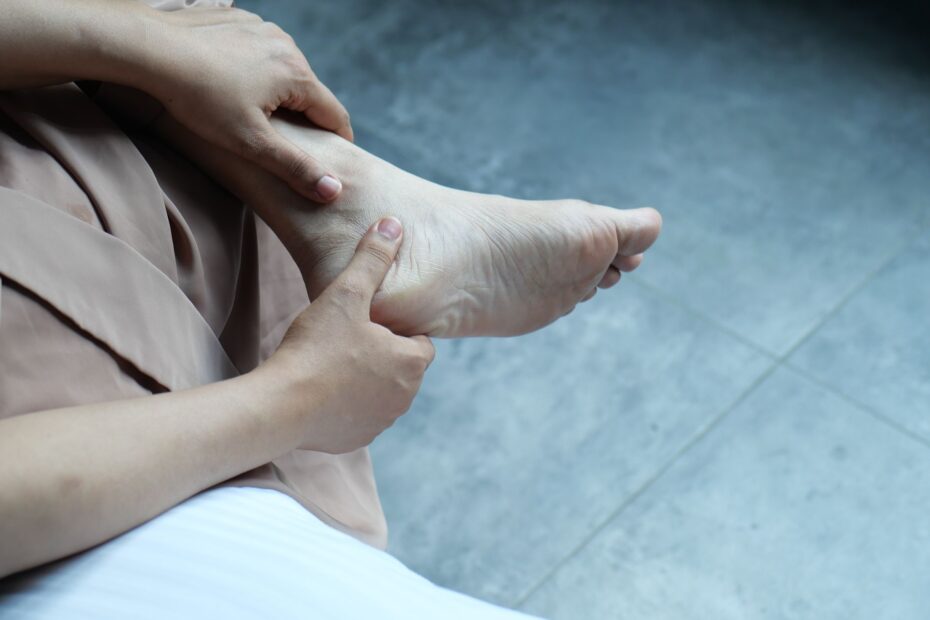
After eight hours upright, strain can build in the feet, calves, joints, and circulation as they carry steady weight. A long shift can leave your heels aching, your shoes tight, and your steps painful, especially on concrete or tile. Pain is not an unavoidable part of work.
This explains what prolonged standing does to your feet and legs, which symptoms deserve attention, and how your work habits, shoes, and station setup can reduce strain.
Prolonged Standing Loads Your Feet and Lower Legs
Stillness Tires the Lower Legs Faster
A checkout counter, prep line, warehouse station, or hospital floor asks your feet to perform quiet but constant work. Small stabilizing muscles in your soles, arches, ankles, calves, hips, and lower back hold your body upright during each planted minute.
Your foot is not a solid platform. Its 26 bones, 33 joints, and layers of connective tissue shift slightly as you transfer weight. During a long shift, those tissues receive repeated compression with few chances to unload.
Walking and still standing place different demands on your body. Walking activates the calf pump, a series of calf-muscle contractions that moves blood upward from your lower legs. During motionless standing, that pump works less, so musculoskeletal fatigue and lower-extremity edema can build.
Eight hours on your feet is a meaningful exposure, not an automatic injury. Your risk changes with concrete flooring, task pace, body mechanics, shoe condition, medical history, sleep, and the amount of uninterrupted standing your job requires.
Work Pattern Matters as Much as Shift Length
A bartender moving between stations gets brief pressure changes during each trip. At a pharmacy counter or fixed register, your feet may receive fewer resets despite the same shift length. Your body responds to the loading pattern, not only the clock.
Occupational standing can also contribute to lower-back discomfort and leg fatigue. Fixed postures strain more than your feet because your calves, hips, and back stay engaged to keep you upright. That matches occupational health guidance from the Occupational Safety and Health Administration.
Pressure starts at ground level. Weight does not land evenly across your sole, so the next concern is where your feet carry the greatest load.
Foot Pressure Shifts Between the Heel, Arch, Forefoot, and Calves
Hard flooring sends force back through your heel as your weight settles. The ball of your foot takes over as you shift forward, while your arch stays active like a bowstring beneath your body.
| Area under strain | What prolonged loading does | What you may feel |
|---|---|---|
| Heel | Firm floors can concentrate impact beneath your heel pad and at the plantar fascia attachment. | You may feel a deep ache, bruised sensation, or sharp pain after rest. |
| Arch | Your arch muscles and plantar fascia work continuously to control your foot shape. | You may feel pulling, cramping, or fatigue through your sole. |
| Forefoot | Body weight shifts toward the metatarsal heads near the ball of your foot. | You may develop burning, tenderness, or a pebble-like feeling. |
| Calves and Achilles | Limited ankle motion can keep calf tissue shortened and raise tension behind your heel. | You may have tight calves, stiff ankles, or soreness above your heel. |
| Ankles and feet | Gravity can slow fluid return from your lower limbs during still standing. | You may see tight shoes, sock marks, puffiness, and evening stiffness. |
Calf Tightness Alters Foot Mechanics
Your Achilles tendon joins your calf muscles to your heel bone. Tight calf tissue can limit ankle bend, called dorsiflexion, and shift extra pull toward the plantar fascia as your foot rolls forward.
That link explains why your sore heel does not always start at the heel itself. Restricted ankle motion makes your sole work harder through each stride, especially on concrete or tile. Gentle ankle movement during your shift reduces the fixed posture behind that pattern.
Fluid Pooling Changes Shoe Fit
Late-shift swelling is more than a comfort concern. Fluid gathering around your ankles and forefoot can turn a properly fitted morning shoe into a tight, rubbing shoe by afternoon.
Your toes then lose room to spread, raising pressure at your nail edges and metatarsal heads. A deep toe box and laces that allow small fit changes can reduce that late-shift squeeze.
Marked swelling on one side, redness, warmth, or sudden calf pain needs prompt medical attention. Those signs do not match routine end-of-shift fatigue.
Where you feel discomfort offers a useful clue. A dull, widespread ache calls for a different response than burning toes or a sharply defined heel spot.
Pain Location Can Reveal the Source of Standing Strain
Morning heel pain after rest points more toward plantar fasciitis irritation than routine muscle fatigue. Your first few steps may feel sharp because the fascia tightens during rest and gets tugged as you load it again.
| Symptom pattern | Possible standing-related source |
|---|---|
| Sharp heel pain after sleep or a break | You may have plantar fasciitis irritation, especially with tight calves or worn shoes. |
| Broad ache through the arch | Your arch tissues may be overworked by poor shoe fit or long periods on rigid flooring. |
| Burning beneath the ball of the foot | You may have metatarsalgia, forefoot pressure, or cramped toe space. |
| Soreness above the heel | Your symptoms may reflect Achilles tendinitis or persistent calf tightness. |
| Stiff, enlarged ankle or midfoot joint | You may have arthritis irritation or swelling around a sensitive joint. |
| Heavy legs with visible veins | You may have varicose-vein symptoms and reduced venous return during still standing. |
General Soreness Differs From Nerve Symptoms
Musculoskeletal fatigue feels broad and dull. Your feet tend to feel better after rest, a shoe change, or a lighter day, and the discomfort stays near the tissues that worked hardest.
Tingling, numbness, weakness, electric pain, or pain traveling into your calf deserves more caution. Those symptoms can involve nerve compression, circulation trouble, or a problem beyond a tired sole.
Toe pain also needs a closer look. Pressure from a narrow shoe can aggravate corns, ingrown nails, bunions, or nerve irritation between your metatarsals. Your shoe should hold your heel securely without squeezing the front of your foot.
Existing Conditions Can Flare During Long Shifts
Plantar fasciitis, metatarsalgia, Achilles tendinitis, arthritis, and varicose veins can flare under repeated loading. Standing does not have to start a condition for your shift to make it more painful.
That distinction matters because worsening pain is not something to outlast. Regular posture changes lower your exposure before your body reaches a flare.
Eight-Hour Shifts Need Regular Movement Breaks
Thirty seconds of movement at the right time can matter more than a long break after pain has already climbed. Your goal is to interrupt stillness before your calves tighten and swelling becomes visible.
No universal minute count marks standing as too long for every job. An eight-hour shift can be workable with movement, seating, and task variety, while a shorter fixed-station shift can overload your feet when breaks are scarce.
Position Changes Help Before Pain Builds
- Every 20 to 30 minutes: Shift your stance, take several steps, or rest one foot on a low rail for a brief reset.
- During task changes: Roll through your ankles and complete 10 slow calf raises near a stable counter.
- At meal breaks: Sit with both feet supported, loosen your laces, and avoid spending your entire break standing in line.
- After heavy periods: Walk for two to five minutes rather than freezing in place at your station.
- Before the trip home: Pump each ankle 15 times to move pooled fluid upward.
Your workplace may limit sitting, but task rotation still helps. Alternate packing with stocking, walk to retrieve supplies, or move between a fixed station and a walking task where your role allows it.
Pain That Continues Into Tomorrow Signals Excess Load
Foot pain from standing all day should settle substantially between shifts. Soreness that starts earlier each day, rises despite breaks, or changes how you walk means your current exposure exceeds your recovery.
Track three details for seven days: your pain location, the time it starts during your shift, and your morning stiffness. That short record gives your clinician a clearer picture than a vague report of sore feet.
Movement breaks lower load, but they cannot fix a collapsing shoe or a floor that punishes each heel strike. Your work setup needs attention next.
A Better Work Setup Reduces Daily Strain
Footwear Needs Structure and Toe Room
A shoe that feels soft for five minutes can fail by hour six when its heel counter bends, its midsole packs down, or its toe box presses your toes together. Your standing shoe needs a secure heel, stable base, room for toe spread, and cushioning suited to the surface beneath you.
- Check the heel counter: Choose a firm back that limits unwanted side-to-side heel motion during stationary tasks.
- Leave toe space: Keep about a thumb-width ahead of your longest toe to reduce nail and forefoot pressure.
- Inspect midsole wear: Look for deep creases, uneven lean, and flattened foam that show your shock absorption has faded.
- Match the floor: Your feet may need more cushioning on dense concrete than on carpet, while unstable shoes can worsen ankle fatigue.
- Rotate work pairs: Alternating your footwear gives foam time to rebound and makes wear easier to spot.
Supportive footwear and cushioned insoles can reduce pressure during standing work, yet more padding is not always better for your feet. A thick insert that lifts your heel too high can crowd your shoe and cause rubbing at the collar.
Orthotic Insoles and Compression Need Proper Fit
Orthotic insoles can move pressure away from a painful arch or metatarsal area. Your foot should feel more stable in the shoe, not perched on a hard ridge. New focal pressure, toe numbness, or blisters mean the insert needs adjustment or removal.
Compression stockings place gentle external pressure around your lower leg. They can ease ankle swelling and heavy-leg symptoms for some workers by helping fluid move upward, but they do not suit every circulation condition. A clinician can advise you on an appropriate compression level with vascular disease.
The Floor and Station Affect Your Exposure
Anti-fatigue mats can soften a fixed concrete station, though a mat does not replace movement. Place yours where you stand repeatedly, keep the edges flat, and avoid a design that creates a trip hazard.
A foot rail, short step, or sturdy low platform gives you a place to alternate one foot at a time. That position shift reduces demand on one calf and moves pressure away from a single heel.
Ask for a sit-stand option or task rotation with a specific example from your shift. Explain that your heel burns after 20 minutes at the register rather than describing only tired feet.
Pinpointing the pattern also makes it easier to judge whether rest is helping between shifts.
Post-Shift Recovery Can Ease Soreness and Swelling
Walking from a demanding shift into a long car ride keeps your ankles in another fixed position. A brief cool-down walk around a parking area or hallway lets your calves contract through a fuller range.
A Short Recovery Routine Beats Sudden Inactivity
- Change your shoes: Remove tight work footwear and socks that leave deep marks around your ankles.
- Walk five minutes: Use an easy pace to settle your gait before sitting down or driving home.
- Raise your feet: Rest your calves on cushions so your ankles sit above heart level for 15 to 20 minutes.
- Move the joints: Circle each ankle, spread your toes, and stretch your calves gently without bouncing.
- Cool a flare: Hold a wrapped cool pack on your sore heel or forefoot for 10 to 15 minutes.
- Drink water: Hydration helps after a hot shift, while high-sodium convenience meals can worsen fluid retention.
Your recovery seat should not turn into an hour of motionless scrolling. Every 30 to 45 minutes, stand briefly or pump your ankles so stiffness does not build in a bent-knee position.
Temporary Relief Does Not Excuse Worsening Pain
Cool packs suit a hot, irritated flare after work. Heat may soothe muscle tightness without visible swelling, but avoid heating an area that is red, swollen, or sharply painful.
Foot elevation, gentle massage, and rest should ease routine fatigue. Pain medicine, ice, or compression should not become the daily cost of a job setup that keeps overloading your feet.
The line between recovery and a repeated flare becomes clearer during your opening weeks in a new standing role.
Gradual Adaptation Separates Soreness From a Developing Problem
New Standing Jobs Stress Untrained Tissues
Your calves and sole muscles need time to tolerate a new work pattern. You may feel less sore across several weeks as your tissues gain endurance, provided your workload rises in steps rather than jumping from desk work to eight hours on concrete.
Start with stable footwear on your opening shift, not after symptoms become severe. Add seated tasks, short walks, or lighter-duty periods where your schedule allows.
How long does it take feet to adjust to standing all day depends on your starting point, floor, shoes, and medical history. A week-to-week drop in soreness is healthier than forcing yourself through the same pain every day.
Symptoms Need to Move in a Healthier Direction
- Expected adjustment soreness: You may feel diffuse tiredness that eases after rest and appears later in your shift over time.
- Focused pain spot: A sharp point beneath your heel or forefoot needs attention before it expands.
- Earlier pain onset: Symptoms that arrive sooner during each shift show that recovery is falling behind demand.
- Altered walking: Limping shifts load into your knee, hip, and back, so it should not become routine.
- Night discomfort: Pain that interrupts sleep does not fit a mild adjustment pattern.
Standing all day and foot health improve with small changes made early. You do not need to wait for a limp, swollen ankle, or painful first step before changing shoes, adding movement, or requesting a workstation adjustment.
Those practical adjustments are useful first steps, yet ongoing or escalating symptoms warrant professional assessment.
Persistent Symptoms Need Medical Evaluation
A foot that will not bear your weight needs more than a new insole. Seek prompt clinical evaluation for severe pain, sudden marked swelling, numbness, weakness, wounds, blue or pale skin, unusual coldness, or one-sided calf swelling.
Seek urgent care for sudden one-sided leg swelling with chest pain, shortness of breath, or fainting. A blood clot can become an emergency.
Some Health Conditions Lower the Threshold for Care
Diabetes changes the stakes because neuropathy can blunt pain and make a blister, crack, or pressure injury harder for you to notice. Regular foot checks and timely professional attention for new sores or skin changes align with guidance from the American Diabetes Association.
Your threshold for care should also be lower with known circulation problems, inflammatory arthritis, prior blood clots, pregnancy, or a history of foot surgery. Pregnancy can raise swelling and alter foot mechanics, while vascular disease can make compression choices more complex.
Repeated Symptoms Need a Specific Clinical Plan
Arrange an appointment with a podiatrist, primary care clinician, or physical therapist when pain persists despite shoe changes and movement breaks. Bring your seven-day symptom record, your work-shoe pair, and a description of the floor and duties that trigger your symptoms.
A clinician can examine your gait, ankle range, pulses, skin, sensation, and painful structures. That exam can separate plantar fascia irritation from a stress injury, nerve issue, tendon problem, or circulation concern.
Final Thoughts
Your feet are built for movement, not hours of frozen posture. Break up still standing, give your toes room, use cushioning that fits your shoe, and respond early to pain that changes your gait. Standing work does not need to leave you barely able to walk, but repeated symptoms deserve more than endurance.
FAQ
How long is too long to stand on your feet?
No single time limit fits every job or your situation. Your risk rises with uninterrupted standing, hard floors, poor shoe fit, and limited breaks. A practical limit appears when your pain climbs through the shift, starts earlier each day, or fails to settle by the next morning after rest.
Is standing for 8 hours a day bad?
Standing for eight hours is not automatically harmful, but eight hours with little movement can strain your feet, calves, ankles, and lower back. You can reduce the burden by changing position every 20 to 30 minutes, using seating during breaks, and avoiding worn work shoes.
Why can I barely walk after standing all day?
Severe pain after your shift can come from overloaded heel, arch, or forefoot tissues, swelling, tight calves, or an aggravated condition such as plantar fasciitis. Seek medical evaluation when walking remains difficult, your pain is sharp, or numbness and weakness appear.
How long does it take your feet to adjust to standing all day?
Your feet and calves can take several weeks to gain tolerance after a new standing job or time away from work. Healthy adaptation brings less soreness over time. Pain that becomes sharper, more focused, or harder for you to recover from points away from normal adjustment.
What type of shoes help with foot pain from prolonged standing?
Shoes for your long shifts need a secure heel, stable sole, enough toe room, and cushioning suited to your floor. Your shoe should remain comfortable late in the shift, not only at the start. An insole should reduce pressure without causing a new sore spot.
When should foot pain or swelling after a shift be checked by a doctor?
Get prompt care for severe pain, inability to bear weight, sudden one-sided swelling, numbness, weakness, wounds, or color changes. Schedule a visit when your pain repeats after shifts, changes your walking, or continues despite better footwear, movement breaks, and foot elevation.