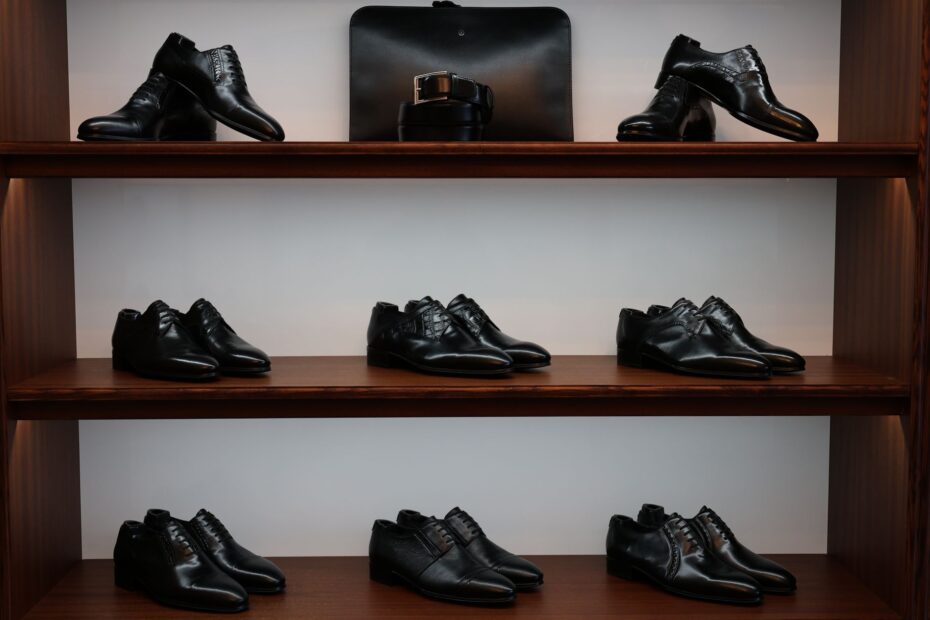
Clean, dry pairs last longer when stored in a cool, shaded space with airflow and gentle shape support. This routine limits curled soles, stale odors, faded color, and leather cracking that can appear after a season out of sight.
You can use these storage methods for daily footwear, seasonal rotation, and longer storage while keeping your closet organized and each pair ready to wear.
A Stable Storage Space Limits Material Damage
Heat, sunlight, and damp air damage shoes in different ways. A dark interior closet shelf gives your pairs more stable conditions than a hot attic, sunny window ledge, unfinished basement, or garage with sharp temperature swings.
Temperature and humidity control matters because heat can soften adhesives, direct sun fades dyes, and dampness leaves materials vulnerable to mold and mildew. Your storage area needs steady air movement rather than sealed, humid conditions.
Heat, light, and dampness affect separate shoe parts
Leather loses moisture in dry heat and can crack along flex points near the toe. Sunlight fades canvas, suede, and dyed leather, while rubber midsoles can yellow or turn brittle. Your shoes stay in better condition in a shaded room with stable indoor conditions.
Keep pairs away from radiators, heating vents, windows, and hot-water pipes. A garage can shift from cold to hot within a day, while a basement wall can hold dampness against cardboard and fabric. Those shifts place stress on soles, uppers, and glue lines.
Store shoes a few inches above the floor. Damp carpet, concrete, and closet corners can move moisture into cardboard, fabric bags, and soles.
Crowded storage spots hide moisture and scuffs
Tight rows restrict air circulation and make dampness harder to spot. Shoes packed toe-to-heel can rub against buckles, shelf hardware, and neighboring soles, leaving marks before you see the problem. Leave a small gap around each pair or container.
For example, white sneakers beside a sunny bedroom window can yellow during a seasonal rotation. Moving that pair to an interior shelf removes direct UV exposure. Once the location is stable, clean and dry shoes can go into storage.
Clean and Dry Each Pair Before Storage
Salt lines, mud, and grit hold moisture against uppers and stitching. Left inside a box for months, that residue can leave stains, stale odors, or abrasion on nearby shoes. Your goal is a dry, neutral surface before storage begins.
Remove debris without soaking the upper
- Brush loose dirt Use a soft brush on dry sneakers, boots, and suede before dust turns into a damp paste.
- Wipe salt marks Use a lightly damp cloth on smooth leather, then dry the surface promptly with a clean towel.
- Clear tread grooves Remove grit and small stones so they do not scratch nearby pairs in storage.
- Empty each shoe Take out pebbles, loose receipts, and removable insoles that can hold odor and dampness.
- Air out insoles Set removable insoles beside the shoes until both feel dry and smell neutral.
Suede needs a dry suede brush rather than a wet wipe. Delicate fabric shoes also need a light touch, since soaking can leave water rings or loosen glued trim. For your pair, surface cleaning is enough before routine storage.
Room-temperature drying protects glue and shape
Set damp shoes in an airy room until they are fully dry. Radiator heat, hair dryers, and space heaters can shrink leather, warp foam, and loosen cemented soles. Your patience keeps moisture from becoming trapped inside a box or bag.
A running shoe worn in rain can feel dry outside while its insole and toe box remain damp. Loosen the laces, remove the insole, and open the tongue wide so interior moisture can leave. Dry materials are the starting point for mold and mildew prevention.
With moisture addressed, preserving each shoe’s form becomes the other essential preparation for long-term storage.
Shape Support Keeps Uppers From Collapsing
Shoes can lose their form while sitting untouched. Empty leather loafers crease at the vamp, soft sneakers collapse at the toe, and tall boots can develop sharp bends in the shaft. Your filler should hold the outline gently without stretching seams.
Shoe trees suit structured leather footwear
Cedar shoe trees fit dress shoes, loafers, and leather boots because they hold the heel and toe in a natural position. Cedar also absorbs a small amount of residual moisture after wear. Your shoe tree should fill the shoe without pulling the leather tight around the last.
Plastic shoe trees offer shape support without cedar’s moisture absorption. Use them for pairs that need structure but do not need added moisture management. Leave slight room at the toe instead of forcing in an oversized tree.
Acid-free tissue suits softer pairs
Loosely crumpled acid-free tissue paper works well for sneakers, flats, canvas shoes, and delicate uppers. It cushions the toe box and reduces creasing without creating pressure points. Your tissue should feel light, not packed into a dense ball.
Skip tightly rolled newspaper. Ink can transfer to pale linings, newsprint can hold dampness, and a hard wad can distort a soft toe box. Separate pairs with tissue or a divider around buckles, studs, and metal hardware.
Tall boots need vertical support from boot shapers or loosely rolled acid-free tissue from ankle to shaft. The shaft should stand upright without looking stretched. That support matters for leather and suede boots stored through an entire season.
How often boots are retrieved helps determine whether that support belongs on an open shelf or inside a container.
Storage Containers Match Wear Frequency and Material
After shoes are dry and supported, the container sets the balance between airflow, dust protection, and access. Daily pairs need quick reach, while seasonal pairs benefit from enclosed storage. Your choice depends on material, closet space, and how soon the shoes return to rotation.
| Storage option | Airflow and protection | Suitable use |
|---|---|---|
| Original shoe boxes | Moderate airflow with solid dust protection | Seasonal pairs with labeled fronts |
| Ventilated boxes | Better air circulation with enclosed protection | Leather, suede, and longer storage |
| Clear plastic shoe storage boxes | High visibility with limited airflow unless vented | Clean, dry sneakers and closet organization |
| Breathable fabric shoe bags | Gentle dust protection with airflow | Suede, embellished shoes, and delicate pairs |
| Open racks | Maximum airflow with little dust protection | Fully dry shoes worn several times a week |
Ventilation matters more than a sealed appearance
Leather and suede do not belong in airtight plastic bags. A breathable fabric shoe bag or ventilated box blocks dust while allowing moisture to leave. Your leather shoes need dry air, not trapped humidity.
Clear plastic shoe storage boxes work for fully dry sneakers, provided the lid does not hold lingering moisture. Sterilite ClearView boxes make a pair easy to spot without opening every container. IKEA SKUBB fabric compartments suit lightweight shoes, though they offer less protection from crushing.
Open shelving works for active rotation
Use open racks for pairs you wear regularly and have allowed to dry after use. The Container Store stackable units and Stackers-style compartments fit narrow closets, but spacing still matters. Your shoes should not press together like books on an overloaded shelf.
Original shoe boxes remain useful for seasonal storage, especially with a label or small photo on the front. Put heavy boots at the bottom of a stack and light flats or sandals above them. This arrangement limits crushing and sole deformation.
Material-Specific Storage Protects Vulnerable Details
Each upper, sole, and finish has a different weak point. Smooth leather needs gentle structure, suede needs friction protection, and sneaker foam needs shade from heat. Your material determines the storage details that matter most.
Leather and suede need breathable coverage
For how to store leather shoes, begin with dry uppers, cedar shoe trees, and a ventilated box or breathable fabric bag. Leather needs moderate ambient moisture to stay flexible, yet dry heat near a vent can lead to cracking. Keep conditioner for clean, dry leather before a long storage period.
Suede shoe care focuses on a clean, dry, uncrushed nap. Place suede shoes in a breathable bag or box, and keep darker footwear away from pale suede to limit color transfer. Your suede pair should never carry the weight of a heavy boot box.
Sneakers, boots, and delicate shoes need tailored support
Sneaker storage needs shade from direct sunlight and heat, especially for white midsoles, foam cushioning, or clear rubber details. Light and heat speed discoloration, while a warped box can bend the sole. Your sneakers belong in a shaded closet with tissue in the toe box.
Embellished heels need tissue around buckles, crystals, and chains so hardware does not scrape leather or satin. Place a beaded evening shoe in its dust bag, then set it in a box with no weight above it. Your storage method should protect the pair’s most fragile feature.
Boots need vertical support, while sandals need separation around straps and buckles. This is how to store shoes properly across a mixed collection: protect the part most likely to crease, yellow, rub, or collapse. Longer storage calls for periodic inspection.
Closet Access and Regular Checks Limit Storage Problems
A neat stack can hide moisture behind its front edge. Longer storage works only when you can reach each pair, inspect it, and correct changes before mildew, pests, or sole breakdown spreads. Your closet setup should make checks simple rather than burying shoes behind a heavy stack.
Arrange shelves for airflow and access
- Raise every pair Keep boxes and bags off carpet, concrete, and closet floors where dampness can collect.
- Place weight low Put boots and dense shoe boxes on lower shelves to protect lighter pairs above.
- Leave small gaps Space containers so air can move and your hands can remove one box cleanly.
- Label the front Mark season, color, or shoe type so you do not pull apart the entire stack.
- Group by use Keep daily shoes near the door and seasonal pairs higher or farther back.
Silica gel packets add minor moisture control inside an already dry closet. Replace packets after they reach capacity, following package directions. Boveda humidity-control packs suit enclosed collectible storage, but they cannot correct a damp basement or humid bin.
Inspection reveals storage failures early
Check long-term pairs every few months for fuzzy spots, stale odor, pest marks, sticky soles, yellowing rubber, drying leather, or damp tissue. Your response starts with the cause: move the shoes, dry the area, improve air circulation, or separate affected pairs.
Mold on shoes calls for immediate separation from the rest of your collection. Dry the pair and its container completely, clean the affected surface with a material-safe method, and move it away from the damp location. Limiting mold on shoes comes down to dry materials, breathable storage, and a closet that does not hold moisture.
Final Shoe Storage Habits
Your shoes last longer in a stable, dry, shaded space than in a tightly packed bin or overheated attic. Clean each pair, dry it at room temperature, protect its shape, and choose breathable storage where the material needs it.
A brief inspection every few months keeps how to store shoes long term from becoming a rescue task. That routine gives you a chance to spot damp tissue, stale odor, yellowing rubber, or a collapsed upper before the damage spreads.
FAQ
What is the best way to store shoes to limit damage?
Keep clean, fully dry shoes in a cool, shaded, ventilated area with shape support suited to the material. Your storage space should stay away from direct sun, heaters, damp floors, and sharp temperature swings.
Should shoes be stored in their original boxes or plastic containers?
Original shoe boxes work well for clean, dry seasonal pairs because they block dust and stack neatly. Clear plastic containers suit dry sneakers where visibility matters, while your leather and suede pairs need ventilated boxes or breathable fabric shoe bags.
How do you store shoes long term without mold, mildew, or odors?
Store only fully dry shoes in a cool location with airflow and easy access for checks. Your boxes should stay off damp concrete and carpet, while silica gel packets can assist with minor moisture inside a dry storage area.
What temperature and humidity are suitable for shoe storage?
A stable indoor room away from radiators, windows, hot-water pipes, and damp basement walls gives shoes the safest conditions. Your closet does not need extreme dryness; it needs steady temperature, low dampness, and air circulation.
Should you put silica gel packets in shoe boxes?
Silica gel packets can help with minor moisture inside a dry shoe box or closet. They do not solve a wet basement, damp pair, or tightly sealed humid container, so your shoes must be dry before storage.
How should leather shoes, suede shoes, sneakers, and boots be stored differently?
Leather benefits from shoe trees and breathable coverage, while suede needs a clean, dry surface protected from rubbing. Your sneakers need shade and toe-box tissue, and boots need boot shapers or loose tissue to keep their shafts upright.