Slick gym floors and dusty outdoor courts punish sloppy footing, and most of the slip-ups I see in pickup runs trace back to a sole that can’t grip. Traction isn’t only about the rubber compound; it’s about how the pattern, midsole geometry, and upper lockdown work together when you plant, cut, and rise for a jumper. This list covers eight options worth a look for anyone chasing that planted, sure-footed feel, from cushioned trainers to grip-boosting sock accessories.
The Essentials At A Glance
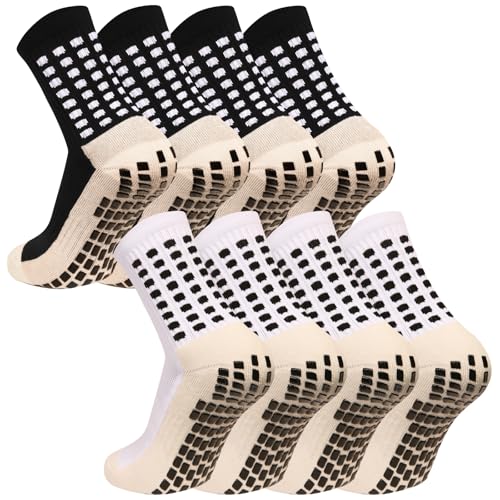
MIHAIR Anti Slip Athletic Socks with Grip Pads

Under Armour Kids’ Pre School Lockdown 7

Nike Men’s Air Jordan 1 Low Sneaker

Nike Dunk High Black White DD1399-105

Nike Women’s Air Force 1 ’07 Sneakers

Nike Men’s Air Jordan 1 Shoes

LI-NING Wade All City 12 Men’s Basketball Shoes

Nike Men’s Basketball Shoe
The Picks, Examined More Closely
These aren’t sneakers at all, but they earn the opening slot because they solve a problem most basketball shoes for grip can’t fix on their own: sock slippage inside the shoe. The MIHAIR socks pair woven athletic construction with rubberized grip pads along the sole and sidewalls, so your foot stays planted against the insole when the upper loosens up mid-game.
Players who run hot or wear low-cut trainers often complain about heel lift, and these pads directly target that. The accessory pairs naturally with any of the sneakers lower on this list, especially the Air Force 1 and Air Jordan 1 Low, both of which have flatter footbeds where foot slippage tends to show up first.
A Strong Showing
- Rubberized grip pads along the sole reduce in-shoe sliding on hardwood and blacktop
- Comes in multiple pack sizes so you can rotate pairs through the wash without going sockless mid-week
- Affordable upgrade compared with replacing a worn-out pair of shoes just to fix heel lift
- Layered knit upper breathes during high-tempo scrimmages, keeping sweat from softening grip
Worth Noting
- Not a substitute for true outsoles, so outdoor grit tends to wear the pads faster than the shoes
- Sizing runs slightly off for wide feet, depending on toe-box shape
Who It Suits Best
Anyone whose feet slide inside otherwise grippy trainers, especially during fast breaks or stop-and-go drills.
Consider Something Else When
Players wanting genuine outsoles for outdoor play should reach for the LI-NING Wade All City 12 instead.
The Lockdown 7 is sized for the smallest hoopers on the roster, and that matters more than adults usually realize. Kids’ feet grow fast, and a shoe that’s too soft or too tall ruins the whole point of having traction in the first place. Under Armour tunes this model with a low profile and a structured sole meant to grip gym floors at smaller body weights.
Compared with the adult Air Jordan 1 Low further down, the Lockdown 7 has a much more contained build, which keeps young ankles from rolling during pivots. It’s a practical pick for parents trying to outfit a kindergartner for their first youth league season.
What It Does Well
- Proper preschool sizing avoids the “too big to grow into” trap that ruins traction fit
- Reinforced sole pattern holds on polished gym floors where most youth shoes slide
- Lightweight build keeps fatigue low during full-court scrimmages
- Durable enough to survive playground asphalt during recess pickups
Trade Offs
- Limited cushioning means heavy landings on hard courts can sting
- Color options change often, so the exact pair you wanted may not always be in stock
Made For
Kids ages roughly 3 to 7 who are just learning to plant, pivot, and stop without their feet sliding out.
Look Elsewhere When
Older teens or adults need something with more cushioning, like the Nike Men’s Basketball Shoe down the list.
The Air Jordan 1 Low is one of those silhouettes that quietly works on the court even though most people wear it for style. Its flat, cupsole construction sits close to the ground, which gives the foot a planted feel on clean hardwood. The herringbone-style outsole pattern bites well when the floor is dry, and the low cut keeps ankles free for quick directional changes.
On dusty or slightly wet surfaces, you’ll notice the rubber compound loses bite faster than a purpose-built trainer like the LI-NING further down. For someone splitting time between casual court sessions and everyday wear, the AJ1 Low is a balanced middle ground, and pair it with the MIHAIR grip socks if you struggle with heel lift.
The Value In It
- Iconic silhouette that doubles as off-court footwear, justifying the spend for style-minded shoppers
- Flat cupsole geometry gives the foot a stable base for jump shots and lateral cuts
- Wide colorway range makes it easy to find a pair that matches team kits
- Durable leather upper holds shape through scuffs and rebounds
Minor Gripes
- Grip compound is tuned more for street wear than aggressive indoor traction
- Low-cut collar doesn’t brace ankles for players with a history of sprains
Best Suited To
Style-conscious players who want one pair that handles light court play and daily wear equally well.
Skip It When
Hardcore indoor hoopers should opt for the Nike Dunk High Black White, which offers more ankle coverage.
The Dunk High earned its stripes on college courts in the mid-1980s, and the modern reissue keeps that DNA mostly intact. A rounded toe box gives toes room to splay during hard stops, and the wider heel counter adds rear-foot stability on hard cuts. The padded collar reaches up past the ankle, which is the main draw for players who rolled an ankle once and never forgot it.
Compared with the Air Jordan 1 Low, this high-top trades some ankle mobility for protective coverage. In real-world gym sessions, the tradeoff tends to favor players who work the post or guard downhill drivers. The 2021 colorway also holds up well for casual wear, so they don’t feel like a one-purpose trainer.
Positive Takeaways
- High-top collar braces the ankle during pivots and contested landings
- Rounded toe box lets toes spread, improving balance on quick directional changes
- Solid rubber outsole grips clean gym floors without grabbing too aggressively
- Black-and-white colorway pairs easily with off-court outfits
Room For Improvement
- Heavier than low-cut trainers, which can fatigue younger players during long sessions
- Outsole pattern wears faster on abrasive outdoor courts than on indoor wood
Who Will Love This
Post players, returners from ankle injuries, and anyone who values ankle support over mobility.
Another Choice May Suit
Guards who need lightweight mobility should consider the Nike Men’s Air Jordan 1 Shoes for a mid-cut alternative.
The Air Force 1 ’07 has been around long enough that its flat, pivot-friendly sole has proven itself on pickup courts across the country. The circular tread pattern grips hardwood cleanly, and the stiff midsole makes lateral cuts feel stable. For lighter recreational play, that combination is hard to beat.
This isn’t a performance trainer in the way the LI-NING Wade All City 12 is, but that’s the point. Players who run light scrimmages and want a shoe that transitions straight to coffee afterward find the AF1 fits that lifestyle well. Cushioning is generous, though the shoe runs heavy for fast-break drills.
What Pays Off
- Flat pivot circle on the sole supports quick directional changes on clean gym floors
- Iconic white-on-white styling works with virtually any off-court outfit
- Stiff midsole gives lateral cuts a planted, responsive feel
- Durable leather upper resists scuffs during crossover drills
Points To Note
- Heavier than purpose-built trainers, which can drag down quick-twitch guards
- Outsole rubber hardens in cold weather, reducing traction on chilly courts
Perfect Match For
Recreational players, especially those who want a shoe that handles both gym sessions and casual wear.
Reach For A Different Pick When
Competitive players wanting true performance traction should size up to the LI-NING Wade All City 12.
The mid-cut Air Jordan 1 threads a needle between the low-top version higher on this list and the taller Dunk High. Its padded collar gives just enough ankle coverage to feel secure without fully restricting mobility. The herringbone outsole pattern handles clean gym floors reliably and is widely reported to grip outdoor courts reasonably well during dry conditions.
Compared with the Air Force 1 ’07, this Jordan 1 carries a sportier silhouette and lighter materials. Players who split time between shooting guards and everyday errands tend to gravitate here because the mid-cut profile looks intentional on the court and casual off it.
Advantages To Know
- Mid-cut collar offers a balance between ankle support and mobility
- Herringbone outsole pattern grips clean hardwood and dry outdoor courts
- Wide colorway selection lets you match team kits or personal style easily
- Classic Jordan 1 leather construction holds shape across seasons of wear
Softer Spots
- Not a dedicated performance trainer, so advanced players may want more impact protection
- Outsole can feel slick on freshly mopped gym floors until the rubber warms up
The Right Fit
Versatile hoopers who play recreationally and want a single pair that crosses over into street style.
Where A Sibling Pick Shines
Players needing more ankle structure should reach for the Nike Dunk High Black White instead.
Of every shoe on this list, the LI-NING Wade All City 12 is the one that looks and feels like it was built primarily for the court. The outsole features a deep, multi-directional pattern designed to bite hardwood and concrete, and the lining includes anti-slip material to keep the foot planted inside the shoe. Shock-absorbing foam in the midsole softens hard landings during rebounds.
Compared with the more lifestyle-oriented Nike picks, this model is heavier and stiffer out of the box. In practice, that stiffness pays off in lateral stability during pick-and-roll defense. Recreational players who want genuine traction tooling without crossing into pro-tier price tags tend to find this is a strong match.
The Case For It
- Dedicated basketball outsole pattern grips clean and dusty courts
- Anti-slip inner lining reduces heel lift during fast breaks
- Shock-absorbing midsole softens landings on hard outdoor surfaces
- Stiffer build supports aggressive lateral movement better than lifestyle sneakers
Potential Drawbacks
- Heavier than Nike Air Force 1 or Air Jordan 1 Low, which can tire guards quickly
- Stiffer out of the box, so a break-in period is required for comfort
Built With In Mind
Recreational and club-level players who train multiple times a week and need real traction under their feet.
Swap It Out When
Shoppers wanting one pair for both gym and casual wear should pick the Nike Men’s Air Jordan 1 Low instead.
This generic-titled Nike basketball shoe is a recurring rotation model built around soft, everyday cushioning. The midsole absorbs impact from frequent jump drills and quick stops, which matters if you’re logging two or three gym sessions a week. The outsole pattern grips hardwood reliably and is widely reported to handle light outdoor use, though concrete tends to chew through the tread faster.
Versus the LI-NING Wade All City 12 above, this Nike leans softer and lighter. Players who prioritize joint comfort over rigid court feedback tend to land here, especially older hoopers whose knees appreciate the extra shock absorption on hard landings.
Reasons It Performs
- Cushioned midsole absorbs impact during frequent jump shots and rebounds
- Reliable outsole pattern grips indoor hardwood through long sessions
- Lighter than dedicated performance trainers, which helps during fast-paced drills
- Versatile enough for warm-ups, drills, and light scrimmages in a single session
A Few Limitations
- Outsole rubber wears down faster on outdoor asphalt than denser compounds
- Less lateral support than high-tops like the Nike Dunk High Black White
Whose Shelf It Belongs On
Recreational gym regulars who want comfortable cushioning and reliable grip without pro-tier stiffness.
Not Your Match When
Outdoor-only hoopers should consider the LI-NING Wade All City 12 for tougher outsole rubber.
What Matters Most Before Choosing Basketball Shoes For Grip
Grip comes down to three things working together: outsole pattern, rubber compound, and how the upper locks your foot in place. A herringbone or multi-directional tread spreads pressure across more surface area, which keeps you planted during quick cuts. Softer rubber compounds grip indoor floors better, but they wear faster outdoors, so court surface matters when weighing durability against bite.
The upper is the part most people overlook. If your foot slides around inside the shoe, even a great outsole can’t save you. Look for structured heel counters, secure midfoot straps or laces, and grip-enhancing socks like the MIHAIR socks at the top of this list if heel lift is a recurring complaint. Cushioning and ankle height round out the package, with high-tops like the Dunk High bracing ankles and cushioned trainers like the Nike Men’s Basketball Shoe easing joint stress.
Outsole Patterns And Court Surface
Smooth gym floors reward flat, wide-spaced tread that makes full contact with the wood. Dusty or slightly wet outdoor courts punish wide flat patterns because debris fills the gaps and turns the sole into a slip surface. Deep, aggressive multi-directional patterns handle outdoor grit better and stay functional when the floor isn’t perfectly clean.
Fit, Lockdown, And Upper Material
Basketball involves constant lateral motion, so a wide toe box lets your foot splay during stops, while a snug midfoot prevents sliding inside the shoe. Leather uppers stretch over time, so consider sizing down half if you want a tight initial fit. Mesh uppers breathe better but may feel loose around the midfoot until the laces are cinched hard.
Weight Versus Performance Trade-Offs
Lighter shoes feel faster but offer less cushioning and ground contact, while heavier trainers stabilize better but fatigue the legs. Guards who rely on quickness often prefer lighter builds, while post players welcome the planted feel of a stiffer shoe. Choosing between them comes down to position and playing style, not a universal rule.
Picking The Right Build For Your Game
Players with a history of ankle injuries should default to high-tops like the Nike Dunk High Black White, which add protective coverage that low-tops simply can’t match. Style-minded shoppers who want one shoe for court and street gravitate toward the Air Jordan 1 line, since the silhouette transitions easily into everyday outfits. Younger players still growing benefit from properly sized youth builds like the Under Armour Lockdown 7 instead of oversized hand-me-downs.
Where Shoppers Go Wrong
Choosing a basketball shoe for grip based purely on looks is one of the most common missteps, since outsole design and rubber compound matter far more than colorway. Skipping the in-store or at-home fit test is another trap, because a half-size difference can completely change how the shoe locks your heel. Finally, assuming all rubber grips the same is wrong: indoor-tuned compounds feel slick outdoors, and outdoor compounds can feel grabby on hardwood.
Where The Extra Money Goes
Higher-tier basketball shoes for grip typically invest in softer, more aggressive rubber compounds that bite cleanly on multiple surfaces, along with denser cushioning foams that last longer under repeated impact. The LI-NING Wade All City 12 and similar performance trainers also add structured heel counters and supportive midsoles that budget picks often skip. For players logging multiple sessions weekly, those upgrades show up in durability and joint comfort over a season. Shoppers who play occasionally may not notice the difference, so the budget tier still makes sense for casual use.
Frequently Asked Questions
Do basketball shoes for grip work on outdoor courts?
Most rubber compounds grip outdoor asphalt, but softer compounds wear faster on rough surfaces. Look for deeper tread patterns if outdoor play is your main game.
How often should I replace basketball shoes for grip?
A good rule is once the tread looks smooth in high-pressure zones, because that’s where grip fails first. Heavy players may need replacements within a season, while casual hoopers can stretch the life much longer.
Are high-tops better for grip than low-tops?
Not directly. High-tops like the Nike Dunk High Black White add ankle support, but the outsole pattern and rubber compound determine actual traction. Fit matters more than height for keeping your footing.
Can grip socks replace proper outsoles?
No. The MIHAIR grip socks solve in-shoe foot slippage, not outsole traction. They’re a useful complement to basketball shoes for grip, especially low-tops where heel lift shows up faster.
Is it worth paying more for premium traction?
For players logging multiple weekly sessions, yes. Premium outsoles last longer and grip more surfaces, so the per-session cost evens out. Occasional players may not notice enough difference to justify the upgrade.
Final Verdict
Traction is a stack of small choices: outsole pattern, rubber compound, fit, and how the shoe locks your foot during movement. Match those choices to your court surface, position, and frequency of play, and any of the eight picks above will keep you planted on the floor. The honest read is that the best shoe is the one that fits your foot and your habits, not the one with the loudest label.