I spend a lot of time thinking about what happens between a hiker’s foot and the trail. Stock insoles that ship with most boots are thin, flat slabs that flatten out within a season, and once they lose their shape, every rock and root telegraphs straight up through the sole. The right boot inserts change that: firmer arch support spreads pressure across the whole foot, a deeper heel cup stops your foot from sliding, and a bit of cushion under the forefoot takes the sting out of long descents.
This roundup is built for hikers, backpackers, and anyone who logs real miles on rough ground. I’ve focused on inserts that bring genuine arch structure, durable foam, and a hiking-specific fit, with options for narrow heels, wide forefeet, heavier bodies, and those managing heel or arch pain on the trail.
An Overview Of The Picks

Active Everyday Orthotics Insoles Set – Daily and Sport Pack – Athletic Shoe Insoles – Size M
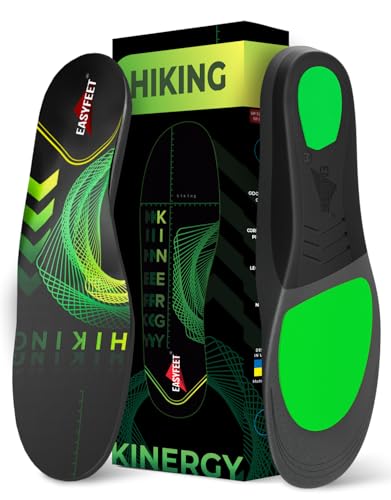
Hiking Boot Insoles for Men & Women – Arch Support Inserts

Running & Sport Insoles for Men & Women – Athletic Sneaker Inserts
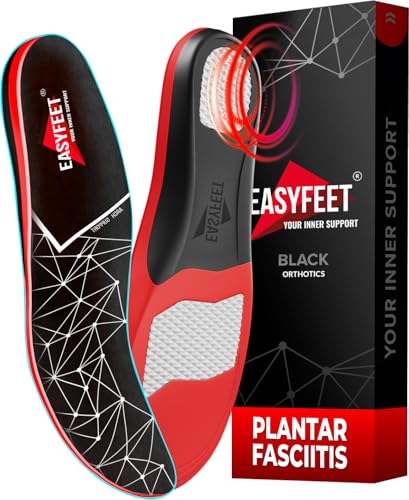
Plantar Fasciitis Insoles for Men & Women – High Arch Support Inserts
EASYFEET Arch Support Insoles for Men & Women – Plantar Fasciitis

Premium High Arch Support Insoles for Men & Women – Odor Control

220+ lbs Heavy Duty Plantar Fasciitis Insoles Men & Women – High Arch
EASYFEET Orthotic Work Insoles Men & Women – Arch Support Standing All Day
More Details On Our Top Picks
This bundle is the practical entry point on the list: two pairs of inserts in one pack, one tuned for everyday wear and one shaped for sportier use. EASYFEET built these around an anatomical arch profile (an arch profile that follows the natural curve of the foot rather than a flat slab) that aims to spread weight evenly across the sole, which matters on a hike when each step is absorbing real downhill force.
For hikers who also use the same boots for errands or gym sessions, the two-pair format keeps a fresh insert in rotation. Owners commonly find that swapping mid-life of a pair extends usable life without the foam packing out under the ball of the foot.
The Upside
- Two-pair value keeps a backup ready for long hiking weekends.
- Mid-size M fit covers common men and women ranges.
- Anatomical arch geometry reduces pressure on the heel and forefoot.
- Lightweight construction suits trail runners and casual hikers alike.
Things To Consider
- Stock arch height feels moderate rather than aggressive.
- Foam can compress faster than premium options under heavy pack loads.
Who It Suits Best
Casual hikers and weekend walkers who rotate the same boots between trail and daily wear and want a flexible, mid-arch upgrade over the factory insole.
Consider Something Else When
Anyone carrying heavy backcountry loads should look at the 220+ lbs Heavy Duty Plantar Fasciitis Insoles for stronger arch reinforcement.
The Kinergy hiking insert is the most trail-specific pick in the roundup. Built around a structured arch and a deep heel pocket, it targets the two areas where hikers feel the most fatigue: the bottom of the heel on rocky descents and the arch on long ascents. The shape is meant to keep the foot from rolling inward on uneven ground.
Where the first pick on the list reads as a generalist, this one is tuned for boot volume. You can expect it to sit cleanly inside a mid-cut hiking boot without crowding the toe box, and the contour stays put rather than sliding forward on steep grades.
Good Reasons To Consider
- Purpose-built arch for uneven terrain, not a generic sport insole.
- Deep heel cup improves stability on sloped trails.
- Sized from XS up, covering narrower feet that other EASYFEET models skip.
Worth Noting
- Higher arch profile takes a few hikes to break in fully.
- May feel tall inside low-volume trail runners.
Feature Snapshot
Right Fit For
Day hikers and section hikers who cover real distance on rough trails and want a trail-specific arch profile.
A Better Fit Elsewhere
Hikers with low arches or flat feet may prefer the gentler contour of the EASYFEET Core Energy update below.
The Flame Boost insert leans hard into energy return. Built for high-intensity movement, it adds a layered cushion stack under the ball of the foot, which is where trail runners and fast hikers feel fatigue on rolling terrain. Compared with the hiking-tuned Kinergy above, this one feels springier and more athletic.
For hikers who prefer trail-running shoes over boots, this is a sensible crossover. It pairs well with lighter footwear and absorbs repeated impact on gravel, hardpack, and root-covered trail without going flat.
Notable Upsides
- Layered forefoot cushioning for fast, light hiking.
- Arch shape tuned for lateral movement and quick changes in direction.
- Works well inside trail-runner silhouettes with lower volume.
- Holds its rebound longer than flat foam under repeated impact.
Honest Caveats
- Less cushion under the heel than work-focused models.
- Geometry may feel narrow in wide hiking boots.
Made For
Fast hikers and thru-hikers moving in trail runners who want responsive cushioning over heavy support.
Look Elsewhere When
Hikers carrying full backpacks on multi-day trips will get more value from the structured support of the EASYFEET Hiking Boot Insoles above.
EASYFEET’s high-arch Black insert is built for hikers who deal with arch and heel pain on the trail. The firm arch bridge fills the gap under a high arch, while the deep heel cup holds the heel steady so the plantar fascia (the thick band of tissue running along the bottom of the foot) isn’t stretched on every step.
This sits between the sporty Flame Boost and the hiking-specific Kinergy. It’s heavier on structure than the running pick and more therapeutic than the trail-tuned model, which makes it a strong fit for hikers whose feet complain before the trail ends.
Standout Benefits
- Firm arch bridge suited to high arches and overpronation.
- Deep heel cup reduces strain on the plantar fascia over long days.
- Even weight distribution eases pressure on the ball of the foot.
Trade Offs
- Firmer feel takes longer to feel natural inside a boot.
- Less airflow than mesh-topped sport inserts.
Feature Snapshot
Best Suited To
Hikers with diagnosed arch pain or heel pain who want a structured insole over a soft, cushioned one.
Not Your Match When
Neutral-arch hikers wanting light, general cushion should consider the Active Everyday Orthotics Set from pick one.
The Core Energy update refines the original EASYFEET shape, with a higher, firmer arch that works for flat feet, fallen arches, and high arches alike. Where the Black insert above reaches aggressively, this one feels more balanced, which makes it a smoother transition for hikers stepping into structured support for the first time.
Cushioning is placed at the heel and forefoot, exactly where hikers absorb the hardest impact on downhills and on rocky approaches.
Practical Advantages
- Balanced arch height for a wider range of foot shapes.
- Deep heel cup keeps the foot stable under load.
- Targeted heel and forefoot cushioning eases pressure spikes.
- Smoother break-in than firmer high-arch models.
Points To Note
- Less aggressive arch lift than the high-arch option above.
Who Will Love This
Hikers with flat feet or mild overpronation who want supportive structure without the firmest possible arch.
Swap It Out When
Hikers with sharper high arches will find more lift in the High Arch Support Insoles from pick four.
The Black Onyx sits at the premium end of the lineup. The focus here is on durable materials, refined shaping, and an odor-control finish that matters more than people expect after a long, sweaty day on the trail.
Compared with the entry-level EASYFEET picks at the top of this list, the Onyx feels sturdier underfoot. For multi-day backpackers who can’t swap socks every evening, the odor-management angle and tighter material tolerance are worth the upgrade.
The Helpful Details
- Premium materials hold shape through repeated trail use.
- Odor-control treatment helps on multi-day trips without laundry access.
- Refined arch geometry feels supportive without being punishing.
Worth Bearing In Mind
- Higher cost than standard EASYFEET options.
- Premium feel may be more than casual hikers need.
Feature Snapshot
Perfect Match For
Multi-day backpackers and hikers who want a longer-lasting, odor-managed insole for repeated trail use.
Reach For A Different Pick When
Lightweight hikers on day trips will do well with the less expensive Running & Sport Insoles from pick three.
Mount Strength is the load-bearing option in this roundup. EASYFEET designed the extra-strong geometry for hikers over 220 pounds, with a reinforced arch that resists the compression that standard inserts suffer under heavier body weight and a heavier pack on top of that.
It borrows the same anatomical shape as the original EASYFEET Black, but with stiffer internals. For heavier hikers who find regular insoles flattening out within a season, this is the strongest pick on the list.
Useful Strengths
- Extra-strong arch holds shape under heavier body weight.
- Designed for hikers over 220 pounds.
- Same anatomical contour, built with stiffer materials.
- Suitable for long trail days with a full pack.
Less-Strong Areas
- Stiffer feel isn’t ideal for low-volume shoes.
- Less forgiving for casual hikers who don’t need the extra strength.
Built With In Mind
Heavier hikers and backpackers who have noticed standard insoles compressing too quickly under load.
Where A Sibling Pick Shines
Lighter hikers get more comfort per dollar from the Premium High Arch Support Insoles from pick six.
The Orthotic Work insert closes the list with a different angle: anti-fatigue shaping built for people who stand for hours at a time. That’s not a hiking-specific brief, but it’s a useful crossover for hikers who spend long days on their feet at work and want the same support on the trail after hours.
The arch profile is firm but not extreme, which makes it a reasonable everyday companion to a more aggressive hiking-specific insert from earlier in this roundup.
Real-World Strengths
- Anti-fatigue shaping suits long days on hard surfaces.
- Moderate arch height works across work boots and hiking boots.
- Steady support keeps legs fresher between trail days.
- Versatile fit for both job-site footwear and casual hiking.
Factors To Consider
- Not built specifically for trail terrain, so it lacks the deep structure of the Kinergy hiking insole above.
- Less cushion than the sport-focused Flame Boost model from pick three.
Whose Shelf It Belongs On
Hikers who also work long shifts on their feet and want a single insole they can move between work boots and trail boots.
Skip It When
Dedicated trail hikers logging serious miles will prefer the trail-tuned Kinergy hiking insole from pick two.
What Matters Most Before Choosing Boot Inserts For Hiking
Arch profile and foot shape. Matching arch height to your actual foot matters more than any other detail. A high-arch hiker needs a firm arch bridge that fills the gap; a flat-footed hiker needs structure that resists inward rolling. Trying to “push through” the wrong arch height usually ends in blisters or shin pain.
Heel cup depth. A deep heel cup stabilizes the rearfoot on rocky descents. Hiking boots generate a lot of downhill force, and a shallow heel pocket lets the foot slide, which in turn drags the arch with it.
Cushioning placement. Look for targeted cushioning at the heel and forefoot rather than uniformly thick foam. Foam under the midfoot does almost no work and just steals volume from the boot.
Boot volume and trim-to-fit. Make sure the insole sits flat inside your boot without bunching at the toe. Many EASYFEET models are trim-to-fit (you cut them along a printed size line before installing), which is helpful for less common sizes.
Durability under load. Hikers carrying packs put more force through each insole than casual walkers do. Heavier hikers, or anyone carrying multi-day weight, should look at reinforced options like the heavy-duty model in this roundup.
Hedge for your own fit. Insoles feel different across boot volumes, so anyone with a particularly narrow or shallow boot may want to confirm the arch height isn’t too tall before committing.
Key Considerations Across These Picks
Where Shoppers Go Wrong
The most common slip is buying by cushion thickness alone. Thick foam feels great in the store, but it packs down over weeks on the trail. Structure, the arch bridge and heel cup, is what keeps an insole working after the cushion fades.
A second pitfall is ignoring boot volume. A supportive insole that crowds the toe box causes more problems than it solves: hot spots, blisters, and numb toes on descents. Always check that the insole sits flat inside your specific boot before trusting it on a long trail.
When Paying More Pays Off
Higher-tier inserts in this category tend to buy three things. First, more durable foams and shells that resist compression under heavier loads, which matters for backpackers. Second, better top-sheet materials that manage odor and moisture on multi-day trips. Third, more refined arch geometry that fits a wider range of foot shapes without forcing a break-in period.
For casual day hikers on flat terrain, a standard insert is plenty. For backpackers, heavier hikers, or anyone with chronic arch or heel pain, the upgrade genuinely shows up over months of use rather than the first few miles.