There’s a specific kind of heartbreak that comes from pulling on a favorite pair of western boots and feeling them pinch exactly where they shouldn’t. Leather gives, but it gives slowly, and forcing the process usually cracks the vamp or warps the shaft. A proper boot stretcher does the work for you, easing tight spots across the toe box, instep, or shaft so the leather relaxes evenly instead of fighting back.
I’ve put together five picks that cover the common scenarios: preserving break-in shape, stretching tight calves, widening the forefoot, and maintaining cedar-fresh storage between wears. Each one earns its place for a different kind of boot owner, and I’ll walk through who benefits most from each.
A Closer Look At The Lineup

Cobbler’s Choice Co. Finest Quality Men’s Boot Tree – Varnished Natural Wood (Black)

HOUNDSBAY Cowboy Boot Trees, Cedar Western Boot Tree for Men & Women
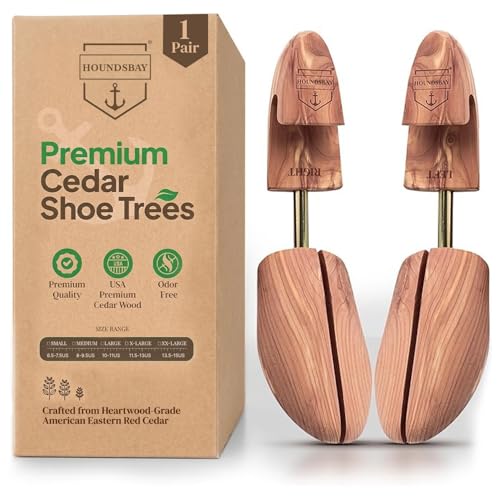
HOUNDSBAY Cedar Shoe Tree, Shoe Trees for Men & Women – Shaper & Stretcher

Cedar Space Wooden Shoe Stretcher Tree, 6.5–14 Sizes Cedar Wood

FootFitter Premium Professional Cowboy Western Boot Stretcher for Width
The Details Behind The Selections
This varnished boot tree leans into the heritage side of boot care. The natural wood shaft is solid through the leg of the boot, which means it actively resists the creasing that slowly ruins the visual line of a tall western shaft over years of wear.
The split-toe front section is the detail that matters most for everyday use: it sits inside the toe box and gently expands to keep vamp creases from setting in, especially around the ball of the foot. The black finish reads more polished than raw cedar, so it looks right at home sitting inside a $400 pair of exotics on a closet shelf.
Good Reasons To Consider
- Solid wood shaft fills tall western boots fully, preventing collapse between wears
- Split-toe construction targets the vamp area where creases form first
- Varnished finish looks at home next to premium leather, not like a garage-shop tool
- Maintains the boot’s break-in shape so re-entry feels comfortable every morning
Things To Consider
- It’s primarily a shape preserver, not an active stretcher, so it won’t widen a tight boot for you
Key Specs
Who It Suits Best
Owners of high-end leather western boots who want to preserve break-in comfort between wears without resorting to a mechanical stretcher.
Consider Something Else When
A boot that genuinely pinches at the forefoot will get more relief from the FootFitter Premium Professional Cowboy Western Boot Stretcher for Width.
HOUNDSBAY built these trees specifically around the cowboy boot silhouette rather than retrofitting a dress-shoe design. That shows in the proportions: the shaft is sized for a tall western leg, and the cedar construction pulls double duty as a moisture absorber.
Cedar is a quiet workhorse in a closet. It wicks the dampness that builds up after a long day, which keeps the lining from smelling stale and helps the leather keep its shape overnight. For someone who rotates between two or three pairs, the trees go straight from boot to boot with no fuss.
A Strong Showing
- Cedar wood naturally absorbs moisture and odors between wears
- Proportioned for tall western shafts rather than short dress boots
- Functions as both a shaper and a mild stretcher for break-in pressure points
- Works for men’s and women’s sizing in one design
Worth Noting
- Will not mechanically widen a boot that is fundamentally too narrow in the forefoot
- Cedar can dry out the surface finish on heavily conditioned exotic skins over time
Made For
Western boot owners rotating through multiple pairs who want cedar-fresh storage and gentle shape retention in one tool.
Look Elsewhere When
Someone needing actual mechanical width adjustment should reach for the FootFitter Premium Professional Cowboy Western Boot Stretcher for Width instead.
This is the more generalist HOUNDSBAY entry, built to handle dress shoes, casual shoes, and shorter western boots alike. The cedar construction carries the same moisture-managing story as the dedicated cowboy tree, but the proportions are friendlier across a wider closet.
For someone whose daily rotation mixes cowboy boots with oxfords and boots of varying shaft heights, this tree fits the most common slots. It functions as a shaper that gently encourages leather to hold its last, which keeps the upper from collapsing into folds during longer storage.
Reasons It Performs
- Universal sizing works across men’s and women’s footwear
- Cedar core naturally pulls dampness out of leather linings overnight
- Provides mild stretching action for break-in pressure points without aggressive force
- One design handles dress shoes, casual boots, and shorter western styles
Room For Improvement
- Shaft height may sit short inside a true 13-inch cowboy boot
- Lacks the split-toe precision of dedicated cowboy-specific designs
Best Suited To
Everyday commuters with a mixed closet who want one tree that handles most of the rotation.
Skip It When
Tall western boots need the proportions of the HOUNDSBAY Cowboy Boot Trees, Cedar Western Boot Tree for Men & Women for proper shaft support.
Cedar Space covers a wide sizing band, which is the headline feature for households that don’t all wear the same size. The cedar wood delivers the familiar moisture-wicking behavior that makes the closet smell better and the leather hold its shape longer.
Where this tree earns its spot is in stretch-and-store combined duty: it actively widens the forefoot over time while simultaneously keeping the boot’s structure intact between wears. For someone breaking in a stubborn pair of square-toe boots, that dual action saves a step.
A Few Highlights
- Covers a wide size range from 6.5 through 14 for shared closets
- Cedar construction absorbs moisture and resists mildew in long-term storage
- Performs both stretching and shape retention in a single tool
- Solid wooden core holds up to repeated insertion without losing form
Points To Note
- Stretching action is gradual rather than targeted, so stubborn pressure points may need a dedicated device
- Generic proportions may not match the tall shaft of a classic western boot
Key Specs
Perfect Match For
Households with multiple boot wearers across a wide size range who want one tree style to share.
A Better Fit Elsewhere
Anyone needing true mechanical width stretching should consider the FootFitter Premium Professional Cowboy Western Boot Stretcher for Width for faster results.
FootFitter is the only entry on this list that functions as a true mechanical stretcher rather than a passive shaper. The width adjustment is the whole point: turn the mechanism, and the forefoot expands against tight spots that cedar trees can only maintain, not fix.
For boots that fit everywhere except across the ball of the foot, this is the tool that actually changes the leather. Compared to the Cobbler’s Choice Co. Finest Quality Men’s Boot Tree at the top of this list, which preserves shape, this one creates new room. The trade-off is that it requires active attention and a couple of sessions to see results.
Useful Touches
- Mechanical width adjustment targets tight spots that passive trees cannot fix
- Built specifically for the cowboy boot silhouette and shaft height
- Allows targeted stretching without forcing the heel or ankle areas
- Creates permanent leather relaxation over multiple short sessions
Honest Caveats
- Requires periodic re-tightening and multiple sessions for stubborn leather
- Does not absorb moisture or freshen the boot the way cedar trees do
- Best used in combination with a passive cedar tree for nightly storage
Key Specs
Who Should Grab It
Anyone whose boots fit well in the heel and shaft but pinch across the ball of the foot or toes.
Reach For A Different Pick When
Boots already fit properly and the priority is preserving break-in shape overnight, where the Cobbler’s Choice Co. Finest Quality Men’s Boot Tree shines.
What To Weigh Before Choosing Boot Stretchers For Western Boots
Matching The Tree To The Real Problem
The first question to answer is whether the boot actually needs stretching or just shape retention. A boot that fits perfectly when new but loses its silhouette overnight needs a passive cedar or wood tree. A boot that genuinely pinches needs a mechanical stretcher, and no amount of cedar will fix that. Choosing the wrong category is the most common mistake, and it costs real money in leather damage when the wrong tool gets forced into service.
Sizing And Shaft Height Matter
Western boots are taller than most dress footwear, and a tree designed for oxfords will sit short inside a 12-inch shaft. Measure the inside height of the boot before buying, especially if the boots have a tall exotic-skin vamp. A tree that’s too short leaves the upper unsupported, which is exactly where collapse starts.
Cedar Versus Finished Wood
Cedar pulls moisture and freshens the lining, but it can dry out heavily conditioned exotics over time. Finished or varnished wood is gentler on delicate leathers but doesn’t manage humidity. For most cowhide boots, cedar is the smarter pick. For ostrich, caiman, or other exotics that see regular conditioning, a finished-wood tree is the safer choice.
Combining Tools For The Best Result
The smartest setup pairs a mechanical stretcher for active widening with a cedar or finished tree for nightly storage. That combination fixes a tight boot once and then keeps the new shape locked in for the long run.
Common Considerations Across These Picks
Pitfalls Shoppers Hit
The biggest mistake is treating all boot trees as interchangeable. A cedar shoe tree and a mechanical stretcher do completely different jobs, and using one in place of the other either wastes money or damages leather. Another common slip is skipping the measurement step and trusting a generic size chart, which leads to short shafts and unsupported uppers.
Where The Extra Money Goes
Higher-tier trees earn their cost through better materials and more precise boot-specific proportions. A varnished hardwood tree costs more than a basic cedar model because the wood is denser, the finish is more refined, and the fit inside a premium boot is noticeably better. For boots worth several hundred dollars, the upgraded tree protects an investment that already outweighs the accessory cost.
Frequently Asked Questions
Do boot stretchers actually work on western boots?
Yes, but the tool has to match the job. Mechanical stretchers like the FootFitter Premium Professional Cowboy Western Boot Stretcher for Width genuinely widen tight leather over multiple sessions, while passive cedar trees maintain the boot’s current shape.
How long should I leave a stretcher inside my boots?
Passive cedar or wood trees can stay in overnight and between wears without concern. Mechanical stretchers should run for shorter sessions of several hours, with breaks in between to let the leather rest and settle.
Can I use the same tree for different pairs of boots?
Only if the sizing is identical. Boots of different sizes need their own matching tree, or the fit will be off and the leather won’t receive even support.
Will cedar trees dry out exotic leather?
Cedar can pull oils from heavily conditioned exotic skins, especially ostrich and caiman. For those boots, a varnished hardwood tree is the safer daily choice.
Is a stretcher necessary if my boots fit fine?
Not necessarily. A passive tree still helps preserve the boot’s silhouette, prevents vamp creasing, and manages moisture, even when the fit is already dialed in.
Wrap Up
The right boot stretcher depends less on brand and more on the actual problem sitting in your closet. Boots that fit need a passive tree to keep them that way, while boots that pinch need a mechanical stretcher to earn their keep. Pair the two for the cleanest result, and the leather will hold its shape and comfort for years instead of seasons.