Picking the right mountain cycling shoes shapes how every trail feels under your feet. The wrong pair leaves your knees aching or your feet slipping on wet roots. The right pair disappears into the ride, letting you focus on the line ahead. This shortlist pulls together seven options across flat pedal and clipless styles. There’s something here for trail riders, racers, and weekend loop cruisers alike.
How The Shortlist Stacks Up

Five Ten Freerider Pro Canvas Flat Pedal Shoe (2022)

Giro Cylinder Men’s Mountain Bike Shoe
Five Ten Freerider Pro Mountain Bike Shoes

SHIMANO SH-ME201 Women’s Trail Cycling Shoes

SHIMANO SH-IC100 Indoor Cycling Shoe

CJROSM Cycling Shoes for Men and Women
SHIMANO SH-TR901 Bicycles Shoes
More Details On Our Top Picks
The Freerider Pro Canvas leans into the casual side of trail riding, blending a relaxed silhouette with the grip you’d expect from a proper mountain cycling shoe. A canvas upper breathes well during summer climbs and dries faster than full leather when creek crossings are part of the route. On the bike, the Stealth S1 rubber (a sticky, high-friction compound that Five Ten developed for pedal pins) clings to flat pedals like glue.
The Dotty tread pattern underneath handles hike-a-bike sections without feeling clunky, and the reinforced toe box shrugs off rock strikes on technical descents. For trail riders who want one pair that works at the bike park, on evening singletrack loops, and at the coffee shop after, this canvas version hits a comfortable middle ground. It’s noticeably less protective than the leather original.
Practical Advantages
- Stealth S1 rubber delivers well-known pedal grip that has built the brand’s reputation
- Canvas upper breathes well and dries faster than leather alternatives after wet rides
- Impact-resistant toe box shields against rock strikes on rocky descents
- Casual styling transitions smoothly from trailhead to post-ride errands
Things To Consider
- Canvas upper offers less abrasion resistance than the standard leather Freerider for riders who crash often
- Not compatible with clipless pedals, so it won’t suit riders switching to SPD setups
Made For
Trail riders on flat pedal setups who want a casual, breathable shoe for mixed on-and-off-bike use.
Consider Something Else When
Racers chasing a stiffer, more efficient power transfer will find a better match in the SHIMANO SH-ME201 Women’s Trail Cycling Shoes.
The Giro Cylinder lands as a friendly entry point into clipless mountain cycling shoes without a steep learning curve on the wallet. It pairs a synthetic upper with a nylon composite sole, which keeps the price accessible while still delivering the cleat connection newcomers need. For riders easing into SPD pedals (a two-bolt cleat system widely used for mountain biking), the Cylinder removes a lot of the friction that comes with a first setup.
Compared to the canvas Freerider that opened this list, the Cylinder is built for clipped-in pedaling rather than flat pedal grip. The sole stiffness is moderate, which suits weekend trail rides better than race-day sprints. You may notice the sole flexing more than premium options under hard standing climbs, but for casual laps it’s perfectly workable.
What Works In Its Favor
- Accessible price point makes it a sensible starting point for clipless newcomers
- Nylon composite sole offers reasonable pedaling efficiency for recreational trail use
- Synthetic upper handles typical trail dust and light moisture without fuss
- SPD cleat compatibility works with most entry-level mountain bike pedal systems
Worth Noting
- Sole flexes more under hard pedaling than carbon or high-end composite options
- Limited ventilation compared to mesh-heavy summer-focused trail shoes
Right Fit For
Beginners transitioning from flat pedals to clipless who want a forgiving first pair without a major investment.
Look Elsewhere When
Women seeking a gender-specific last will be better served by the SHIMANO SH-ME201 Women’s Trail Cycling Shoes.
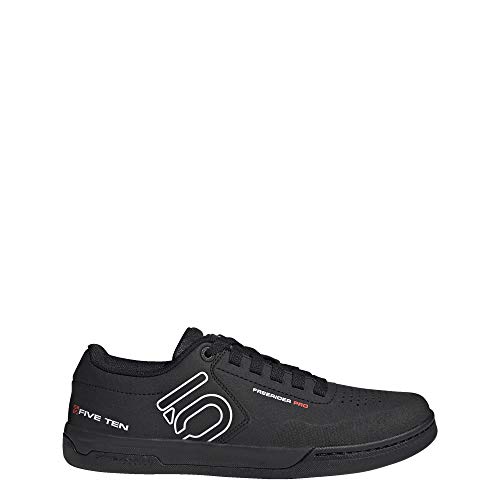
The classic Freerider Pro is the reason Five Ten’s name carries weight in the flat pedal world. The leather upper gives this version more structure and weather resistance than the canvas sibling that opened the list. Underneath, the Stealth S1 rubber and Dotty tread combo create a planted feel on platform pedals, whether you’re dropping into a rock garden or feathering through a techy climb.
For aggressive riders who push their bikes hard, the reinforced toe and padded ankle collar absorb the kind of impacts that punish lesser shoes. The trade-off is a slightly heavier, less breathable build compared to summer-specific options. In damp conditions, the leather takes longer to dry than the canvas alternative.
Advantages To Know
- Stealth S1 rubber compound is widely recognized for benchmark pedal grip
- Leather upper offers better abrasion resistance through repeated trail scrapes
- Reinforced toe box handles rock strikes on technical terrain
- Cushioned midsole softens pedal impacts during long descents
Trade Offs
- Heavier than the canvas version, which matters for riders counting grams on long days
- Leather dries more slowly after creek crossings or wet rides
- Flat pedal only, so clipless riders won’t benefit
Quick Facts
Best Suited To
Aggressive trail and enduro riders who want benchmark flat pedal grip and don’t mind a touch of extra weight.
Reach For A Different Pick When
Race-focused XC riders chasing lighter weight should consider the SHIMANO SH-TR901 Bicycles Shoes instead.
SHIMANO built the SH-ME201 with a women’s-specific last, meaning the shoe’s volume and shape are designed around a narrower heel and instep than unisex clipless options. That difference shows up immediately on the first ride: less heel lift, fewer hot spots, and a more dialed fit out of the box. For cross-country and trail riders logging longer miles, that fit advantage saves a lot of adjustment.
The glass fiber reinforced nylon sole strikes a middle ground between flex and stiffness, which suits mixed terrain where you might walk as often as you pedal. Compared to the flat pedal Five Tens that opened this list, the ME201 is firmly in clipless territory with SPD cleat compatibility. You may find the sole a touch soft for pure racing, but for trail duty it’s balanced.
What Makes Sense
- Women’s-specific last reduces heel lift and pressure points on long rides
- SPD cleat compatibility works with most mountain bike clipless pedal systems
- Glass fiber reinforced sole balances walkability with pedaling efficiency
- Cross-country friendly weight for riders who care about efficiency on climbs
Room For Improvement
- Sole is less rigid than premium XC race shoes for riders chasing maximum power transfer
- Sizing runs slightly narrow for riders with wider feet who prefer more toe box volume
Spec Overview
Whose Shelf It Belongs On
Women riding XC and trail loops who want a purpose-built last and dependable SPD performance without a race price tag.
Swap It Out When
Riders wanting flat pedal freedom instead of clipless engagement will prefer the Five Ten Freerider Pro Mountain Bike Shoes.
The SH-IC100 sits in SHIMANO’s indoor cycling line, which means the priorities shift from trail toughness to pedaling efficiency and clean aesthetics. The stiff sole transfers power directly to the pedal without the flex you’d find in a trail-tuned shoe, making it a natural fit for indoor trainers and spin setups. Mesh paneling keeps air moving during high-cadence intervals.
Unlike the trail-ready options earlier in this list, the IC100 isn’t built for hike-a-bike sections or stream crossings. It’s at home on a stationary bike in a controlled environment. You may find the styling too road-leaning for casual off-bike wear, but inside the trainer room it disappears into the ride.
What Helps Most
- Stiff sole design maximizes power transfer during indoor intervals
- SPD and SPD-SL dual compatibility covers most trainer pedal setups
- Mesh ventilation handles sweat during long spin sessions
- Clean styling fits naturally in a studio or home gym environment
Small Caveats
- Not built for outdoor trail use, so off-bike durability is limited
- Lacks the reinforced toe protection found in trail-specific mountain cycling shoes
Who Should Grab It
Home studio cyclists and dedicated spin class regulars who want efficient power transfer without trail-rated toughness.
A Better Fit Elsewhere
Outdoor trail riders will get more value from the SHIMANO SH-ME201 Women’s Trail Cycling Shoes or the Five Ten Freerider Pro Mountain Bike Shoes.
The CJROSM shoes step in with a clear purpose: fitting riders using Delta cleats, the three-bolt system popularized by Peloton and many indoor cycling platforms. The unisex sizing covers a wide spread, from women’s 6.5 up through men’s 8, so households sharing one bike can often share one pair. That flexibility matters more than it sounds for couples or roommates using the same setup.
Compared to the SHIMANO SH-IC100 just above, this option targets Delta cleat riders specifically, while SHIMANO’s indoor shoe leans toward SPD and SPD-SL systems. The breathable mesh upper handles sweat on long sessions, and the rigid sole keeps watts transferring to the pedals efficiently. Depending on your cleat platform, one of these two indoor picks will fit your setup.
Reasons It Performs
- Delta cleat compatibility works directly with Peloton and similar indoor bikes
- Wide unisex size range covers many riders from one listing
- Mesh upper ventilation keeps feet cooler during high-intensity intervals
- Stiff sole construction supports efficient indoor pedaling
Honest Caveats
- Limited to Delta cleat platforms, so SPD riders need a different shoe
- Brand recognition is lower than SHIMANO, which may matter for shoppers who prioritize established labels
Feature Snapshot
Built With In Mind
Peloton owners and indoor cycling enthusiasts using Delta cleat setups who want an accessible, broad-size-range option.
Another Choice May Suit
SPD-based indoor riders will find better cleat alignment with the SHIMANO SH-IC100 Indoor Cycling Shoe.
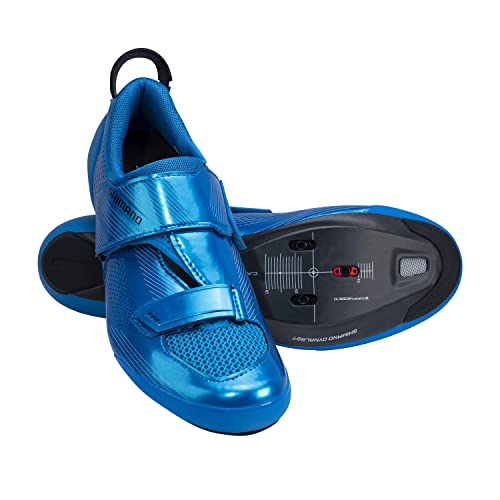
The SH-TR901 is purpose-built for the demands of triathlon racing, where every second in transition matters. A single strap fastening, extra-wide opening, and large heel loop let you slide the shoe on while running through T2 (the bike-to-run transition zone in a triathlon). The carbon fiber sole keeps weight down and power transfer high across long course miles.
Against the trail-focused mountain cycling shoes earlier in this list, the TR901 sits in a different lane entirely. It’s not designed for hike-a-bike sections or wet root conditions, and the ventilation and quick-dry construction favor hot race environments. For riders stepping up to competitive triathlon, the design choices line up with race-day priorities rather than casual trail use.
What It Does Well
- Carbon fiber sole maximizes power transfer with minimal weight
- Wide opening and heel loop speed up transitions in triathlon racing
- Single strap fastening keeps entry and exit quick under race pressure
- Ventilated, quick-drying upper suits hot race-day conditions
Points To Note
- Triathlon-specific design limits usefulness for general trail or commuting use
- Less durable than trail-tuned shoes for riders who put shoes through rocky conditions
Key Product Details
The Right Fit
Competitive triathletes and time-crunched multisport racers who need fast transitions and race-day efficiency above all else.
Where A Sibling Pick Shines
Riders wanting flat pedal control on trails should look at the Five Ten Freerider Pro Mountain Bike Shoes instead.
What To Weigh Before Picking Mountain Cycling Shoes
Pedal type comes first. Flat pedals pair with shoes that have grippy rubber outsoles and walkable comfort, while clipless systems need a sole that accepts two-bolt SPD or three-bolt cleats. Matching your shoe to your pedal setup avoids buying something that won’t connect.
Sole stiffness matters more than most riders expect. A flexible sole feels comfortable off the bike but wastes watts on climbs, while a very stiff carbon or composite sole transfers power efficiently but feels harsh during hike-a-bike sections. Trail riders usually want a middle ground, racers usually want maximum stiffness.
Fit is personal but non-negotiable. A shoe that’s too narrow causes hot spots on long rides, while too much volume lets your foot slide inside the shoe on rough descents. Trying shoes on at the end of the day, when feet are slightly swollen, mirrors real trail conditions.
Finally, think about what you’ll do off the saddle. If your rides include frequent walking, technical hike-a-bike moves, or post-ride stops at the coffee shop, a walkable tread pattern and casual styling earn their keep. Pure racers can prioritize efficiency over walkability without hesitation.
Key Considerations Across These Picks
Mistakes Worth Dodging
Choosing a shoe based on looks alone often backfires when the fit is wrong or the cleat system doesn’t match your pedals. Take time to confirm your pedal type before committing to a clipless shoe, since switching later means buying adapters or new cleats. Ignoring closure systems is another common slip up; lace designs feel familiar but collect mud, while boa-style dials tighten faster on the fly. The right closure matters more on technical terrain where you might need quick adjustments mid-ride.
Where The Extra Money Goes
Premium mountain cycling shoes typically invest in lighter, stiffer soles, better ventilation, and tougher upper materials that survive seasons of trail abuse. A carbon or high-grade composite sole pays back on long climbs where every watt counts, while reinforced toe boxes and abrasion-resistant uppers handle rocky conditions that destroy cheaper builds. For casual riders, the upgrade isn’t always necessary, but for anyone logging high mileage or racing, the build quality difference becomes obvious within months of regular use.
Frequently Asked Questions
What’s the difference between flat pedal and clipless mountain cycling shoes?
Flat pedal shoes use grippy rubber outsoles to stick to platform pedals, while clipless shoes have a stiff sole with cleat mounts that clip into SPD or Delta pedals. Flat pedal shoes are easier for beginners, while clipless shoes offer better pedaling efficiency once you’re comfortable clipping in and out.
How should mountain cycling shoes fit?
They should feel snug around the heel and midfoot with a little room in the toe box for foot movement on descents. Your toes shouldn’t hit the front when standing, and your heel shouldn’t lift when pedaling hard.
Can I use road cycling cleats on mountain cycling shoes?
Most mountain cycling shoes use two-bolt SPD cleats, while road cycling shoes typically use three-bolt SPD-SL or Look cleats. They aren’t interchangeable without an adapter, so check your pedal and shoe compatibility before buying.
How long do mountain cycling shoes typically last?
Trail riders often get one to three seasons from a pair, depending on terrain, frequency, and care. Aggressive riders who crash often or hike sharp rocky sections may wear through soles and toes faster than smoother-condition riders.
Do I need special socks for mountain cycling shoes?
Wool or synthetic cycling socks wick moisture and reduce hot spots on long rides. Cotton socks stay wet and cause blisters, so most riders avoid them for any serious mileage.
The Takeaway
Your best fit depends on the pedals under your feet and the trails under your wheels. Flat pedal riders chasing grip and casual styling should start with the Five Ten options, while clipless riders will find their lane among the SHIMANO choices. Take your time matching cleat systems and fit, and the right pair will feel like an extension of the bike rather than gear you have to think about.