Heel height can make or break a routine. A 1.5-inch Cuban heel gives beginners stability through quick turns, while a 2.5-inch T-strap drives more dramatic line work for seasoned Latin dancers. Material matters just as much, with suede outsoles gripping polished floors and leather uppers molding to the foot over time. I’ve gathered nine options that cover the main flavors of ballroom and Latin practice, from low practice heels to performance-ready styles with rhinestone detailing.
The Picks In Brief

Spring Step L’Artiste Luxe

Bloch Tap-Flex Leather Split Sole

Bloch Performa Stretch Canvas Ballet
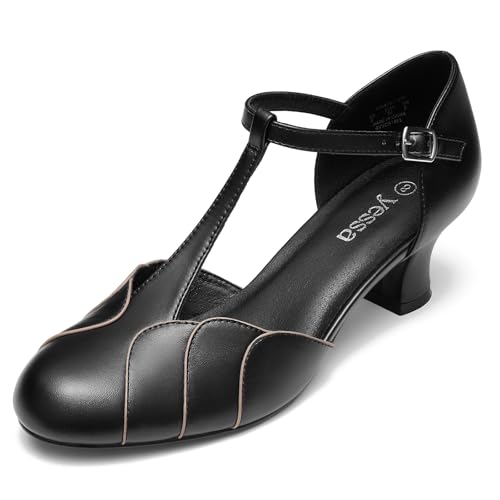
YESSA 2″ T-Strap Flapper Heels

TTdancewear 1.5″ Cuban Heel Practice

TTdancewear Rhinestones Suede Sole

YESSA 2″ T-Strap Gatsby Heel
YESSA 2.5″ T-Strap Ballroom Heel

TTdancewear Glitter Cuban Heel 1.5″
A Breakdown Of The Leading Choices
The Spring Step L’Artiste Luxe leans into the artistic-heel niche, offering a handcrafted feel that suits dancers who spend long hours on the floor. The sculpted footbed and decorative styling make it a natural choice for stage performers, theatrical dancers, and instructors who want a shoe that doubles as costume.
Unlike the Bloch Tap-Flex in the next slot, which targets pure tap training, the Luxe focuses on visual character and walking comfort. It handles light ballroom movement but isn’t engineered with suede outsole grip. For most studio days, you may find it a good fit if your routine prioritizes grace and presentation over aggressive pivot work.
The Value In It
- Cushioned footbed reduces fatigue during extended standing and rehearsal blocks
- Decorative upper adds visual flair for stage and theatrical roles
- Flexible construction supports a natural walking stride between routines
- Styling pairs well with vintage-themed ballroom and cabaret numbers
Things To Consider
- Outsole may not provide the dedicated suede grip that serious Latin competitors rely on for sharp pivots
- Sizing can run slightly roomy, so trying on with dance tights is recommended before locking in a fit
Right Fit For
Stage performers, theatrical dancers, and instructors who want a visually rich heel that handles light ballroom and cabaret routines comfortably.
Look Elsewhere When
Competitive Latin dancers chasing a dedicated suede outsole should reach for the TTdancewear Rhinestones Suede Sole instead.
The Bloch Tap-Flex is built for tap work, but the split-sole leather construction and Shockwave tap plates appeal to dancers who crossover between tap and light rhythm practice. The leather upper breaks in nicely, molding to the foot over a few sessions.
Compared to the Spring Step L’Artiste Luxe from the first slot, the Tap-Flex is a more athletic, training-grounded option. It doesn’t carry a ballroom heel at all, so anyone shopping for Latin or standard practice should look further down the list. For tap-driven dancers, this is a workhorse that handles classes and rehearsal floors reliably.
Useful Highlights
- Split-sole design enhances arch flexibility and quick foot articulation
- Leather upper softens and conforms to the foot over time, improving fit after break-in
- Shockwave tap plates deliver a clean, resonant sound on hard studio floors
Points To Note
- Not a ballroom heel, so Latin and standard dancers will need a separate pair for partner work
- Leather requires routine conditioning to prevent drying and cracking on stored pairs
- Tap plates may scuff delicate wood floors if worn outside tap studios
Best Suited To
Tap students and crossover dancers who need a responsive, leather-built practice shoe for studio work.
Skip It When
Ballroom and Latin dancers should reach for the TTdancewear 1.5″ Cuban Heel Practice shoe instead, since it has an actual heel height designed for partner dancing.
The Bloch Performa stretch canvas ballet slipper is a class staple. The lightweight canvas hugs the foot, and the split-sole cut gives a clean point articulation for barre, floor work, and quick warm-ups before stepping into heels.
It’s not a ballroom heel, but it earns a spot here because many ballroom dancers rotate between heeled practice shoes and flat slippers for technique drills. The Performa is a smarter warm-up companion than the Tap-Flex from the previous slot, since it stays nearly invisible under tights. For most dancers who split their week between barre and Latin, it covers the flat-shoe gap without overcomplicating the rotation.
Benefits That Matter
- Stretch canvas upper adapts to a wide range of foot widths
- Split-sole pattern supports pointed footwork during barre and floor exercises
- Lightweight build reduces fatigue during long technique classes
Worth Noting
- Canvas can wear through at high-friction spots after heavy use, particularly under the ball of the foot
- Not a substitute for a heeled ballroom shoe in partnered Latin or standard routines
Who It Suits Best
Class regulars and ballet-trained dancers who want a comfortable, foot-hugging slipper for technique work and warm-ups.
Consider Something Else When
Latin-focused dancers who skip barre drills should jump straight to the TTdancewear Glitter Cuban Heel 1.5″ for a heeled practice option.
The YESSA 2″ T-Strap channels 1920s flapper aesthetics into a dance-functional heel. The T-strap closure keeps the foot locked in during fast Charleston and swing work, while the moderate 2-inch height keeps balance approachable for dancers still building ankle strength.
Compared to the Bloch Performa from the third slot, this is a full costume and performance heel, not a warm-up slipper. The T-strap styling gives it a more theatrical edge than the TTdancewear Cuban heel further down. For themed events, cabaret numbers, and historical ballroom showcases, it adds visual interest without pushing the heel too high.
Standout Benefits
- T-strap design provides lateral foot security during kicks and fast directional changes
- 2-inch heel height offers a flattering lift without overwhelming newer dancers
- Period-correct styling pairs with vintage and Gatsby-themed costumes
Honest Caveats
- Closure hardware may loosen with repeated wear, so a periodic fit check helps prevent slippage mid-routine
- Not engineered with a dedicated dance suede outsole, so aggressive pivots on polished wood are trickier
Built With In Mind
Cabaret and themed-event performers who want flapper-style flair and a manageable heel height for extended routines.
A Better Fit Elsewhere
Competition-focused Latin dancers should consider the TTdancewear Rhinestones Suede Sole for a proper performance sole.
The TTdancewear 1.5-inch Cuban heel is a sensible starting point for new Latin and salsa students. A Cuban heel is a block-style heel set under the center of the foot, which gives more balance and weight distribution than a stiletto shape. The 1.5-inch height is low enough to learn weight transfers in without fighting gravity.
Where the YESSA T-Strap in the previous slot leans into themed styling, this one focuses on function. It works equally well for salsa, bachata, and beginner rumba. For most first-time heel wearers, it builds the muscle memory needed before stepping up to a 2.5-inch line.
Key Advantages
- Low 1.5-inch Cuban heel supports balance and weight transfer for newer dancers
- Practice-oriented construction handles daily class wear without falling apart quickly
- Versatile for salsa, bachata, and beginner rumba practice sessions
Trade Offs
- Plain styling may feel underwhelming for showcase or performance settings
- Outsole may not provide the same grip as a dedicated suede sole on competition floors
Whose Shelf It Belongs On
First-time Latin and salsa students who want a forgiving, low heel that supports balance while they learn footwork.
Another Choice May Suit When
Dancers who want a touch of stage sparkle should pick the TTdancewear Glitter Cuban Heel 1.5″ instead, which carries a similar heel with a finish built for visual presence.
The TTdancewear Rhinestones Suede Sole blends visual drama with a proper dance sole. The rhinestone upper catches stage lighting without going over the top, and the suede outsole grips polished wood the way it should, allowing sharp pivots and controlled slides during Latin routines.
Where the YESSA T-Strap earlier in this list is a costume-flair piece, the Rhinestones model is a performance floor shoe. You may find the suede sole grips harder than a synthetic outsole, which is exactly what competitors want. For showcases, showcases, and studio performances, it bridges practice functionality and stage presence.
Bright Spots
- Suede outsole offers controlled grip for pivots and slides on polished wood floors
- Rhinestone detailing adds visual interest under stage lighting
- Built specifically for Latin, salsa, and bachata performance demands
Small Caveats
- Suede requires brushing after use to maintain even grip and prevent matting
- Rhinestone detailing is delicate, so storage away from other shoes prevents loose stones
Made For
Competition and showcase dancers who need a suede-soled heel that handles pivots while still looking polished under stage lights.
Where A Sibling Pick Shines
Strictly practice-focused dancers may prefer the simpler TTdancewear 1.5″ Cuban Heel Practice, which trades rhinestones for a more durable daily-grind build.
The YESSA 2″ T-Strap Gatsby Heel is a sibling to the flapper version in slot 4, with a similar 2-inch block and T-strap construction. The Gatsby angle emphasizes speakeasy-era polish, and the slightly different finish keeps it feeling distinct from the earlier flapper design.
It competes with the TTdancewear Rhinestones Suede Sole from the previous slot on a different axis: visual era versus competition function. Dancers planning a Gatsby-themed showcase often want the costume look, not a suede outsole. This delivers the period styling at a height that won’t punish a less-experienced wearer during a long event night.
Everyday Advantages
- Period-correct Gatsby styling for themed performances and social dances
- T-strap closure holds the foot steady through turns and lateral movement
- 2-inch heel height offers a balanced lift for social and stage work
A Few Limitations
- Outsole is not a dedicated dance suede, so it may feel less controlled on polished competition floors
- Limited performance-grade support for fast Latin rotation work
Perfect Match For
Social dancers and event performers who want a vintage-finish heel for Gatsby nights, themed parties, and light stage work.
Reach For A Different Pick When
Latin-focused dancers chasing stage sparkle and suede grip should reach for the TTdancewear Rhinestones Suede Sole instead.
The YESSA 2.5″ T-Strap Ballroom Heel steps up the height from the earlier YESSA options. The taller heel creates a longer leg line, which is the visual goal in standard ballroom and competitive Latin styling. The T-strap keeps the foot anchored when the heel gets this high.
Compared to the 1.5-inch TTdancewear Cuban Heel from slot 5, this is a different beast aimed at intermediate and advanced dancers. You may find the extra inch demands real ankle conditioning. For dancers who already train in heels and want more drama on the floor, it’s a natural step up.
Everyday Wins
- 2.5-inch heel height creates a more pronounced leg line for ballroom styling
- T-strap offers essential mid-foot security at the taller height
- Period silhouette suits both ballroom practice and themed events
Points To Keep In Mind
- Higher heel demands stronger ankles and is less forgiving for new heel wearers
- Not a suede performance sole, so competition pivot control may be limited
Who Should Grab It
Intermediate and advanced ballroom dancers who want a taller heel for practice, showcases, and costume work.
Swap It Out When
Beginners still building ankle strength should swap to the TTdancewear 1.5″ Cuban Heel Practice for a friendlier learning curve.
The TTdancewear Glitter Cuban Heel brings a bit of stage shimmer to a beginner-friendly 1.5-inch block. The lower Cuban heel offers balance, and the glitter finish gives a performance feel without forcing a higher heel on new dancers.
Compared to the plain TTdancewear 1.5″ Cuban Heel Practice in slot 5, this version swaps utility for visual flair. It also differs from the YESSA 2.5″ in the previous slot, which is taller and more demanding. For dancers on a tighter budget who still want their practice shoes to look like costume, this is a smart compromise.
Where It Helps
- Glitter upper adds visual interest while still being beginner-friendly in price
- 1.5-inch Cuban heel supports balance and weight transfer during practice
- Comfort-oriented build suits long lesson blocks
Practical Considerations
- Outsole may lack the dedicated suede grip needed for competition pivot work
- Glitter finish can wear unevenly with heavy studio use over time
Right Fit For
Budget-conscious beginners and intermediate dancers who want a visually fun heel for lessons, social dances, and recitals.
Not Your Match When
Competition dancers should pass on this glitter finish and pick the TTdancewear Rhinestones Suede Sole for a proper performance sole.
What To Weigh Before Choosing Ballroom Dance Heels
Heel height is the first decision point. Beginners tend to start at 1 to 1.5 inches, which keeps the ankle from working overtime while footwork patterns are still being memorized. Intermediate dancers often shift to 2 inches, while advanced competitors push toward 2.5 to 3 inches for stronger leg lines. The trade-off is straightforward: taller heels look more dramatic but demand stronger ankles and more conditioning.
Sole material shapes how the shoe performs on a dance floor. Suede outsoles grip polished wood and allow controlled pivots, which is why most performance Latin and standard shoes use them. Synthetic or leather outsoles feel slicker and can throw off sharp turns, but they’re more durable for outdoor or social floors.
Heel shape matters too. A Cuban heel is a block-style heel set under the center of the foot, which gives more balance and weight distribution than a stiletto shape. A flared or tapered heel leans more theatrical and works well in character dance. Match the heel type to your discipline.
Closure style affects foot security. T-straps lock the midfoot, useful for fast turns. Slip-ons feel minimalist but rely on a snug fit. Buckle and ankle-strap designs offer adjustability for swelling feet during long events.
Upper material influences comfort and break-in. Leather molds to the foot but needs conditioning. Synthetic uppers stay consistent but breathe less. For dancers who practice several times a week, the upper material often decides whether the shoe feels like a tool or a chore.
Key Considerations Across These Picks
Where Shoppers Go Wrong
A common slip is choosing heel height based on appearance rather than conditioning. Dancers who jump from flats to a 2.5-inch heel without building ankle stability often find themselves compensating with poor posture and knee strain. Starting lower and progressing gradually protects the joints.
Another trap is overlooking outsole material. A pretty heel with a slick synthetic sole on a polished wood floor becomes a hazard during sharp pivots. Checking the sole construction before committing saves frustration mid-routine.
When Paying More Pays Off
Higher-tier ballroom heels often invest in proper suede outsoles, leather uppers, and reinforced toe boxes. These elements translate to better grip, longer shoe life, and a more consistent fit over months of use. For dancers practicing multiple times a week or competing, the upgrade pays off in fewer replacement pairs and more reliable floor feel. Beginners in early lessons may not feel the difference, but anyone training seriously will notice it within a few months.
Frequently Asked Questions
What heel height should a beginner start with in ballroom dance shoes? Most new dancers start at 1 to 1.5 inches to learn weight transfer and balance before progressing to 2 or 2.5 inches.
How do I clean and maintain suede soles on ballroom dance heels? Brush gently with a suede brush after each use to remove dust and restore nap, and avoid wearing them outdoors where grit can damage the suede.
Can character shoes work for actual ballroom and Latin dancing? Yes for practice, social dancing, and themed events, though dedicated ballroom shoes with suede soles usually perform better for competition.
How often should ballroom dance heels be replaced? It depends on usage, but regular dancers typically replace them every 6 to 12 months as soles wear and cushioning compresses.
Should I size down in ballroom dance shoes for a snug fit? Most dance shoes fit close to street size with thin tights, so sizing down too far risks nerve compression and foot pain during long sessions.
The Takeaway
Match the heel to your current training level, your discipline, and the floors you actually dance on. Beginners get more mileage from a low Cuban heel in a practice-friendly build, while competitors benefit from suede soles and stronger construction. The right ballroom dance heels should disappear on your foot, leaving only the music and the movement.