A good pair of athletic shoes should disappear on your foot, not fight it. I put together this roundup for women who log miles, lift weights, chase kids, and still want something that looks clean enough for coffee after class. Every pick here leans black, leans versatile, and earns its keep across real-life routines, from studio sessions to sidewalk commutes.
A Quick View Of The Lineup

PUMA Womens Defy Mid Varsity Slip On Training Sneakers
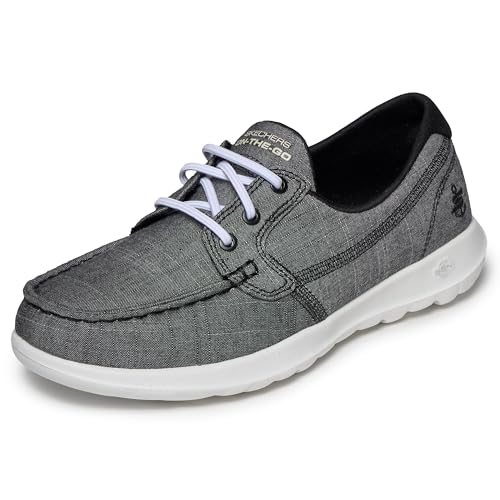
Skechers Women’s GO Walk Lite Isla Flat

ASICS Women’s GT-1000 14 Running Shoes

Brooks Women’s Anthem 8 Running Shoe

ASICS Women’s Gel-Excite 11 Running Shoes

ASICS Women’s Gel-Venture 11 Trail Running Shoes
A Deeper Look At The Lineup
The PUMA Defy Mid takes the slip-on convenience of a casual sneaker and stretches it taller, giving the ankle a little extra coverage that reads more intentional than a low-cut trainer. Pull it on, head to a lifting session, and it carries into a lunch stop without looking out of place. The taller profile is the visual hook here, and it does real work for anyone who wants a single shoe to span studio, street, and a relaxed office.
Unlike the flatter Skechers GO Walk Lite Isla that follows in this list, the Defy Mid leans into a chunkier, streetwear-inspired silhouette. Most owners should find it forgiving for short runs and gym circuits, though serious distance work belongs on a dedicated running shoe.
The Case For It
- Slip-on construction saves time during rushed mornings and gym transitions.
- Mid-cut shape adds ankle coverage that pairs well with leggings and joggers.
- Foam midsole offers enough rebound for light plyometrics and walks.
- Black colorway hides scuffs better than pale athletic finishes.
- Styling versatility covers studio sessions, errands, and casual outings in one shoe.
Things To Consider
- Not built for long-distance running, so dedicated milers will want a running-specific pair.
- Slip-on fit can feel loose for narrow heels without a snug sock choice.
Who It Suits Best
Women splitting time between gym sessions, walks, and casual plans who want one shoe that transitions cleanly without a wardrobe change.
Consider Something Else When
Runners logging real weekly mileage will get more from the ASICS Gel-Excite 11, which is purpose-built for repetitive foot strikes.
The GO Walk Lite Isla is the shoe for women who treat their feet like tools and want something that vanishes on the foot by midday. A flat, flexible sole keeps the stride natural, and the slip-on entry skips the bending-down routine when shoes come off and on a dozen times a day. It reads more like a walking shoe than a training shoe, which is exactly the point.
Compare that to the PUMA Defy Mid above, which targets studio-to-street styling with a chunkier midsole, and the Isla is the quieter, lighter sibling. Owners commonly report that the breathable upper handles warm-weather errands well, and the washable construction makes cleanup straightforward after long travel days.
Where It Helps
- Lightweight build reduces foot fatigue during long errand runs.
- Slip-on entry works well for travel days and security lines.
- Flat, flexible sole supports natural walking gait.
Worth Noting
- Minimal cushioning means it falls short for actual running or high-impact workouts.
- Flat profile lacks the ankle structure needed for uneven terrain.
- Wide-fit accommodation may feel loose for those with narrow feet.
Made For
Women prioritizing all-day comfort over athletic performance, especially travelers, dog walkers, and anyone clocking long hours on their feet at a standing job.
Look Elsewhere When
Trail seekers should reach for the ASICS Gel-Venture 11, which adds the grip and protective upper that uneven paths demand.
The GT-1000 14 is the stability trainer in this roundup, built for runners whose feet tend to roll inward during longer efforts. ASICS pairs an FF BLAST midsole, a foam compound tuned for energy return, with a 3D Guidance System that subtly steers the foot through each stride. The result is a shoe that feels structured without feeling stiff, which matters when weekly mileage adds up.
Where the Skechers Isla above is a walking-first slip-on, the GT-1000 14 is unapologetically a running shoe with engineering behind it. The polyester upper and synthetic rubber outsole keep weight reasonable, and the layered cushioning softens heel landings for runners who feel the pavement in their joints. For neutral runners, the structured feel may read as more shoe than necessary, so profile matters here.
What Makes Sense
- 3D Guidance System supports runners who overpronate during long efforts.
- FF BLAST midsole delivers responsive rebound that holds up over weekly mileage.
- Synthetic rubber outsole grips well on wet pavement.
- Polyester upper breathes enough for warm-weather training runs.
Trade Offs
- Heavier and more structured than a neutral trainer like the Brooks Anthem 8.
- Stability features feel overbuilt for runners with neutral mechanics.
Quick Facts
Best Suited To
Runners with mild overpronation who log regular mileage and need a structured shoe that still feels responsive underfoot.
Skip It When
Neutral stride runners should consider the Brooks Anthem 8, which trades stability features for a lighter, softer ride.
The Brooks Anthem 8 sits in the easy-category sweet spot for runners who want a comfortable daily trainer without the bulk of a stability shoe. Brooks positions it as an approachable, versatile pick, the kind of shoe a new runner can lace up and trust without overthinking the fit. It carries Brooks’s reputation for balanced cushioning that feels neither mushy nor harsh.
Compare it to the ASICS GT-1000 14 reviewed above, and the difference is intent. The Anthem 8 skips the structured stability system in favor of a more neutral ride, which suits runners whose feet track straight. For beginners building a base, that balance often beats specialized features, since most new runners don’t yet know their stride pattern. A handful of owners may find the cushioning thinner than expected if they prefer a marshmallow-soft feel.
Reasons It Performs
- Neutral geometry suits runners who haven’t been told they overpronate.
- Brooks cushioning strikes a middle ground between soft and firm.
- Approachable price point for runners starting a base-building phase.
- Versatile enough for easy runs, treadmill work, and recovery walks.
Honest Caveats
- Lacks the structured support system of the ASICS GT-1000 14 for overpronators.
- Midsole cushioning may feel firm to runners used to plush, maximalist shoes.
Who Should Grab It
Beginner to intermediate runners with a neutral stride who want a dependable, no-fuss daily trainer they can trust across varied workouts.
Reach For A Different Pick When
Runners needing corrective support for overpronation will get more value from the ASICS GT-1000 14, which adds stability engineering.
The Gel-Excite 11 is where ASICS loads a budget-friendly trainer with enough cushioning technology to feel like a step up. The shoe pairs FF BLAST PLUS foam in the upper midsole with AMPLIFOAM PLUS below, two foam compounds stacked to balance softness and bounce, then layers in rearfoot PureGEL, a gel unit tucked under the heel that softens landings without adding visible bulk. The breathable jacquard mesh upper keeps airflow moving, which matters during summer runs.
Where the Brooks Anthem 8 above aims for a balanced neutral ride, the Gel-Excite 11 leans plush. For runners who care more about impact absorption than ground feel, that extra cushion can be the difference between enjoying a long run and dreading it. The trade-off is weight: stack all that foam together and the shoe reads heavier than minimalist trainers.
Features That Help
- Dual foam midsole delivers a soft, springy ride for impact absorption.
- PureGEL heel unit smooths out landings for runners sensitive to pavement.
- Jacquard mesh upper breathes well in warm conditions.
- Entry-level price point for runners watching their gear budget.
Points To Keep In Mind
- Stacked foam layers add weight compared to minimalist trainers.
- Plush feel may feel unstable to runners who prefer a firmer platform.
Feature Snapshot
The Right Fit
Budget-conscious runners who want maximum cushioning for daily miles and don’t mind a slightly heavier build.
A Better Fit Elsewhere
Runners craving a lighter, faster feel should look at the Brooks Anthem 8, which trims weight by skipping stacked cushion layers.
The Gel-Venture 11 is the trail entry in this lineup, built for women whose runs leave the sidewalk and head into dirt, gravel, and root-crossed paths. ASICS bumps the stack height, the measurement of midsole material between foot and ground, by 2mm over the previous version and reinforces it with AMPLIFOAM PLUS cushioning. The result is a shoe that softens rocky impacts without feeling overly soft on flatter terrain.
Versus the ASICS Gel-Excite 11 reviewed just above, the Venture swaps road-focused cushioning for trail-ready grip. No-sew upper details reduce seams that can rub during long efforts, a small touch that matters on multi-hour trail days. Owners commonly report that the outsole handles loose dirt and moderate mud without complaint, though serious technical terrain may push past what an entry-level trail shoe can manage.
The Good Stuff
- Trail-specific outsole grips loose dirt, gravel, and moderate mud.
- AMPLIFOAM PLUS cushioning softens impact on rocky paths.
- No-sew upper construction reduces chafing during long trail efforts.
- 2mm higher stack height improves impact absorption over uneven ground.
Minor Gripes
- Entry-level trail design may feel underbuilt for technical mountain terrain.
- Outsole lugs can pack with mud on wet, sticky trails without regular cleaning.
Whose Shelf It Belongs On
Women who mix road runs with dirt-path adventures and want one shoe that handles both without missing a beat.
Where A Sibling Pick Shines
Runners staying strictly on pavement will find the ASICS Gel-Excite 11 more efficient, since trail outsoles add drag on smooth surfaces.
What Matters Most When Picking Athletic Shoes
The right shoe starts with where your feet actually go. Women logging real miles on pavement need a road trainer with cushioned midsoles and breathable uppers, while trail runners should look for grippy outsoles and protective construction. For mixed routines that blend gym sessions with errands, a slip-on silhouette saves precious minutes during transitions.
Fit matters more than brand loyalty. A shoe that feels snug in the heel without pinching the toes will outperform a fancier model that slips around during lateral moves. Trying shoes on later in the day, when feet are slightly swollen, gives a more honest fit than a morning try-on.
Consider cushioning density. Soft, plush foams like FF BLAST PLUS absorb impact well for joint-sensitive runners, while firmer platforms give a more responsive ground feel for speed work. Stability features, such as ASICS’s 3D Guidance System, help runners who overpronate, but they can feel intrusive for those with neutral strides.
Maintenance extends shoe life. Letting athletic shoes air dry between uses, rotating between two pairs during heavy training weeks, and cleaning trail outsoles after muddy runs all help midsole foams retain their bounce longer. A little routine care goes further than people expect.
Key Considerations Across These Picks
Where Shoppers Go Wrong
The most common slip-up is choosing a shoe for looks instead of function. A clean black sneaker pairs with everything, but a slip-on built for casual wear won’t survive real running mileage, and frustration sets in fast. Match the shoe to the activity that fills most of your week.
Another mistake is skipping size variation between models. Athletic shoe sizing varies surprisingly between brands, and the ASICS GT-1000 14 may fit differently than the Skechers GO Walk Lite Isla even at the same marked size. Trying on or measuring feet before ordering saves the hassle of returns.
Where The Extra Money Goes
Higher-tier running shoes invest in midsole foam technology and stability engineering. Features like FF BLAST midsole compounds and 3D Guidance Systems cost more to develop, but they deliver tangible differences in energy return and stride control. For runners logging serious weekly mileage, that engineering pays off in reduced joint fatigue and longer shoe life.
Premium trail shoes add protective rock plates and aggressive lug patterns that entry-level models skip. Women who run technical mountain terrain benefit from those upgrades, while casual path runners can save with a versatile entry like the Gel-Venture 11. The upgrade is worth it when terrain gets serious.
Frequently Asked Questions
How do I know if I need a stability shoe? Runners whose ankles roll inward during longer efforts, a pattern called overpronation, often benefit from stability shoes like the ASICS GT-1000 14. A gait analysis at a running store or a podiatrist visit can confirm your stride pattern before committing.
Can I use running shoes for gym workouts? Yes, most road running shoes handle gym sessions well, though heavy lateral moves may wear outsoles faster. Cross-trainers or versatile picks like the PUMA Defy Mid often hold up better across mixed routines.
How long should athletic shoes last? Most running shoes hold up for roughly 300 to 500 miles before midsole foam loses its bounce. Rotating between two pairs extends overall lifespan since foam recovers between uses.
Are black athletic shoes harder to keep clean? Black uppers hide scuffs better than lighter colors but show dust and salt lines more readily. A quick wipe-down after trail runs keeps the color looking intentional.
What’s the difference between road and trail running shoes? Road shoes prioritize cushioning and smooth outsoles for pavement, while trail shoes add lug patterns and protective uppers for uneven terrain. The Gel-Venture 11 leans trail, while the Gel-Excite 11 sticks to road-friendly construction.
Bottom Line
The best black athletic shoe is the one that matches how you actually move. Daily runners will find their stride in the ASICS Gel-Excite 11 or Brooks Anthem 8, trail seekers should reach for the Gel-Venture 11, and anyone splitting time between studio and street will appreciate the PUMA Defy Mid. Start with the activity, not the look, and the rest tends to fall into place.