Wet boots turn into a real problem once winter hits. Slipping into cold, damp footwear before work, a hike, or a morning on the slopes is miserable, and air-drying leather or lined boots can warp them over time. I pulled together five options that move warm air into soggy boots, gloves, and helmets, so mornings feel less punishing and your gear lasts longer. Some run silent all night, some fold flat for a duffel, and one even handles mittens.
A Side-By-Side Look

PEET Original Dryer Electric Shoe Dryer

PEET Mitten DryPort Attachment for Ski and Winter Mittens

JobSite Portable Boot Dryer and Deodorizer 2 Pack
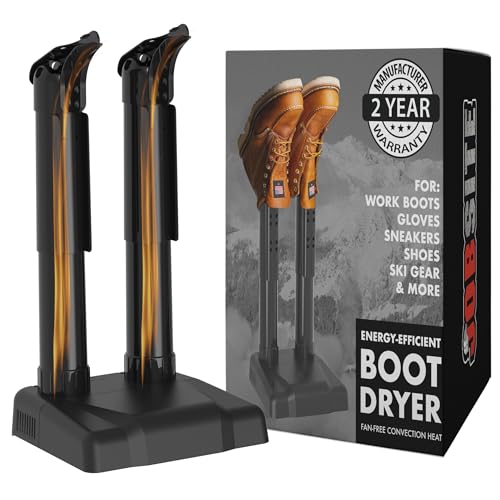
JobSite Boot Dryer Silent Warmer and Deodorizer 36W

Kendal Boot Dryer Adjustable Tubes and Timer
Why These Options Stand Out
For homeowners or tradespeople running tall pac boots, the PEET Original Dryer earns the first slot. Convection heat (warm air rising through the boot naturally, with no fan) makes it genuinely quiet, so a mudroom or entry closet is the natural home for it.
The XL tower reaches deep into 12-inch leather work boots without forcing the leather over a rigid post. Made in the USA, the unit pulls very little wattage, so leaving it on overnight after a wet commute is realistic.
Where It Helps
- Convection-style silent operation won’t wake a household.
- XL tower handles tall pac and ski boots that shorter dryers cannot fit.
- Low wattage allows safe all-night drying on a standard outlet.
- Built in the USA with a reputation for multi-year reliability.
Honest Caveats
- No fan means drying takes longer than forced-air options.
- Fixed-height posts don’t collapse for travel or small duffels.
Feature Snapshot
Who Should Grab It
Tradespeople, rural homeowners, and ski families with tall pac boots who want quiet overnight drying.
A Better Fit Elsewhere
Frequent flyers should look at the JobSite Portable, since the PEET tower doesn’t collapse for travel.
Anyone who already owns a PEET dryer can add the DryPort to handle the gear that boots leave behind: soggy mittens, bulky ski gloves, and the small items that ruin a mountain morning if still wet from yesterday.
Rather than a separate machine, this snap-on attachment expands the existing setup into a mitten and glove dryer. I see it as the practical add-on for families sharing a PEET base unit.
Practical Pluses
- Extends an existing PEET dryer rather than adding a second appliance.
- Shaped ports hold bulky ski mittens upright for airflow.
- Compact footprint fits beside the base unit in a closet or gear room.
Small Caveats
- Only works with PEET base units, not third-party dryers.
- Dries one or two pairs at a time, limiting capacity for large households.
- Needs occasional wiping to clear fabric lint buildup.
Whose Shelf It Belongs On
PEET owners with kids who constantly lose a glove in the snow and need mittens dry by morning.
Reach For A Different Pick When
Households needing a stand-alone solution should consider the Kendal, which handles gloves without a separate base.
Roaming crews and weekend travelers get real value from the JobSite Portable. Telescoping posts collapse down so the whole unit slides into a job-site bag or a carry-on, and ETL certification means it meets common North American electrical safety standards.
The two-pack configuration lets one dryer live at the shop and another in the truck. A forced-air fan moves heat faster than the silent PEET, so boots worn in slush are ready by lunch.
Points In Its Favor
- Telescoping posts collapse for travel bags and duffels.
- Forced-air drying cuts wait time on soaked work boots.
- Two-pack value covers shop and vehicle simultaneously.
- ETL certification offers a baseline electrical safety check.
Trade-Offs
- Fan noise rules out bedroom placement overnight.
- Telescoping posts need occasional re-tightening to stay put.
- Plastic posts may not reach as deep as the PEET XL tower.
Key Product Details
Best Suited To
Contractors, ski instructors, and traveling athletes who need a dryer that fits in a duffel and dries fast.
Swap It Out When
Apartment dwellers sensitive to fan noise should pick the JobSite Silent instead, since this model hums noticeably.
For shared spaces where noise matters, the JobSite Silent drops the fan entirely. A 36W heating element (about the draw of a small lamp) warms boots without a hum, so it earns its place in a dorm, a bedroom closet, or a thin-walled apartment.
Where the PEET Original leans tall, this model targets standard-height footwear: work boots, sneakers, and everyday leather. The trade-off is slower drying, but for overnight cycles that rarely matters.
A Few Strong Suits
- Fanless design runs silent in bedrooms and shared walls.
- 36W draw stays on all night without taxing a standard outlet.
- Compact footprint fits narrow entry closets.
- Deodorizing warmth helps with daily-use athletic shoes.
Worth Bearing In Mind
- Standard-height posts don’t fit 12-inch ski or pac boots well.
- No fan means damp boots need a longer cycle to dry fully.
The Right Fit
Students, apartment dwellers, and night-shift workers needing silent overnight drying in shared rooms.
Look Elsewhere When
Tall ski-boot owners should pick the PEET Original Dryer instead, since these posts run short.
The Kendal covers a wider range of gear than the rest of the list, including helmets and hats alongside ski boots and sneakers. A built-in timer takes the guesswork out of overnight cycles, and adjustable tubes let the ports match the height of each piece of gear.
Where the JobSite Portable prioritizes travel and the PEET Original prioritizes silence, the Kendal leans into versatility. For households juggling ski gear one week and cleats the next, that flexibility is the selling point.
A Few Highlights
- Adjustable tubes fit ski boots, sneakers, gloves, and helmets.
- Built-in timer auto-shuts off for safer overnight runs.
- Multi-port design dries several pieces of gear at once.
- Portable form factor moves easily between rooms.
Practical Considerations
- Forced-air fan makes some audible noise during use.
- More ports mean a larger counter footprint than single-pair units.
Perfect Match For
Ski households, coaches, and multi-sport families juggling boots, gloves, and helmets in one cycle.
Skip It When
Anyone needing pure silence should choose the JobSite Silent, since the Kendal’s fan adds audible noise.
Picking The Right Boot Warmers For Your Routine
The first call to make is heating style. Convection dryers, like the PEET Original and the JobSite Silent, push no air and run nearly whisper-quiet, making them natural fits for bedrooms and entry closets. Forced-air dryers, including the JobSite Portable and the Kendal, move warm air through the boot with a small fan, drying faster but adding audible hum. Pick convection when silence matters most, and forced-air when speed outweighs noise.
Next, measure your tallest boot. A 12-inch pac or ski boot needs an XL tower or adjustable posts that actually reach the toe box. Standard-height dryers handle work boots and sneakers fine, but they leave the upper of a tall ski boot damp. For mixed families, adjustable tubes like those on the Kendal cover the widest range.
Finally, think about where the unit lives. A stationary mudroom setup suits a convection tower. Travel, cabin trips, or job-site rotation call for collapsible posts that pack flat. Multi-sport households with gloves, helmets, and boots benefit most from timed, multi-port models that handle several pieces in one cycle.
What Matters Most Across The Category
Mistakes Worth Dodging
The most common slip is buying a standard-height dryer for tall pac or ski boots. The toe box stays damp, and the leather slowly mildews from the inside out. Measure your tallest pair before choosing.
Another pitfall is ignoring where it will sit. A noisy forced-air dryer next to a bedroom door becomes annoying by the second night. Match the heating style to the room it actually lives in.
When Paying More Pays Off
Stepping up to a unit with adjustable tubes and a timer, like the Kendal, costs more than a basic two-post dryer but saves you from buying a second unit when ski season arrives. Taller XL towers, like the PEET Original, command a step up in price for the same reason: they handle boots shorter posts cannot fit, removing the need for a separate tall-boot solution later.
Frequently Asked Questions
How long does a boot dryer take to dry wet boots?
Most forced-air models finish standard work boots in one to three hours. Convection models like the PEET Original run overnight, which fits a morning-after commute routine.
Can boot dryers handle ski boots and helmets?
Adjustable multi-port models like the Kendal fit ski boots, gloves, and helmets in one cycle. Standard-height posts may not reach deep enough into tall ski shells.
Are boot dryers safe to leave on overnight?
Low-wattage convection and timed forced-air models are designed for overnight runs. Always confirm the unit sits on a hard surface and the boots are heat-tolerant leather or synthetic.
Do boot dryers help with odor?
Yes. Warm dry air discourages the bacteria and moisture that cause odor. The Kendal and JobSite models include deodorizing modes that work well on athletic shoes and work boots.
Will a boot dryer damage leather boots?
Low-wattage convection heat, common to PEET models, is generally safe for leather. Avoid pinning leather directly against high-heat elements and let boots air out periodically.
The Takeaway
The right boot warmer depends on where it lives and what it dries. Tall pac and ski boots point to the PEET Original XL or the Kendal. Shared bedrooms and dorms favor the fanless JobSite Silent. Travel and job-site rotation lean toward the collapsible JobSite Portable. Pick the one that matches the wettest, coldest part of your routine, and mornings get easier fast.