Sparks don’t care what you spent on your boots. They land the same way on cheap leather and premium leather, and a stray bead can roll down into a low-cut pair faster than most welders expect. I put this list together for hobbyists and full-time fabricators who want footwear that actually holds up to heat, spatter, and long shifts on concrete.
How The Shortlist Stacks Up
YLOKO Kevlar Boot Laces for Work Boots

SAFETOE Welding Boots with Metatarsal Protection

Bear Guard Boot Leather Waterproofing Beeswax

Revco Black Stallion BSX FR Cotton Welding Jacket
SUREWAY 6in Moc Toe Work Boots, Wedge Sole
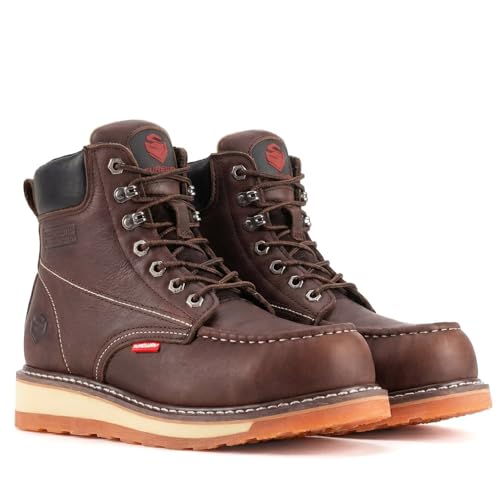
SUREWAY Heavy Duty Wedge Moc Toe Work Boots
SUREWAY Slip-On Fire & Safety Work Boots
GLANOUDUN Steel Toe Shoes, Mid-Top Slip-On
The Strengths Of Each Pick
Most welders forget about laces until a pair melts mid-shift. The YLOKO Kevlar Boot Laces step in for that exact moment, replacing the cotton or nylon strings that tend to fray against spatter and heat. Kevlar is the same aramid fiber used in cut-resistant gloves, so the upgrade here is less about looks and more about surviving contact with hot work.
For anyone already running a solid pair of leather boots from the picks below, swapping the stock laces takes about five minutes and one pair of scissors. I think of them as cheap insurance against a lace snapping at the worst possible time.
Where It Helps
- Heat- and abrasion-resistant Kevlar construction outlasts standard laces around sparks and grinding dust.
- Drop-in replacement for most work boot eyelets, no special tools required.
- Reduces mid-shift snap-offs during overhead or out-of-position welding.
- Pairs naturally with heavier picks like the SUREWAY Heavy Duty Wedge Moc Toe Work Boots.
Worth Noting
- Kevlar fibers can feel slightly stiffer than cotton laces during the first few shifts.
- Lace length varies by boot height, so measuring before ordering avoids a short pair.
- Not a substitute for proper FR boots on their own.
Right Fit For
Welders who already own a good pair of boots and want a quick, affordable lacing upgrade that resists heat damage during regular shop work.
Look Elsewhere When
You need full footwear with toe protection, in which case the SAFETOE Welding Boots with Metatarsal Protection covers heat, impact, and metatarsal coverage in one piece.
Where the YLOKO laces handled one small part of the job, the SAFETOE Welding Boots handle the whole foot. Composite toe protection (a non-metallic cap that resists impact and compression without triggering metal detectors) is paired with metatarsal guards covering the upper foot, plus a fire-resistant build rated for contact heat up to 300°C.
This is the pick I keep coming back to for structural and pipework welders who deal with falling slag and heavy plate. The taller shaft keeps embers from dropping into the boot, and the heat-resistant leather helps during close-quarters grinding where sparks pool around the ankles.
Strengths Worth Knowing
- Composite toe plus metatarsal guard shields the entire forefoot from falling objects.
- 300°C heat-resistant construction handles direct spark and brief ember contact.
- Non-metallic toe is friendly for anyone moving through security gates on job sites.
- Taller ankle coverage helps block spatter from rolling inside the boot.
Trade Offs
- Heavier build than the lighter SUREWAY options, which can feel stiff on the first few shifts.
- Break-in tends to take longer for the metatarsal area compared to a standard toe.
- Limited ventilation compared to lower-cut moc toe styles.
Who Should Grab It
Full-time welders working around heavy plate, structural steel, or pipe where falling material and sustained heat are part of the daily grind.
Swap It Out When
You mostly do light fabrication or garage projects and want something more flexible, in which case the SUREWAY 6in Moc Toe Work Boots, Wedge Sole is easier to wear on long quiet days.
Even the toughest leather welder’s boot dries out eventually, and dry leather cracks the first time it meets a hot spark. Bear Guard Beeswax is the type of shop-side maintenance product I think more fabricators should own. It’s a beeswax-based conditioner that softens leather and adds a light waterproof layer at the same time.
For people running the SAFETOE or SUREWAY pairs reviewed here, a once-a-month wax rub keeps the leather supple and helps repel weld spatter rather than absorbing it.
Why It Works Well
- Beeswax base softens stiff leather without leaving a greasy residue on pant legs.
- Adds light water resistance for outdoor fab work in damp conditions.
- Small tin format stores easily on a shop shelf next to the grinder.
- Helps extend the lifespan of any leather boot in this list by preventing dry cracking.
Points To Keep In Mind
- Not a replacement for boots on its own, so it belongs in the maintenance kit, not the foot.
- Beeswax can darken lighter leather tones, which matters on the royal blue jacket option below.
- Application takes a few minutes per pair, so factor that into a busy schedule.
Made For
Welders who already invested in leather boots and want a simple, natural way to condition and waterproof them on a regular schedule.
Not Your Match When
You want actual protective footwear first and foremost, in which case the GLANOUDUN Steel Toe Shoes deliver toe protection at a friendlier spend.
Boots don’t do much for the rest of the body, and that’s where the Revco Black Stallion BSX Jacket steps in. The 9 oz flame-resistant (FR) treated cotton (a midweight fabric coated to self-extinguish when exposed to flame) covers the torso and arms, with a welder’s collar protecting the neck from UV flash and spatter.
I included it here because pairing solid boots with a proper FR jacket is how a sensible protective kit comes together, especially for shop fabricators layering gear for long shifts.
A Strong Showing
- FR-treated cotton resists sparks and self-extinguishes after brief flame exposure.
- Contoured cut sits closer to the body than boxy traditional jackets, reducing snag points.
- Dual scribe pockets inside hold welding markers and soapstone.
- Leather-reinforced snaps hold up better than plastic under heat and laundering.
Room For Improvement
- FR treatment typically softens after many wash cycles, so longevity depends on care habits.
- Cotton breathes less than lighter synthetic jackets during hot summer fab work.
- Sizing tends to run closer to standard fit, so layering over a hoodie may require going up one size.
Best Suited To
Welders who already own a solid pair of boots from this list and want an FR jacket to round out the upper-body side of their PPE.
Consider Something Else When
Foot protection is the actual priority on your list, in which case the SAFETOE Welding Boots with Metatarsal Protection handles the lower body end of the kit.
Switching back to footwear, the SUREWAY 6in Moc Toe Work Boots lean into comfort over armor. The moc toe (a soft, stitched toe box rather than a hard safety cap) sits low on the foot, and the wedge sole spreads weight across a wider surface for easier standing on concrete floors during long shifts.
These are the boots I’d hand to a hobbyist welder who spends more time at the bench than on a structural crew. The toe options listed (steel or soft) let you pick protection based on what actually rolls onto your shop floor.
Practical Advantages
- Wedge sole reduces foot fatigue during long standing sessions at the bench.
- 6-inch shaft keeps sparks out without restricting ankle movement.
- Available in steel or soft toe, so protection matches your actual hazard.
- Moc toe styling looks more like a regular work boot, useful outside the shop.
Smaller Limitations
- Not rated for the same contact heat as the SAFETOE option above.
- Wedge soles can feel less stable on uneven ground outside the shop.
- Lighter build means less ankle support for heavy lifting situations.
Whose Shelf It Belongs On
Shop fabricators and hobby welders who want comfortable, easy-wearing boots for light-to-medium welding and grinding tasks.
A Better Fit Elsewhere
You’re doing heavy plate work all day, where the SUREWAY Heavy Duty Wedge Moc Toe Work Boots offer a sturdier construction for tougher shifts.
Where the lighter 6-inch SUREWAY feels like a daily commuter, this heavy-duty version steps up the build. The same wedge sole design stays in place, but the materials around the toe and upper get a noticeable reinforcement, with soft, composite, or steel toe options on offer.
For welders who need genuine impact protection but still want the comfort of a wedge sole over a heeled logger boot, this sits in a useful middle ground between the SAFETOE armor and the entry-level moc toe.
The Good Stuff
- Multiple toe options (soft, composite, steel) cover different shop hazards.
- Wedge sole keeps the all-day standing comfort SUREWAY is known for.
- Heavier leather upper resists abrasion from repeated spark exposure.
- Reinforced construction handles rough outdoor fab work better than standard moc toes.
A Few Considerations
- Heavier than the lighter 6-inch version, so break-in takes longer.
- No specific metatarsal guard like the SAFETOE option.
- Wedge soles can feel bulky under a welding leathers apron strap.
Built With In Mind
Welders who want full-shift comfort with real toe protection, especially those working on outdoor structural or agricultural fabrication projects.
Where A Sibling Pick Shines
Quick on and off the boots matters more than protection, in which case the SUREWAY Slip-On Fire & Safety Work Boots skip the laces entirely.
The other SUREWAY option in this list pulls laces out of the equation entirely. The slip-on design saves a couple of minutes at the start and end of every shift, and for welders who walk in and out of the shop a lot, that time adds up fast.
Composite or soft toe options keep the safety conversation alive, while the fire and safety build targets the kind of environments a welder actually moves through. For anyone tired of melted laces, slipping in and out of these feels like a small daily win.
Real-World Strengths
- Slip-on entry eliminates lace replacement and reduces burn risk from melted strings.
- Composite or soft toe lets you choose between detection-friendly and lighter comfort.
- Pairs well with the YLOKO Kevlar Boot Laces if you later want to convert to a laced pair.
- Lower profile fits under welding bibs without bunching.
Where It May Fall Short
- Slip-on fit can’t be tightened mid-shift if feet swell on hot days.
- Less ankle lockdown than a fully laced boot during heavy lifting.
- Sizing must be more precise, with little room to compensate with lace tension.
Perfect Match For
Welders who hop in and out of the shop multiple times a day and want to skip the lace routine without giving up toe protection.
Another Choice May Suit
You need the absolute toughest build for plate and pipe, where the SAFETOE Welding Boots with Metatarsal Protection provides more aggressive coverage.
Closing out the list is the GLANOUDUN Steel Toe Shoes, a mid-top slip-on that targets welders who want the protection of a steel toe without committing to a heavy-duty leather build. Mid-top coverage rises above the ankle a touch, which helps keep sparks from dropping in at the collar.
For hobby welders and garage fabricators, this is a sensible entry point. The steel toe handles the occasional dropped workpiece, and the slip-on format makes it easy to grab and go on a Saturday afternoon project.
What Helps Most
- Steel toe cap provides impact protection for the budget-conscious shopper.
- Mid-top design adds ankle coverage without the bulk of a full work boot.
- Slip-on format keeps the boots easy to store on a garage shelf.
- Lower profile fits under light welding aprons and jackets like the Revco BSX.
Practical Considerations
- Steel toe triggers metal detectors, which matters for site-based welders.
- Heat resistance is less aggressive than the SAFETOE composite option.
- Not ideal for heavy structural work or pipe welding at scale.
The Right Fit
Garage welders and weekend fabricators who need genuine toe protection without stepping into a full heavy-duty boot.
Where Another Pick Suits Better
You’re working professional hours on site, in which case the SUREWAY Heavy Duty Wedge Moc Toe Work Boots handle longer shifts and rougher conditions.
Choosing Boots That Actually Fit The Work
Heat Resistance And Material Choices
Welding boots live or die on how they handle heat and spatter. Leather is the standard because it chars rather than melts, but not all leather is treated equally. Fire-resistant treatment, kevlar stitching, and a tall enough shaft all contribute to how the boot handles rolling sparks. Look for boots that mention contact heat ratings or flame resistance if your work involves close plate welding or pipe work. Composite toe options avoid the metal detector issue and stay cooler in summer, which matters on job sites without shade.
Toe Protection And Hazard Matching
A steel toe cap resists compression from heavy drops, while a composite toe handles the same impact at a lighter weight. Metatarsal guards extend that protection across the upper foot, useful when working under suspended loads. Match the toe type to what actually falls or rolls in your shop, rather than buying the most armored option by default. A garage hobbyist rarely needs the same coverage as a shipyard welder.
Sole Design And Standing Comfort
Wedge soles spread weight evenly and tend to feel more comfortable during long shifts on flat concrete. Heeled logger soles provide better traction on uneven outdoor ground but can tire feet faster indoors. For mixed indoor and outdoor fab work, a wedge sole with aggressive tread gives a sensible middle ground.
Fit, Break-In, And Long-Term Care
Boots that fit well on day one still need a break-in period, especially with metatarsal guards. Plan a lighter first week before relying on them for full eight-hour shifts. Conditioning leather with a beeswax-based product every few weeks keeps it supple and adds light water resistance. Replace frayed laces with kevlar options before they snap mid-shift.
Smart Choices Before You Commit
Where Shoppers Go Wrong
The biggest mistake is buying the most armored boot on the list when the work doesn’t call for it. Heavy metatarsal guards feel clunky on light fab work and add weight nobody enjoys. The opposite mistake is skipping toe protection entirely to save money, which costs more the first time a grinder or workpiece lands on a foot. Match the boot to the actual hazard, and don’t trust marketing language over the spec list.
When Paying More Pays Off
Spending more on boots usually buys three things: better heat-rated materials, longer-lasting construction, and more thoughtful comfort features. For a full-time welder logging 30+ hours a week near hot work, the upgrade tends to pay back through fewer replacements and less foot fatigue. For weekend hobbyists, a solid mid-tier pair like the GLANOUDUN covers the essentials without overcommitting. The honest read is to scale the spend with the hours, not the wish list.
Frequently Asked Questions
Do welding boots need to be leather?
Leather is the most common material because it resists heat and abrasion better than synthetics. Fire-resistant treatment improves that performance further. Synthetic options exist but rarely match leather for direct spark contact.
Are composite toe boots safe enough for welding?
Composite toes meet the same impact and compression ratings as steel toes in most regions. They also stay cooler, weigh less, and don’t trigger metal detectors, which suits many shop environments.
How tall should a welding boot shaft be?
A 6-inch shaft covers most light fab work, while 8-inch or taller shafts help during overhead and pipe welding where sparks fall more directly onto the boot. Match shaft height to your typical work position.
Can I use regular work boots for occasional welding?
For occasional hobby welding, a sturdy leather work boot is often enough. Frequent or production welding calls for boots with explicit heat ratings and fire-resistant construction.
How do I care for leather welding boots?
Brush off spatter and dust after each shift, condition with a beeswax-based product monthly, and store in a dry spot away from direct heat. Replace laces with kevlar options if standard laces fray quickly.
The Takeaway
The right boots for welding depend on hours, hazards, and how often sparks meet leather. Heavy fabrication calls for the SAFETOE or a heavy-duty SUREWAY pair, while garage hobbyists get solid mileage from the GLANOUDUN or 6-inch moc toe. Whatever pair fits the work, the kit isn’t complete without a conditioning routine and reliable laces to back it up.