I spent a lot of time talking to recreational boxers, coaches, and folks who cross-train in their garage to figure out which pairs of boxing training shoes actually earn their spot in a bag. The right pair keeps your ankles planted when you pivot, grips the canvas without slipping, and disappears on your feet during long rounds. The wrong pair turns every combo into a fight with your own shoes. Here’s where I’d point most shoppers.
How The Shortlist Stacks Up

RUDIS Alpha 2.0 Wrestling Shoes
Adidas Varner Wrestling Shoes

Everlast Elite V2 Boxing Shoes

adidas Hog 2.0 Training Boots

Hayabusa Pro Boxing Lightweight Shoes
HIKLDK High-Top Wrestling Shoes
A Closer Look At Each Pick
The RUDIS Alpha 2.0 borrows heavily from wrestling culture, which actually translates well into boxing because both sports punish sloppy footwork. Sitting low to the canvas with a thin, gum-rubber style sole, the shoe rewards planted pivots and clean angle changes during sparring rounds. Recreational boxers who shadowbox on mats or roll under hooks find the grip genuinely confidence-building once the shoes break in.
Where it stands apart from wrestling-only competitors is the everyday wearability. Compared with the wrestling-focused Adidas Varner further down this list, the Alpha 2.0 reads slightly more forgiving around the toe box. Boxers who lace up for bag work, footwork drills, and the occasional light spar get a versatile daily driver without paying competition-tier money.
Strong Points
- Thin sole keeps the foot connected to the canvas for stable pivots
- Low-cut profile frees the ankle for full range during rolls and level changes
- Reinforced toe handles the drag of push-step footwork on rough mats
- Versatile enough for bag sessions, mitt work, and light sparring
- Construction holds up well through sweaty training sessions over months
Things To Consider
- Sizing runs on the snug side, so trying them on matters if you have a wider forefoot
- Minimal cushioning means concrete garage floors feel every step during long rounds
Whose Shelf It Belongs On
Boxers who split time between bag work and mat-based footwork drills, and who want a shoe that disappears on the foot once warmed up.
Look Elsewhere When
Shoppers training mostly on bare concrete or plyometric-heavy sessions will get more out of the Everlast Elite V2 Boxing Shoes, which adds structure underfoot.
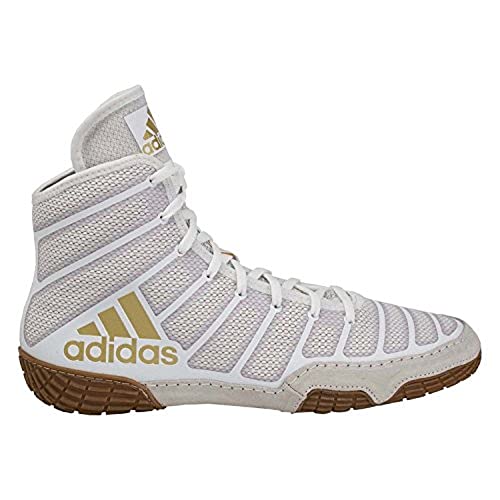
The Adidas Varner was co-developed with an Olympic-level wrestler, and that pedigree shows up the moment you slip them on. The single-piece mesh upper wraps the foot like a sock, so there’s almost no break-in period before you trust the shoe under hard lateral pressure. Boxers who rely on quick direction changes find the lightweight build pays off when the round drags past the third minute.
Against the RUDIS Alpha 2.0 reviewed above, the Varner trades a touch of structure for a more performance-oriented geometry. The thin outsole grips canvas and rubber flooring cleanly, though the upper’s racer feel rewards narrower feet more than wider ones.
Practical Advantages
- Sock-like upper eliminates the break-in window most boxing shoes demand
- Aggressive rubber outsole bites well on both canvas and rubberized gym floors
- Single-piece construction reduces hot spots during extended sparring
- Lightweight build helps tired legs stay sharp in late rounds
Worth Noting
- Narrow last can squeeze wider forefoots during longer sessions
- Minimal padding means hard surfaces transmit impact, so a cushioned insole helps
- Breathable mesh upper shows scuffs faster than synthetic overlays on cheaper pairs
Feature Snapshot
Made For
Competitive fighters with narrower feet who want a race-ready shoe for sparring, amateur bouts, and high-tempo mitt work.
Reach For A Different Pick When
Beginners on a tighter budget get better mileage from the HIKLDK High-Top Wrestling Shoes, which costs far less and absorbs awkward training falls more forgivingly.
Everlast built the Elite V2 from the ground up for boxers rather than borrowing from wrestling, and that intent shows in small details. The mid-height ankle collar adds a touch of lateral stability that helps when you’re working the heavy bag for ten straight rounds. A wider landing platform under the heel keeps your base planted through straight shots and weight-transferring crosses.
Sitting between the wrestling-style RUDIS Alpha 2.0 and the ankle-tall adidas Hog 2.0 later in the lineup, the Elite V2 reads as the most traditional boxing shoe of the bunch. Recreational boxers who mostly train in commercial gyms with rubberized floors will feel right at home in this pair.
Useful Highlights
- Boxing-specific last shape accommodates slightly wider feet than wrestling models
- Mid-cut collar supports the ankle during repetitive bag rounds
- Gum-style outsole grips rubber gym flooring without leaving scuff marks
- Breathable mesh upper panels keep feet cooler through long mitt sessions
Trade Offs
- Heavier than wrestling-borrowed options, so speed work feels slightly more effortful
- Lacks the featherweight feel of pure wrestling models for explosive scrambles
Best Suited To
Gym boxers and coaches who rack up bag and mitt rounds on rubber gym flooring and want a boxing-first fit.
Skip It When
Speed-first fighters chasing the lightest possible shoe should look at the Hayabusa Pro Boxing Lightweight Shoes further down this list.
The adidas Hog 2.0 sits in the boot-style corner of the category, and that’s its whole reason for existing. With ankle-covering support and a reinforced outsole, this shoe targets the boxer who hammers the heavy bag, smashes pads, and occasionally lifts weights in the same session. The higher collar keeps the joint stable through repetitive impact, especially when fatigue starts to wobble your base.
It weighs noticeably more than the wrestling-style Adidas Varner from earlier on this list, and the trade-off is intentional. Stability beats stealth for shoppers who train hard on heavy bags and need a shoe that doesn’t roll under load.
Everyday Wins
- Ankle-high collar supports the joint through heavy bag combinations and squats
- Reinforced outsole handles the drag of push-steps without wearing thin quickly
- Breathable upper mesh manages heat during long, sweaty rounds
- Durable construction suits daily training rather than occasional sparring
Honest Caveats
- Bulkier silhouette limits agility compared with low-cut wrestling models
- Heavier build tires the ankles during long sparring exchanges
- Boot height can feel restrictive if you prefer unrestricted ankle mobility
- Break-in takes a few sessions before the leather softens around the ankle
Quick Facts
Who Will Love This
Boxers whose week revolves around heavy bag sessions, strength circuits, and the occasional pad workout with a coach.
A Better Fit Elsewhere
Anyone focused on sparring and competition rounds will find the RUDIS Alpha 2.0 Wrestling Shoes lighter and quicker on the pivots.
Hayabusa designs gear around the pro fighter, and the Pro Boxing Lightweight shows that bias clearly. The shoe feels barely there during footwork drills, which translates directly into faster pivots and snappier direction changes. A grooved rubber outsole anchors the foot through hard angle cuts without grabbing the canvas awkwardly on the way out.
Where it differs from the Adidas Varner covered earlier is the boxing-specific geometry. The Hayabusa sits a touch wider in the forefoot and offers more cushion under the ball, which suits boxers more than wrestlers.
Everyday Perks
- Lightweight build fights fatigue during sparring sessions that stretch past four rounds
- Grooved outsole grips clean canvas for sharp pivots on both feet
- Stable platform transfers power from the floor through each straight shot
- Flexible sole bends naturally through push-steps and angle cuts
- Internal padding holds the heel locked during rapid combinations
A Few Limitations
- Light build trades some impact absorption compared with heavier trainers
- Sizing tends toward narrow, so wider feet may want a half-size up
The Right Fit
Speed-focused fighters who care most about quick feet, clean pivots, and gear that disappears during long sparring rounds.
Consider Something Else When
Heavy bag warriors leaning on stability and ankle support should size up to the adidas Hog 2.0 Training Boots for tougher sessions.
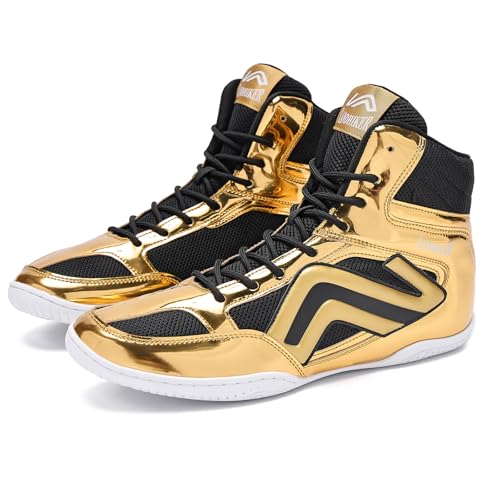
HIKLDK offers a high-top wrestling-style shoe at a fraction of the price of the bigger brands, and that value proposition matters for beginners. The taller ankle collar adds a layer of support that newer athletes genuinely appreciate, especially when they’re still learning how to plant their feet. For casual bag work and mixed home workouts, this shoe covers the basics without overpromising competition-grade performance.
Compared with the RUDIS Alpha 2.0 earlier on this list, the HIKLDK trades refinement for affordability. You’ll feel the difference in long sessions, but for the first three to six months of training, that’s usually a fair trade.
What Pays Off
- High-top design adds ankle stability that helps beginners stay upright through combinations
- Low price point lets newcomers try boxing without a big upfront investment
- Lightweight construction keeps the legs fresh during early training sessions
- Non-slip outsole handles rubber gym floors and home mats alike
Practical Considerations
- Build quality won’t match premium brands after a season of heavy training
- Limited sizing options can make finding a perfect fit trickier than established brands
- Less breathability than mesh-heavy competitors, so hot workouts get swampy
Perfect Match For
Beginners, casual home trainers, and shoppers wanting a flexible crossover shoe for boxing plus general fitness work.
Swap It Out When
Once training frequency climbs past three sessions a week, the Everlast Elite V2 Boxing Shoes offers noticeably more durability for the long haul.
Choosing Boxing Training Shoes That Actually Fit Your Style
Sole Style Shapes How You Move
The single most important decision sits under your foot, not on top. A thin, gum-style rubber sole keeps you glued to the canvas for pivots and angle work, which is exactly what boxing rewards. Wrestling-derived shoes like the RUDIS Alpha 2.0 and Adidas Varner lean hard into this idea. Thicker soles, the kind seen in high-top crossover options, trade that grounded feel for cushion and durability on rough flooring. For most recreational boxers training on rubber gym floors, the thinner sole wins.
Ankle Height Reflects How Hard You Push
Low-cut shoes free the ankle for rolls and level changes, which matters when sparring or working defensive drills. Mid-cut collars, like those on the Everlast Elite V2, add a touch of support without choking the joint. High-top boots make sense when heavy bags and strength circuits dominate the week. Match the height to your actual training mix rather than chasing the lowest or tallest silhouette you see online.
Weight And Cushion Trade Speed For Comfort
Lightweight shoes reduce ankle fatigue during long sparring rounds, but they transmit impact on hard surfaces. Heavier options absorb punishment better but slow down pivots. Boxers who train mostly on rubber flooring usually land somewhere in the middle. Those pounding concrete in a home gym should lean toward a cushioned midsole to protect the knees.
Fit Matters More Than Brand
Sizing varies wildly across this category, with wrestling-derived models typically running narrower than dedicated boxing shoes. If your forefoot spreads during push-steps, prioritize width over the smallest size that fits your heel. A thumb’s width of room at the toe is a sensible baseline for footwork that demands push-steps and pivots.
Key Considerations Across These Picks
Pitfalls Shoppers Hit
The biggest mistake I see is choosing a wrestling or cross-training shoe based purely on looks rather than training reality. Plenty of attractive pairs online simply aren’t built for boxing-style footwork, and the wrong geometry shows up the first time you throw a hard angle combination. Another common trap is sizing down for a “tighter” fit when what you actually need is the right last shape. Wrestling shoes run narrow, boxing shoes run wider, and your foot sits in between.
Where The Extra Money Goes
Premium pairs like the Adidas Varner and Hayabusa Pro earn their keep with refined lasts, lighter materials, and outsole compounds that grip harder without grabbing. The upgrades show up in long-term comfort, fewer blisters during break-in, and noticeably cleaner pivots when fatigue sets in. For most recreational boxers training two or three times a week, mid-tier options handle the load fine. Anyone pushing toward amateur competition will feel the difference every round.
Frequently Asked Questions
Do boxing shoes really make a difference?
They do, mostly through sole grip and ankle freedom, both of which directly affect how cleanly you can pivot and push off during combinations. The right pair feels quieter on the foot and lets you focus on technique rather than your shoes.
Can I use wrestling shoes for boxing training?
Yes, especially for footwork-heavy drills on mats and canvas, since wrestling-derived shoes share the thin-sole, low-cut geometry that boxing rewards. For pure bag work and rough gym floors, a boxing-specific mid-cut can feel more stable.
How tight should boxing training shoes fit?
Snug around the heel and midfoot with roughly a thumb’s width at the toe works for most people. Too loose and the foot slides during pivots, too tight and you’ll battle blisters every session.
How long do boxing training shoes usually last?
A recreational boxer rotating two or three pairs through two or three sessions a week typically gets six to twelve months before the outsole smooths out. Heavy bag specialists wearing them daily may see faster wear.
Are high-top boxing shoes worth it?
High-tops make sense when bag work, strength circuits, and ankle stability matter more than sparring agility. Low-cut options serve sparring and competition work better because they let the ankle move freely.
Bottom Line
The right boxing training shoes come down to your training mix, your foot shape, and the floor you’ll spend the most time on. Lean toward a thin-sole, low-cut wrestling-derived pair for sparring and footwork, and reach for a mid- or high-top option when heavy bags and conditioning dominate the week. Try to feel the shoe underfoot if you can, trust the geometry over the marketing, and your feet will thank you by round ten.