That hot, burning ache under the ball of your foot can turn a simple walk into a chore. Metatarsalgia flares up when the metatarsal heads (the long bones just behind your toes) take on too much pressure, and the wrong footwear quietly makes it worse. The right pair redistributes load, cushions the forefoot, and keeps your arch from collapsing on every step.
This roundup mixes full orthopedic slip-ons with insert-and-shoe pairings, so you can pick the path that fits your routine. Each option was reviewed for arch geometry, forefoot padding, heel control, and how it handles hours of walking. Two paths show up repeatedly: swap your insole inside a shoe you already own, or step into a shoe engineered around the problem from the start.
A Quick View Of The Lineup

Aetrex L2200 Memory Foam Orthotic Insoles for Men

Aetrex L2205 Memory Foam Orthotic Insoles for Men
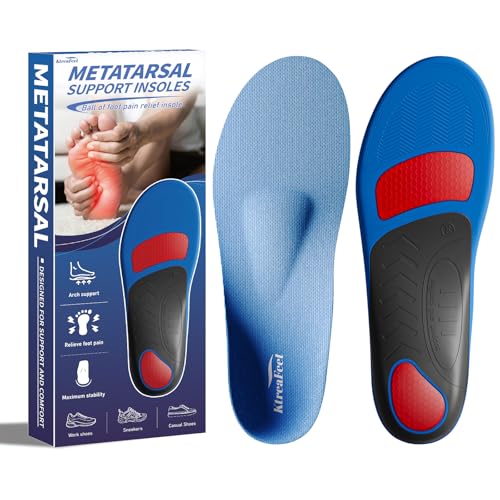
KtreaFeet Metatarsal Insoles with Built-in Pad

Brooks Men’s Launch 9 Neutral Running Shoe
OrthoComfoot Canvas Orthopedic Slip-On Loafers
OrthoComfoot Orthopedic Slip-On Loafers for Flat Feet
OrthoComfoot Casual Canvas Orthopedic Loafers
More On The Choices That Made The List
Most metatarsalgia relief insoles do one thing well. The Aetrex L2200 tries to do everything at once, and lands surprisingly close. Built around a slow-recovery memory foam top layer, the insole molds to your arch over the first few wears so the support feels custom rather than generic.
For nurses, teachers, and warehouse workers pushing 10-hour shifts, the poron shock-absorbing base softens heel strike while the cupped heel keeps your rearfoot from rolling. A 0.25-inch profile slips into sneakers, casual boots, and most dress shoes without forcing a tight fit.
What Helps Most
- Slow-recovery memory foam that adapts to your arch shape during wear
- Poron cushion base absorbs impact during long shifts on hard floors
- Cupped heel geometry stabilizes the rearfoot and reduces ankle roll
- Versatile 0.25-inch profile fits sneakers, work boots, and casual shoes
- Biomechanically aligned arch support eases forefoot pressure
Things To Consider
- No dedicated metatarsal pad, so forefoot relief is indirect
- Memory foam compresses over months of daily use and may need replacement
Key Specs
Who Should Grab It
Shift workers and commuters who spend six-plus hours standing on hard surfaces and want a single insole that handles mixed footwear.
Consider Something Else When
Runners logging serious mileage should reach for the Brooks Launch 9, which pairs cushioned support with a road-ready upper.
Where the L2200 spreads its support evenly, the Aetrex L2205 zeroes in on the exact spot that hurts. A built-in metatarsal pad sits behind the ball of the foot, lifting and separating the metatarsal heads instead of letting them splay under load.
This is the insole to try when generic arch support helps the arch but leaves the forefoot screaming. The medium-to-high arch height suits neutral to slightly pronated feet, and the deep heel cup keeps your alignment honest during long walks.
Useful Touches
- Dedicated metatarsal pad redistributes pressure off the ball of the foot
- Slow-recovery memory foam contours to your arch during wear
- Deep heel cup maintains rearfoot alignment through long shifts
- Biomechanically angled arch support targets plantar fasciitis and metatarsalgia
Points To Keep In Mind
- Higher arch profile feels too aggressive in shallow or tight dress shoes
- Break-in period of several days before the foam fully settles
Built With In Mind
Walkers with diagnosed metatarsalgia or Morton’s neuroma who want a pad-based approach rather than generalized cushioning.
A Better Fit Elsewhere
Shoppers prioritizing pure cushioning over targeted lift should consider the Aetrex L2200, which spreads support across the whole foot.
Stepping into orthotics for the first time can feel like a leap, especially if you are unsure the problem is serious enough for a premium insert. The KtreaFeet metatarsal insole lowers that bar. It targets the same forefoot pressure point as the Aetrex L2205, just at a friendlier entry cost.
Available in clearly labeled size steps (Men’s 5-6 / Women’s 6-7 at 250mm and Men’s 6.5-7.5 / Women’s 7.5-8.5 at 262mm), the insole trims to fit for borderline sizes. The built-in metatarsal pad lifts the metatarsal arch and offloads the inflamed tissue during walking.
Strengths Worth Knowing
- Built-in metatarsal pad targets ball-of-foot pain specifically
- Ergonomic arch support reduces foot fatigue on longer walks
- Two listed size options with trim-to-fit flexibility
- Entry-level price makes trial low risk for first-time users
Small Caveats
- Construction quality may not match premium orthotic brands for daily heavy use
- Limited size range listed; larger feet may need to look elsewhere
Right Fit For
First-time orthotic shoppers testing whether a metatarsal pad solves their pain before committing to a premium insole.
Skip It When
Long-shift workers needing all-day durability should reach for the Aetrex L2205, which uses heavier-grade materials.
Not everyone wants an orthopedic slip-on. Some walkers want a real athletic shoe that handles metatarsalgia without looking like a medical device. The Brooks Launch 9 fits that brief. Classified as a neutral road running shoe, it skips heavy stability posts in favor of a smoother, more responsive ride.
The Launch line has long appealed to walkers who log fast-paced miles. For metatarsalgia sufferers, the right insole swap matters more than the stock sock liner, so pairing this shoe with an Aetrex or KtreaFeet insert unlocks its full potential.
The Value In It
- Neutral platform suits walkers with a balanced gait
- Lightweight road-shoe feel encourages longer, faster walks
- Roomy toe box lets the forefoot splay naturally
- Compatible with aftermarket metatarsal insoles for added relief
Trade Offs
- No built-in metatarsal pad; relief depends on the insole you pair it with
- Athletic styling may not suit office or formal environments
- Neutral design offers less guidance for overpronators
Made For
Active walkers and casual runners who want a responsive shoe they can pair with a dedicated metatarsal insole.
Look Elsewhere When
Shoppers wanting an all-in-one solution should consider the OrthoComfoot Canvas Orthopedic Slip-On Loafers, which bakes the support into the shoe.
Orthopedic shoes have a reputation for looking orthopedic. The OrthoComfoot canvas slip-on quietly breaks that mold with a vintage-inspired upper that reads more like weekend wear than a clinical device. Underneath the canvas, though, the construction is serious about foot support.
Built for walking on hard pavement and indoor floors, the slip-on pairs arch support with a forefoot design that eases metatarsalgia pressure. The low-profile build makes it a practical grab for quick errands and dog walks.
Notable Gains
- Vintage canvas styling works for casual outings without drawing attention
- Built-in arch support removes the need to buy a separate insole
- Slip-on convenience suits quick errands and short walks
- Lightweight construction reduces foot fatigue on pavement
Honest Caveats
- Canvas upper offers little weather protection for rain or cold
- Less cushion depth than a dedicated running shoe for high-mileage days
Whom It Serves
Casual walkers and errand-runners who want orthopedic support in a shoe that does not look orthopedic.
Reach For A Different Pick When
Long-distance walkers needing more cushion and structure should consider the Brooks Launch 9 for road performance.
Flat feet and metatarsalgia often arrive together, because a collapsed arch shifts load forward onto the metatarsal heads. This OrthoComfoot loafer is tuned for that exact combination, with arch geometry aimed at low arches rather than neutral or high ones.
The slip-on silhouette leans toward slipper-like ease, which makes it a strong pick for home wear, casual office days, and short neighborhood walks. The orthopedic interior does the heavy lifting while the exterior stays unfussy.
Noteworthy Benefits
- Arch profile tuned for flat-footed wearers needing extra lift
- Forefoot cushioning reduces pressure on the metatarsal heads
- Slip-on entry suits sore mornings and post-work tired feet
- Casual styling transitions between home and quick outings
Some Limits To Know
- Lower arch profile may feel underwhelming for neutral or high arches
- Not built for long-distance walking on rough terrain
Best Suited To
Flat-footed walkers managing metatarsalgia who want comfort-first shoes for low-impact daily use.
Swap It Out When
Higher-arched walkers should reach for the Aetrex L2205 insole paired inside the Brooks Launch 9 instead.
The third OrthoComfoot entry in this roundup splits the difference between the vintage canvas slip-on and the flat-foot specialist. It carries the brand’s casual orthopedic construction in a breathable canvas package that breathes well in warm weather.
For warm-climate walkers who deal with forefoot pain, the lightweight upper and built-in arch geometry offer relief without overheating. It works well as a summer walking shoe for short to mid-length outings.
The Practical Payoff
- Breathable canvas upper keeps feet cooler in warm weather
- Built-in arch support removes the need for a separate insole
- Lightweight construction reduces fatigue on casual walks
- Casual style blends with summer wardrobes easily
Worth Bearing In Mind
- Limited weather protection in rain or cold seasons
- Less structured than a running shoe for serious mileage
Whose Shelf It Belongs On
Warm-weather casual walkers who need orthopedic support without the bulk of a year-round boot.
Another Choice May Suit
Four-season walkers should consider the OrthoComfoot Canvas Orthopedic Slip-On Loafers, which offer similar styling with slightly more structure.
How To Match The Right Mens Walking Shoes For Metatarsalgia Pain To Your Feet
Understand The Role Of The Metatarsal Pad
A metatarsal pad is a small dome placed behind the ball of your foot that lifts and separates the metatarsal heads. This shift redistributes pressure away from the inflamed tissue and onto healthier parts of the foot. Insoles like the Aetrex L2205 and the KtreaFeet model build this feature in, while most shoes require you to add a pad yourself.
Match The Arch Height To Your Foot Type
Arch geometry matters more than cushioning thickness for many walkers. Low arches (flat feet) often need higher, more structured arch support to prevent overcollapse, while neutral arches need moderate lift. Wearing the wrong arch height can actually worsen metatarsalgia over time.
Decide Between A Full Shoe And An Insole Swap
Two paths solve the same problem. An orthopedic slip-on like the OrthoComfoot loafers bakes support into the shoe itself, which simplifies your routine. An insole swap inside a Brooks Launch 9 lets you keep your preferred athletic shoe while still addressing forefoot pressure. Your existing footwear and walking intensity usually dictate the better route.
Consider Your Daily Walking Surface
Hard pavement amplifies shock through the forefoot, so poron or memory foam bases help absorb impact. Indoor floors and carpet call for less aggressive cushioning but still benefit from arch support. Match the insole’s stack height to the shoe’s depth so your foot does not sit crammed against the upper.
What Separates These Picks At A Glance
Where Shoppers Go Wrong
A common slip is choosing pure cushioning without any metatarsal lift, which can feel soft at first but fails to address the root pressure problem. Another mistake is wearing flat, unsupportive house shoes around the home for hours, undoing the support work your walking shoes did all day. Your feet need consistent support across environments, not just during dedicated walks.
Why Top Tier Costs More
Premium orthotic insoles like the Aetrex L2205 use slow-recovery memory foam and engineered poron bases that hold their shape through months of daily wear. Cheaper inserts may feel similar out of the box but lose their supportive geometry quickly. Paying more typically buys denser materials, more precise arch contours, and longer usable life, which matters most for shift workers and high-mileage walkers.
Frequently Asked Questions
Do I Need A Metatarsal Pad Or Just Arch Support?
You likely need both, but the metatarsal pad is what directly offloads the inflamed area under the ball of your foot. Arch support helps prevent the collapse that causes metatarsal pressure in the first place.
Can I Use A Running Shoe Instead Of A Walking Shoe For Metatarsalgia?
Yes, neutral road running shoes like the Brooks Launch 9 work well for brisk walking. Pair them with a dedicated metatarsal insole for the best results, since most running shoes do not include a built-in forefoot pad.
How Long Should Orthopedic Insoles Last Before Replacement?
For daily wear, expect 6 to 12 months before memory foam compresses and support weakens. Heavy-use walkers may need to swap insoles sooner, while occasional users can stretch replacement further.
Are Slip-On Orthopedic Shoes Supportive Enough For All-Day Wear?
For casual and home wear, yes. The OrthoComfoot loafers handle errands and short walks well, but long-distance days may call for a more structured athletic shoe with an insert.
Is Metatarsalgia Pain Something A Shoe Alone Can Fix?
Footwear is a critical piece, but persistent pain may also benefit from stretching, foot strengthening, and professional assessment. The right shoes reduce the load so other recovery work can take effect.
The Takeaway
The best path forward depends on whether you want to build support into a shoe you already love or step into something purpose-built. Insoles give you flexibility and cost control, while orthopedic slip-ons simplify your routine. Match the choice to your daily walking hours, your arch type, and the surfaces you cover most, and your feet will tell you quickly if you got it right.