Working on a metal roof without proper traction is a fast way to slide off the side. The right footwear and the right flashing make the difference between a confident day on the roof and a sketchy one. This list covers both, pairing a traction-focused boot with flexible pipe boots that seal around vents and chimneys on corrugated metal panels. Here’s what to know before you climb the ladder.
The Shortlist At A Glance

Cougar Paws Performer Roof Boot Size 12

#6 Metal Roof Pipe Flashing Boot, OD 5″-9″
#8 EPDM Metal Roof Vent Boot, OD 6.75″-15″

#7 Silicone High-Temp Roof Jack, OD 6″-11″

#3 Metal Roof Flashing Kit, OD 0.25″-5″
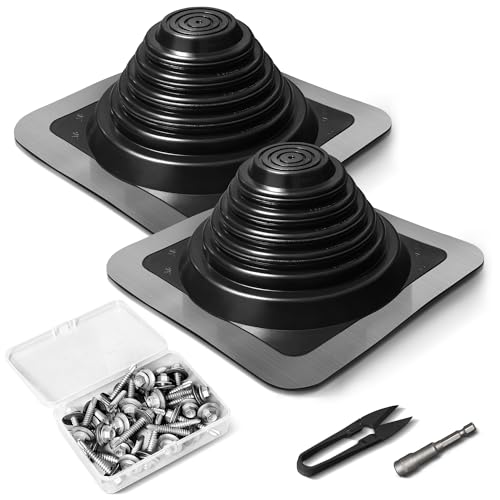
#3 EPDM Roof Jack Kit, OD 0.25″-5.75″
#6 EPDM Roof Vent Boot, OD 4.75″-10″
Taking A Closer Look At The Options
The Cougar Paws Performer is the only footwear-focused item on this list, and it earns its spot by being purpose-built for working on shingled and metal pitches. Unlike the flashing boots below, this is a soft-soled boot that slips over your regular work shoe and uses replaceable felt pads to grip the surface.
If your day involves climbing ladders, walking ridges, and kneeling on metal panels, traction is the variable that decides whether you come down safely. The Size 12 fits most standard work boots, and the breathable upper helps when the sun is hammering the panels. For most homeowners tackling a weekend repair, this is the kind of gear that quietly pays for itself the first time you hit a slope.
Real-World Strengths
- Replaceable felt pads deliver strong grip on slick metal panels
- Slips over existing work boots, no second pair to haul up the ladder
- Breathable upper reduces heat buildup on sunny days
- Designed specifically for roofers, not repurposed hiking gear
Trade Offs To Consider
- Sizing runs specific, so measure carefully before ordering
- Not waterproof, so wet mornings mean soggy socks
Best Suited To
Roofing contractors and serious DIYers who spend real time on metal panels and want traction they can trust.
Skip It When
The ACNOYEL #6 EPDM Roof Vent Boot suits you better when your project is sealing a vent, not gaining footing on a slope.
This ACNOYEL flashing boot is sized for the most common mid-range vent stacks you’ll find on a residential metal roof. The rubber sleeve (EPDM, a synthetic rubber valued for weather resistance) trims to match your pipe’s outer diameter, which means a snug fit on anything from a 5-inch plumbing vent up to a 9-inch HVAC penetration.
Where the Cougar Paws above keeps you on the roof, this boot keeps water out of your house. Pair the two and you cover both halves of a metal roofing project. The aluminum base sits flat against corrugated panels, and the wide working range means you don’t have to nail down the exact pipe size before ordering.
A Few Highlights
- Cuts to fit pipes from 5″ to 9″ outer diameter
- EPDM sleeve handles temperature swings without cracking
- Aluminum base conforms to common corrugated profiles
Honest Caveats
- Single-piece pack, so larger projects may need multiple orders
- Aluminum base can dimple if over-tightened during install
Who It Suits Best
Homeowners and roofers sealing mid-sized plumbing or HVAC penetrations through standard corrugated panels.
Consider Something Else When
The ACNOYEL #8 EPDM Metal Roof Vent Boot is the better match when your chimney or flue falls in the 6.75″ to 15″ outer diameter range.
Step up in size and you step into the #8, which covers the largest common residential penetrations. The 6.75″ to 15″ range swallows big chimney flues, B-vent gas appliance terminations, and the oversized HVAC stacks you find on additions and shop roofs.
Compared to the #6 above, this boot uses a wider square base that lays flat on deeply corrugated panels without rocking. It ships with the roofing screws and hex bit needed to drive them, so the install isn’t held up by a missing part. For anyone sealing a masonry chimney to a metal roof, this is the size class you actually need.
Good Reasons To Consider
- Handles extra-large pipe diameters other boots can’t reach
- Square base fits standard corrugated profiles cleanly
- Screws and hex bit included so install goes smoothly
- EPDM rubber holds up to UV exposure over many seasons
Where It May Fall Short
- Oversize for most standard vent stacks, so measure first
- Single boot per order, which can sting on multi-flue projects
Right Fit For
Homeowners and contractors flashing large chimneys or wide HVAC penetrations on corrugated metal roofing.
Look Elsewhere When
The ACNOYEL #7 Silicone High-Temp Roof Jack is the smarter call for wood stove flues where heat tolerance matters more than pipe diameter.
Feature Snapshot
The #7 swaps EPDM for high-temperature silicone, which changes the conversation. Where the rubber boots above are tuned for plumbing and HVAC vents, this one is built for stove pipes and chimney penetrations that actually run hot. If you heat with wood, you need this material class, not a generic rubber boot.
The kit includes butyl sealant tape, which is a sticky rubber-based ribbon used to seal overlapping flashing, plus screws and a hex socket, so the install is genuinely complete out of the box. The 6″ to 11″ range overlaps the #8 above but trades upper-end capacity for thermal headroom that rubber can’t match.
Useful Strengths
- Silicone tolerates higher pipe heat than EPDM boots
- Includes butyl tape for a true double-sealed lap
- 30 roofing screws and a hex socket cover a single install
- Flexible sleeve cuts to fit pipes between 6″ and 11″
Possible Compromises
- Overkill and pricier for cold-only vent stacks
- Silicone can attract dust over time, more visible on light panels
Built With In Mind
Wood stove owners and installers flashing chimney penetrations on a metal roof where heat is a real factor.
Not Your Match When
The ACNOYEL #3 Metal Roof Flashing Kit suits a small bath or kitchen vent better, since heat isn’t part of the equation.
Feature Rundown
Small vents cause big leaks when they’re not sealed, and this two-pack covers the most common offenders. Bath fan exhausts, kitchen range hoods, and radon mitigation lines all tend to fall in the quarter-inch to five-inch outer diameter range, which is exactly what this kit handles.
You get two boots plus 20 screws, a hex bit, and a pair of scissors sized for trimming the rubber sleeve. For homeowners sealing multiple penetrations in one session, the twin pack means you’re not pausing halfway through to reorder. Compare that to the single-pack #6 above, and you see why the math works out for multi-vent projects.
Real Benefits
- Two boots per order, ideal for multi-vent projects
- Covers small OD range most homes actually have
- Scissors included for trimming the rubber sleeve cleanly
- Lower per-boost cost than buying singles
Things To Weigh
- Too small for any chimney or large HVAC penetration
- Two-pack is wasteful for single-vent repairs
Whose Shelf It Belongs On
DIYers and contractors sealing several bath or kitchen vents on a metal roof in one visit.
Another Choice May Suit
The ACNOYEL #3 EPDM Roof Jack Kit fits the same vents with a wider 5.75″ upper end when you need a touch more range.
This twin-pack carries the same small-pipe footprint as the #5 above, but extends the upper end to 5.75″. That extra room matters when you’re sealing a slightly oversized exhaust line or a dryer vent that falls outside the standard range. The square base is tuned for corrugated panels, which is the most common residential profile.
Screws, a hex bit, and scissors come in the box, so the install is self-contained. The EPDM build handles temperature swings well, and in most climates you can expect multi-season service before any cracking shows up. Where the #5 kit focuses on the smallest vents, this one gives you breathing space for the awkward middle.
Reasons It Performs
- Extended upper range covers slightly oversized vents
- Square base sits flush on common corrugated panels
- Twin-pack format keeps per-boot cost reasonable
Small Caveats
- Still too small for any chimney or flue work
- EPDM isn’t suited to high-heat stove penetrations
- Hex bit included is single-use size, so check your driver
Who Should Grab It
Homeowners and installers sealing mid-sized bath, dryer, or kitchen vents on corrugated metal roofing.
Reach For A Different Pick When
The ACNOYEL #6 EPDM Roof Vent Boot handles larger mid-range penetrations where the 5.75″ upper end isn’t enough.
Feature Overview
The #7 on this list rounds out the mid-range coverage with a sleeve that handles 4.75″ to 10″ outer diameter pipes. It sits between the small-vent kits and the chimney-class #8 above, catching the projects where the pipe is bigger than a bath vent but smaller than a full masonry flue.
Screws and a hex bit come with the boot, so you’re not chasing parts mid-install. The square EPDM base lays flat on standard corrugated profiles. For mixed vent diameters on a single roof, this size class tends to do more work than either extreme. Compared to the heat-rated #4 above, this is the cold-side equivalent for plumbing and HVAC stacks.
What Pays Off
- Broad 4.75″ to 10″ range covers mid-sized residential vents
- EPDM sleeve handles UV and weather across many seasons
- Square base fits corrugated panels without flexing
- Hardware included for one full install
Less Ideal Details
- Single boot per pack, so plan ahead for multi-pipe projects
- Not heat-rated, so keep it off stove and flue runs
Perfect Match For
Roofers and homeowners sealing mid-sized plumbing and HVAC penetrations on standard corrugated metal panels.
A Better Fit Elsewhere
The ACNOYEL #8 EPDM Metal Roof Vent Boot is the right call when the pipe diameter climbs into the chimney range above 10″.
Quick Facts
What To Weigh Before Buying Metal Roofing Shoes
Traction and sealing are two different jobs, but they share the same roof. Start with what you’ll be walking on: corrugated panels with deep ribs need a flashing boot with a square base, while standing seam profiles may want a different mounting approach. Measure every pipe’s outer diameter before ordering, since rubber boots cut to fit only within their stated range.
For footwear, sizing matters more than brand. A traction cover that doesn’t fit your work boot will shift on the roof, which is worse than no cover at all. Climate plays a quiet role too: if your roof runs hot under summer sun, breathable uppers reduce foot fatigue over long days.
Budget versus scale is the other real decision. A single vent repair calls for a one-pack, while a full re-roof with multiple penetrations makes a two-pack far more efficient. Heat exposure is non-negotiable for stove pipes, where silicone outlasts rubber by years. Walking surfaces and sealing penetrations together usually cover the full project.
Picking The Right Flashing For The Pipe
Penetration size drives almost every choice here. Quarter-inch to five-inch OD covers bath and kitchen vents. Six-inch to eleven-inch handles most stove and mid-sized HVAC lines. Above that, you’re in chimney territory, which wants a wider flange and tougher hardware.
Material choice is the second fork. EPDM handles weather and UV for cold vents and most HVAC stacks. Silicone earns its premium on hot flue pipes where rubber would eventually crack. Aluminum bases give you a stiff flange to screw down, and they conform to common corrugated profiles without extra forming.
Key Considerations Across These Picks
Mistakes Worth Dodging
The most common error is ordering by pipe nominal size instead of outer diameter. A “3-inch pipe” usually measures closer to 3.5″ outside, and that mismatch turns into a loose sleeve and a leak. Measure twice with a tape across the pipe before you order.
The other slip is buying one boot when the project has four vents. Per-boot cost drops fast in twin packs, and the hardware included in those kits usually matches the install. Single boots make sense for repairs, not for whole-roof days.
Where The Extra Money Goes
Premium picks on this list earn their keep in two places: heat-rated silicone that survives chimney temperatures, and boots that ship with every screw and sealant strip needed for a clean install. For a single cold vent, the budget rubber kits perform well. The upgrade matters most when heat, UV, or panel profile pushes standard materials past their comfort zone.
Frequently Asked Questions
What are metal roofing shoes used for? Metal roofing shoes are soft, slip-over traction covers that grip metal panels so you can walk and kneel safely during installs or repairs. The rest of this list covers pipe boots, which seal the penetrations that come up through the roof.
How do I measure pipe size for a flashing boot? Wrap a tape measure around the outside of the pipe and divide by pi (3.14) to get the outer diameter, or measure straight across with calipers. Order to that number, not to the pipe’s nominal name.
Can one flashing boot fit multiple pipe sizes? Yes, most rubber and silicone boots let you trim the sleeve to match the exact outer diameter within their stated range. Always cut to the measured size rather than guessing.
Is silicone really necessary for stove pipes? For wood stove and chimney penetrations, silicone is the safer long-term choice. EPDM can handle warm air but eventually hardens and cracks under sustained heat from a flue.
How long do these flashing boots last? On a typical residential metal roof, an EPDM boot usually lasts many seasons before UV takes a toll. Silicone boots generally outlast rubber, especially near heat sources, though exact lifespan depends on sun exposure and weather.
Closing Remarks
The right combination here depends on what your roof actually needs: traction for the walk up, flashing for the pipes that poke through. Match the boot size to the measured pipe, choose silicone when heat is in play, and don’t underestimate how much easier a proper grip makes the whole day.