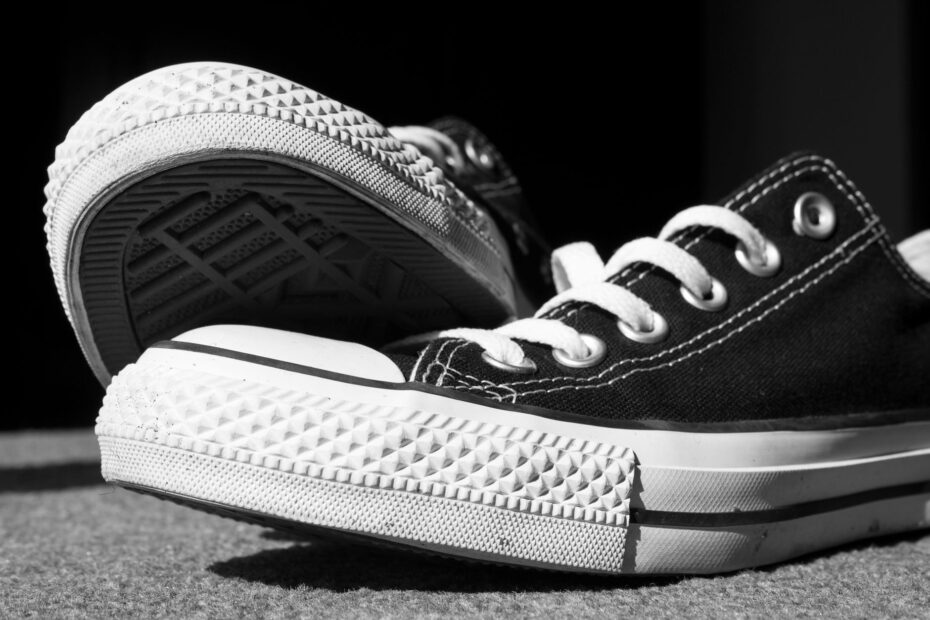
Grit trapped in the tread acts like sandpaper, so match each pair to its surface and activity, clean the outsole regularly, rotate suitable pairs, and repair small worn areas before the rubber disappears. Smooth heel rubber can turn a familiar walk into a slide long before the upper looks worn.
Your sneakers, work shoes, boots, and dress shoes face different wear from surfaces, fit, walking mechanics, cleaning habits, repair limits, and declining grip.
Normal Wear and Early Sole Damage
The outsole meets the ground, while the midsole sits above it and cushions each step. Tread thinning across the sole comes with use, but bald patches, deep heel loss, cracks, holes, and layer separation show damage beyond normal wear.
Rubber loses material through friction. Each step presses the outsole against a surface, then adds a small amount of twisting or sliding as your foot moves forward. Your shoe type and walking surface decide how quickly that friction removes rubber.
Surface Contact Shapes Abrasion
Rough concrete, asphalt, and gravel act like sandpaper against a rubber compound. Mud packs into grooves, while road salt and chemical residue dry across the outsole and upper. Indoor flooring causes far less abrasion, so your shoes may age at very different speeds across two routines.
Your walking surface matters as much as mileage. A lightweight Nike running shoe used for commuting, grocery trips, and yard work can lose rubber sooner than the same model used only on a track or treadmill.
For rough pavement, choose footwear with rubber coverage beneath the heel and forefoot. Thin athletic rubber works well for lighter movement, yet constant contact with abrasive ground removes it faster than a thicker work-boot outsole.
Routine Checks Spot Damage
Set both shoes on a table with the soles facing up. Compare tread depth at the heel, forefoot, and outer edges. Look for exposed midsole foam, chipped rubber, lodged stones, and smoother areas on one shoe.
A thumb check reveals changes that your eyes may miss. Press across the heel and forefoot; polished rubber feels flatter and less textured than intact tread. You should also place both shoes on a level floor and watch for visible leaning.
Grip changes before a hole appears. Stop using a pair on wet tile, metal stairs, or slick pavement once the tread feels flat or polished under your thumb.
How to make shoe soles last longer starts with a check every few weeks. That short routine shows whether friction, fit, or gait is wearing down one area faster than the rest of the outsole.
Wear Patterns Point to Friction, Fit, and Gait
A worn toe tip or sharply ground-down heel marks repeated contact in one area. Foot dragging scrapes the front edge during each stride, while a hard heel strike places more force at the rear. Court shoes on rough pavement and running shoes worn through work shifts also lose tread faster.
Wear marks offer clues, not a diagnosis. Your body movement, shoe fit, surface choice, and job demands may all leave a mark on the same pair. The shape of the worn area matters more than a single smooth spot.
Uneven Edges Show a Repeat Pattern
Outside-heel wear may come from a heel strike that lands toward the outer edge. Inside-edge wear may appear with pronation, where your foot rolls inward after contact. Supination describes the opposite motion, with more body weight held along the outside edge.
The answer may involve heel strike, pronation and supination, foot dragging, loose heel hold, or repeated turning on one side. Your shoe pattern alone does not identify a medical cause.
| Wear location | Common contributor | What you can check |
|---|---|---|
| Outer heel | Outer-edge heel strike or supination | Compare heel corners and watch for shoe tilt on a flat floor. |
| Inner heel or forefoot | Pronation, loose heel hold, or poor foot support | Look for inward lean and heel slipping during walks. |
| Toe tip | Foot dragging or footwear used beyond its activity | Look for scuffed toe rubber and scraped laces. |
| One-sided forefoot | Fit mismatch or repeated turning movement | Check toe room and match footwear to the activity. |
Persistent pain, ankle instability, numbness, or rapid one-edge wear deserves a professional fit assessment or gait analysis. The American Podiatric Medical Association notes that shoe fit and function affect foot comfort, though your shoe alone cannot explain every symptom.
That pattern gives you a useful next step. Reduce the repeated friction visible on the outsole, then watch whether the new wear remains in the same area over the next several wears.
Daily Habits Reduce Outsole Abrasion
One pair cannot cover every job without more tread wear. Reserve running shoes for running, then use sturdier footwear for long work shifts, errands, gravel paths, or outdoor chores. Your outsole lasts longer when its construction matches the ground beneath it.
Grit causes damage in two ways. Stones press into deep lugs and twist against the rubber during walking, while dirt trapped around the heel edge can grind against the outsole during storage and movement.
Small Routine Changes Reduce Grinding
- Rotate suitable pairs. Give each pair a day away from wear so your shoes dry and avoid continuous stress on the same outsole and midsole.
- Remove lodged stones. Pick gravel from deep lugs after walks because trapped stones press and twist against rubber during your next outing.
- Rinse off residue. Wash away mud, salt, and chemical film with cool water and a soft brush before the material dries into the tread.
- Air-dry indoors. Keep shoes away from radiators, dryers, and direct heat, which dries rubber and weakens glued seams.
- Use shoe trees. Cedar or plastic shoe trees help leather shoes hold shape and reduce heel slip that worsens uneven sole contact.
Drying time matters because damp shoes stay compressed under body weight for longer stretches. Shoe rotation does not rebuild worn rubber, but your midsole, lining, and upper receive time away from repeated loading.
Keep a stiff brush near the door for your daily routine. Clear the tread before storage, especially after salted sidewalks, construction dust, or wet trails where grit settles into each groove.
Care can slow abrasive wear, while the sole’s materials and attachment determine how long it withstands regular use.
Shoe Construction Holds Up to Real Use
Rubber coverage beneath the heel and forefoot tells you more about wear resistance than an impressive upper. Exposed foam feels light and softens landings, but asphalt can abrade it quickly. A thicker rubber outsole gives your high-contact zones more material before the midsole appears.
Outsole thickness is only part of the picture. Tread depth, rubber compound, heel shape, and the intended surface also affect how the shoe behaves under your stride.
Outsole Coverage Sets Wear Limits
| Construction feature | Where it fits | Trade-off for your use |
|---|---|---|
| Thick full-rubber outsole | Pavement, work floors, boots, rough paths | Added weight, with more material against abrasive surfaces. |
| Rubber pods over foam | Road running and casual athletic wear | Light feel, but uncovered foam can wear away at contact zones. |
| Deep lug tread | Dirt, mud, and loose gravel | Stronger grip outdoors, but less smooth movement on indoor floors. |
| Flat court outsole | Gym floors and court movement | Stable indoors, yet rough sidewalks wear it down quickly. |
Vibram rubber appears on hiking and work boots because its rubber compounds and lug patterns suit demanding ground contact. Dr. Martens boots also use substantial rubber soles, though even thick outsoles wear unevenly where your heel slides inside the boot.
Proper Shoe Fit Protects the Sole From Within
Proper shoe fit keeps your foot centered over the platform. Heel slip makes the shoe strike and twist differently during each step. A cramped toe box alters push-off, while inadequate arch structure can concentrate pressure along one edge.
Check fit late in the day after your feet expand from standing and walking. Leave about a thumb’s width ahead of the longest toe, secure the heel without pinching, and select activity-specific footwear for your routine.
Fit matters because rubber cannot compensate for repeated rubbing in the same zone. To prevent shoe soles from wearing out quickly, your foot needs a stable heel hold and enough toe room for a natural stride.
Even with a stable fit, localized damage can spread before it becomes obvious enough to affect comfort or traction.
Prompt Repairs and Protection Limit Spreading Wear
A small worn heel corner is easier to address than a heel worn into the main outsole. Dress shoes and boots with stacked heels may lose a rubber heel cap, then wear into leather, plastic, or midsole material beneath it.
Repair work has limits. Added rubber works only where the remaining base is firm, level, and attached to the upper. Your cobbler needs enough stable material beneath the worn patch to shape a flat walking surface.
Localized Protection Has Clear Limits
Cobblers fit rubber heel caps, patch limited worn areas, or add protective rubber to compatible shoes. Topy sheets are thin rubber layers placed on some leather-soled dress shoes to add grip and slow direct leather wear.
Sole protectors help shoes last longer where the underlying shoe remains structurally sound. They do not restore flattened midsole cushioning, correct pronation, or level a shoe that rocks because one side has worn much lower.
Use Shoe Goo only for a small, clean separation or minor patch where the surrounding sole remains firm. Adhesive does not hold crumbly foam, a badly split outsole, or a sole detached across a broad area.
Repair Depends on Shoe Construction
Shoe sole repair and replacement ranges from a simple heel lift to a full resole. Welted boots and some work footwear allow resoling, while molded athletic shoes use bonded foam and rubber that do not rebuild in the same manner.
Bring the pair in before the midsole becomes exposed. A cobbler checks whether added rubber sits flat and whether the upper, shank, and stitching justify the work. Your repair choice becomes clearer after checking traction and platform stability.
Replacement Becomes Safer After Grip Fails
Bald tread turns water, dust, and smooth flooring into a traction problem. Retire shoes with holes, exposed foam, sole separation, a severely uneven platform, or a heel worn far enough down that the shoe visibly leans to one side.
A worn sole changes more than appearance. Uneven heel height changes your foot angle at contact, while shallow tread leaves less rubber texture against wet concrete or polished tile. Your footing deserves more attention than a cosmetic patch.
Grip and Stability Outrank Cosmetic Repairs
Cleaning packed mud from grooves can improve shoe traction because the tread contacts the surface again. New rubber on a localized heel can restore a level platform. Neither approach fixes a sole splitting away from the shoe or foam that has compressed and broken down.
Your risk rises on wet concrete, polished tile, ladders, and uneven ground. A pair with poor grip can shift your ankle angle without warning, while an uneven heel changes how your knee and hip track during each step.
A Practical Rule for the Next Decision
- Keep sound soles. Clean the tread, rotate pairs, and watch for changing grip before wear becomes severe.
- Repair local damage. Visit a cobbler for heel caps, small patches, or resoling on footwear built for that work.
- Retire unstable pairs. Stop wearing shoes with holes, separation, exposed foam, or a platform that no longer sits level.
- Check the cause. Seek fit or gait help after rapid one-sided wear, discomfort, or repeated outside-heel damage.
How to stop heels from wearing down depends on timing. Address a worn heel tap while a firm, level base remains beneath it. Once wear reaches the main sole, repair becomes less dependable and traction may remain poor.
Final Look
Soles are consumable, but premature damage is not random. Your surface, activity, proper shoe fit, heel strike, cleaning routine, and repair timing all leave visible marks on the rubber compound.
To prevent shoe soles from wearing out quickly, protect high-contact areas before they become smooth, reserve each pair for its intended use, and retire footwear once grip or stability cannot return. Your regular inspection gives you time to act before a small heel corner becomes a larger safety concern.
FAQ
Why do my shoe soles wear out so quickly?
Rough asphalt, concrete, gravel, foot dragging, and all-purpose use wear rubber down quickly. Your soles also lose material unevenly from poor fit, weak foot support, repeated hard heel strikes, or exposed foam in high-contact areas.
Does the way I walk cause my shoes to wear out faster?
Your gait changes where rubber meets the ground. A hard heel strike, toe drag, pronation, supination, or movement altered by discomfort can concentrate wear on one edge, though a shoe pattern alone does not diagnose the cause.
How can I prevent uneven wear on the outside of my heels?
Keep your heel secure and match footwear to your activity. A gait analysis or fit assessment is useful after rapid outside-heel wear, uneven wear between shoes, pain, or ankle instability.
Can a cobbler add rubber to worn shoe soles?
A cobbler adds protective rubber, fits rubber heel caps, patches limited damage, or resoles footwear built for that work. Your pair needs a stable base because added rubber does not rebuild crushed midsole cushioning or hold a failing sole together.
Do sole protectors help shoes last longer?
Sole protectors slow wear on compatible leather soles and localized high-wear areas. They work best before deep damage appears, and your shoes still need proper fit and usable tread for stable traction.
When should worn shoe soles be replaced?
Retire the pair once tread is bald, the outsole has holes, foam is exposed, the sole separates, or the platform becomes severely uneven. Your footing is the deciding factor, especially on wet or smooth surfaces where worn rubber can slide.