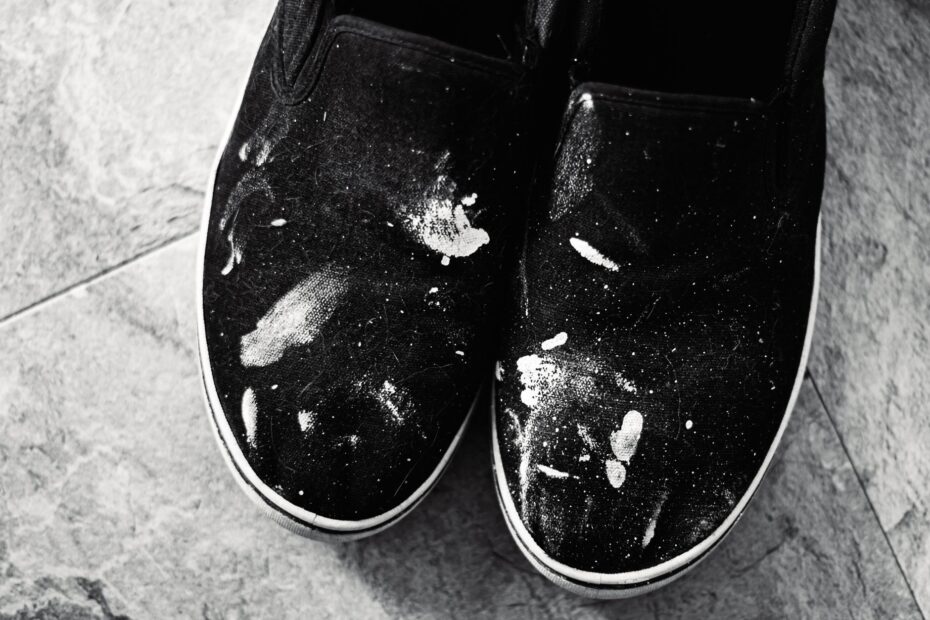
Dry soil should be lifted before moisture, then a lightly sudsy spot treatment can be worked into the mark before the pair air-dries away from heat. Controlled cleaning lifts grime from the weave without spreading grease, weakening glue, or roughing fabric.
This practical walkthrough suits anyone facing mud, grass, food, oil, scuffs, or yellowing on canvas shoes. You’ll learn which materials suit each mark and where gentle methods reach their limit.
Stain Type and Shoe Construction Set Cleaning Limits
A brown mud mark needs a different starting point than grease, grass pigment, or food residue. Your cleaner works only as well as the stain diagnosis, because water loosens dry soil but can spread oil deeper into the canvas weave.
Different marks need different lifting methods
| Stain type | What loosens it | Care point for your shoes |
|---|---|---|
| Dry mud | Dry brushing, then mild soap | Brush loose grit away before adding water. |
| Grass | Mild laundry detergent | Use repeated light applications rather than hard strokes. |
| Food | Detergent and a damp cloth | Blot sauces before rubbing pigment deeper. |
| Oil or grease | Baking soda or cornstarch | Absorb surface oil before wet cleaning. |
| Rubber scuff transfer | Damp cloth or magic eraser | Keep abrasives off the canvas upper. |
| Yellowing | Gentle brightening on white fabric | Check rubber, glue, and fabric separately. |
Canvas is woven cotton or a cotton-blend fabric, so stain particles settle between fibers instead of sitting on a smooth surface. You remove stubborn stains from canvas shoes by lifting particles outward, not by grinding them down with a stiff brush.
Construction details change the safe method
Check colored panels, printed graphics, leather trim, suede accents, metal eyelets, and cracked seams before wetting the upper. Your Keds may seem plain, yet a printed floral panel or glued strip can react very differently from the white canvas beside it.
Rubber soles handle focused cleaning better than fabric. Keep the sidewall and toe bumper separate from the upper, because a material that leaves rubber bright can leave dyed canvas pale or rough.
Spot-test every mixture on a concealed edge near the tongue or inside collar. A dye that looks stable while damp can dry lighter than the surrounding canvas.
Dry Preparation Keeps Soil From Spreading
Loose grit turns into gray slurry once water reaches it, so dry preparation comes before soap. Your goal is controlled moisture, not a soaked shoe that strains adhesive and stays damp for two days.
A small cleaning kit gives you better control
- Lace removal: You can reach tongue folds and clean laces in separate soapy water.
- Dry brushing: Use a soft-bristled toothbrush to loosen dust, dried mud, and sand from seams.
- Mild soap: Mix mild laundry detergent or a small amount of dish soap with water.
- White cloths: Keep pale cloths nearby so colored towels do not transfer dye onto damp fabric.
- Plain paper: Set aside unprinted paper for reshaping shoes during air drying.
A soft-bristled toothbrush reaches stitching and the canvas-rubber seam without tearing fibers. Skip Scotch-Brite pads on the upper, since rough fibers can raise the nap and leave a fuzzy, worn patch.
Spot tests reveal dye and trim reactions
Put a pinhead-size amount of your chosen mixture on a hidden area, wait for it to dry, then inspect it under normal room light. Baking soda paste, white vinegar, hydrogen peroxide, and oxygen bleach products such as OxiClean all need that check.
Use a small bowl of water rather than a deep basin. Excess moisture can loosen shoe glue, carry brown soil into clean fabric, and leave tide marks around the edge of a damp patch.
Gentle Spot Cleaning Lifts Embedded Canvas Dirt
A thin film of suds does more work than a foamy flood. Mix about one teaspoon of mild laundry detergent or dish soap into one cup of water, then stir until the water looks lightly cloudy rather than thick with bubbles.
Short strokes lift soil without roughing the weave
- Damp brush: Wet the brush with the solution, then tap off drips before it touches your canvas.
- Center strokes: Work from the stain edge toward its center with short, gentle motions.
- Clean blotting: Press a damp white cloth onto the area as dirt transfers out of the fabric.
- Residue wipe: Wipe with fresh water on a cloth until your canvas no longer feels slick.
For example, a gray city-dust band above the rubber sole responds well to two light passes and blotting. Your opening pass loosens surface dirt, while the cloth removes it before another pass presses it into white threads.
Baking soda paste helps with dingy marks
A baking soda paste made with baking soda and mild detergent gives slight grit without the force of an abrasive pad. Put a pea-size amount on the stained area, wait five minutes, then brush gently with the damp toothbrush.
Baking soda can lift dull residue and embedded dirt, but it does not dissolve heavy grease or repair worn fabric. Your final wipe matters because dried powder can leave a chalky patch on dark or white canvas.
Because gentle soap cannot break down every residue, stubborn marks require methods matched to their source.
Stop brushing once the fabric looks clean but damp. Continued friction after soil lifts can thin the canvas, blur printed designs, and leave one small area lighter.
Targeted Methods Address Oil, Mud, Grass, Food, and Scuffs
The detergent mixture remains the base method, but oil and dried soil need a different opening move. You can clean dirty canvas sneakers more safely by removing material that water would spread before brushing begins.
| Problem | Targeted method | Sign to stop |
|---|---|---|
| Wet mud | Leave it alone until fully dry, then brush off crusted soil. | Canvas feels damp from mud rather than cleaner. |
| Fresh oil | Cover with baking soda or cornstarch for 30 minutes, then brush away powder. | Powder clumps heavily with absorbed oil. |
| Grass stain | Use detergent on a damp brush and blot after each pass. | Color starts lifting from dyed canvas. |
| Food stain | Blot residue, then use detergent on the remaining mark. | Fabric stays slick after wiping. |
| Rubber scuff | Rub the rubber with a damp cloth or lightly used magic eraser. | The eraser reaches canvas fabric. |
Oil needs special handling because soap and water can carry it outward into a larger ring. Cover the spot with absorbent powder, leave it undisturbed for 30 minutes, brush away the powder, then use restrained spot cleaning on the remaining shadow.
Grass pigment and food residue respond better to patience than force. Let the shoe dry between cleaning rounds, then revisit the mark with mild detergent rather than adding stronger materials during the same session.
Rubber soles collect black transfer from floors, curbs, and bike pedals. Keep a magic eraser barely damp and use two or three light rubs on rubber only, since its abrasive surface can roughen your canvas upper.
White Canvas Needs Brightening Methods With Clear Limits
White fabric shows leftover soil, soap residue, and minerals from hard water more clearly than darker material. Start with baking soda paste and detergent, because surface grime can look like yellowing until you wipe the fabric fully clean.
Brightening materials carry different risks
| Method | Useful role | Limit for your shoes |
|---|---|---|
| Baking soda and detergent | Lifts dinginess and embedded dirt | Needs complete wiping to avoid powder residue. |
| Hydrogen peroxide | Can brighten white canvas | Can fade color and affect decorative details. |
| White vinegar | Light cleaning aid for mild marks | Does not lift heavy grease or fiber damage. |
| Chlorine bleach | No useful role on canvas shoes | Weakens fibers, alters color, and can yellow rubber. |
Hydrogen peroxide can brighten white canvas, yet it belongs only on all-white fabric after a concealed-area check. Dab a small amount with a cloth, wait several minutes, wipe it away, and inspect the dry result before working on a larger area.
To remove stains from white canvas shoes with yellow edges, clean fabric and rubber as separate surfaces. Yellow marks can come from trapped cleaner residue, aging glue, or heat exposure, so one liquid cannot restore every pair to an even shade.
Chlorine bleach weakens canvas fibers and can turn white rubber yellow over time. Your safer route uses repeated mild cleaning, full residue removal, and shade drying rather than a harsh attempt to remove yellow stains from shoes in one session.
Even successful brightening can look uneven if moisture, residue, or heat changes the fabric as it dries.
Drying, Retreatment, and Machine Washing Shape the Final Result
Water left inside the toe box can alter a shoe’s shape long after the surface feels dry. Blot excess moisture with a towel, stuff each shoe with plain white paper, and place it in moving indoor air away from radiators, dryers, and direct sun.
Air drying protects glue, shape, and color
- Plain paper: Use unprinted paper because printed sheets can transfer ink onto damp white canvas.
- Damp stuffing: Replace wet paper after several hours to draw moisture from the lining and toe box.
- Open tongue: Loosen the tongue so air reaches creases around eyelets and lace rows.
- Distant heat: Keep shoes away from high heat, which can shrink canvas and soften adhesives.
- Dry-surface check: Feel for stiff areas that point to cleaner residue rather than remaining dirt.
Air drying also reduces stale odor because trapped moisture under insoles feeds that smell. Your shoes need airflow through the opening, not a sealed plastic bag or hot laundry machine.
Repeated mild cleaning beats hard scrubbing
Old stains can need two or three mild cleaning rounds, with full drying between each round. You remove stubborn stains from canvas shoes more safely by repeating the least aggressive method that works rather than reaching for bleach or a harsh brush.
Machine washing suits only pairs whose care label permits a washing machine. A gentle cycle can distort thin canvas, loosen adhesives, and shorten the usable life of glued details, so hand spot cleaning remains the safer choice for fashion sneakers.
To wash canvas shoes without damaging them, remove laces and insoles, use cold water, place the shoes in a mesh bag, and skip the dryer. Your shoes still need paper stuffing and slow air drying after the cycle.
Key Cleaning Habits Keep Canvas Looking Even
Stains lift through controlled cleaning rather than force. Match the method to the mark, keep water sparse, wipe away cleaner residue, and allow each shoe to air-dry in shape before deciding whether another mild round is needed.
That sequence protects canvas fibers, rubber soles, color, and glue while giving difficult marks more than one careful chance to lift. Your patience matters most with oil shadows, grass pigment, and yellowing around glued seams.
FAQ
What method removes stubborn stains from white canvas shoes?
Start with dry brushing, then use mild laundry detergent and a damp soft-bristled toothbrush. Your white canvas needs a complete wipe with clean water afterward, since leftover soap or baking soda can dry into a pale, uneven patch.
Can baking soda and vinegar remove stains from canvas sneakers?
Baking soda can lift dingy dirt and absorb surface oil, while white vinegar can help with mild marks. Neither material removes heavy grease from deep fibers, and your canvas needs a concealed-area check before either mixture reaches dyed fabric.
How do you get old yellow stains out of canvas shoes?
Old yellow marks need mild detergent and baking soda paste before stronger brightening materials. Your results depend on the cause, since heat, aging glue, trapped residue, and yellowed rubber do not respond the same way.
How do you remove oil, grease, grass, mud, and food stains from canvas?
Dry mud needs brushing, while oil needs baking soda or cornstarch for 30 minutes before wet cleaning. You can use mild detergent for grass and food marks, blotting after each gentle pass so pigment and residue move into the cloth.
Can canvas shoes be washed in a washing machine?
The care label determines whether a washing machine is suitable for cleaning canvas shoes. Use cold water and a gentle cycle, remove laces and insoles, place the pair in a mesh bag, and avoid machine drying because heat can distort canvas and weaken glue.
Will hydrogen peroxide bleach or damage colored canvas shoes?
Hydrogen peroxide can fade colored canvas and affect printed details, so keep it for spot-tested all-white fabric. Your colored shoes are better served by mild laundry detergent, sparse water, and shade drying.